
The Head of a Scotch Lake — History & Facts
Did the painter know this moment would outlive them? Captured in time, the shadows dance across the water’s surface, whispering secrets of an elusive world just beyond reach. Look to the center of the canvas, where a serene lake mirrors a sky heavy with clouds. The interplay of blues and greys creates a haunting tranquility, inviting the viewer to step closer. Notice the delicate brushwork that distinguishes the rippling water from the solid, shadowy banks; each stroke breathes life into the scene, allowing the viewer to feel the crisp air and hear the soft lapping of the water against the shore. Beneath this calm exterior lies an emotional tension — the contrast between the serene surface and the ominous shadows looming just beyond the lake's edges.
The interplay of light and dark hints at the balance between beauty and danger inherent in nature. The reflections suggest a world inviting exploration while simultaneously holding secrets that remain hidden beneath the surface, a reminder of the complexity of existence. Alfred de Bréanski painted this work during a period marked by an increasing fascination with capturing nature’s essence in the late 19th century. Working in England and inspired by the Scottish landscapes, he sought to convey the emotional depth of the scenery through his mastery of light and shadow.
This piece, though undated, embodies the artist's commitment to capturing the raw beauty and mysterious allure of the natural world as it captivated artists of his time.
More Artworks by Alfred de Bréanski
Browse all →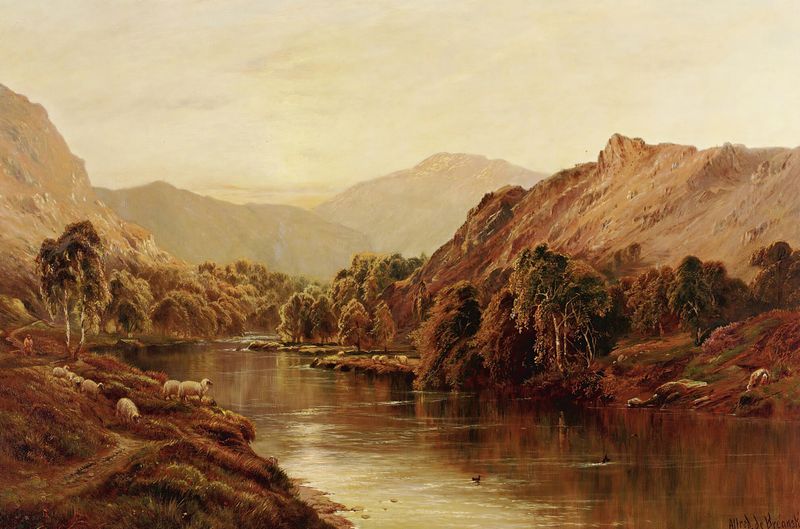
The Dee Near Balmoral
Alfred de Bréanski
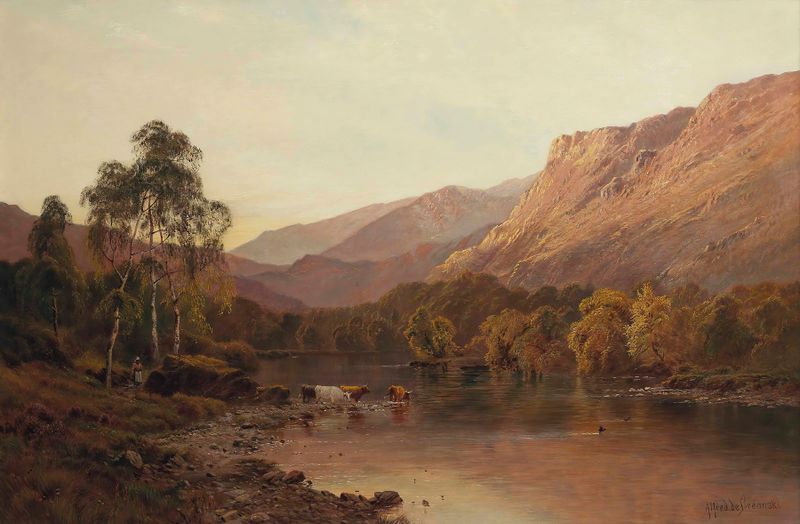
The Valley Of Borrowdale
Alfred de Bréanski
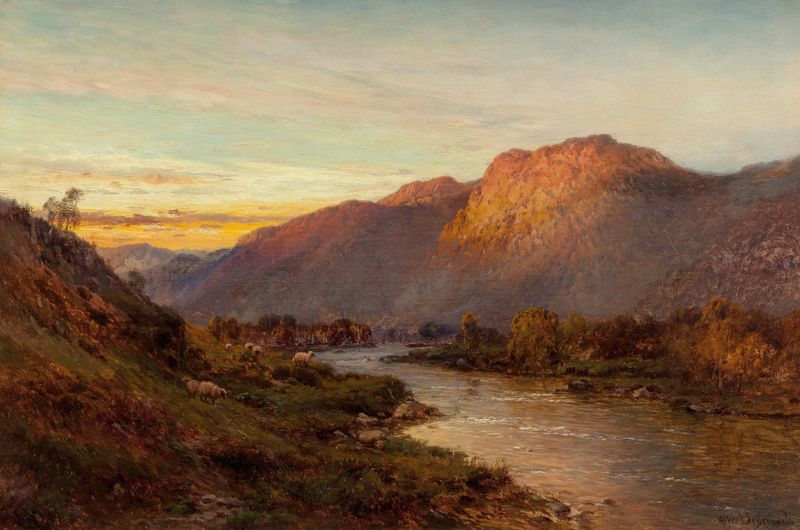
Below the Falls of Glenfinlas, Scotland
Alfred de Bréanski
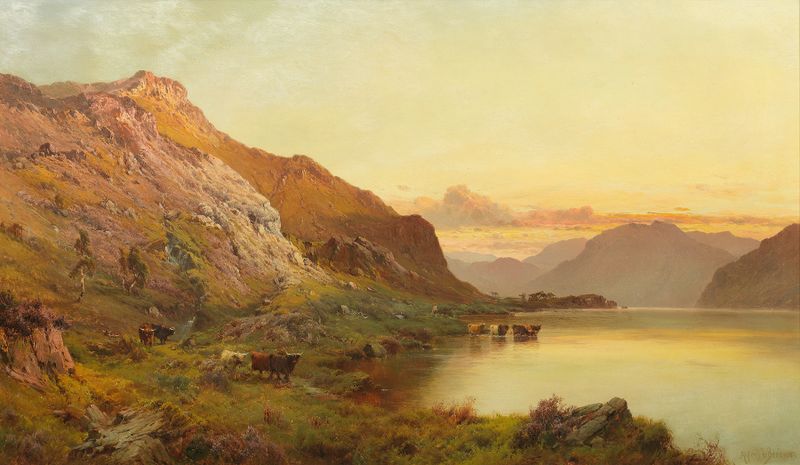
At the foot of Ben Nevis, N.B.
Alfred de Bréanski
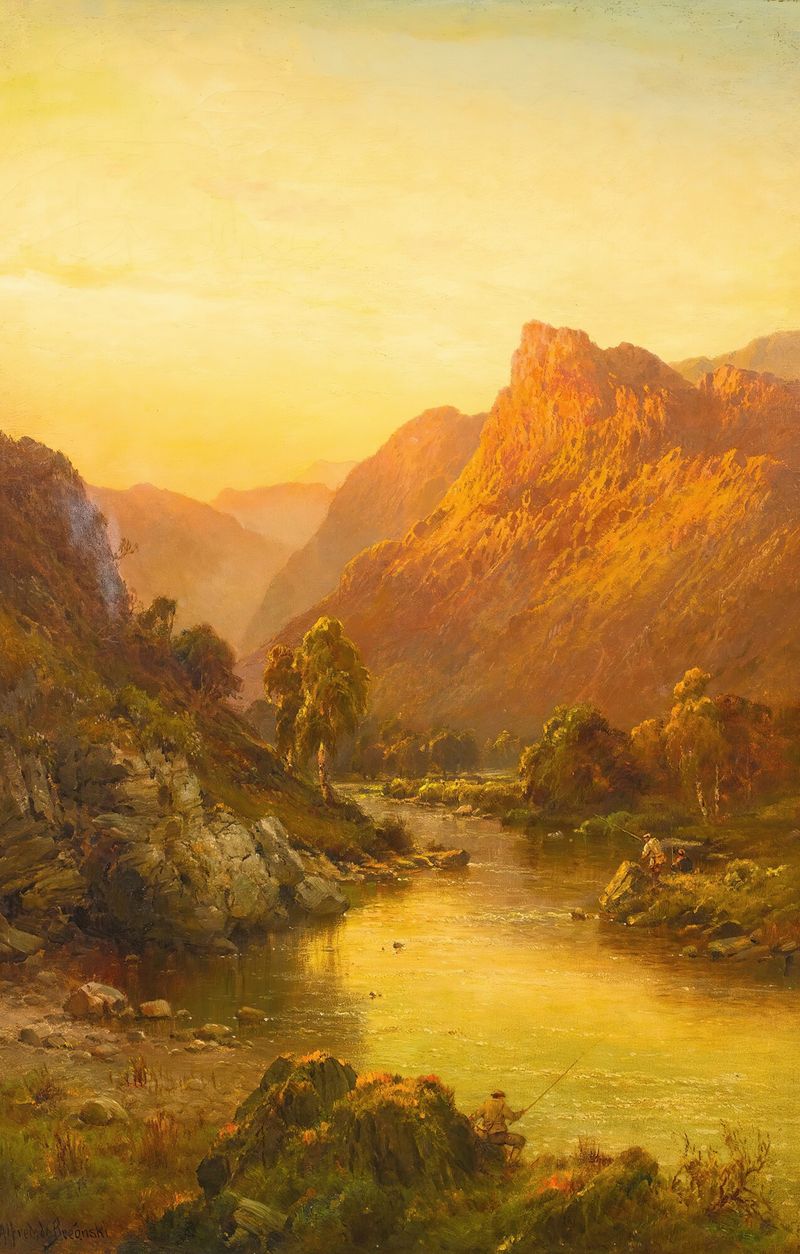
The Vale of Ben-Lawers
Alfred de Bréanski

Ben Lomond
Alfred de Bréanski
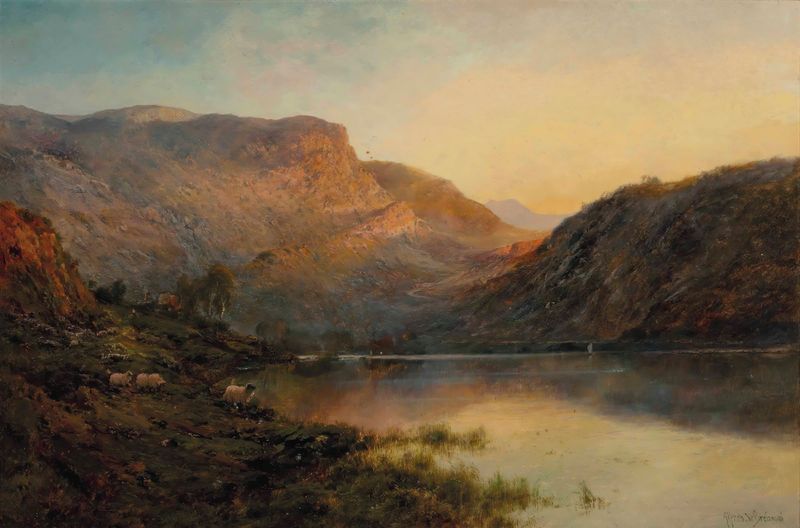
The Evening Glow, Vale Of Eagle, Loch Lomond
Alfred de Bréanski
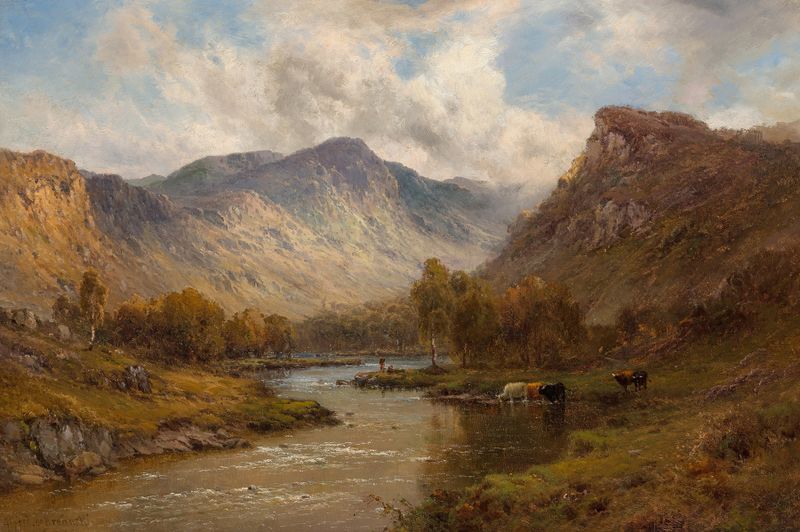
The Tay near Dunkeld, Scotland
Alfred de Bréanski

The Dee at Balmoral
Alfred de Bréanski

Highland landscape
Alfred de Bréanski





