The Home Fleet Saluting the State Barge — History & Analysis

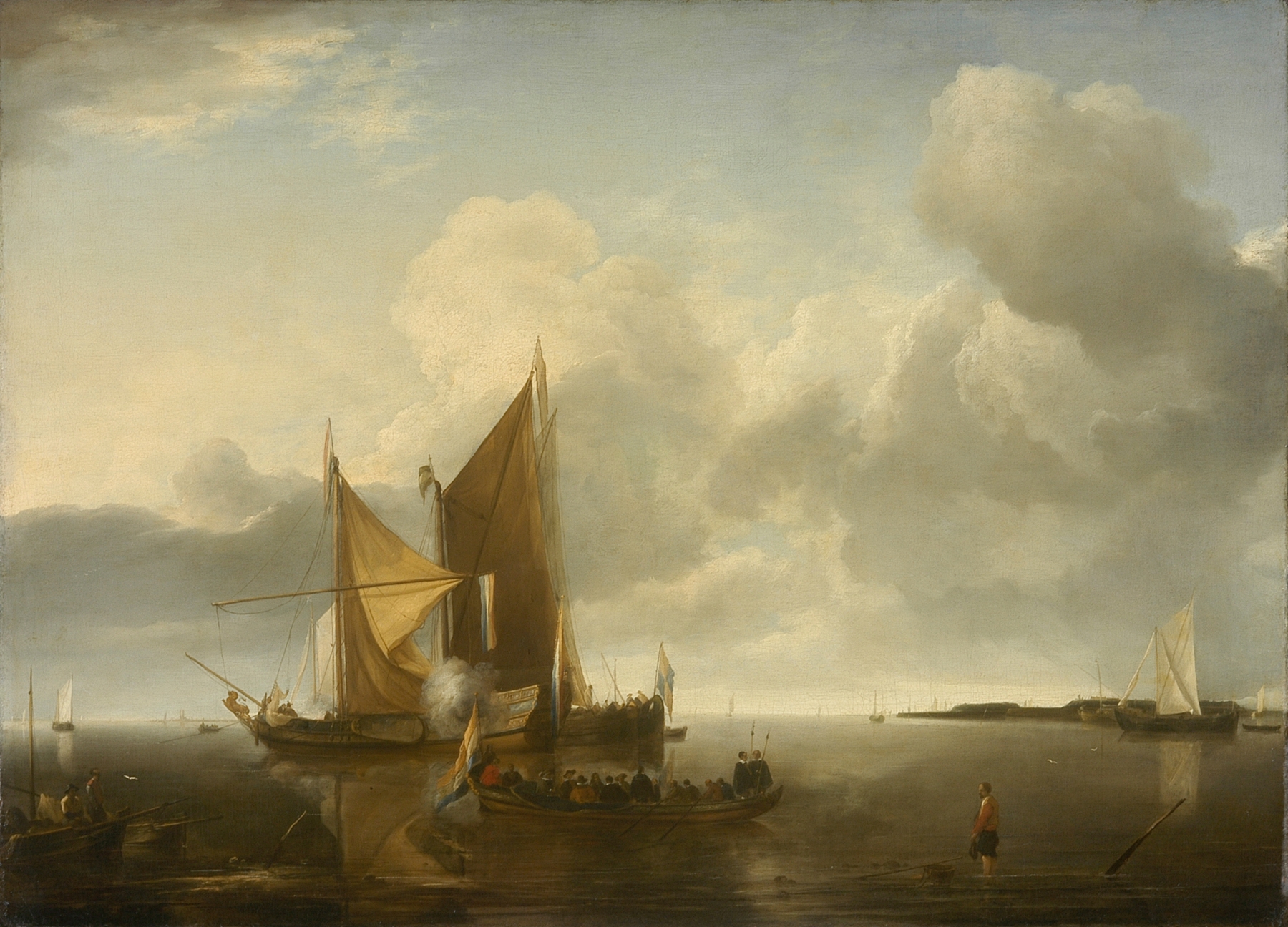
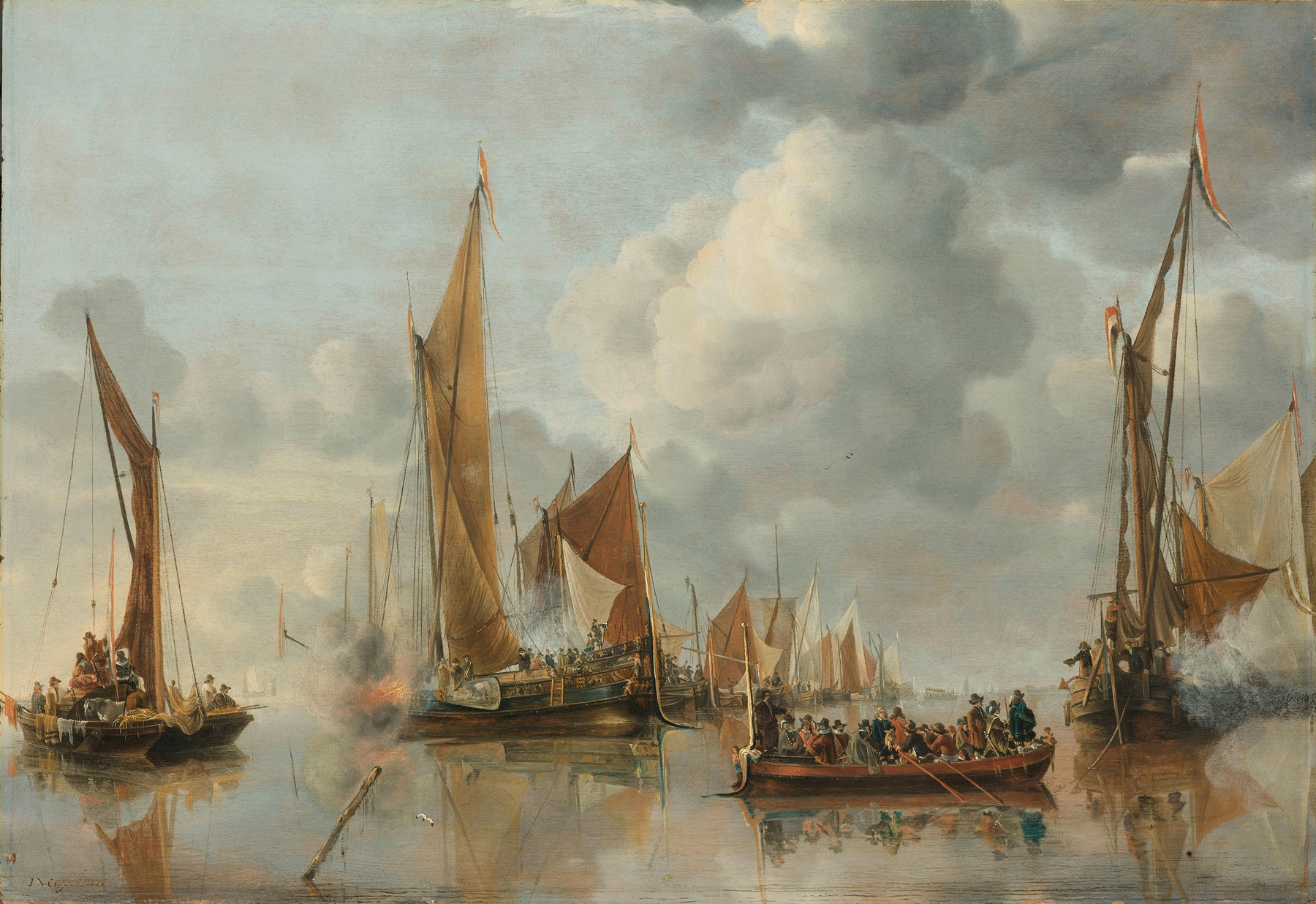
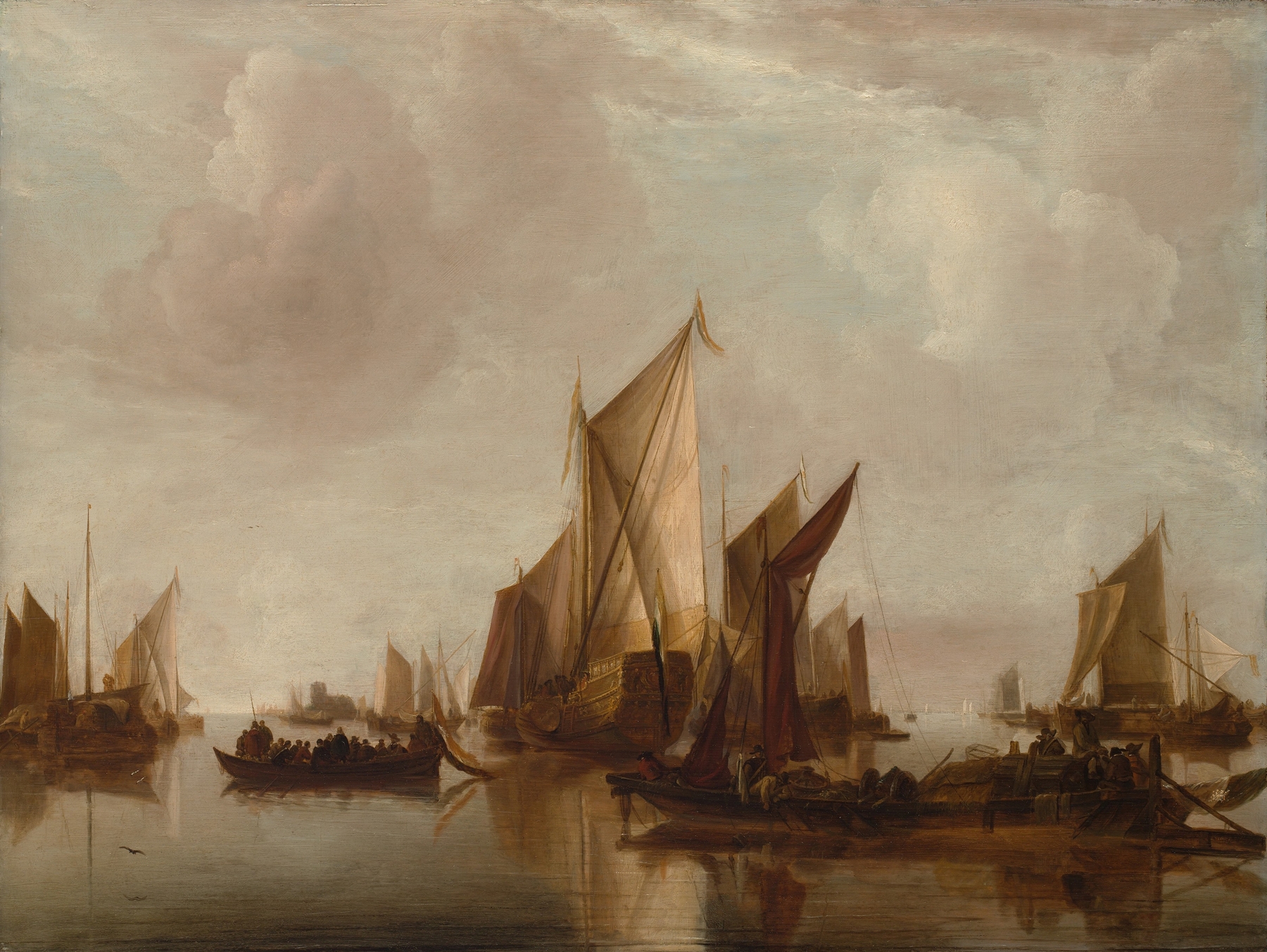
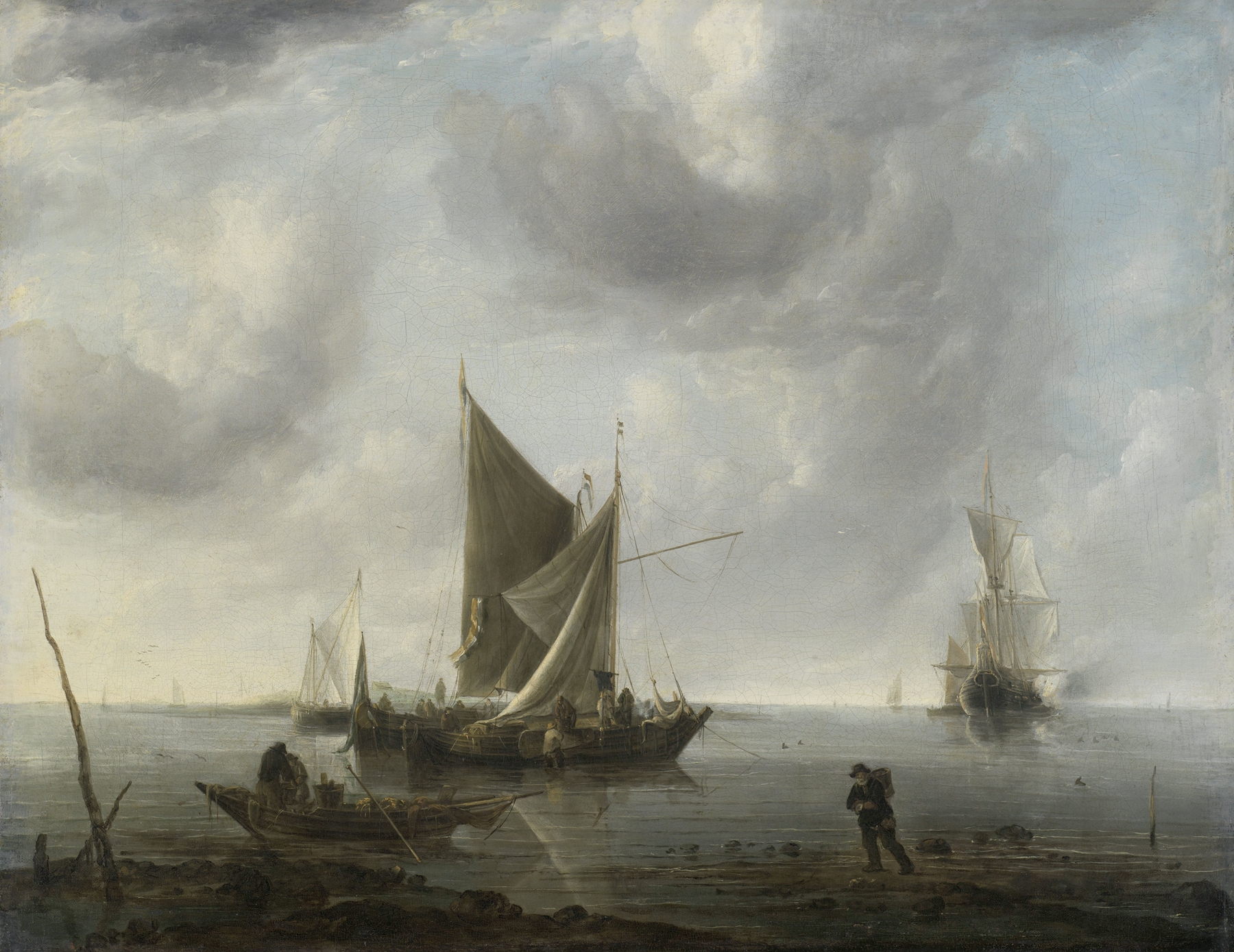
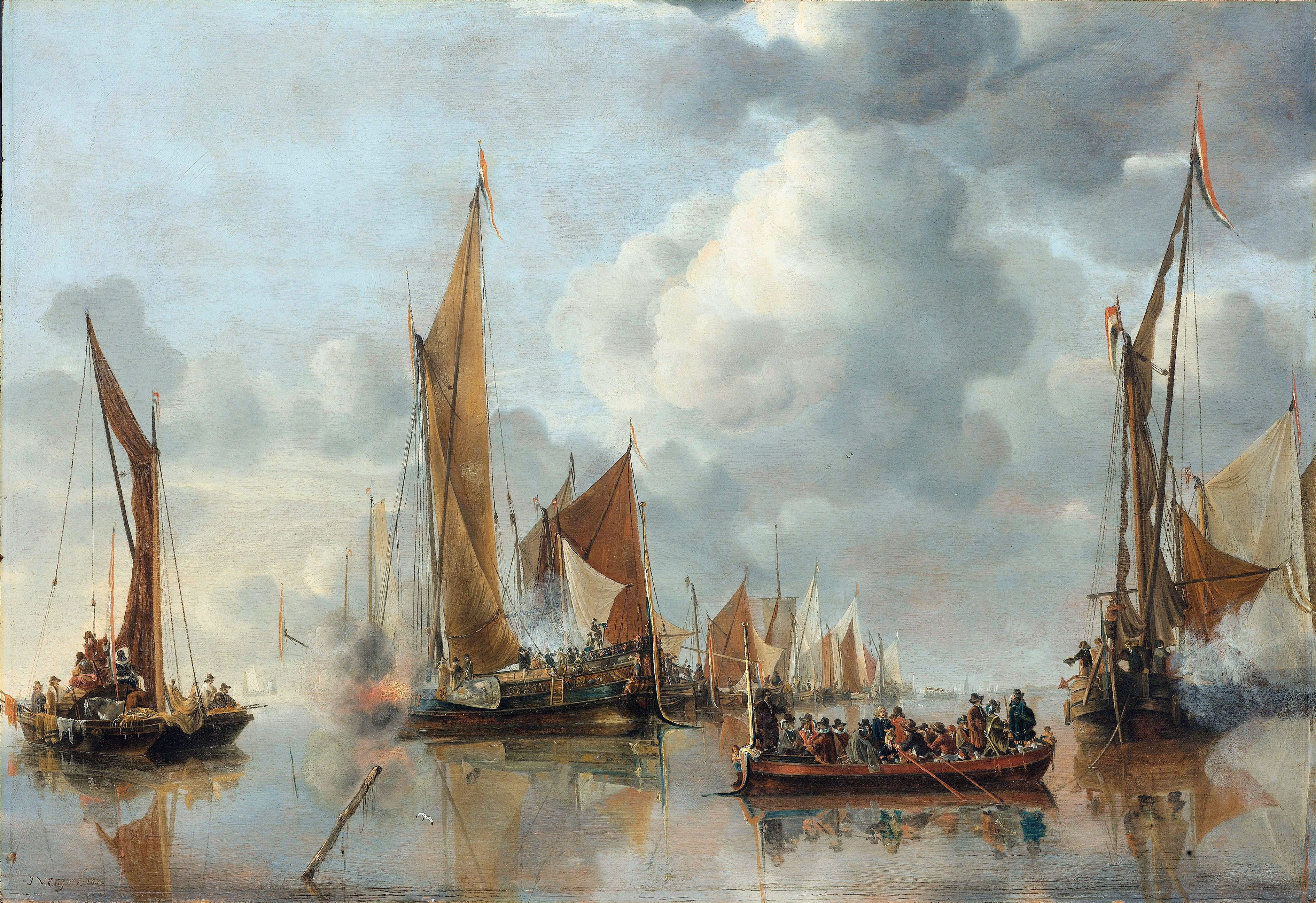
“Under the brush, chaos becomes grace.” In The Home Fleet Saluting the State Barge, Jan van de Cappelle captures a moment where the tumultuous power of the sea converges with the order of regal ceremony, transforming the ordinary into the extraordinary. Look to the right at the stately state barge, elegantly adorned and gliding majestically through the water. Notice how the shimmering light plays upon the surface, creating a delicate dance of reflections that heightens the scene's elegance. The meticulously rendered ships of the home fleet, arranged in a harmonious formation, draw the eye to their intricate details—from the billowing sails to the intricate woodwork.
The palette is rich but restrained, dominated by soft blues and greens that evoke a sense of calm amidst the bustling activity. Delve deeper, and you'll find contrasts that speak volumes: the magnificence of the barge against the background of the fleet, the stillness of the water contrasted with the vibrancy of the ship's movements, and the formal reverence of the crew juxtaposed with the untamed nature of the sea. Each element, from the sailors' disciplined gestures to the distant coastline, adds layers to the narrative, suggesting a celebration of both human achievement and the unpredictable beauty of the natural world.
In the mid-17th century, van de Cappelle painted this work during a period of flourishing maritime trade in Holland. The Dutch Golden Age saw the rise of naval power and prosperity, significantly influencing his focus on maritime themes. This artwork reflects not only his personal artistic journey but also the broader context of national pride and identity that characterized the era.