
The interior of the Redan taken from its left face, looking towards the salient angle, looking south — History & Facts
Is this a mirror — or a memory? In The interior of the Redan taken from its left face, looking towards the salient angle, looking south, the viewer is confronted with the stark reality of human conflict and the lingering shadows of mortality. Look to the foreground where the rugged, earthy textures of the fortification draw you in. The somber palette of muted browns and greys evokes a sense of desolation, while the interplay of light and shadow reveals the worn surfaces, hinting at the passage of time. Your gaze then travels to the dimly lit corners where remnants of human presence linger, suggesting both life and abandonment.
The angular composition directs the eye naturally along the lines of the structure, emphasizing its formidable presence yet fragile state. Within this scene lies a profound juxtaposition of strength and vulnerability. The solid walls speak to resilience, a defense against the uncertainties of war, while the emptiness resonates with the absence of life, breeding an unsettling silence. Those rough-hewn stones bear witness to stories untold, inviting contemplation on the fleeting nature of existence amidst the clamor of battle.
The weight of mortality hangs in the air, a silent testament to the cost of conflict. William Simpson created this piece in 1855 during the Crimean War, witnessing firsthand the harrowing realities of warfare. As a war artist, he aimed to document the stark landscapes and emotional toll on soldiers and civilians alike. This work not only serves as a historical record but also reflects the broader themes of loss and the human condition that permeated the art world of his time.
More Artworks by William Simpson
Browse all →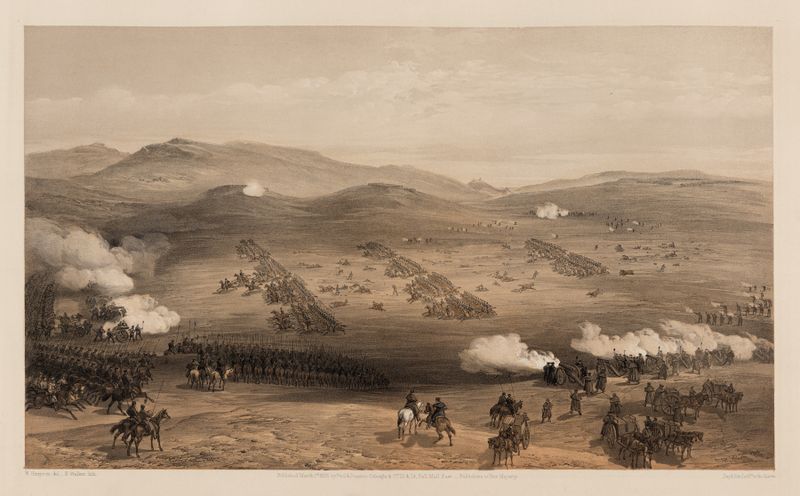
Charge of the light cavalry brigade, 25th Oct. 1854, under Major General the Earl of Cardigan
William Simpson

Charge of the heavy cavalry brigade, 25th Octr. 1854
William Simpson
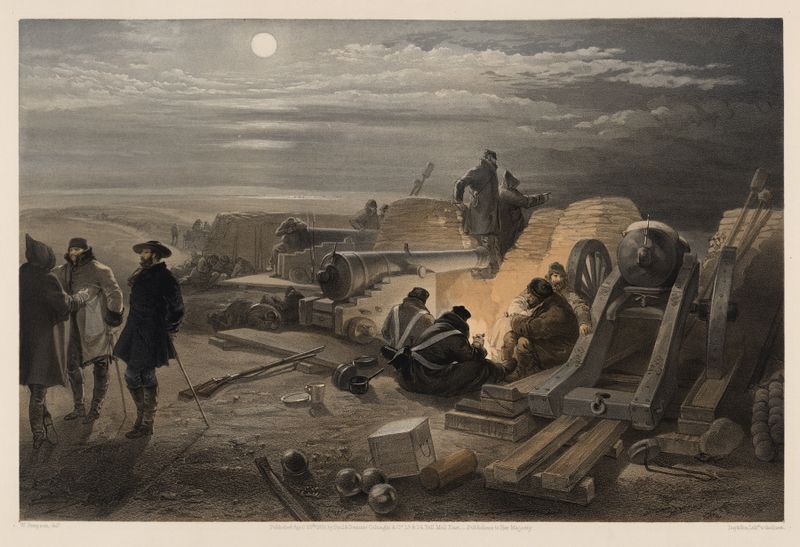
A quiet night in the batteries – a sketch in the Greenhill battery (Major Chapman’s), 29th Jany. 1855
William Simpson

The Great Wall of China
William Simpson
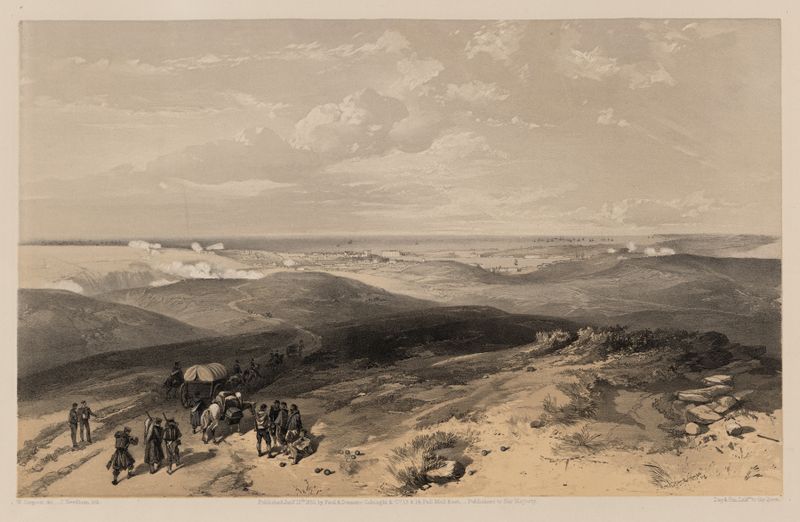
Sebastopol from the rear of the English batteries
William Simpson
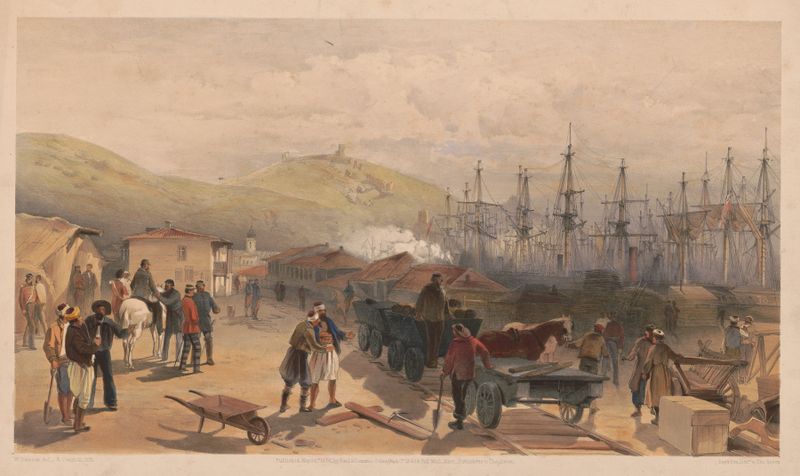
The railway at Balaklava, looking south
William Simpson

The Governor-General’s and Commander-in-Chief’s Camp at Jalandhar, 1 Febuary 1860
William Simpson
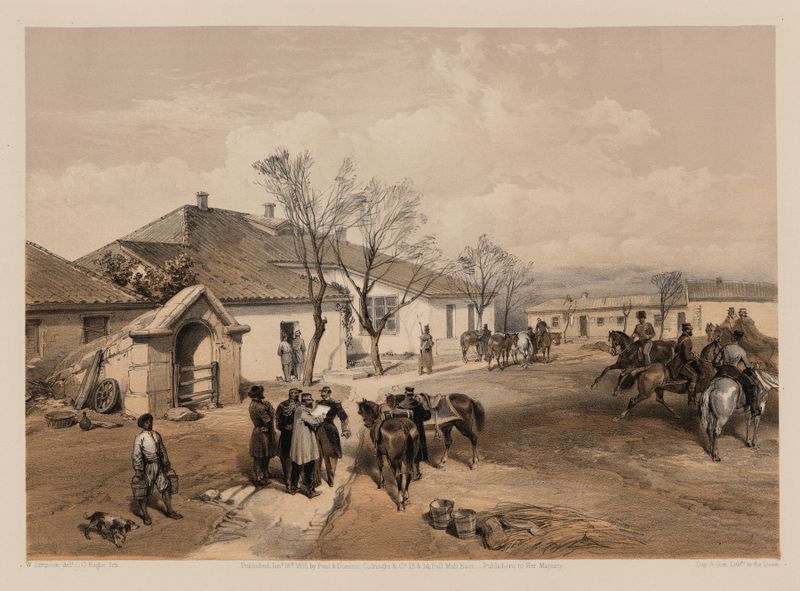
Lord Raglan’s head quarters at Khutor-Karagatch
William Simpson
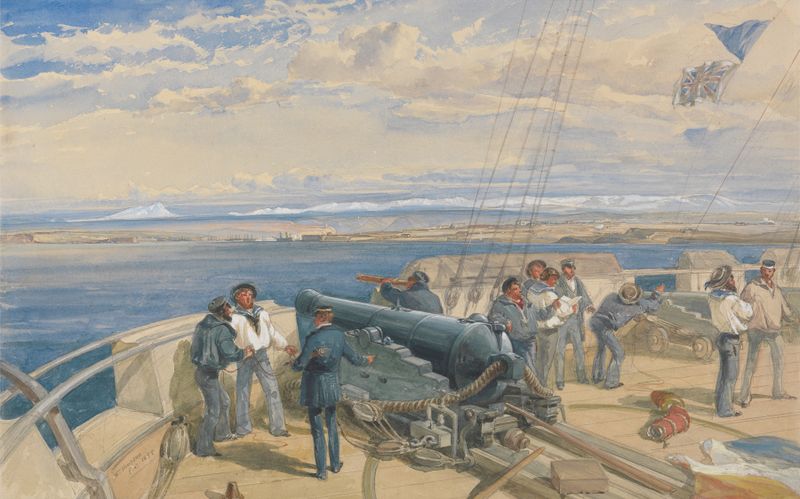
Sebastopol from the Sea, Sketched from the Deck of H. M. S. Sidon, Feb. 1855
William Simpson
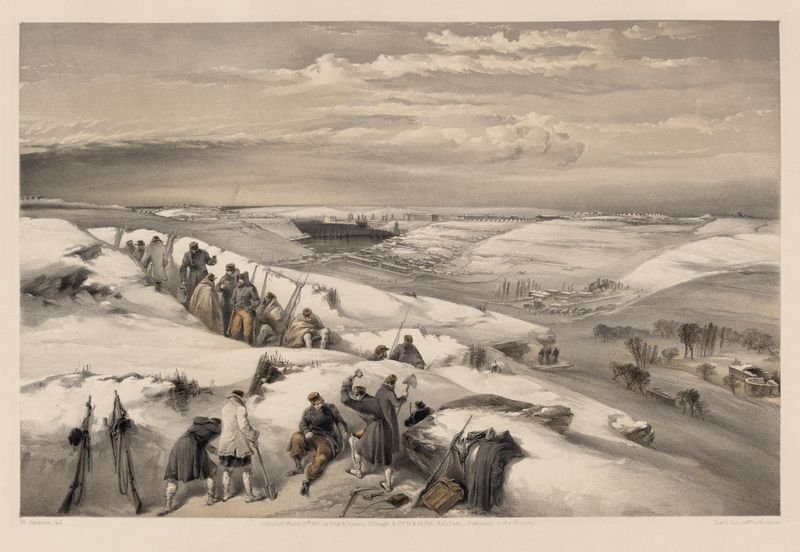
Sebastobol from the 26 gun battery on the extreme right of French attack
William Simpson
More Historical Art
Browse all →
The Night Watch Militia Company of District II under the Command of Captain Frans Banninck Cocq
Rembrandt van Rijn

Lincoln Memorial
Henry Bacon

The Third of May 1808
Francisco de Goya

Isaac and Rebecca, Known as ‘The Jewish Bride’
Rembrandt van Rijn

The Charge of the Mamelukes (1814)
Francisco de Goya

De vier ruiters van de apocalyps
Albrecht Dürer