
The Kelpie of Corrievreckan — History & Facts
There is a wild, unsettling energy that pulls the viewer straight into the heart of The Kelpie of Corrievreckan. The kelpie, crowned with a horned helm and astride a gray horse, seizes the girl Jessie in a moment that teeters between myth and nightmare. The sweep of her golden hair, the limp grace of her body, and the kelpie’s determined, almost triumphant posture all conspire to freeze the moment at the edge of disaster.
The rocks close in like jaws, and the water, alive with bubbles and darting creatures, seems to beckon them downward. Every detail, from the kelpie’s flowing cloak to the startled crab below, is designed to keep the eye moving and the heart unsettled. This illustration, created by Warwick Goble for Dora Owen’s 1920 The Book of Fairy Poetry, is steeped in the visual language of early twentieth-century fairy tale art. Goble’s palette is delicate but never soft; the muted greys and greens of the sea cave are punctuated by the vivid red of Jessie’s dress and the kelpie’s cloak, drawing the viewer’s focus to the central drama.
The kelpie’s horned helm and the string of pearls on the horse hint at both menace and enchantment, while the underwater world—crabs, seaweed, and serpentine forms—suggests a realm both beautiful and perilous. In an era when illustrators like Arthur Rackham and Edmund Dulac were reimagining folklore for new audiences, Goble’s work stands out for its blend of danger and lyricism, inviting the viewer to linger at the threshold between land and legend.
More Artworks by Warwick Goble
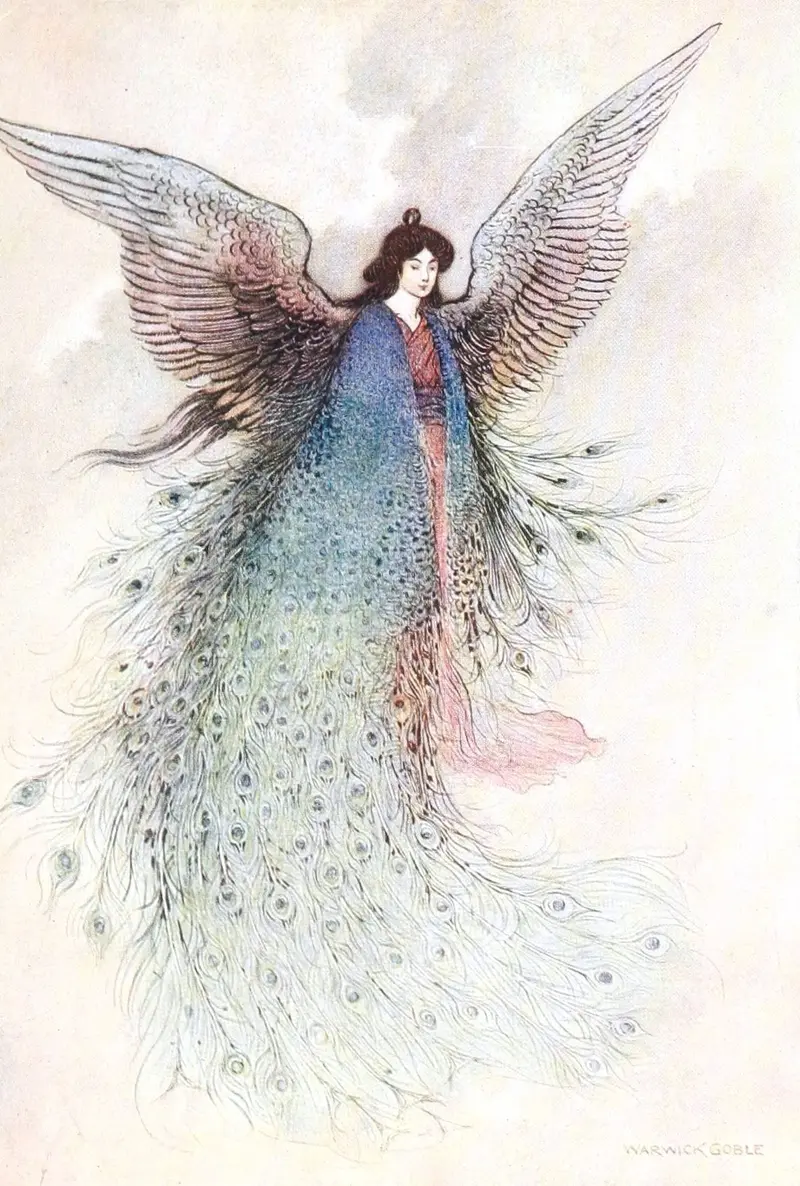
The Moon Maiden (Green Willow)
Warwick Goble
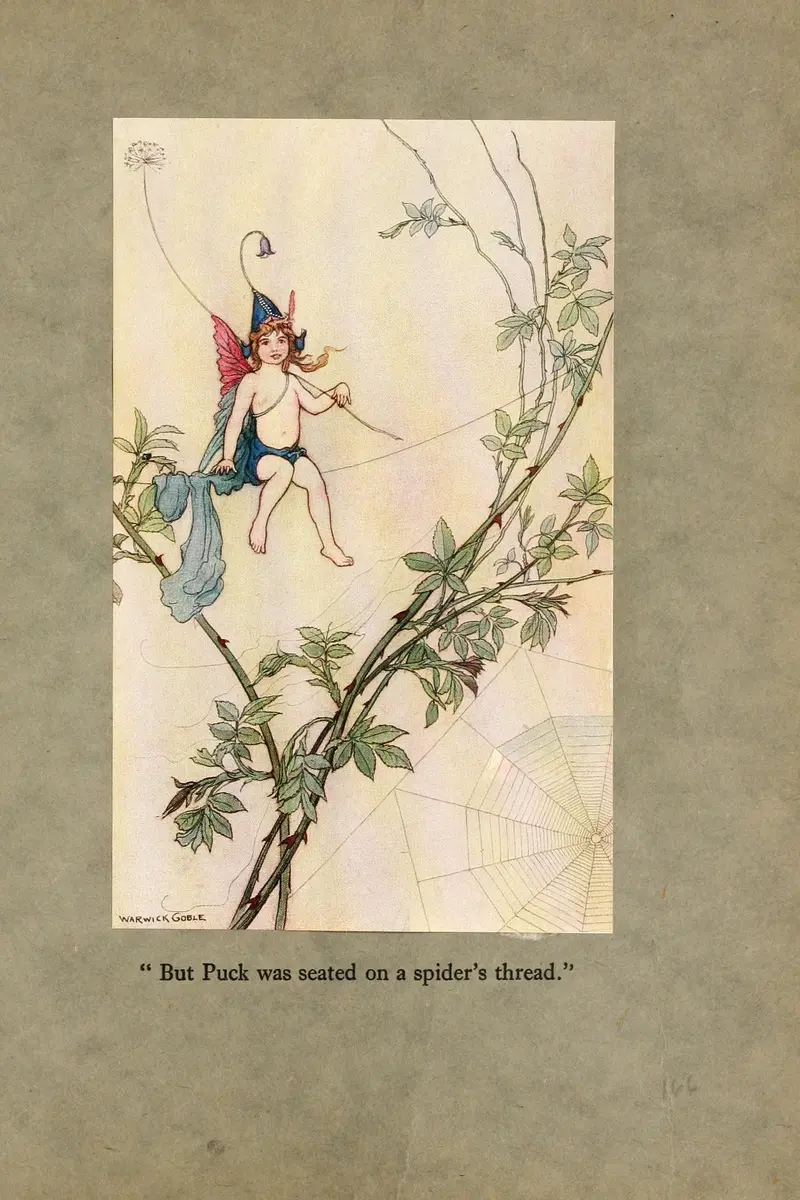
Puck
Warwick Goble

The Ordeal of Queen Draupadi
Warwick Goble

Momotaro
Warwick Goble
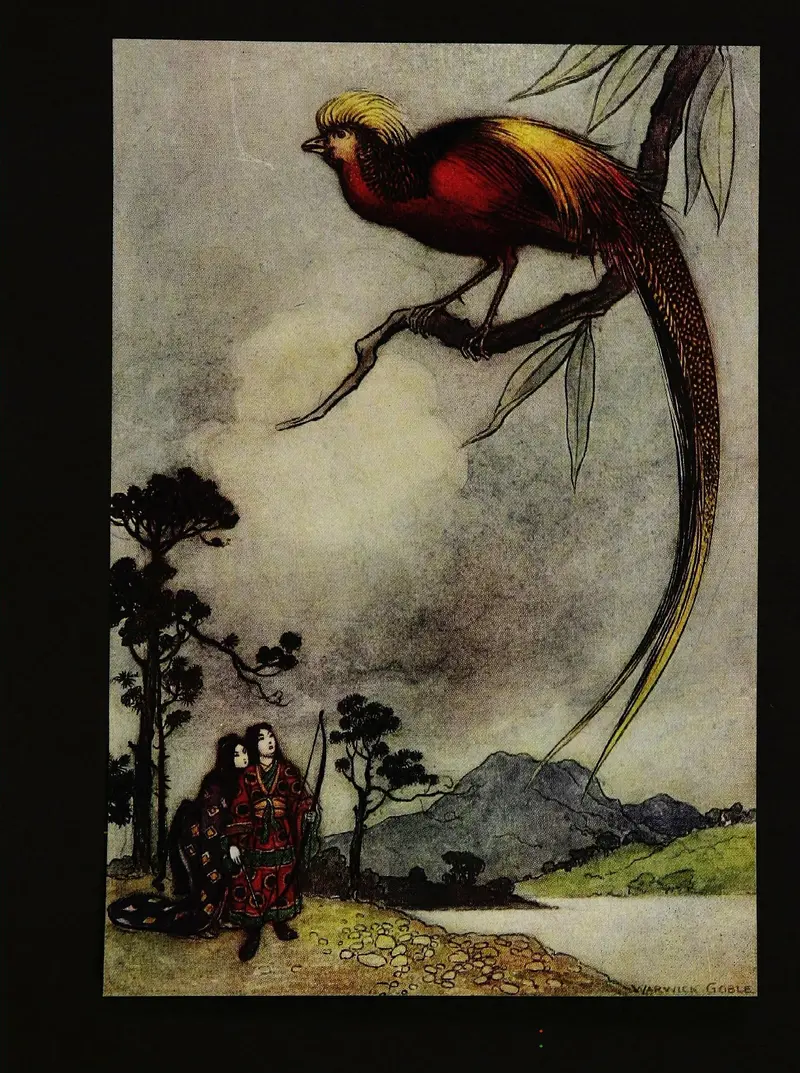
The Singing Bird of Heaven
Warwick Goble
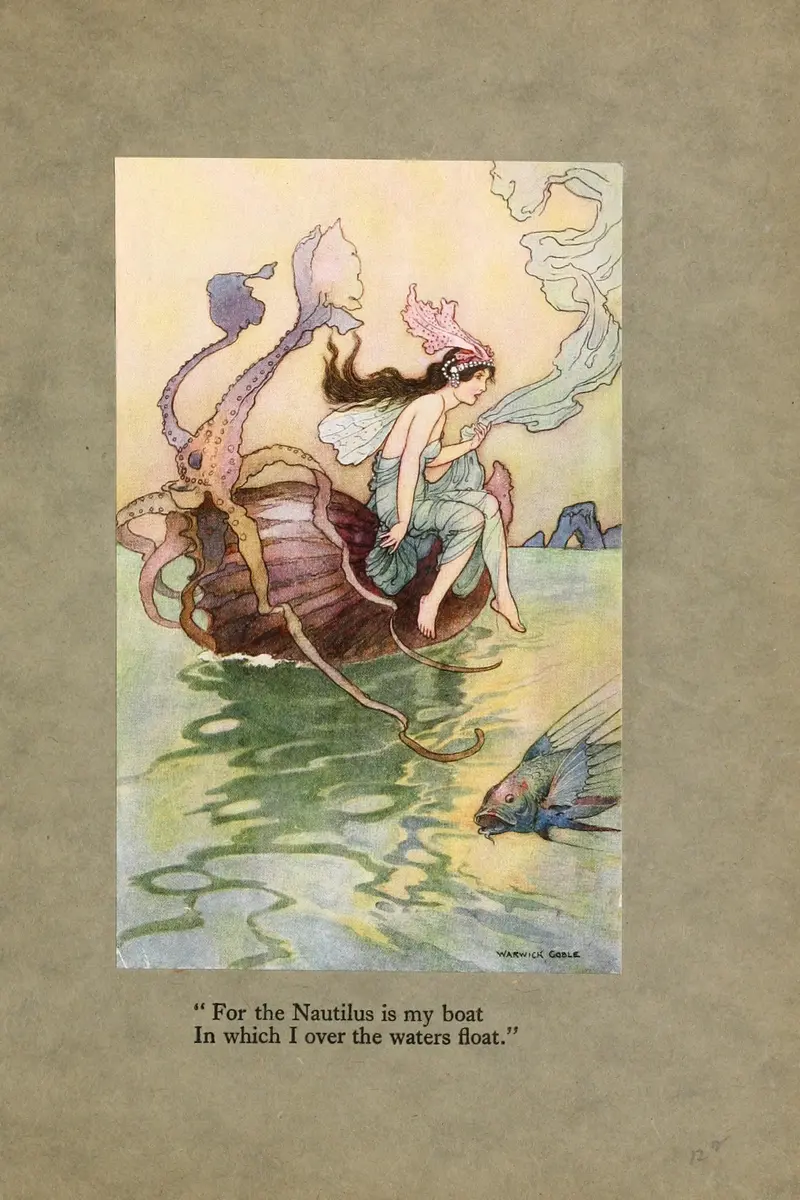
Fairies on the Seashore
Warwick Goble
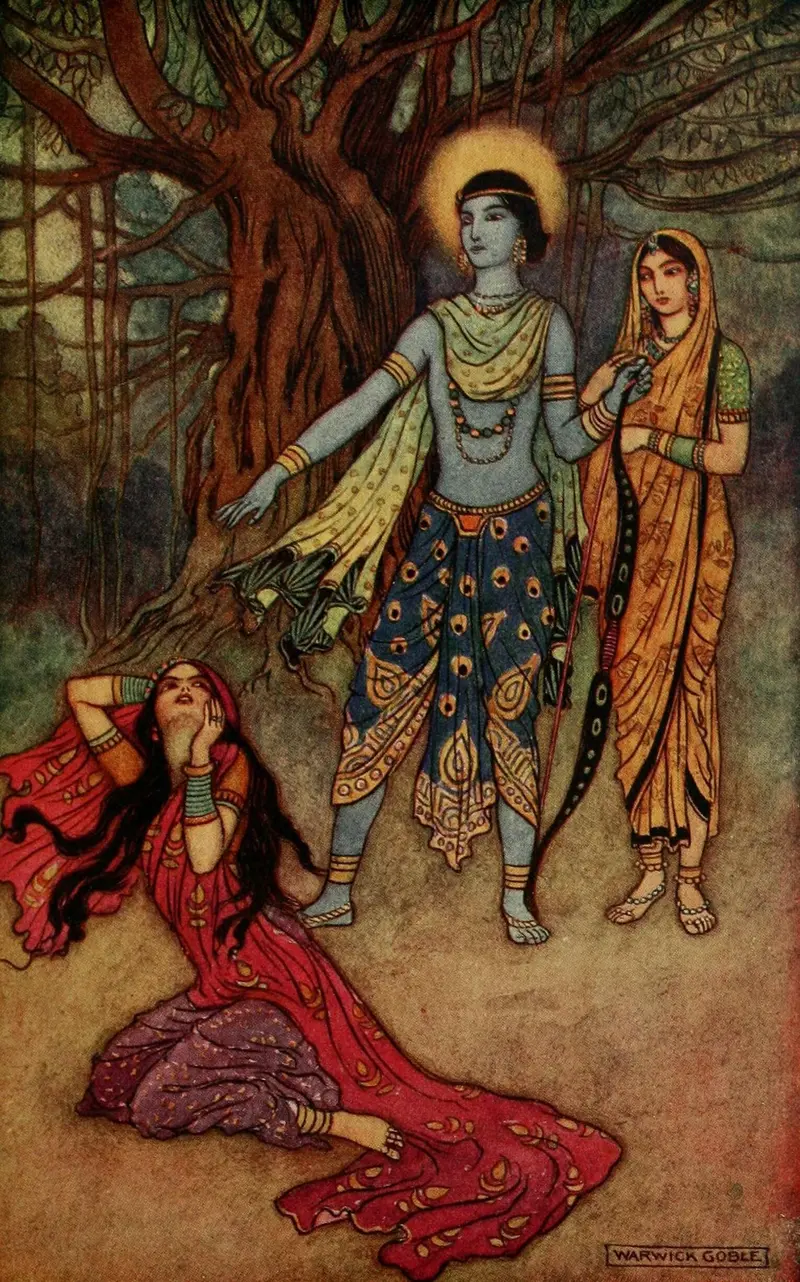
Rama Spurns the Demon Lover
Warwick Goble
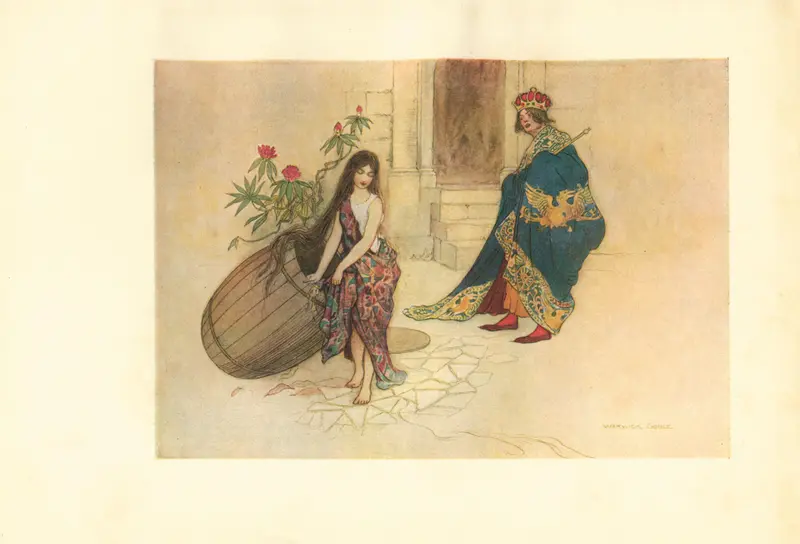
Cannetella Released from the Cask
Warwick Goble
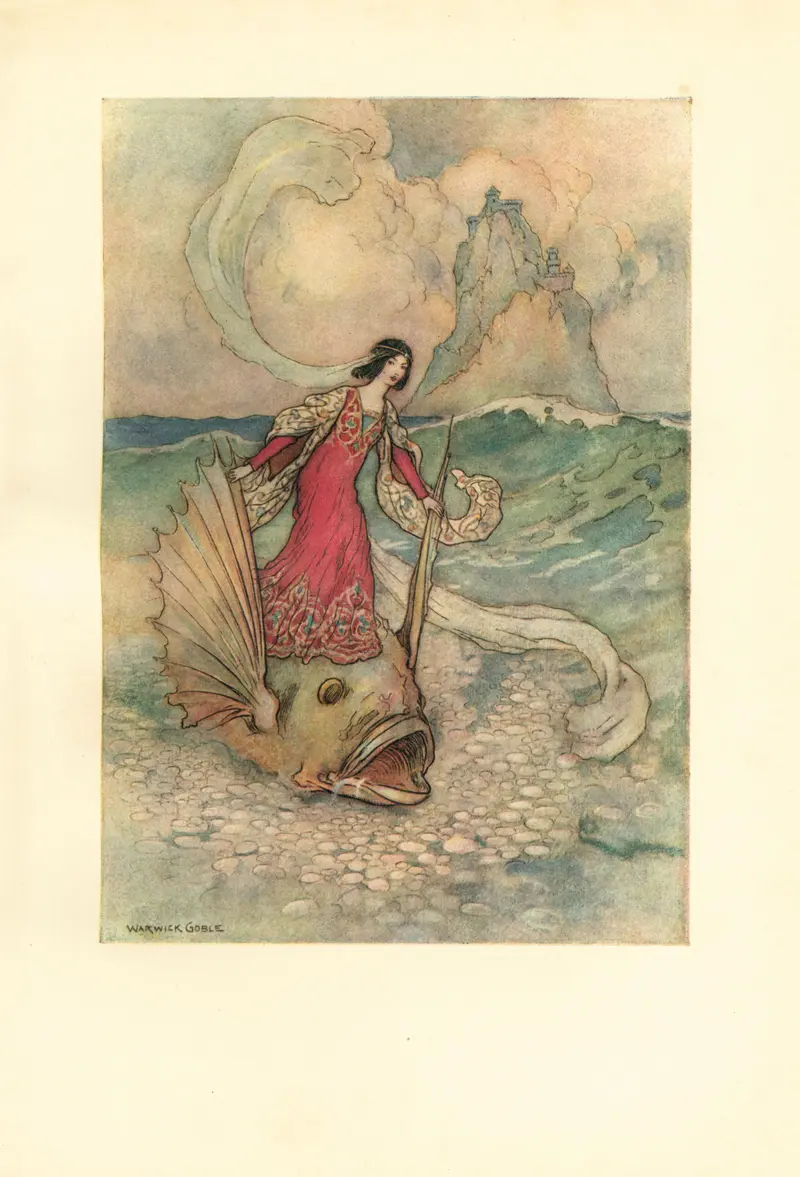
Rita Riding on the Dolphin
Warwick Goble
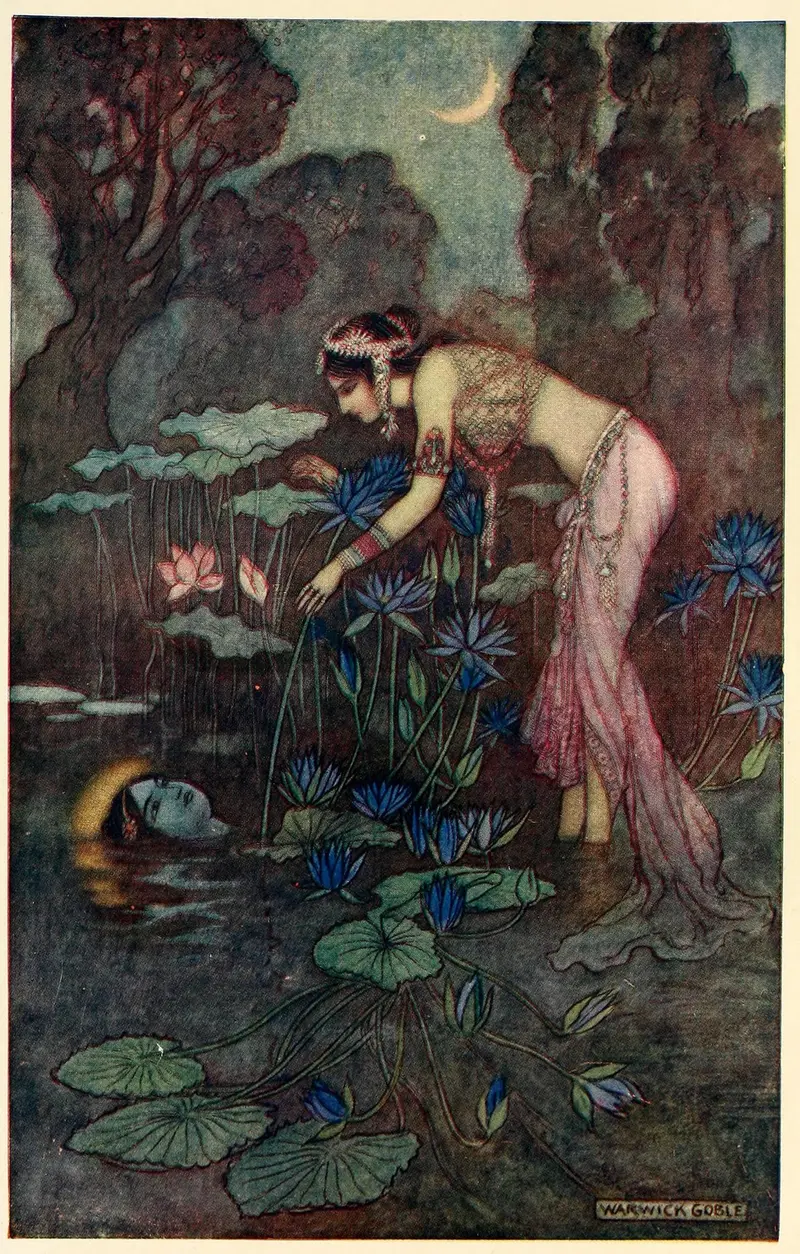
Sita Finds Rama Among Lotus Blooms
Warwick Goble





