
The Large Tree — History & Facts
Can paint confess what words never could? In The Large Tree, the canvas breathes with an unspoken yearning, a vivid hope that pulses beneath each brushstroke. Look to the center at the towering tree, its lush green canopy spilling over the edges like a promise of life. Notice how Gauguin’s bold use of color transforms the ordinary into the extraordinary; the tree's vibrant hues contrast sharply with the muted tones of the background. The play of light dances on the leaves, giving them an almost otherworldly glow, while the earthy browns of the trunk ground the composition, inviting contemplation. As you delve deeper, consider the juxtaposition of the tree against the desolate landscape surrounding it.
The sparsely populated horizon hints at isolation, yet the tree stands resolute, a beacon of resilience amid the emptiness. The thick, swirling strokes convey a sense of movement, a whisper of nature's spirit that transcends the stillness. This evokes a profound emotional tension, suggesting themes of endurance and the bittersweet nature of hope. In 1891, Gauguin was in Tahiti, seeking escape from European society and its constraints.
This period marked a significant turning point in his career, as he began to embrace vibrant colors and primitive motifs, striving to capture the essence of life in a new world. Influenced by his longing for authenticity and meaning, The Large Tree reflects his desire to communicate feelings that words alone could not convey, solidifying his legacy as a pioneer of modern art.
More Artworks by Paul Gauguin
Browse all →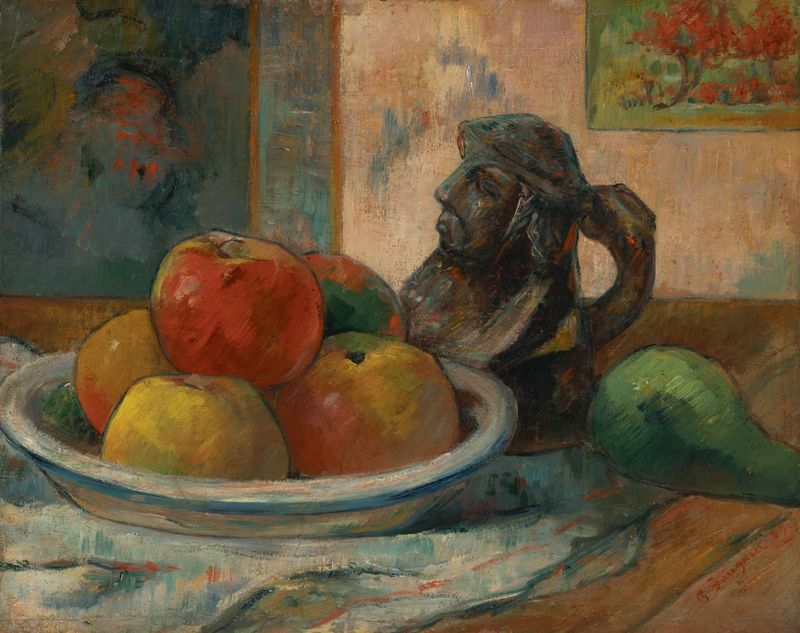
Still Life with Apples, a Pear, and a Ceramic Portrait Jug
Paul Gauguin
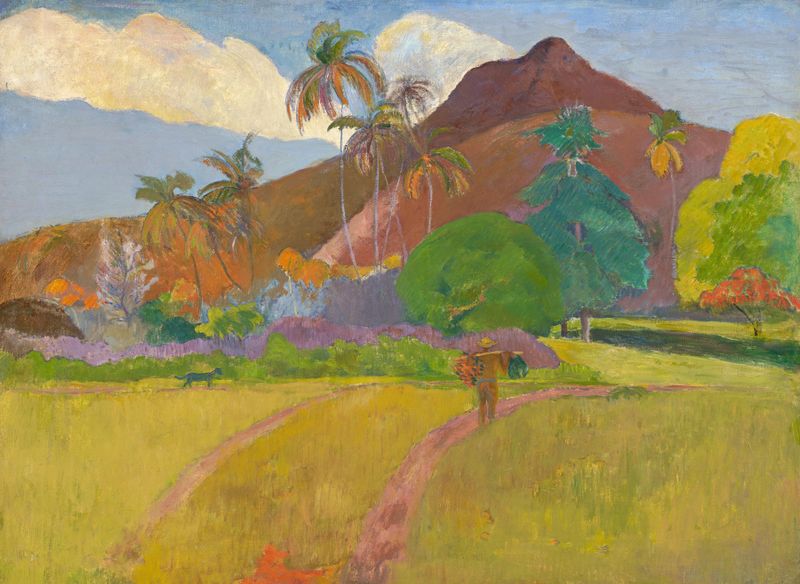
Tahitian Landscape
Paul Gauguin

Landscape near Pont-Aven
Paul Gauguin

No te aha oe riri (Why Are You Angry?)
Paul Gauguin
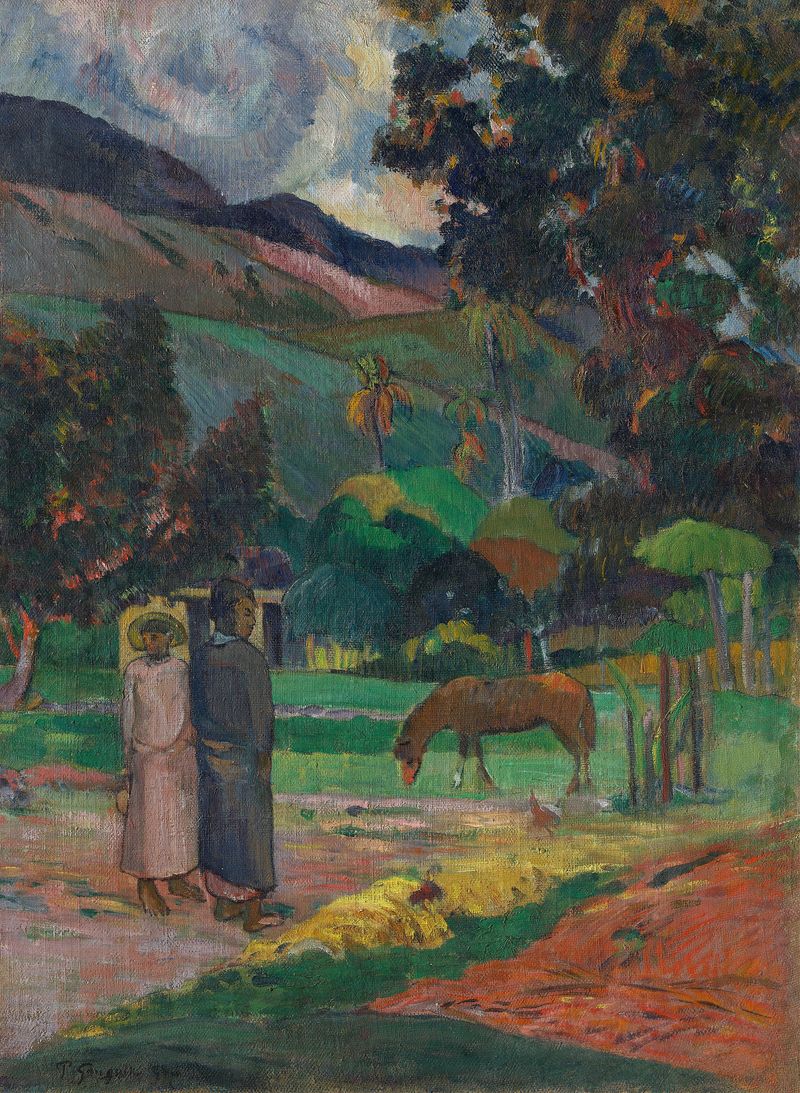
Tahitian Landscape
Paul Gauguin
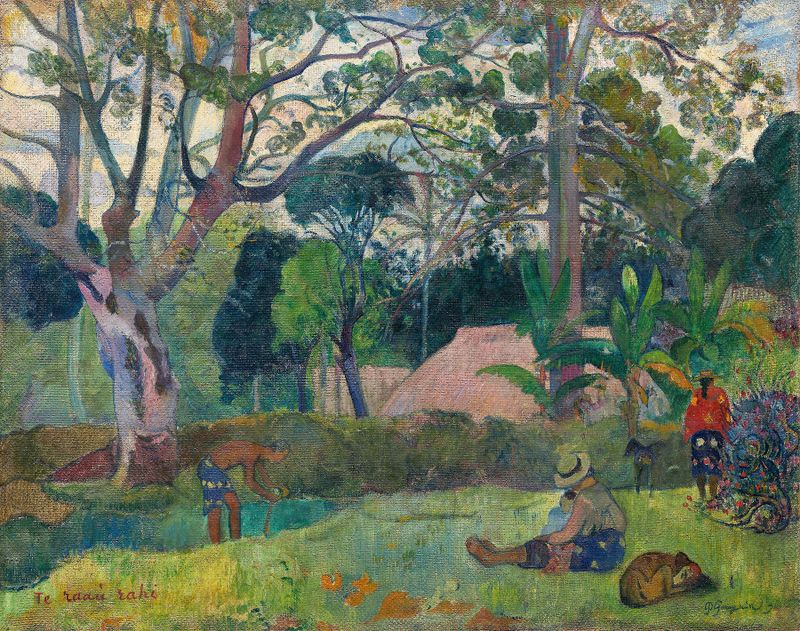
Te raau rahi (The Big Tree)
Paul Gauguin

Landscape at Le Pouldu
Paul Gauguin

Landscape of Brittany
Paul Gauguin

Poèmes Barbares
Paul Gauguin
Mahana no atua (Day of the God)
Paul Gauguin





