
The Man of Sorrows — History & Facts
When The Man of Sorrows by Sandro Botticelli resurfaced in the early 21st century after centuries in private hands, it sent ripples through the art world—not only for its rare subject in Botticelli’s late career, but for its intense, almost mystical presence. Scholars immediately noted that this depiction of Christ, painted around 1500, stands apart from the artist’s earlier mythological works. The painting’s haunting directness and psychological depth have led to speculation about Botticelli’s own spiritual crisis in his later years, possibly influenced by the fiery sermons of Savonarola in Florence.
Unlike the graceful Venus or Primavera, here Botticelli confronts the viewer with suffering and redemption. At the center of the composition, Christ gazes outward, his eyes heavy with sorrow, his hands bound by a rope and crowned with thorns. Blood trickles down his forehead, and angels flank him, holding the instruments of the Passion: the cross, nails, and scourge. The moment Botticelli chooses is not the narrative climax, but the aftermath—Christ’s suffering is complete, and he meets the viewer’s gaze with a mixture of pain and compassion.
The starkness of the background and the directness of Christ’s stare recall Northern European devotional images, such as those by Hans Memling, yet Botticelli’s Christ is unmistakably Florentine in his delicate features and linear grace. The painting invites contemplation, drawing the viewer into a silent dialogue with the suffering figure. The exact origins of The Man of Sorrows remain uncertain; there is no surviving record of its original patron or commission. Its small scale suggests it was intended for private devotion rather than a church.
Over the centuries, the painting passed quietly through collections, its attribution occasionally debated until technical analysis confirmed Botticelli’s hand. Today, it stands as a rare testament to the artist’s late period, when religious fervor and personal introspection replaced the mythological fantasies of his youth. Its recent public reappearance has sparked new interest in Botticelli’s spiritual journey at the turn of the 16th century.
More Artworks by Sandro Botticelli
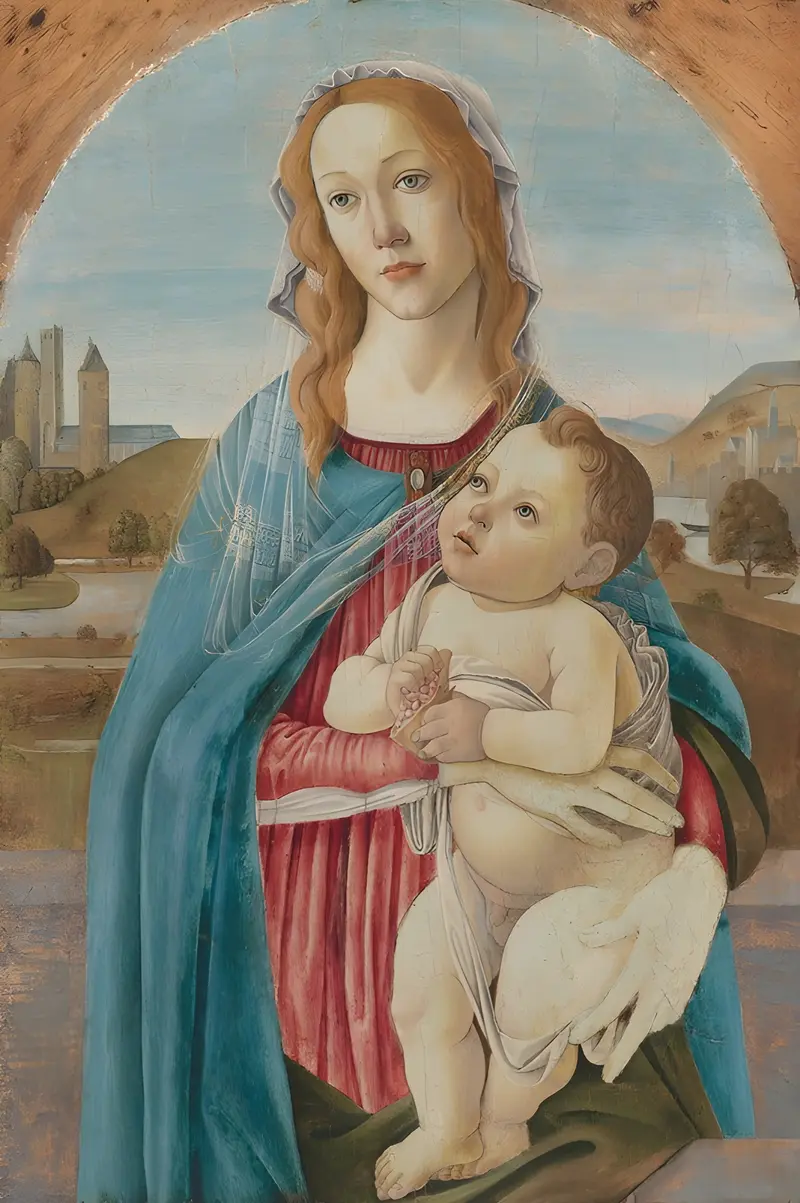
Virgin and Child
Sandro Botticelli
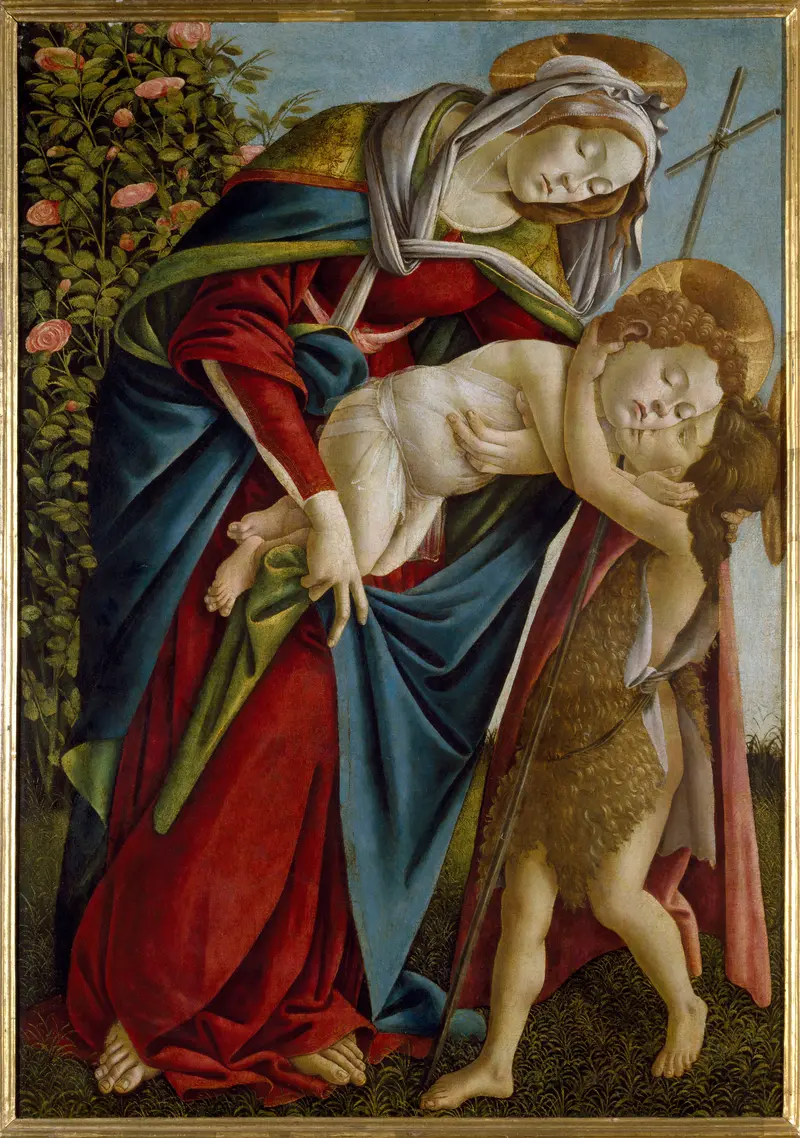
Madonna and Child and the Young St John the Baptist
Sandro Botticelli
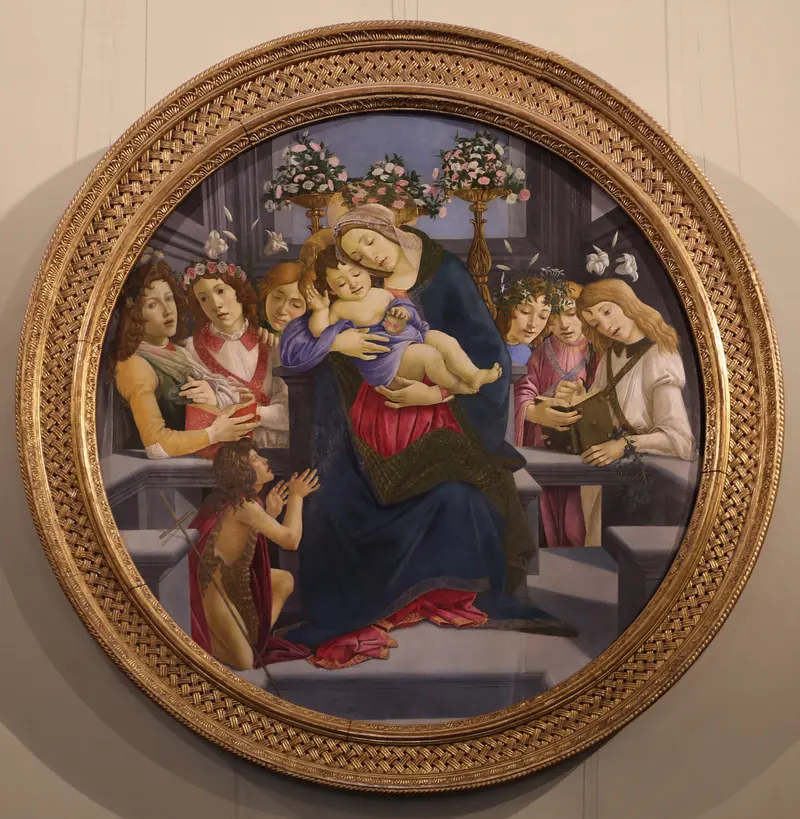
Madonna and Child with six angels and Saint John the Baptist as Child
Sandro Botticelli
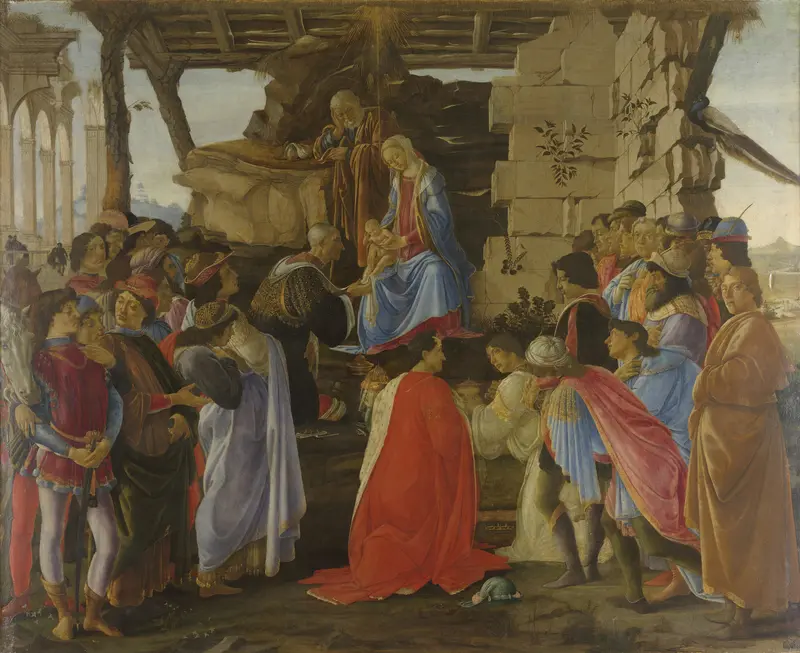
Adoration of the Magi
Sandro Botticelli

Virgin and Child with the Young Saint John the Baptist
Sandro Botticelli
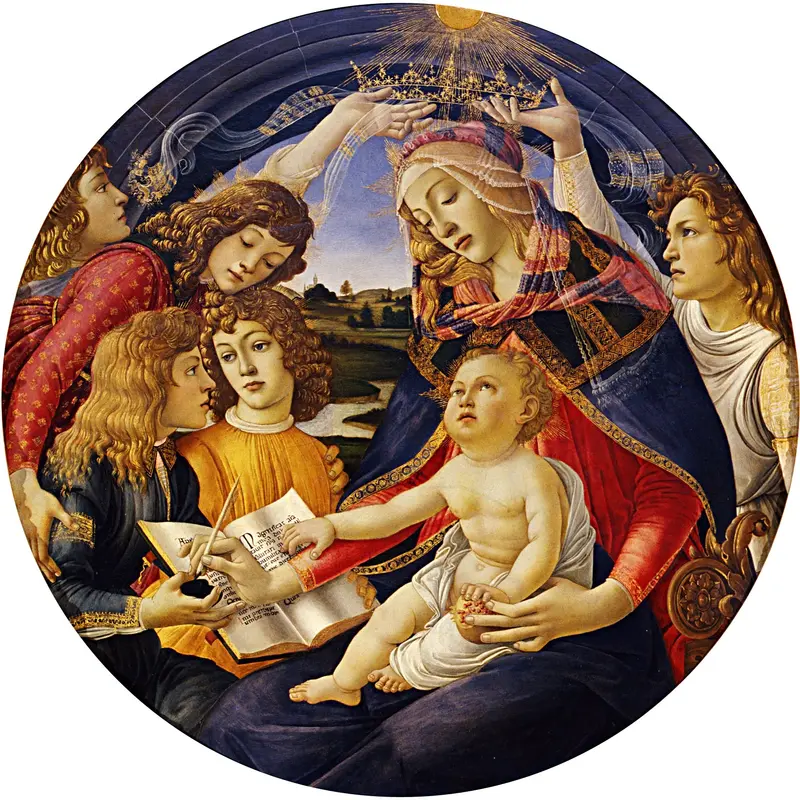
Madonna of the Magnificat
Sandro Botticelli
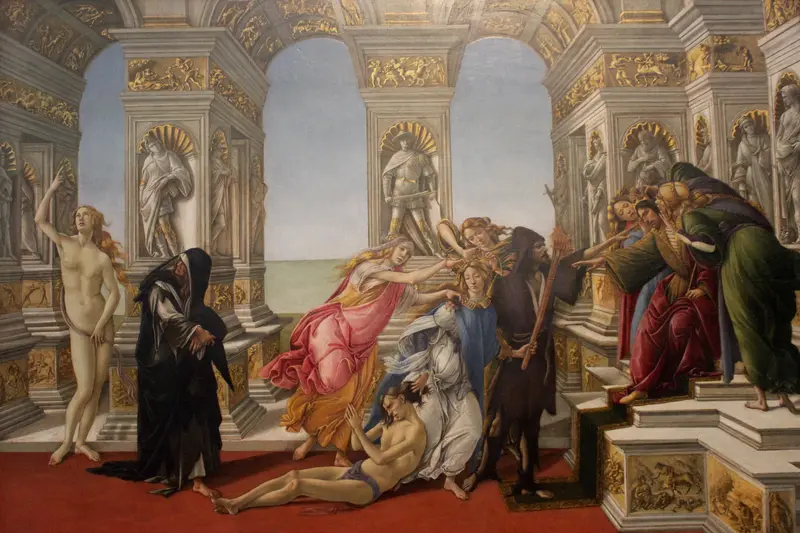
Calumny of Apelles
Sandro Botticelli
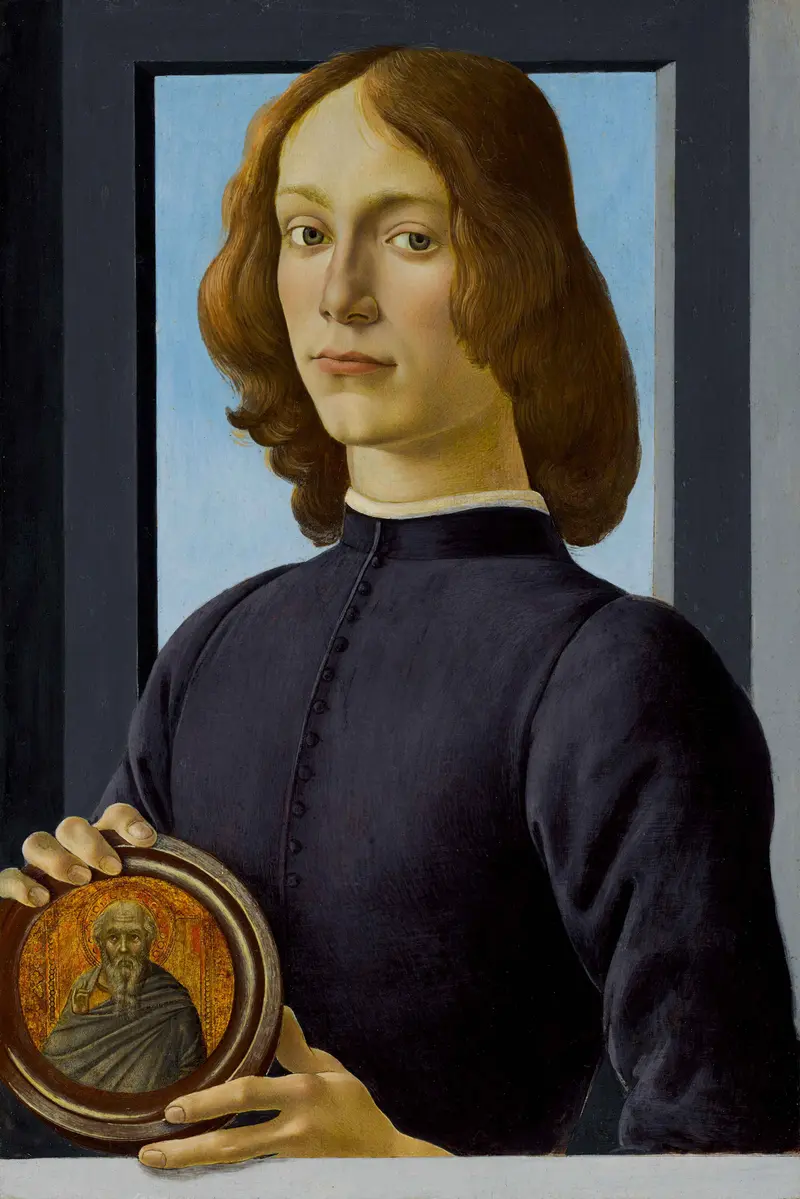
Portrait of a young man holding a roundel
Sandro Botticelli

The Trinity with Saint Mary Magdalene and Saint John the Baptist, the Archangel Raphael and Tobias
Sandro Botticelli
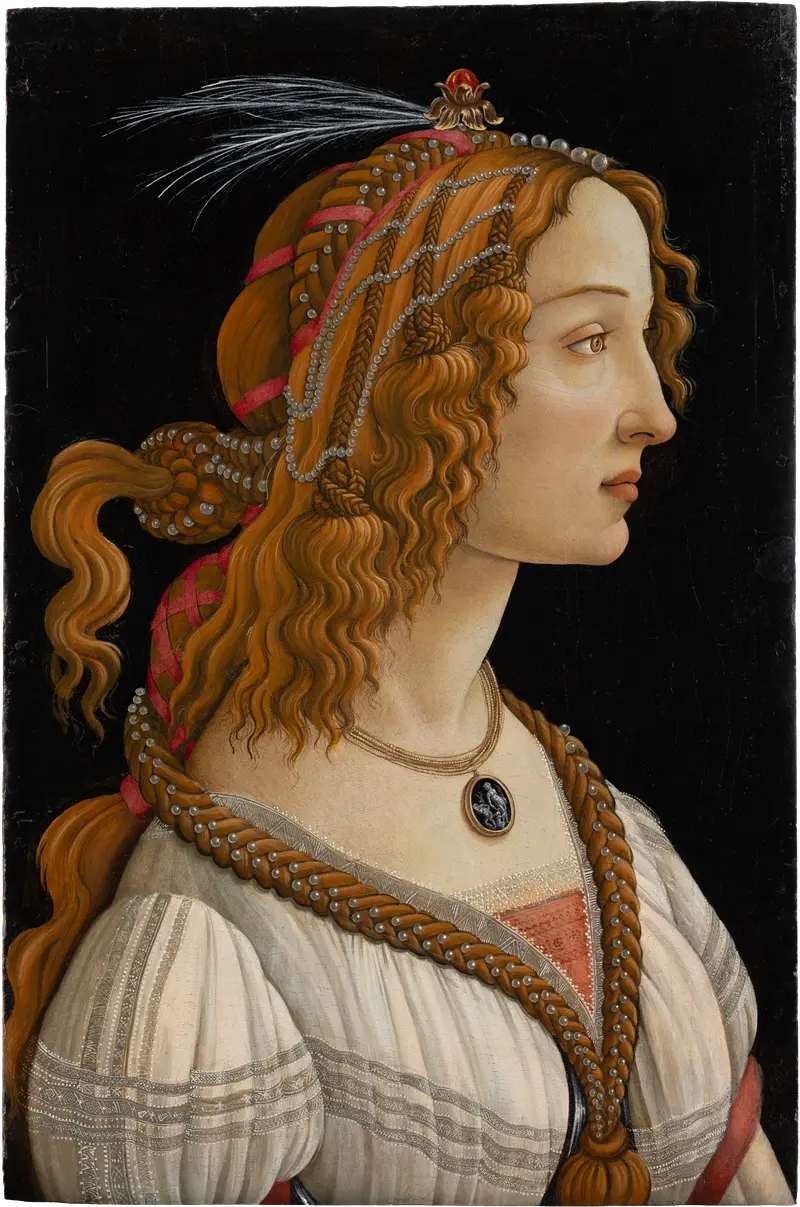
Idealized Portrait of a Lady (Portrait of Simonetta Vespucci as Nymph)
Sandro Botticelli





