
The Marble Rocks, Nerbudda Jubbolpore — History & Facts
In a world increasingly dominated by chaos and noise, how often do we pause to embrace the void that art can unveil? Look closely at the expansive composition, where the interplay of light and shadow dances upon the rugged surface of the marble rocks. The subtle gradient of blues and whites speaks to the artist's masterful command of the watercolor medium, drawing your gaze toward the beckoning embrace of the river below. Notice how the distant mountains rise against the horizon, their ethereal presence almost whispering of solitude and the infinite nature of landscape. As you delve deeper, the contrasting textures reveal emotional tensions.
The smoothness of the water reflects not only the scenery above but also the stillness of thought, while jagged rock formations remind us of the rough edges of existence. This juxtaposition of serenity and turmoil invites contemplation of the spaces we navigate—both in nature and in our own lives. The void is not merely an absence, but a presence that underscores the beauty of the untouched. The artwork emerged during a period when the artist primarily worked in Europe and was influenced by the Romantic ideals of nature and exploration.
Although the exact date remains unknown, Lear was honing his skills between the late 1830s and 1860s, a time when his journey as a travel writer and painter began to flourish. This canvas reflects not only the landscapes he encountered but also his profound quest for capturing the essence of beauty amid the transient and ephemeral.
More Artworks by Edward Lear
Browse all →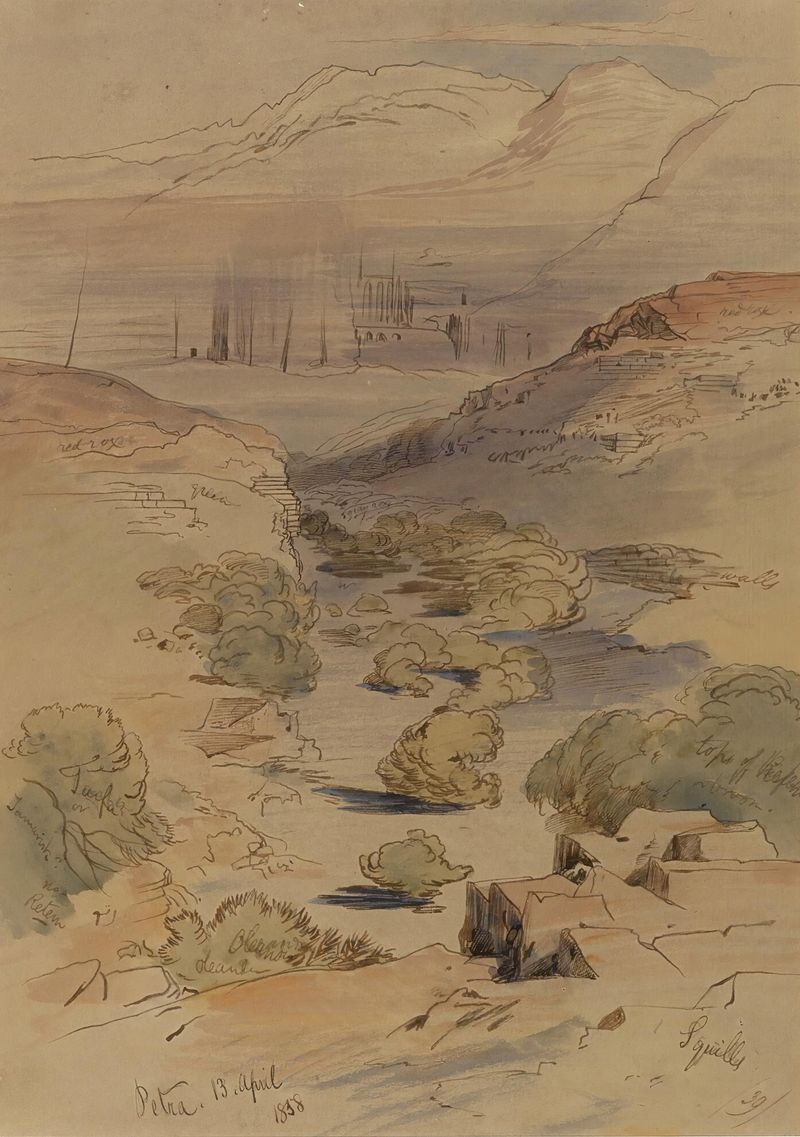
Petra
Edward Lear
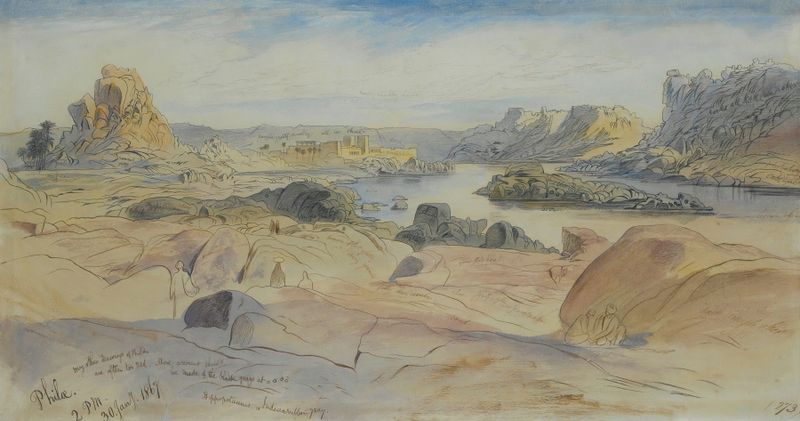
Philae, Egypt
Edward Lear
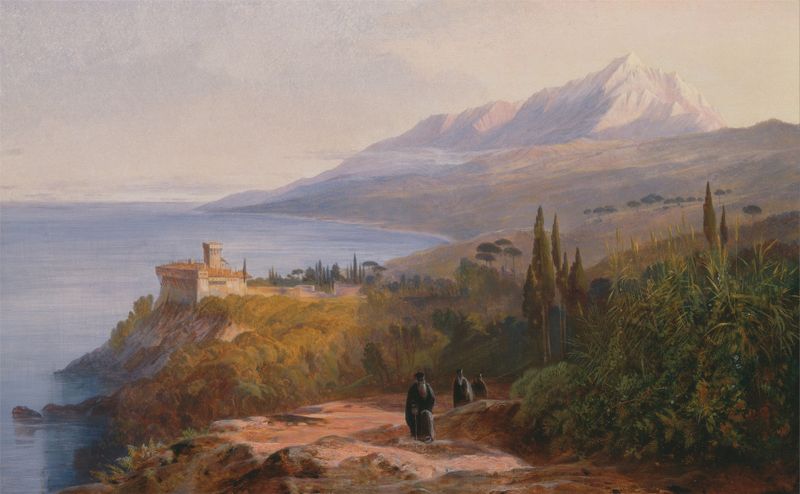
Mount Athos and the Monastery of Stavronikétes
Edward Lear
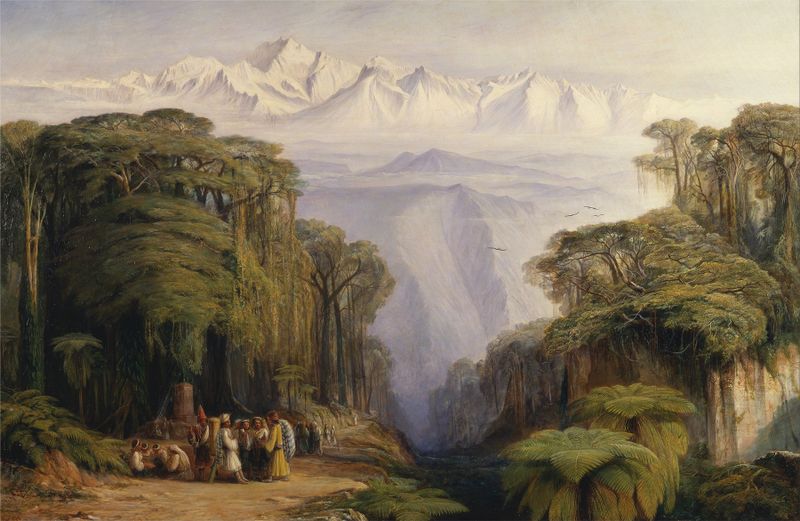
Kangchenjunga from Darjeeling
Edward Lear
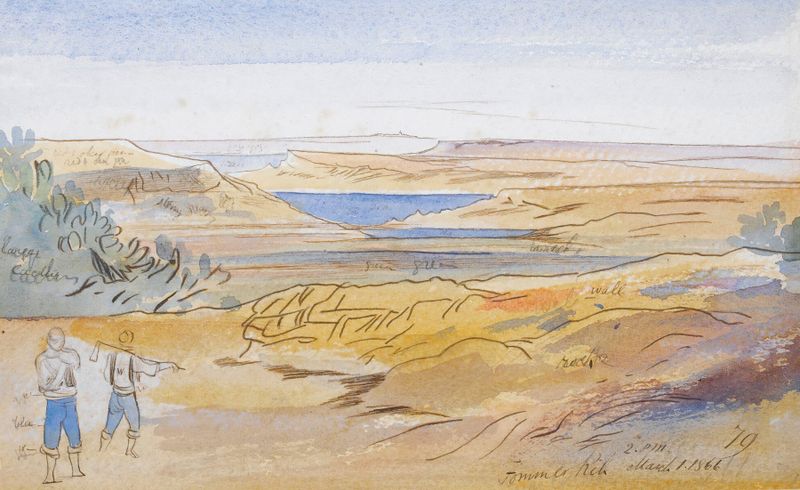
Fomm Ir-Rih, Malta
Edward Lear
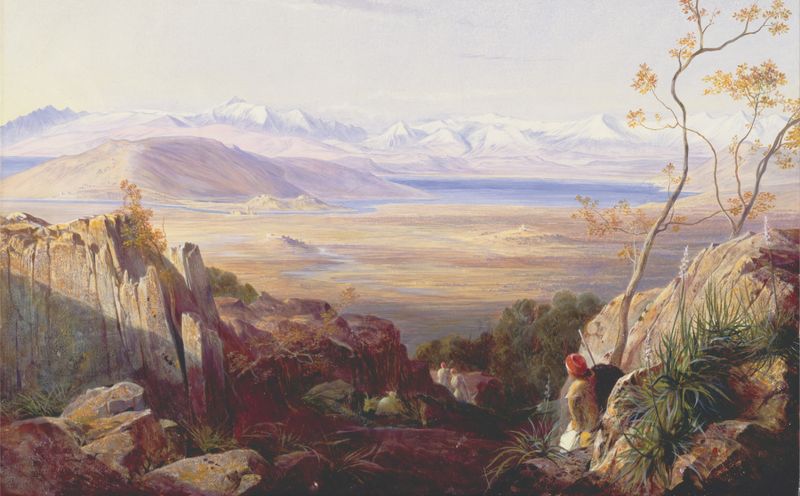
Butrinto, Albania
Edward Lear
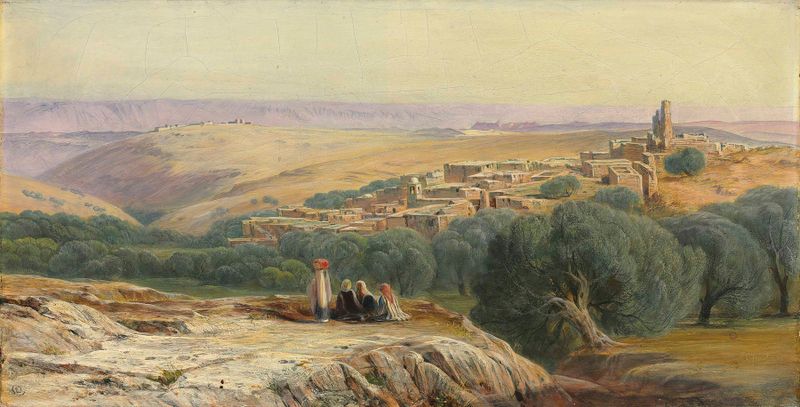
The Plains of Bethany
Edward Lear

Karnak, 9-30 pm, 22 January 1867
Edward Lear
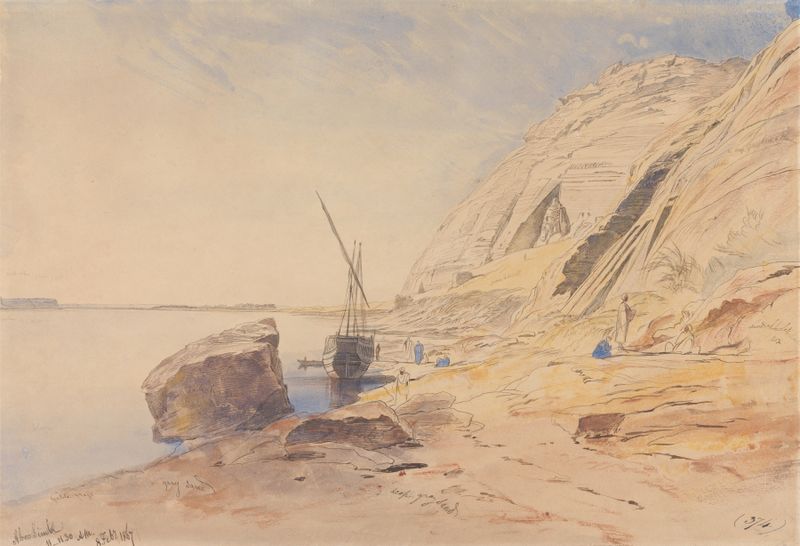
Abu Simbel, 11-11;30 am, 8 February 1867 (374)
Edward Lear

A View Of Mount Athos And The Pantokrator Monastery, Greece
Edward Lear





