
The Marne Near Créteil — History & Facts
Did the painter know this moment would outlive them? In The Marne Near Créteil, emptiness transforms into a haunting echo of tranquility, inviting the viewer to linger in its stillness. Look to the foreground, where the gentle curve of the river draws your eye, leading toward the distant horizon. The muted palette of greens and blues conveys a somber mood, while the delicate brushwork captures the fleeting light as it dances upon the water's surface. Notice how the soft clouds, rendered in gentle pastels, seem to absorb the landscape, creating a seamless blend of sky and earth.
This technique evokes an intimate connection with nature, as if time itself has paused to breathe in the serenity. Within this composition lies a tension between presence and absence. The stillness of the water reflects not only the surrounding scenery but also a profound solitude that resonates through the empty banks. The sparse trees stand like guardians, their silhouettes casting long shadows that hint at the passage of time.
This juxtaposition of beauty and desolation allows for a quiet contemplation of one's fleeting existence amid nature's eternal rhythm. Stanislas Lépine painted this work during the late 19th century, a period marked by a transition in the art world toward impressionism and a new appreciation for capturing everyday moments. Living in France during this time, he sought to depict the essence of landscapes with a delicate touch. His exploration of light and atmosphere not only defined his artistic vision but also aligned with the broader shifts occurring in the movement away from strict realism.
More Artworks by Stanislas Lépine
Browse all →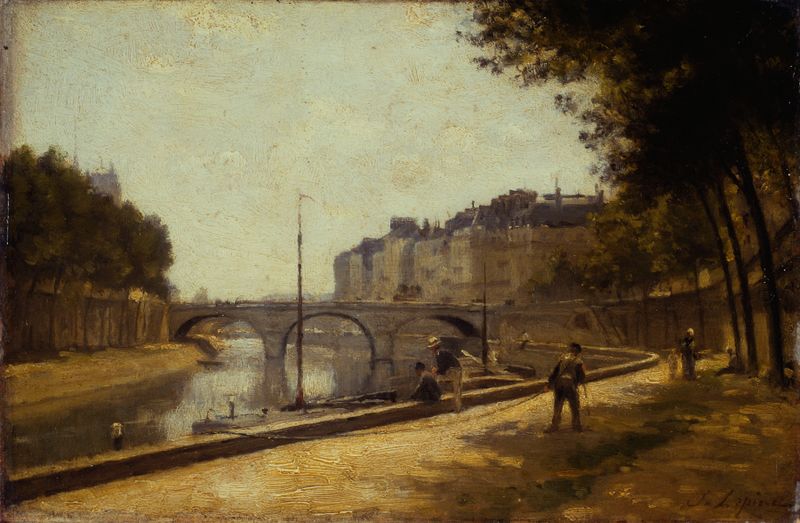
Le pont Saint-Michel
Stanislas Lépine
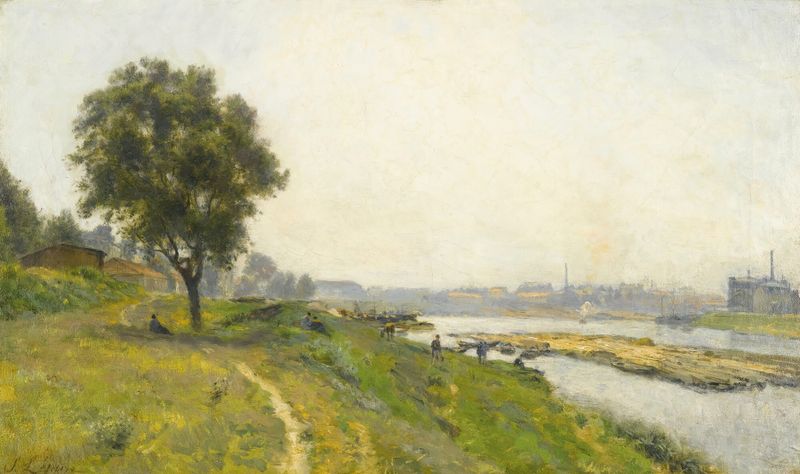
Ivry-Sur-Seine. Le Confluent Avec La Marne
Stanislas Lépine

View on the Seine, Paris
Stanislas Lépine
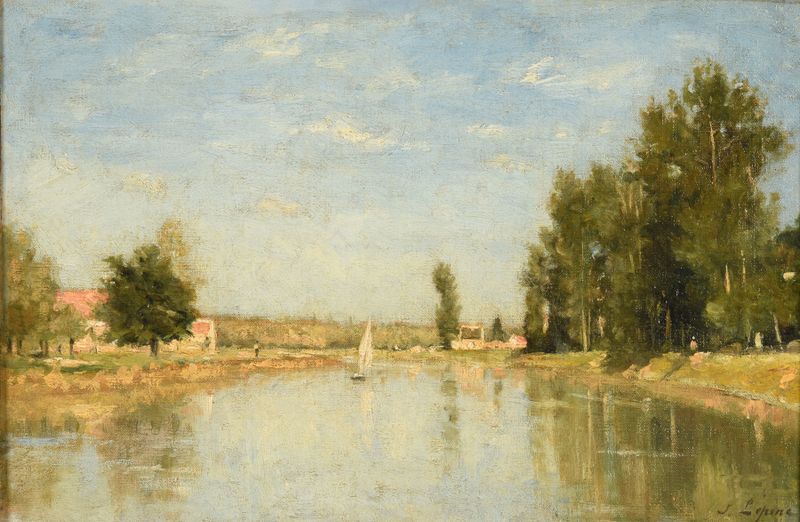
Les Bords de la Marne
Stanislas Lépine

L’île de la Cité et l’île Saint-Louis, vues du pont d’Austerlitz
Stanislas Lépine
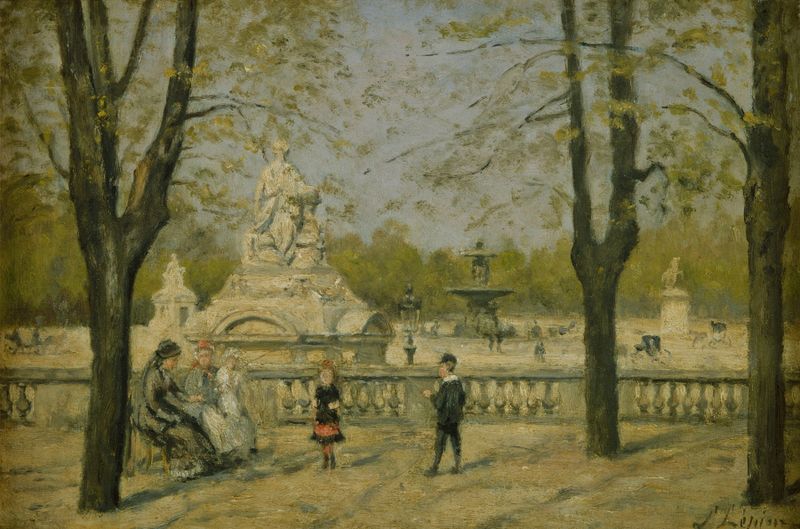
La place de la Concorde, vue de la terrasse des Tuileries
Stanislas Lépine
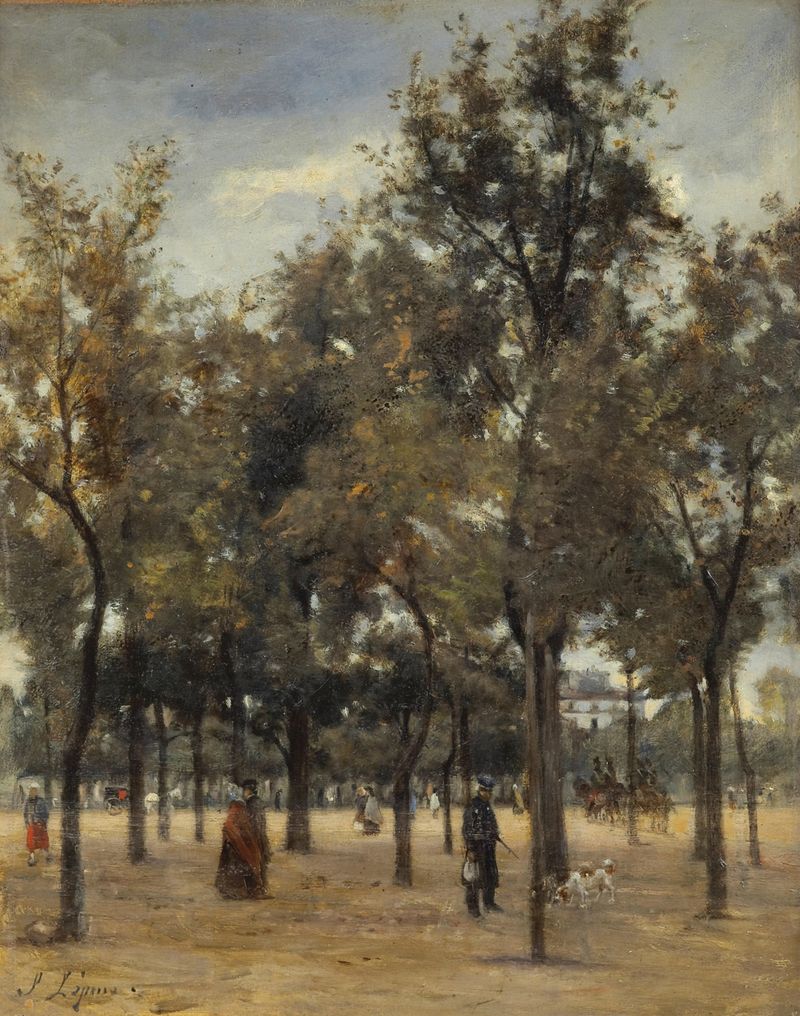
L’esplanade des Invalides
Stanislas Lépine
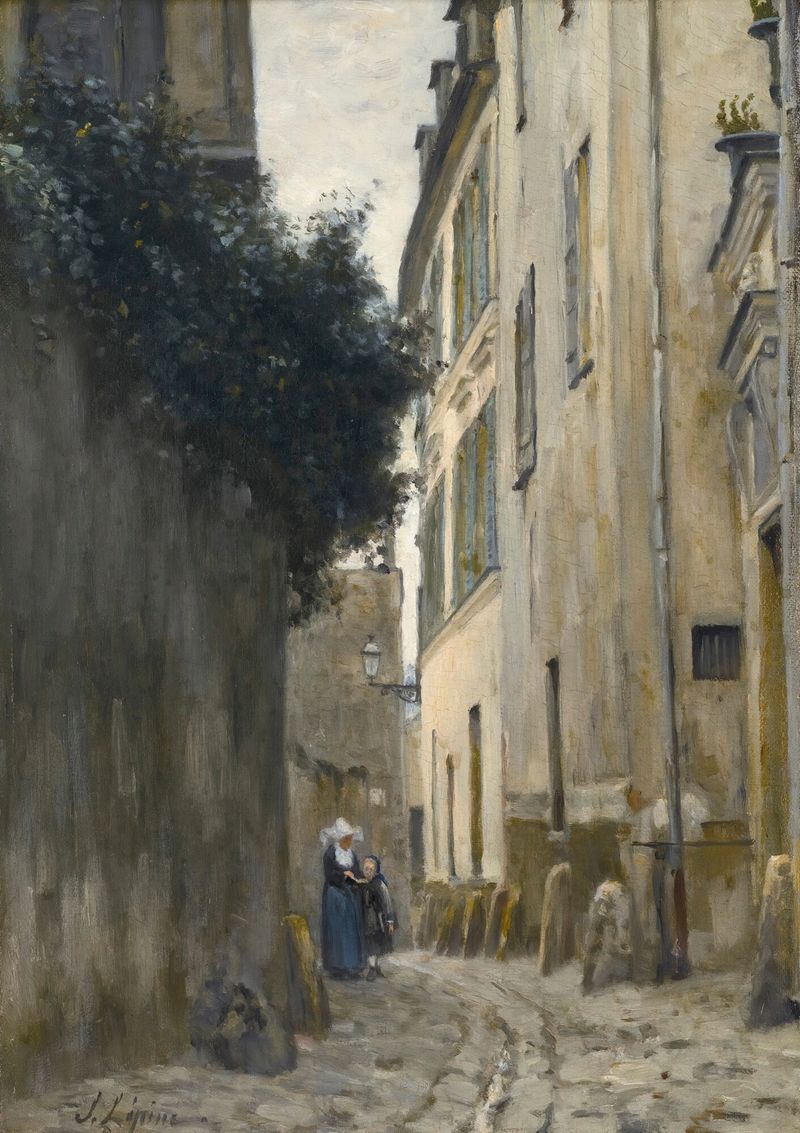
Montmartre. La Rue Saint-Vincent
Stanislas Lépine

Le Bassin de la Villette en hiver
Stanislas Lépine
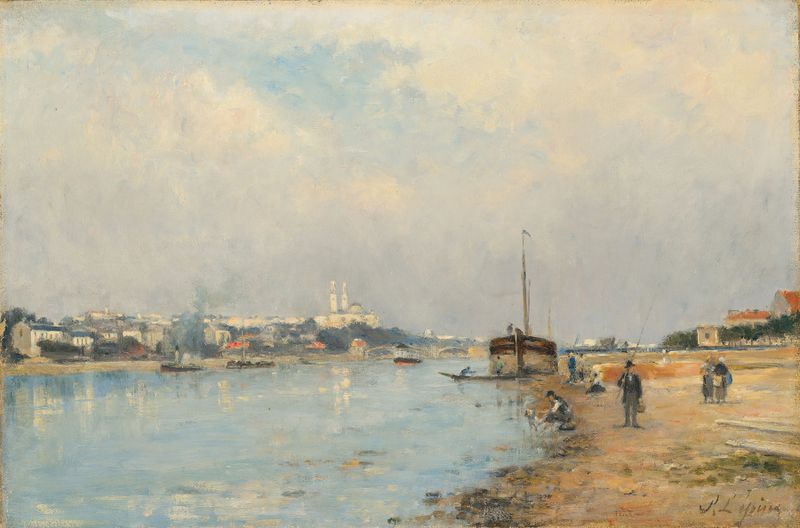
La Seine. Le Trocadéro et le pont de Grenelle, vus du quai de Javel
Stanislas Lépine





