
The Mill, Sunset — History & Facts
What if beauty was never meant to be finished? In The Mill, Sunset, the quiet juxtaposition of nature and craftsmanship compels us to contemplate the delicate balance between creation and decay, echoing a faith in the unfinished narrative of life itself. Look to the left at the majestic silhouette of the mill, its weathered timbers standing resolute against the radiant canvas of the sky. The sun, a fiery orb, casts a warm glow that bathes the scene in an ethereal light, inviting the viewer into the moment. Notice how the vibrant hues of orange and gold blend seamlessly into soft lavender and deepening indigo, illustrating the transition from day to night—an allegory for both hope and closure.
The interplay of light and shadow draws your gaze across the tranquil water, reflecting the splendor above, while hints of green foliage frame the composition, symbolizing nature’s omnipresent embrace. In this work, contrasts resonate deeply—between permanence and impermanence, industry and nature, daylight and dusk. The mill, a testament to human endeavor, stands firm, yet the encroaching twilight suggests that even the most steadfast creations are subject to the passage of time. The rich colors evoke a sense of faith in the cyclical nature of existence, where endings become preludes to new beginnings, urging us to revel in the transient beauty of each moment. Created during a period of artistic exploration in the early 19th century, the artist painted this piece amid the growing American Romantic movement, which emphasized nature's power and beauty.
As he sought to capture the essence of the Hudson River Valley, he was also grappling with the rapid industrialization of America, harmonizing the tension between human creations and the natural world through his evocative landscapes.
More Artworks by Thomas Cole
Browse all →
View from Mount Holyoke, Northampton, Massachusetts, after a Thunderstorm—The Oxbow
Thomas Cole
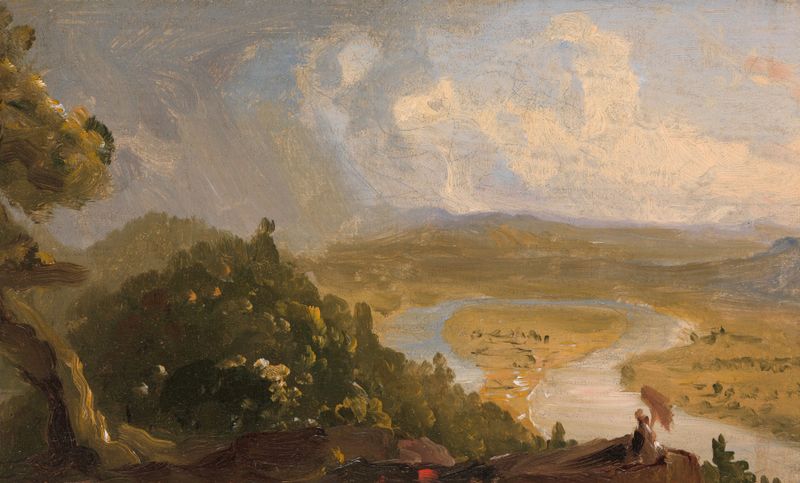
Sketch for View from Mount Holyoke, Northampton, Massachusetts, after a Thunderstorm (The Oxbow)
Thomas Cole
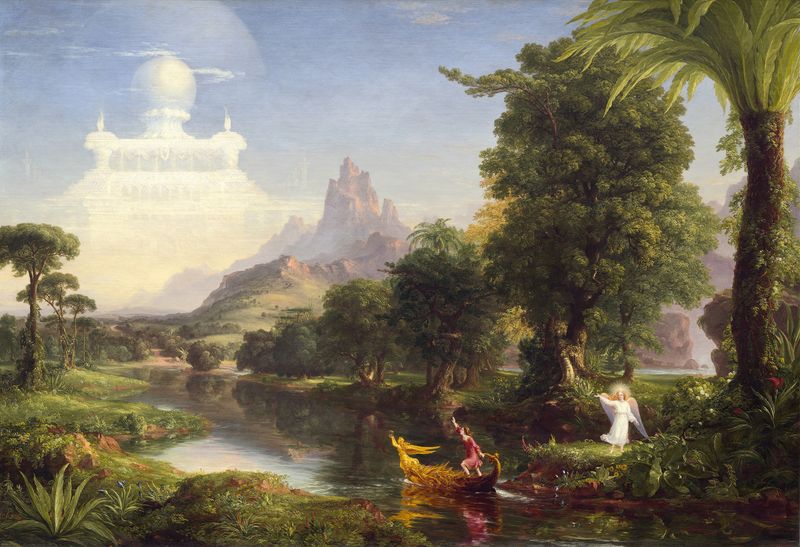
The Voyage of Life – Youth
Thomas Cole
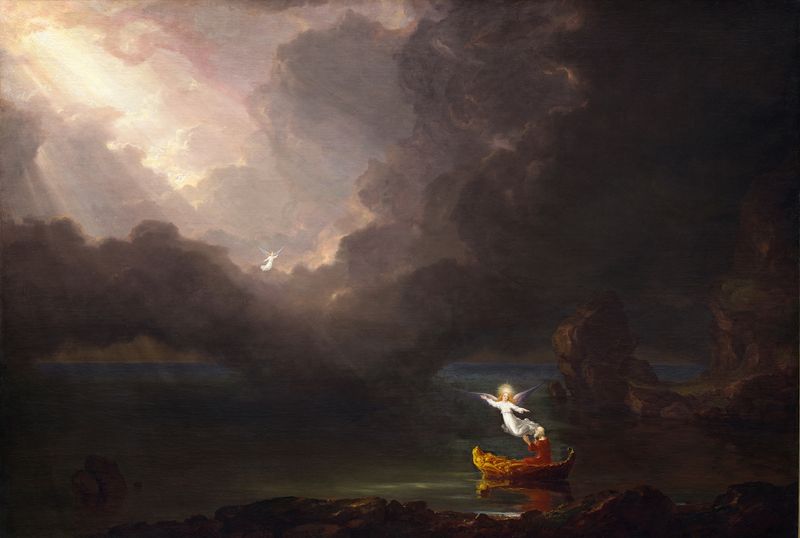
The Voyage of Life – Old Age
Thomas Cole
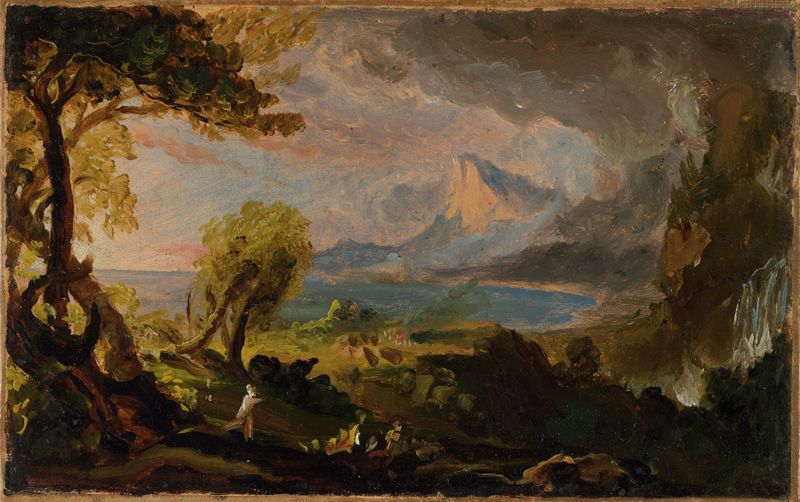
The Course of Empire–The Savage State
Thomas Cole

Landscape
Thomas Cole

New England Scenery
Thomas Cole

Sunrise in the Catskills
Thomas Cole
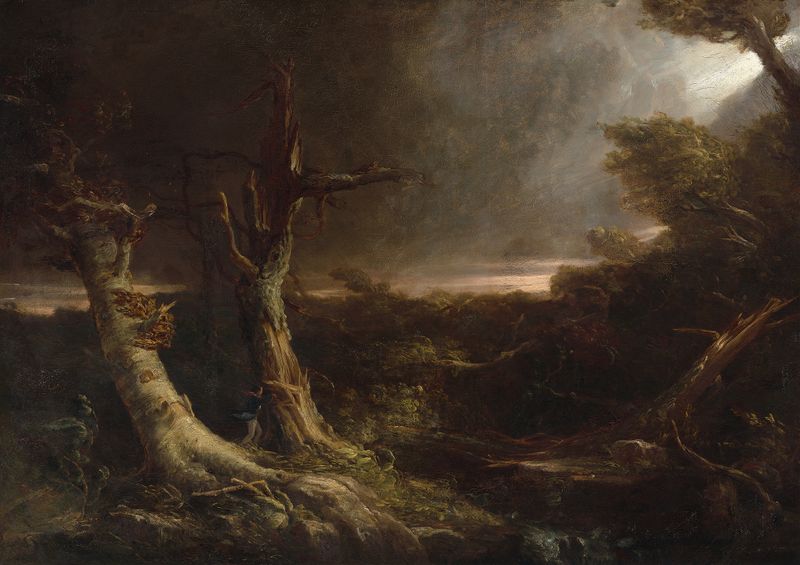
Tornado in an American Forest
Thomas Cole
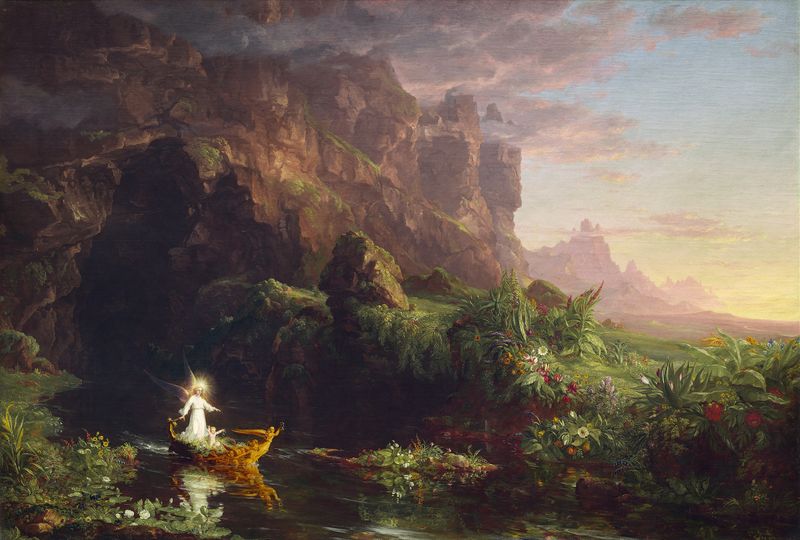
The Voyage of Life – Childhood
Thomas Cole





