
The North Terrace, Looking East — History & Facts
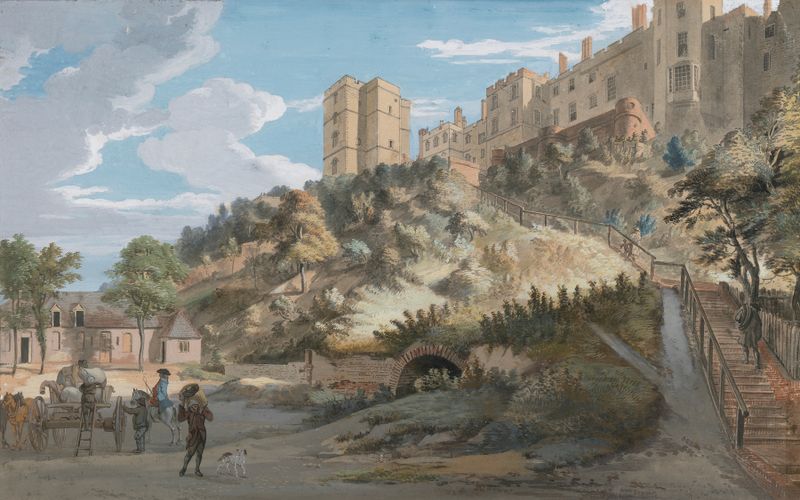
In a world where nature and humanity intertwine, ecstasy pulses in the very fabric of the canvas, inviting the viewer to experience a moment suspended in time. Focus first on the verdant contours that sweep across the foreground, where lush greenery embraces the viewer like a soft whisper. The careful layering of greens, punctuated with flecks of sunlight filtering through the leaves, draws the eye upward, inviting exploration of the distant horizon. Notice how the gentle blues of the sky blend with the earth, creating a harmonious dance that evokes both tranquility and anticipation—an invitation to wander through the landscape. Delve deeper into the painting's rich tapestry and consider the interplay of light and shadow, which adds emotional depth to the idyllic scene.
The contrast between the vibrant hues of the garden and the muted tones of the architecture hints at a dialogue between nature and manmade beauty. Here lies a tension—a celebration of life’s ephemeral moments juxtaposed with the permanence of structures, echoing the bittersweet essence of fleeting joy in a complex world. During the late 18th century, Paul Sandby created works that captured the idyllic English countryside, often serving as a visual chronicle of natural beauty in a rapidly industrializing world. This piece, painted at an indeterminate time, reflects his mastery of watercolor and his keen eye for landscape, a period when artists began to explore the relationship between nature and human existence.
Sandby’s dedication to portraying the sublime in even the simplest scenes marked a significant evolution in British art.
More Artworks by Paul Sandby
Browse all →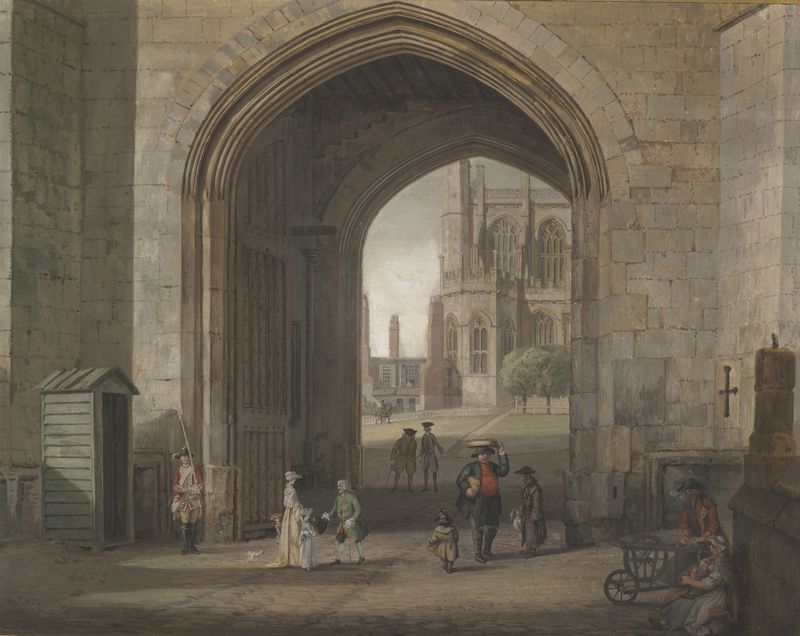
The Tower Gate at Windsor Castle
Paul Sandby

A Distant View of Maidstone, from Lower Bell Inn, Boxley Hill
Paul Sandby
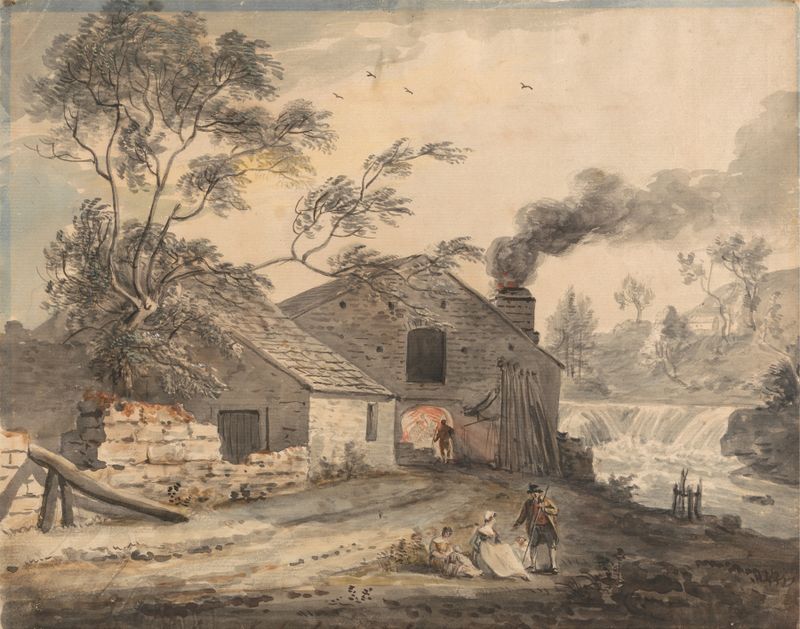
Iron Forge on the River Kent, Westmorland
Paul Sandby
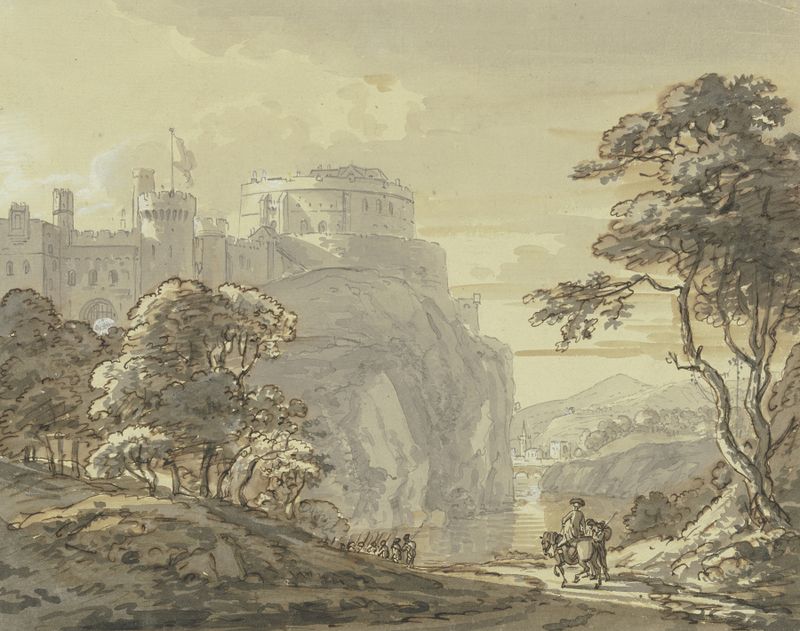
View of Windsor Castle
Paul Sandby

Hackwood Park, Hampshire
Paul Sandby

Roslin Castle, Midlothian
Paul Sandby
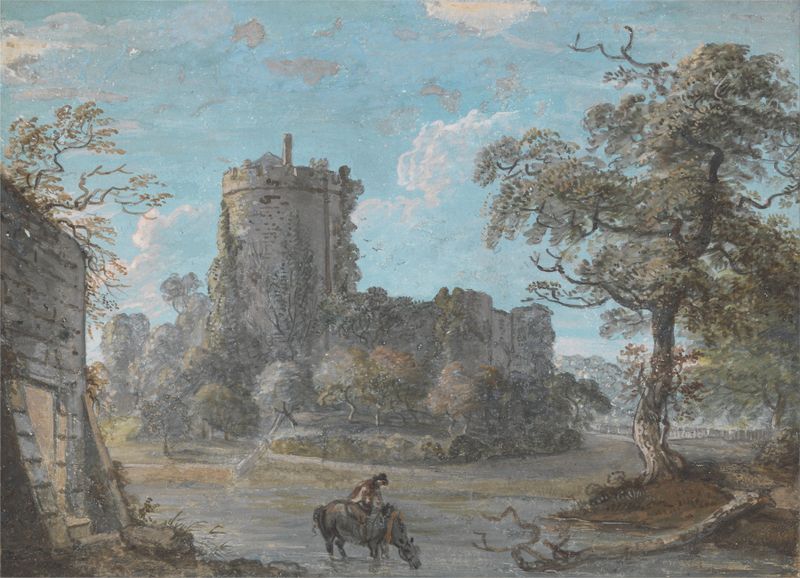
The Entrance to Chepstow Castle
Paul Sandby
The Hundred Steps and Winchester Tower, Windsor Castle, Berkshire
Paul Sandby

Brook End, Essex
Paul Sandby
Carreg Cennen Castle
Paul Sandby





