
The Old House — History & Facts
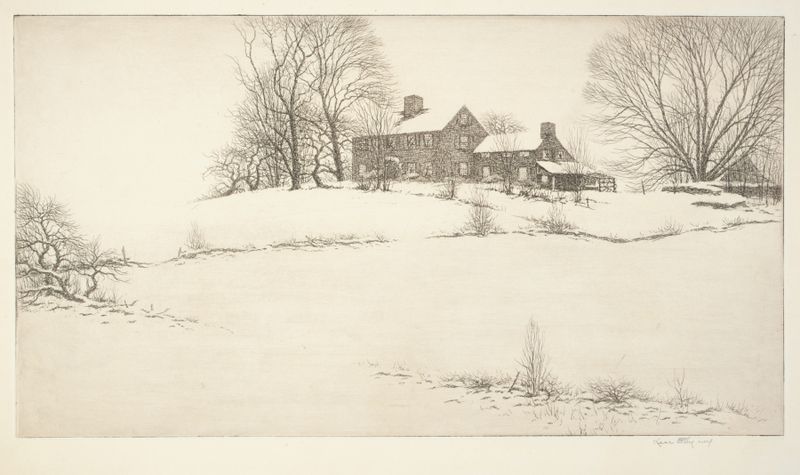
Did the painter know this moment would outlive them? In The Old House, Kerr Eby captures a quiet reverence for the passage of time, inviting viewers to ponder the weight of history resting upon weathered walls. Look to the left at the gnarled tree, its branches stretching protectively over the dilapidated structure. The muted earth tones of the house contrast sharply with the vibrant greens of the surrounding foliage, drawing attention to the wear and tear of the old wood. Notice how the dappled sunlight filters through the leaves, casting delicate patterns on the ground, as if nature itself is mourning the house's fading glory.
Each brushstroke conveys a sense of nostalgia, creating a space where past and present intertwine. Hidden within this serene landscape are whispers of stories long forgotten. The peeling paint and cracked windows suggest a once-vibrant life, now silenced, evoking emotions of loss and remembrance. Eby's delicate rendering of the light hints at transient beauty, as if to remind us that every moment, like the house, is ephemeral.
There is a tension between the house's decay and its silent majesty — a reminder that time shapes all things, both cherished and forlorn. In 1916, Eby created this work during a pivotal period in his life, marked by personal and global upheaval. Living in the United States after leaving Canada, he was deeply influenced by the tumult of World War I, which shaped the art world’s exploration of themes like memory and loss. Amidst the chaos, he found solace in the quiet resilience of forgotten places, imbuing his work with a haunting beauty that resonates with the viewer.
More Artworks by Kerr Eby
Browse all →
More Architecture Art
Browse all →
The statue of Liberty
Frédéric Auguste Bartholdi

View of Houses in Delft, Known as ‘The Little Street’
Johannes Vermeer

View of Houses in Delft, Known as ‘The Little Street’
Johannes Vermeer

The Cathedral in Rouen. The portal, Grey Weather
Claude Monet

The yellow house
Vincent van Gogh

The Church in Auvers-sur-Oise, View from the Chevet
Vincent van Gogh