
The Pierced Rock — History & Facts
Who listens when art speaks of silence? In The Pierced Rock, the stillness of a solitary landscape speaks volumes, inviting contemplation and reflection on nature's quiet power. Look to the left, where a dramatic rock formation juts into the sky, its jagged edges softened by the gentle light of an overcast day. Notice how the artist skillfully captures the interplay of shadow and illumination, casting a muted glow that caresses the contours of the rock. The subtle hues blend harmoniously, creating a sense of movement within the stillness, while delicate strokes suggest the whispering winds and the quiet rustle of foliage in the background. Delve deeper into the composition, and you’ll discover the emotional tension between permanence and transience.
The pierce in the rock serves as a metaphor for vulnerability, contrasting the rugged strength of nature with the fleeting moments of beauty that surround it. The distant horizon hints at an unseen world beyond, inviting the viewer to ponder what lies beyond the visible, while the subtle colors evoke a melancholic sense of longing. During the latter half of the 17th century, Antonie Waterloo created The Pierced Rock amid the burgeoning Dutch landscape tradition. Living in a time of flourishing artistic exploration, he found himself influenced by the emerging emphasis on realism and the natural world.
This period marked a significant shift, emphasizing observation and representation, and Waterloo's work reflects this transition as he sought to capture both the grandeur and fragility of nature.
More Artworks by Antonie Waterloo
Browse all →
Gezicht op het dorp Soest
Antonie Waterloo

Hagar comforted by the Angel
Antonie Waterloo

Waldbach, der über Felsen stürzt, über die eine Holzbrücke führt
Antonie Waterloo
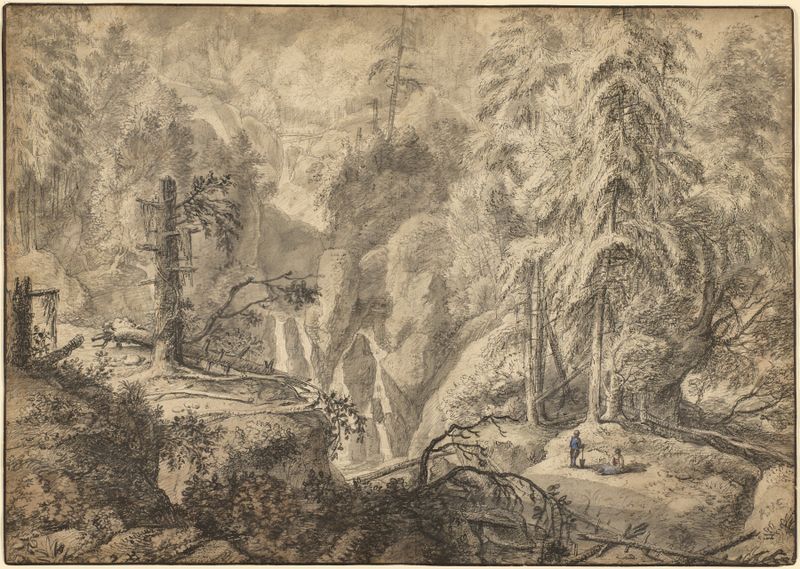
Mountain Landscape, Peasants in a Clearing near a Waterfall
Antonie Waterloo
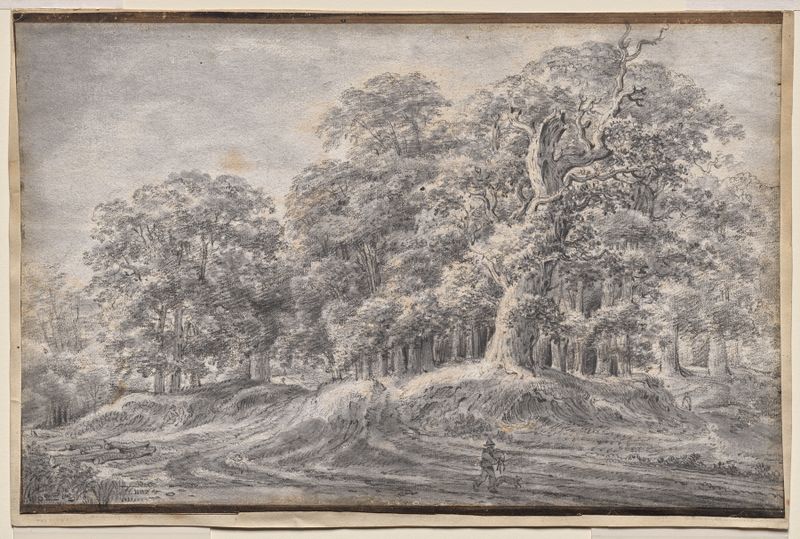
A Track on the Edge of a Wood with a Peasant Carrying Sheep
Antonie Waterloo
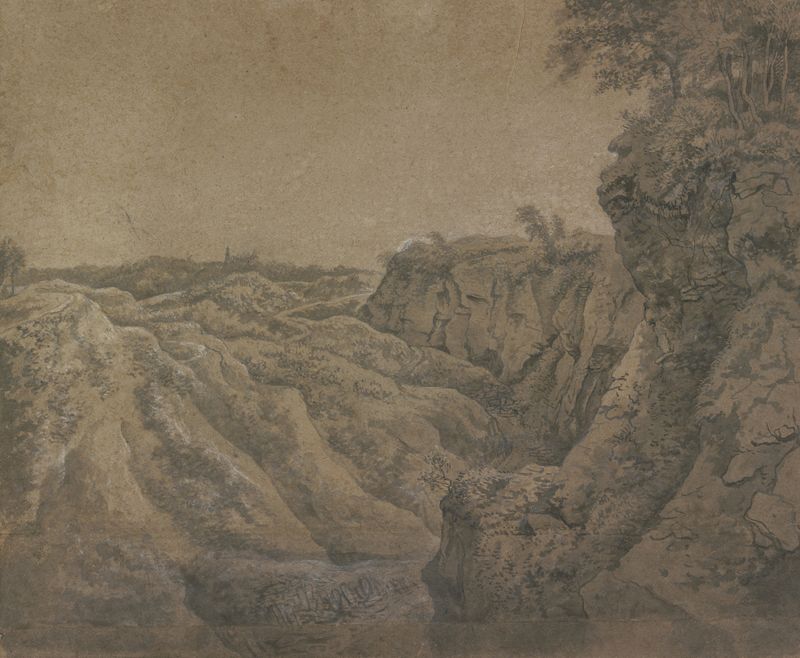
Landscape with a View of Bentheim Castle in the far Distance
Antonie Waterloo
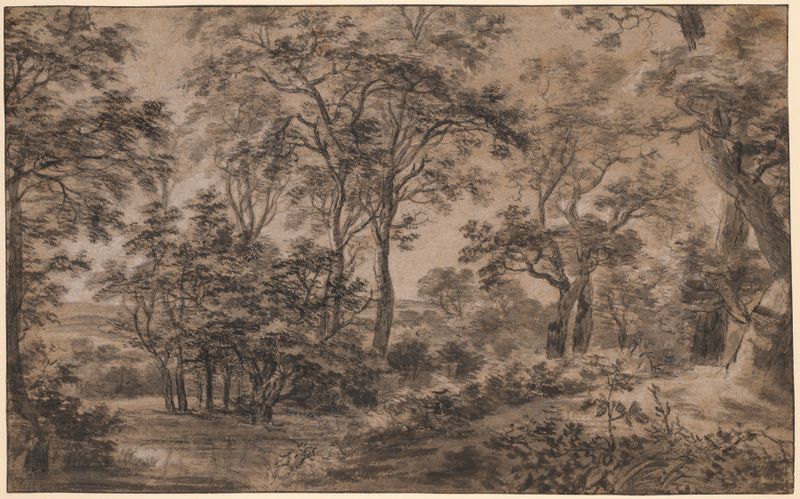
Wooded Landscape
Antonie Waterloo
Elijah Fed by the Ravens
Antonie Waterloo
River Landscape with a Castle in the Distance
Antonie Waterloo

Trees and cottages in hilly landscape
Antonie Waterloo





