
The Pilgrim of the World at the End of His Journey (study for the series, The Cross and the World) — History & Facts
Who listens when art speaks of silence? In the stillness of The Pilgrim of the World at the End of His Journey, innocence meets the weight of reflection, inviting contemplation of a life well-lived or a journey unfulfilled. Look to the center, where a solitary figure stands poised at the edge of a precipice, gazing out over an expansive landscape that blurs the line between heaven and earth. The soft brushwork creates a dreamy atmosphere, while muted colors evoke a sense of longing and nostalgia. Notice how the sky transitions from pale blue to warm gold, symbolizing the passage of time, as light spills softly across the foreground, illuminating the pilgrim's humble garment, suggesting both purity and weariness. Delve deeper into the contrasts within the painting.
The pilgrim, embodying innocence and introspection, faces the vastness of the world, imbued with both promise and uncertainty. The surrounding nature, serene yet imposing, highlights the tension between solitude and the companionship of the journey. Here, innocence is not depicted merely as naivety but as a profound understanding of one's place in the cosmos—a contemplation of life’s ephemeral nature. Created in 1847, this study was a crucial part of a larger series exploring the intersection of spirituality and nature.
At this time, Cole was grappling with personal upheaval and the broader Romantic movement, which sought to bridge emotional depth with the sublime in landscapes. The series reflects his evolving thoughts on human existence, nature, and the divine, capturing the essence of an artist at a pivotal moment in both his life and the history of American art.
More Artworks by Thomas Cole
Browse all →
View from Mount Holyoke, Northampton, Massachusetts, after a Thunderstorm—The Oxbow
Thomas Cole
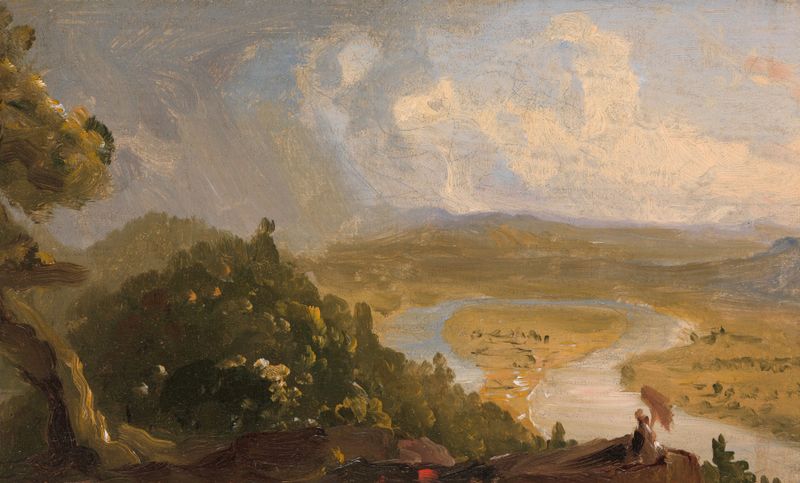
Sketch for View from Mount Holyoke, Northampton, Massachusetts, after a Thunderstorm (The Oxbow)
Thomas Cole
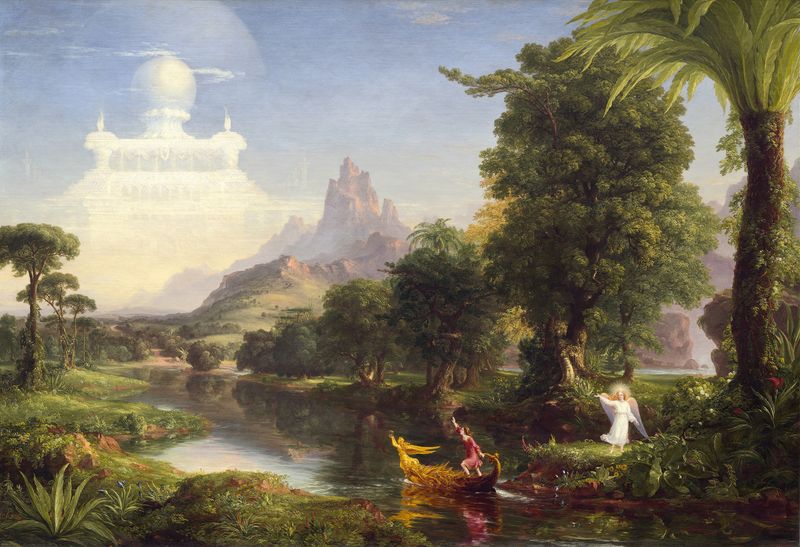
The Voyage of Life – Youth
Thomas Cole
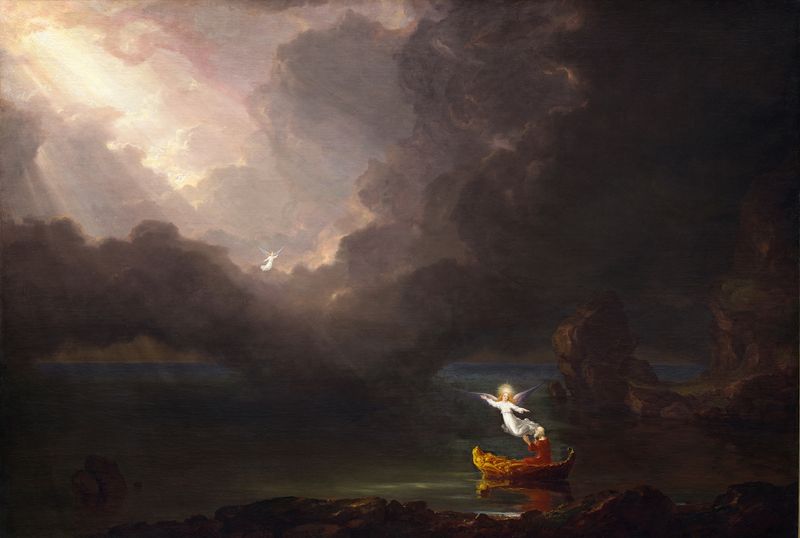
The Voyage of Life – Old Age
Thomas Cole
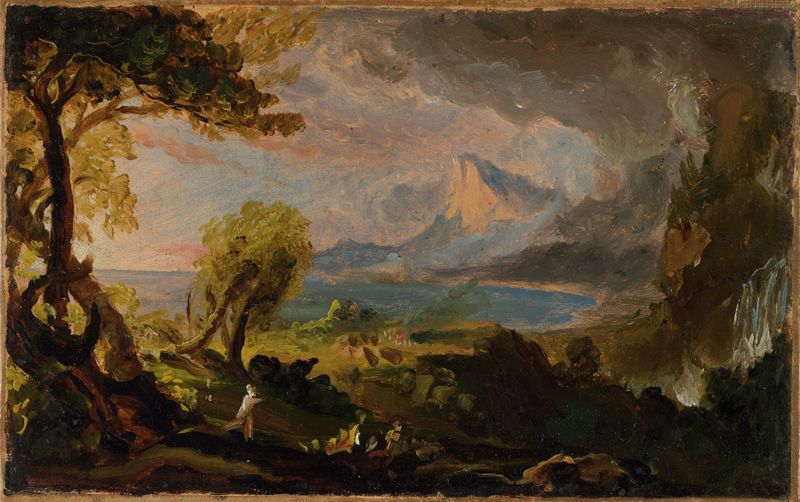
The Course of Empire–The Savage State
Thomas Cole

Landscape
Thomas Cole

New England Scenery
Thomas Cole

Sunrise in the Catskills
Thomas Cole
Tornado in an American Forest
Thomas Cole
The Voyage of Life – Childhood
Thomas Cole





