
The Pond — History & Facts
Art reveals the soul when the world turns away. In moments of quiet, it captures our deepest sorrows and unspoken yearnings, inviting us to confront what lies beneath the surface. Focus on the tranquil water in The Pond. Notice how the stillness mirrors the sky, a delicate blend of soft blues and gentle greens that breathe life into the scene.
The brushstrokes exhibit a sense of calm, yet there’s an undercurrent of tension as shadows play along the shoreline, hinting at something unseen lurking just beyond the viewer’s gaze. The trees, standing sentinel in their muted hues, frame the pond like guardians of a secret wish, whispering tales of the past. As your eyes wander, notice the delicate interplay between light and shadow, where each reflective ripple suggests a poignant memory—moments of loss captured in the nature of stillness. The vibrant yet subdued palette evokes a sense of longing, inviting contemplation of the transient beauty of life, as if the very essence of loss is woven into the fabric of the landscape.
The contrast between the peaceful appearance of the pond and the weight of its silence beckons us to explore our own emotions and connections to what has been lost. Painted in 1837, this work emerged during a time when Jules Dupré was deeply involved in the Barbizon School, focusing on capturing the essence of nature. Living in France amidst the rise of Romanticism, he sought to evoke emotional responses through his landscapes, offering viewers a reflection of both the natural world and their inner struggles. This period marked a shift toward a more personal and expressive approach in art, allowing Dupré to articulate the profound relationships between humanity and nature.
More Artworks by Jules Dupré
Browse all →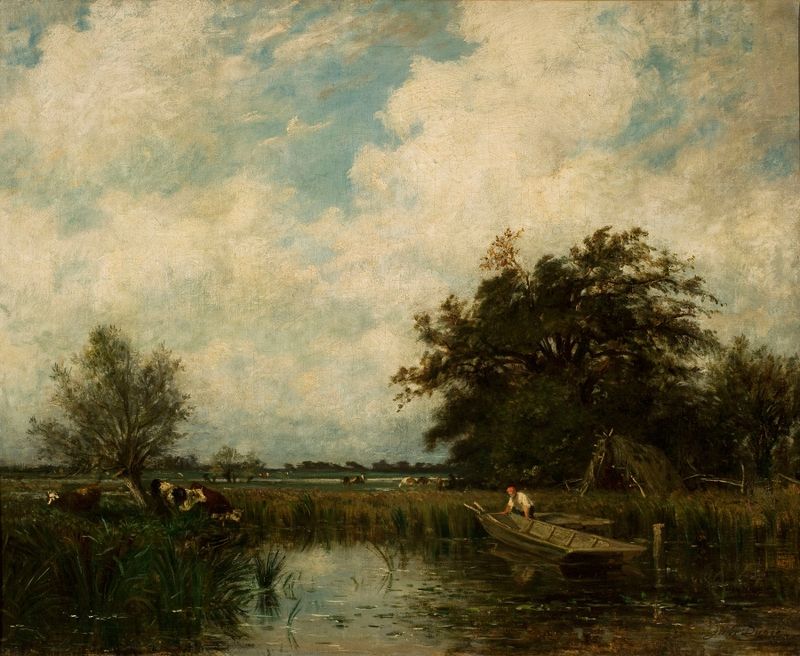
Landscape with a pond
Jules Dupré

The Cottage by the Roadside, Stormy Sky
Jules Dupré
The Windmill
Jules Dupré

The Estuary Farm
Jules Dupré

Fontainebleau Oaks
Jules Dupré

Village Scene, Sunset
Jules Dupré

Barks Fleeing Before the Storm
Jules Dupré

Cows Crossing a Ford
Jules Dupré

The Old Oak
Jules Dupré

Weidelandschaft im Limousin
Jules Dupré





