
The Rabbi — History & Facts
What draws the eye first in The Rabbi by Theodoros Ralli is the hush of concentration that seems to radiate from the sitter, a stillness shaped by the warm, slanting light that falls across his profile. The rabbi’s gaze is fixed, not on the viewer, but on something beyond the frame—an inward world, perhaps, or the invisible labor of thought. Every detail is a clue: the soft folds of his robe, the careful placement of spectacles and books on the desk, the subtle play of shadow on the wall behind him.
The composition guides us gently from the rabbi’s furrowed brow down to his resting hands, inviting us to imagine the weight of years and wisdom. The palette is restrained, almost monochrome, allowing the golden light and the rabbi’s white beard to glow with quiet dignity. Painted sometime between 1873 and 1909, this work belongs to a period when European artists were fascinated by the everyday lives and rituals of communities often overlooked by grand history painting. Scenes like this—private, contemplative, and intimate—were collected by patrons interested in the authenticity and variety of the human experience.
Theodoros Ralli, known for his interest in Eastern Mediterranean subjects, brings a respectful attention to detail and atmosphere that was typical of the Orientalist movement, yet here the effect is one of intimacy rather than spectacle. History has kept few traces of this particular painting’s journey, but its presence in a modern collection invites us to linger with the rabbi a moment longer, and wonder what wisdom might be found in such quietude.
More Artworks by Theodoros Ralli

The Sleeping Concubine
Theodoros Ralli
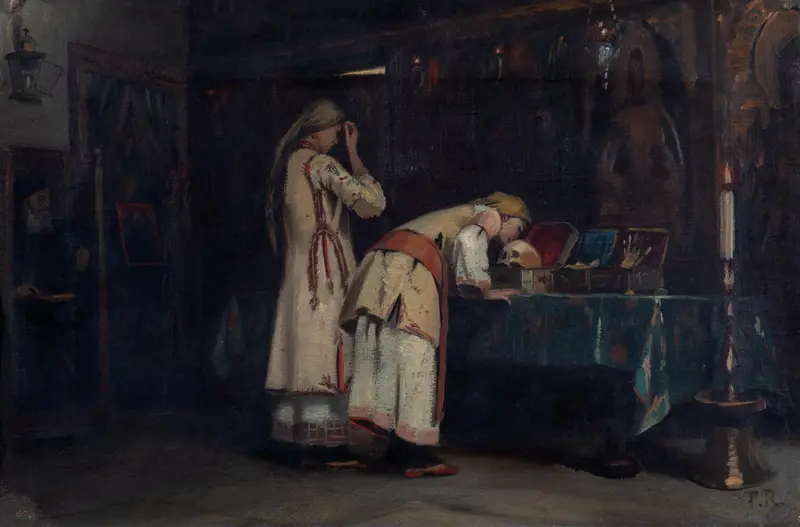
Holy Relics
Theodoros Ralli
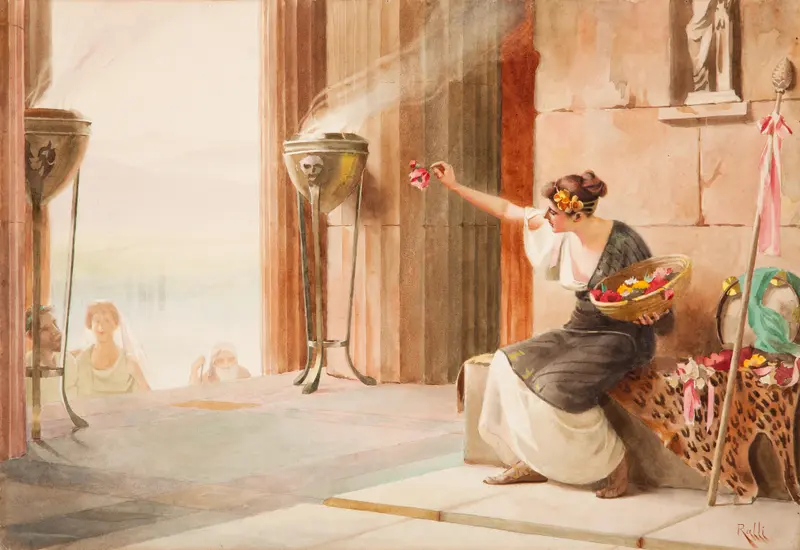
Flower Seller at the Parthenon
Theodoros Ralli
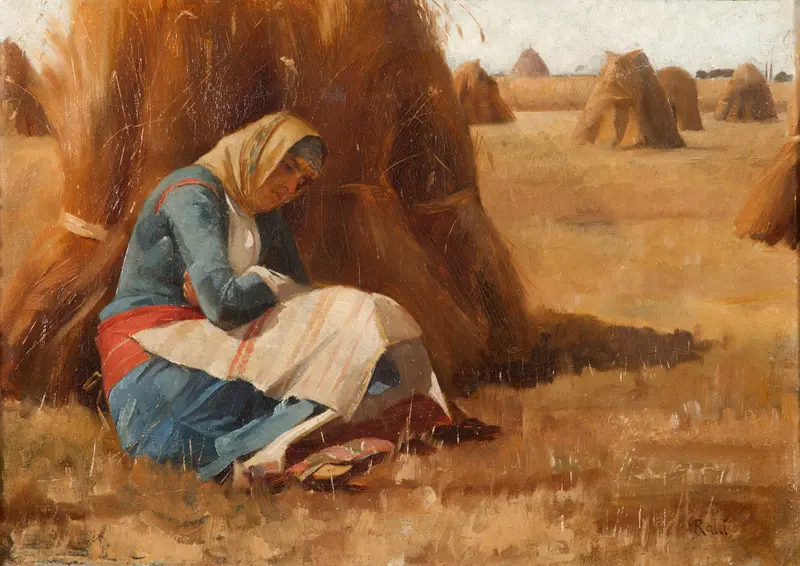
Resting by a Haystack
Theodoros Ralli
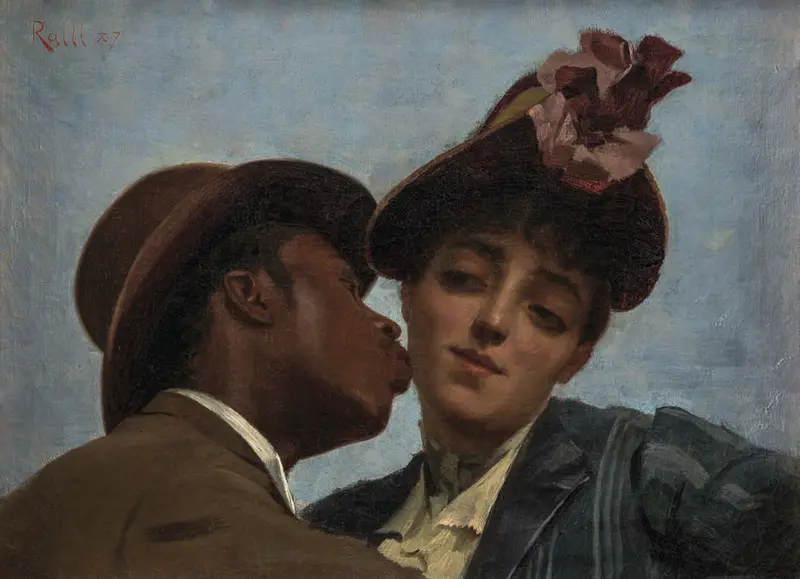
The Kiss (Ralli)
Theodoros Ralli
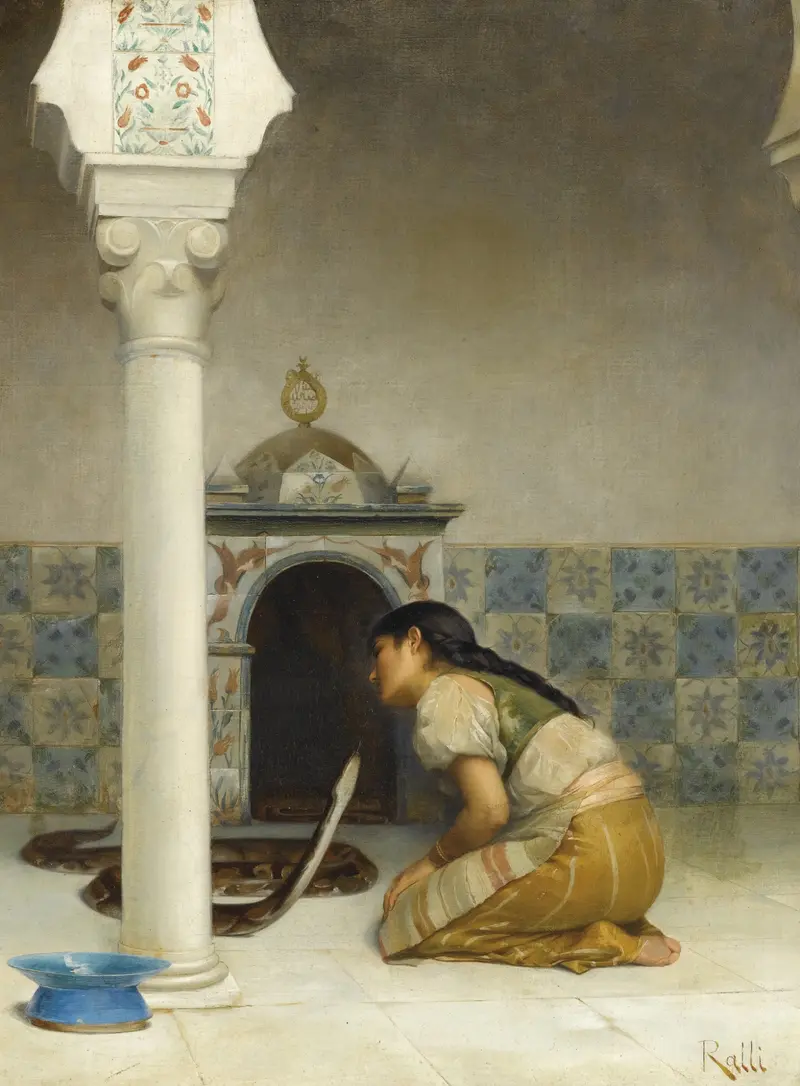
The Sacred Serpent
Theodoros Ralli
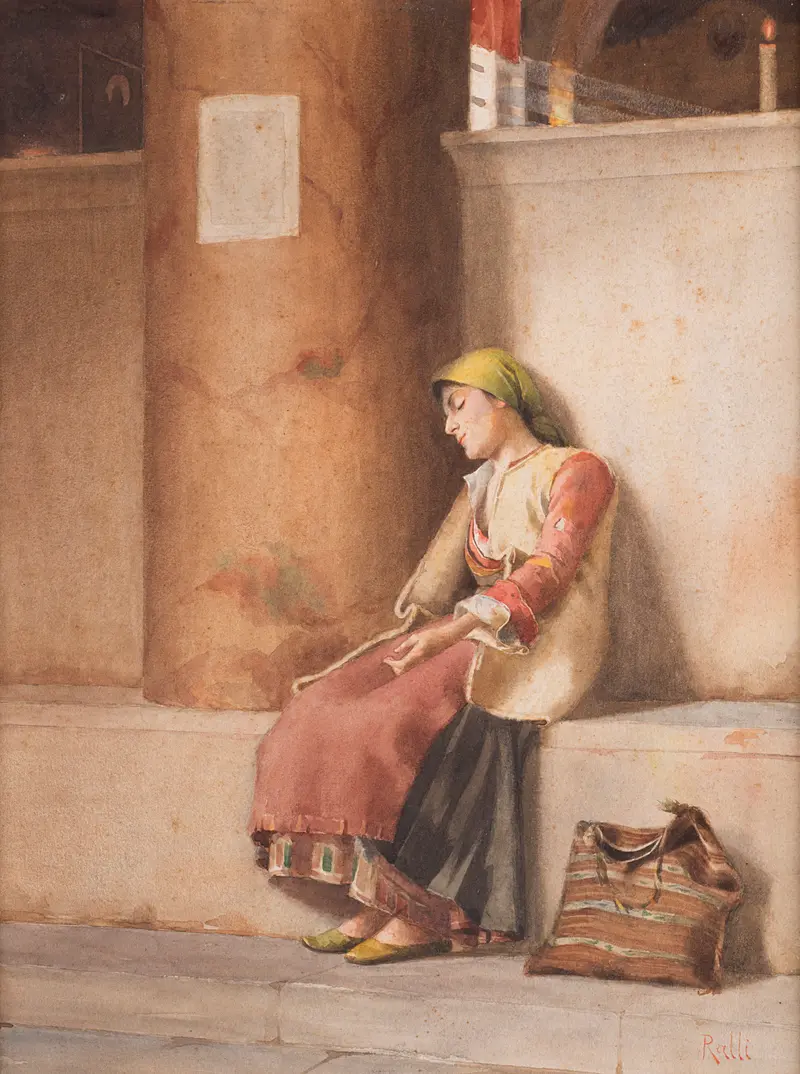
A Moment of Reflection
Theodoros Ralli
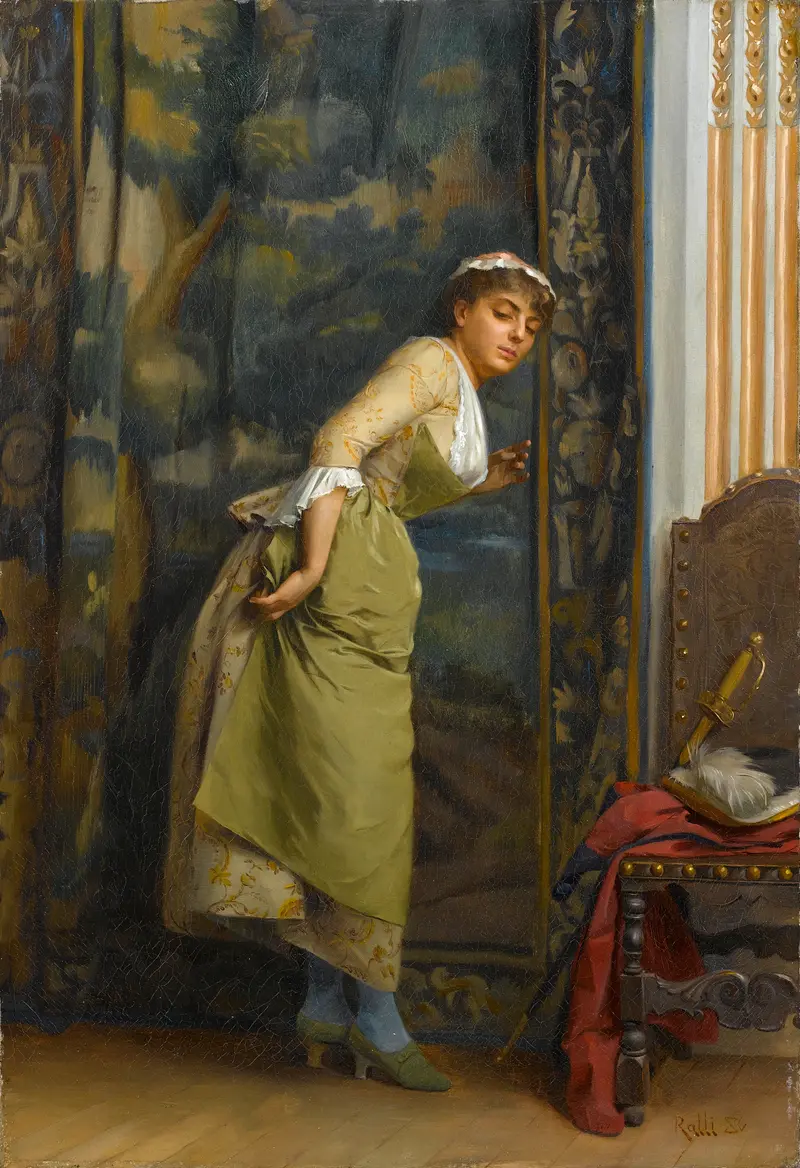
Eavesdropping (Ralli)
Theodoros Ralli
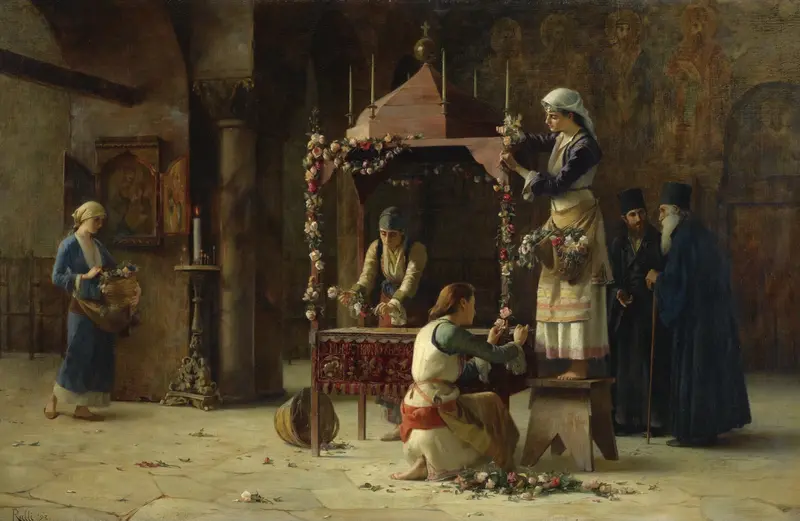
Holy Friday, Greece
Theodoros Ralli
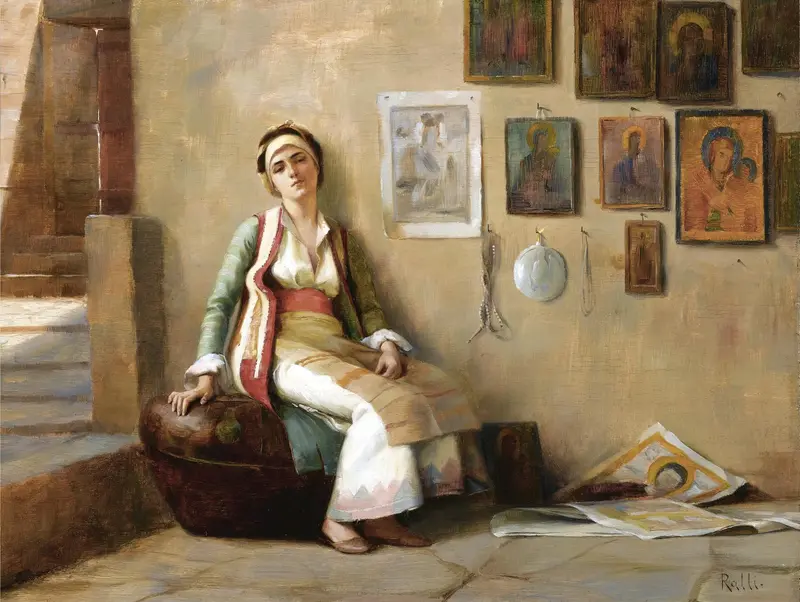
A Moment's Rest
Theodoros Ralli





