
The Railroad Bridge — History & Facts
In a world too often bathed in the chaos of noise, how do we find clarity? Look to the shimmering steel of the bridge, an elegant structure sprawling across the canvas like an embrace between two worlds. Notice how Eby uses rich tones of blue and green, mingling with the soft, muted earth around it. The viewer's gaze is drawn first to the bridge itself, a testament to human ingenuity, before being led across the surface of the water, where reflections blur the line between reality and illusion.
The brushstrokes convey movement — the rippling water seems to breathe, and the sky above, painted in gentle hues, adds a dreamlike quality. Delve deeper, and the interplay of light and shadow reveals a poignant contrast between man-made progress and nature’s enduring presence. The bridge stands as a symbol of connection, yet the surrounding stillness hints at the solitude of modern existence. Look closely and you’ll notice the whispers of fading light on the water, suggesting that while humanity advances, the essence of nature quietly remains, almost forgotten behind the thundering locomotive that passes above. In 1913, Eby worked during a period of rapid industrialization and change in America.
Living in New York, he found inspiration in the juxtaposition of urban development and natural landscapes. This painting reflects both the excitement of the era and an introspective critique of the allure of progress, capturing a moment where technology and tranquility converge.
More Artworks by Kerr Eby
Browse all →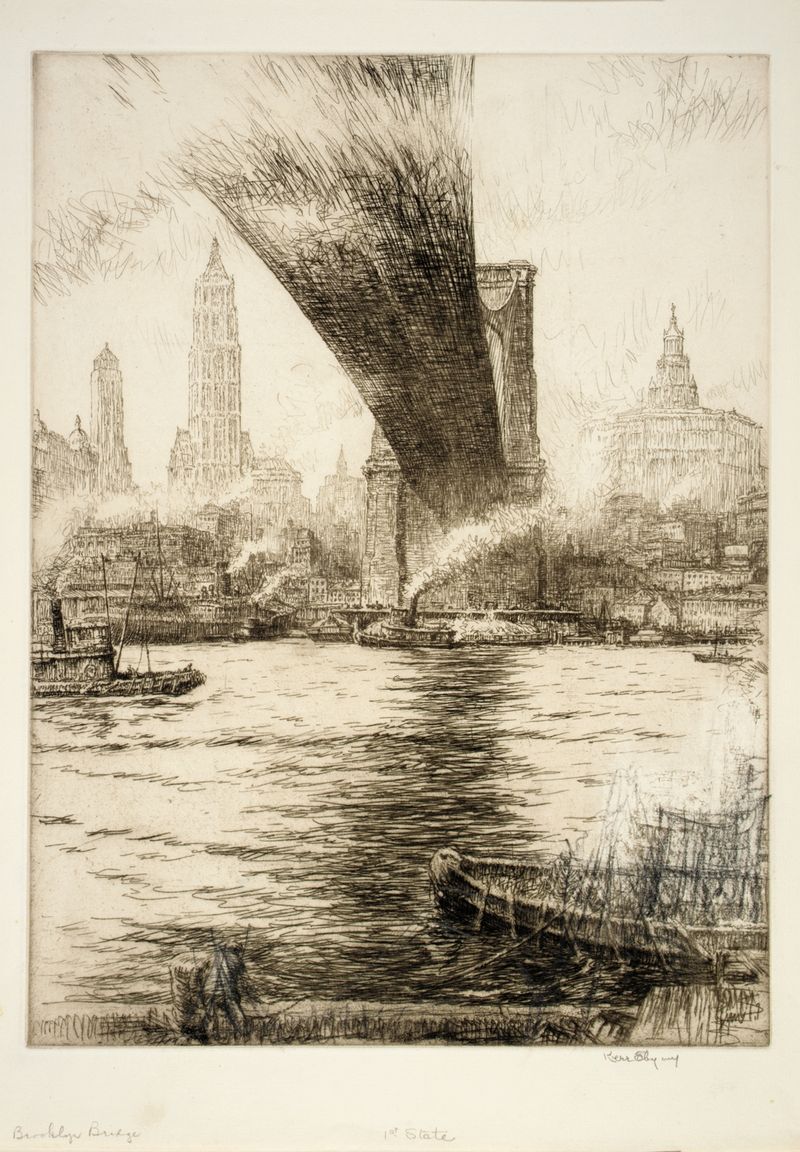
More Architecture Art
Browse all →
The statue of Liberty
Frédéric Auguste Bartholdi

View of Houses in Delft, Known as ‘The Little Street’
Johannes Vermeer

View of Houses in Delft, Known as ‘The Little Street’
Johannes Vermeer

The Cathedral in Rouen. The portal, Grey Weather
Claude Monet

The yellow house
Vincent van Gogh

The Church in Auvers-sur-Oise, View from the Chevet
Vincent van Gogh