
The Return — History & Facts
What if beauty was never meant to be finished? In Thomas Cole's The Return, we are invited to ponder the delicate balance between nature and the madness of human ambition, caught in a moment of haunting reflection. Look to the left at the majestic peaks, their snow-capped summits piercing the sky, a testament to nature's enduring grandeur. The foreground, rich with verdant greens, contrasts starkly against the increasingly ominous clouds looming overhead. Notice how the winding river snakes through the valley, leading the viewer's eye towards the distant mountains, almost as if beckoning one to a world yet untouched by chaos.
The careful application of light illuminates the tranquility of the landscape, while shadowy hints near the horizon evoke an underlying tension, suggesting the encroachment of human folly. Herein lies the emotional tumult: the stark juxtaposition of serene nature against the creeping darkness of civilization. The figures in the boat seem small and vulnerable—mere whispers against the vastness of the wilderness—symbolizing humanity's fragile relationship with the natural world. Moreover, the unfinished quality of the scene’s composition evokes a sense of madness, as if the artist is questioning whether the pursuit of progress is worth the beauty it destroys, leaving us to confront our own role in a rapidly changing landscape. Created in 1837, this piece emerged during a time of significant transition for Cole.
Living in America, he had witnessed the tension between the Industrial Revolution and the natural world, and his work often reflected a tension between romantic ideals and the inevitable encroachment of modernity. As a founder of the Hudson River School, he captured both the sublime beauty of the American landscape and the anxieties of a society on the brink of transformation, revealing the paradoxes inherent in the human experience.
More Artworks by Thomas Cole
Browse all →
View from Mount Holyoke, Northampton, Massachusetts, after a Thunderstorm—The Oxbow
Thomas Cole
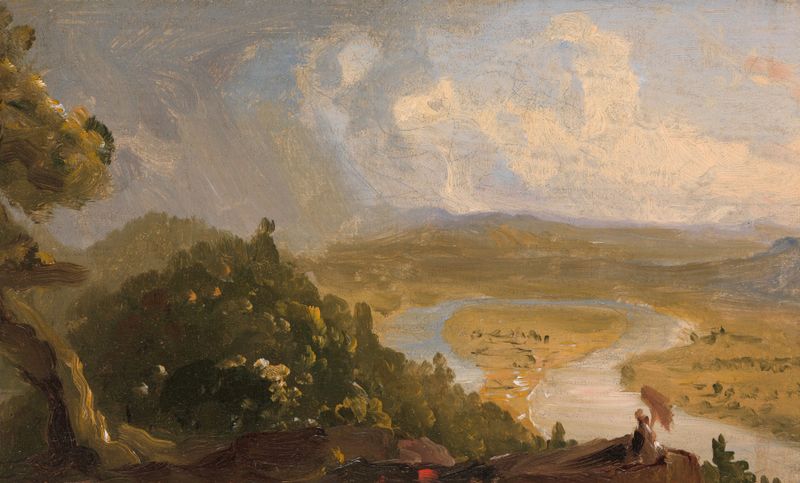
Sketch for View from Mount Holyoke, Northampton, Massachusetts, after a Thunderstorm (The Oxbow)
Thomas Cole
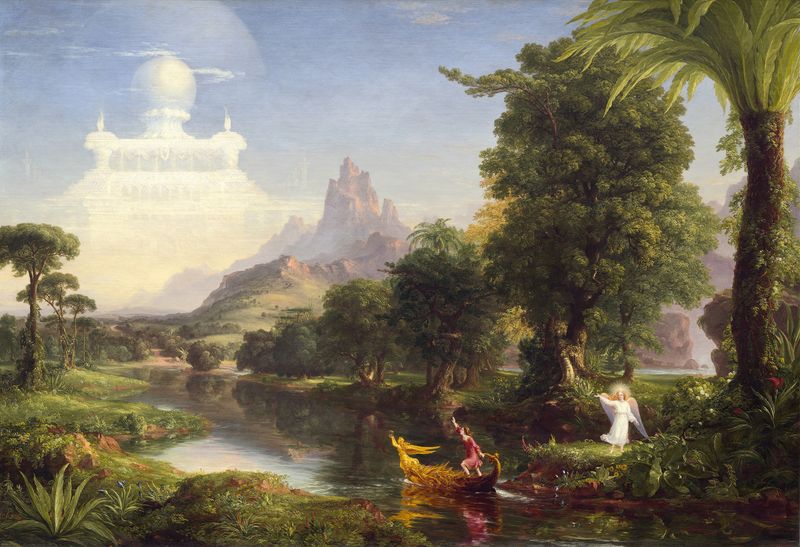
The Voyage of Life – Youth
Thomas Cole
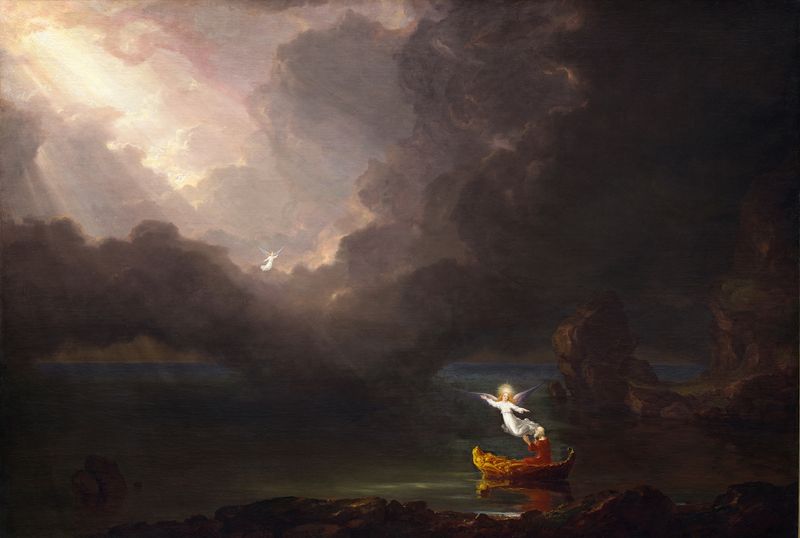
The Voyage of Life – Old Age
Thomas Cole
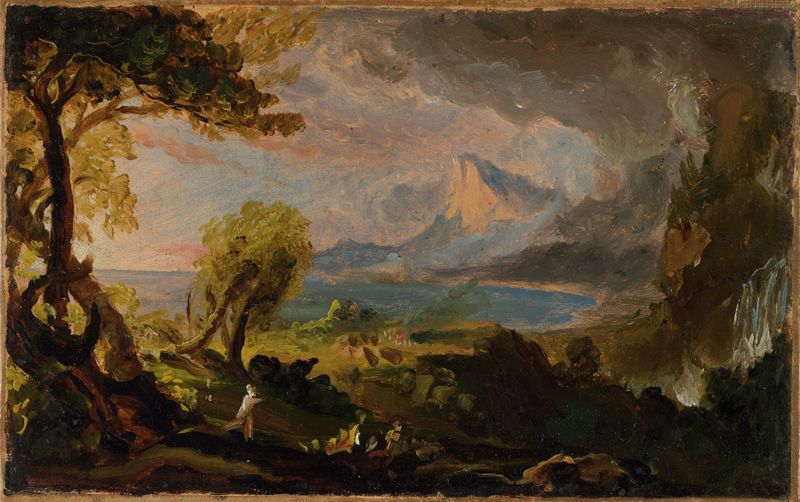
The Course of Empire–The Savage State
Thomas Cole

Landscape
Thomas Cole

New England Scenery
Thomas Cole

Sunrise in the Catskills
Thomas Cole
Tornado in an American Forest
Thomas Cole
The Voyage of Life – Childhood
Thomas Cole





