
The Riva, No. 1 — History & Facts
Did the painter know this moment would outlive them? In The Riva, No. 1, a quiet yet charged encounter unfolds on the canvas, hinting at a narrative beneath its tranquil surface. Look to the lower right where the gentle ripples of the water meet the shadowy forms of boats, their silhouettes merging with the dusk. The palette is dominated by deep blues and muted grays, evoking an intimate atmosphere, where the fading light cloaks the scene in mystery.
Brushstrokes dance delicately, capturing the fleeting moment between day and night, while the figures remain mere suggestions—hinting at stories untold. The subtle gradations of color hypnotize, inviting the viewer to linger in this ephemeral world. Beneath the calm surface, contrasts of fragility and strength simmer. The stillness of the water conceals an underlying tumult; even the quietest moments can harbor violence, hinted at by the sharpness of the edge where the boats cut through the water.
The figures, seemingly at rest, evoke a tension that may suggest deeper struggles, as the fading light symbolizes both the end of a day and the impermanence of existence. This duality poses an essential question about life’s balance between serenity and chaos. Created in 1880 during his time in Venice, the artist was navigating a period of personal and professional turmoil. Known for his innovative approach to color and composition, he was also grappling with the challenges of his artistic reputation and the evolving art movements of his time.
This work reflects both his mastery and the complexity of the world he inhabited, capturing a fleeting yet significant moment that continues to resonate.
More Artworks by James Abbott McNeill Whistler
Browse all →
Nocturne in Blue and Silver
James Abbott McNeill Whistler
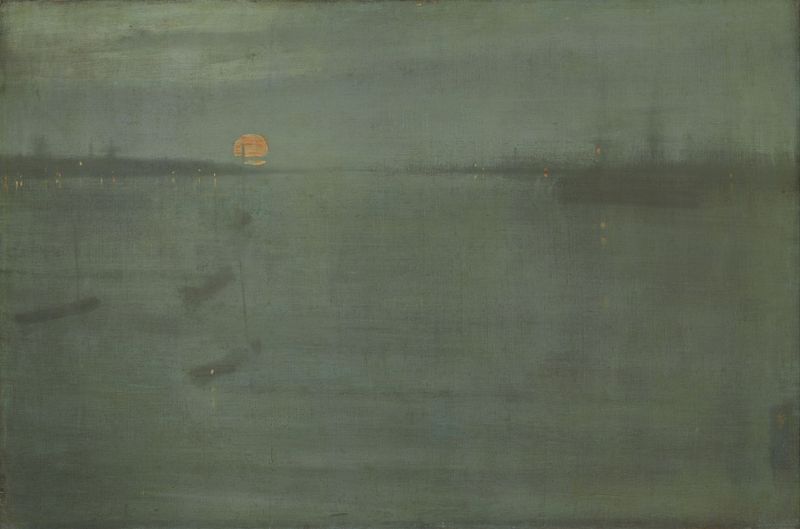
Nocturne: Blue and Gold–Southampton Water
James Abbott McNeill Whistler
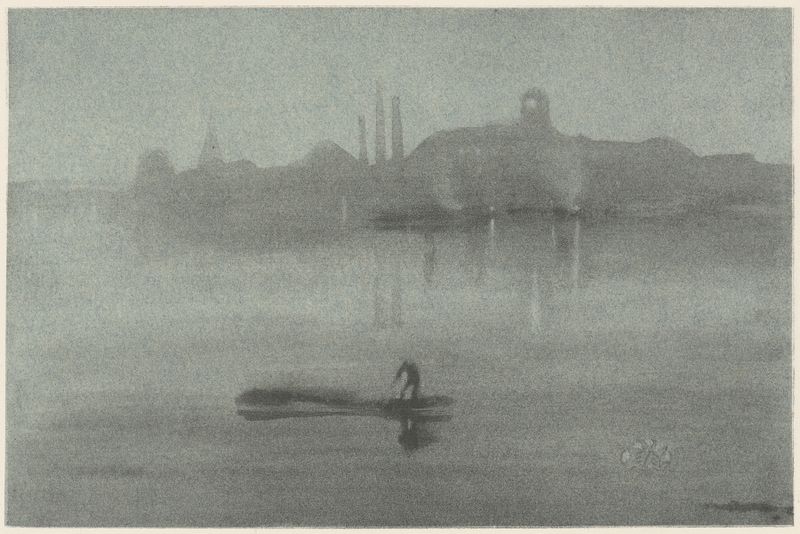
Nocturne
James Abbott McNeill Whistler
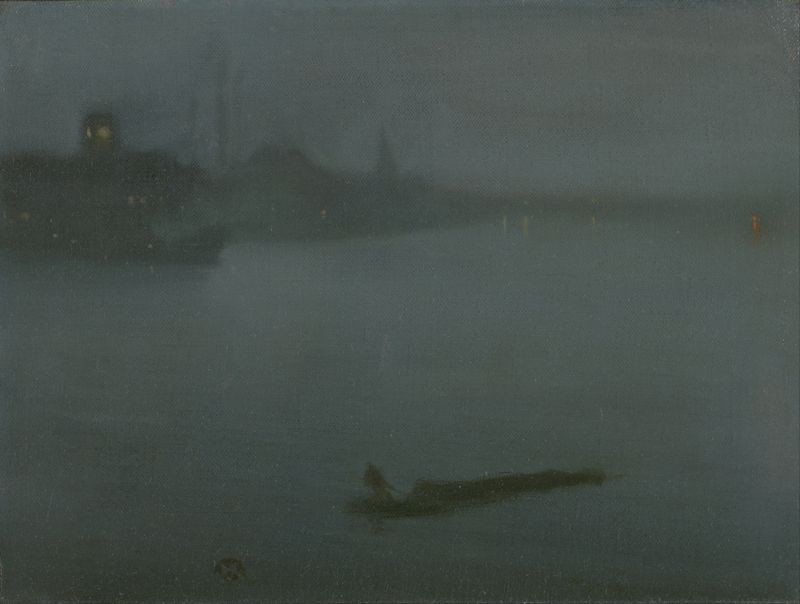
Nocturne in Blue and Silver
James Abbott McNeill Whistler
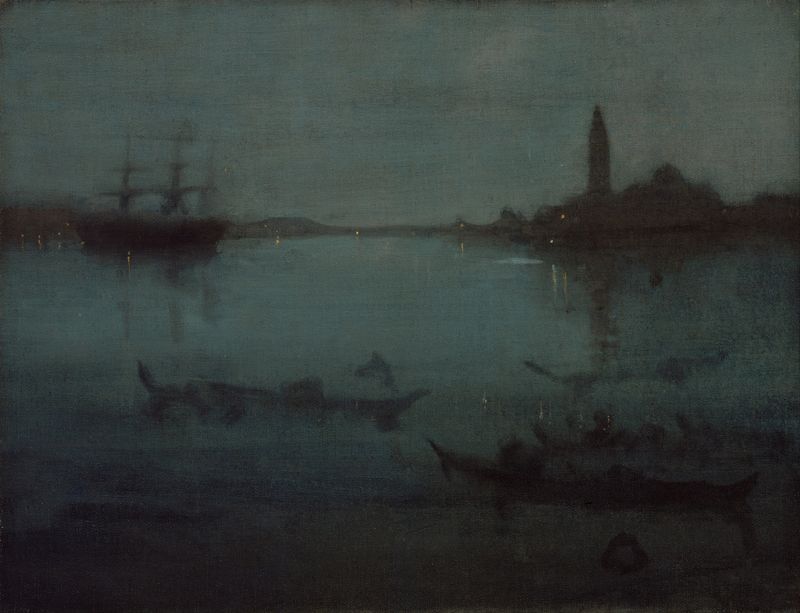
Nocturne in Blue and Silver- The Lagoon, Venice
James Abbott McNeill Whistler
Nocturne in Grey and Gold: Chelsea Snow
James Abbott McNeill Whistler
Nocturne: Black and Red—Back Canal, Holland
James Abbott McNeill Whistler
Old Battersea Bridge
James Abbott McNeill Whistler

Nocturne: Blue and Silver–Battersea Reach
James Abbott McNeill Whistler
Grey and Silver–Pier, Southend
James Abbott McNeill Whistler




