
The River Nile At Abou Seir, The Second Cataract, Egypt — History & Facts
Can paint confess what words never could? In a world where landscapes bear witness to both beauty and brutality, Edward Lear’s vision of the Nile speaks to the heart of violence hidden within nature’s serenity. Look to the foreground, where the river reflects a shimmering dance of sunlight, its ripples caressed by a gentle breeze. The placid water lures the eye, drawing attention to the delicate interplay of light and shadow. Notice how the verdant banks cradle the river, their lush greens contrasting with the harsh, rocky outcrops that rise in the distance.
Each brushstroke invites contemplation, revealing Lear’s deft hand in capturing the vibrancy of life amidst the formidable landscape. Yet beneath this picturesque façade lies a profound tension. The vibrant blues of the water and greens of the foliage starkly oppose the rocky cliffs, suggesting the raw power of nature that can be as destructive as it is beautiful. The viewer can sense an undercurrent of violence, the lurking force of the river that shapes the land, eroding banks and carrying with it untold secrets.
This duality reflects the conflict between serenity and upheaval, urging us to consider the stories the land has witnessed and the struggles endured by those who dwell alongside it. In 1867, as Lear painted this scene, he was navigating both personal challenges and the artistic currents of his time. Having established himself as a prominent landscape artist and illustrator, he was deeply immersed in the exploration of the natural world while also grappling with chronic illness. The socio-political landscape of Europe was shifting, and the journeys Lear undertook for inspiration were rife with tumult and discovery, underpinning his profound connection to the wild beauty captured in this work.
More Artworks by Edward Lear
Browse all →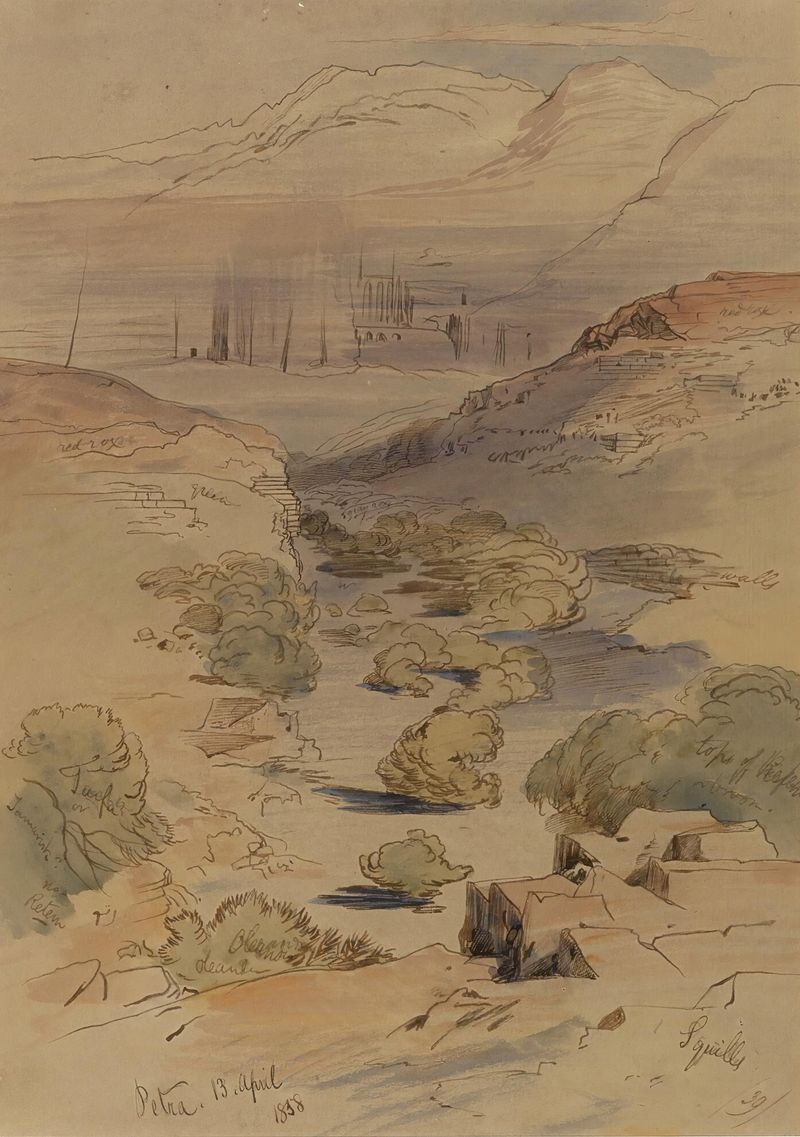
Petra
Edward Lear
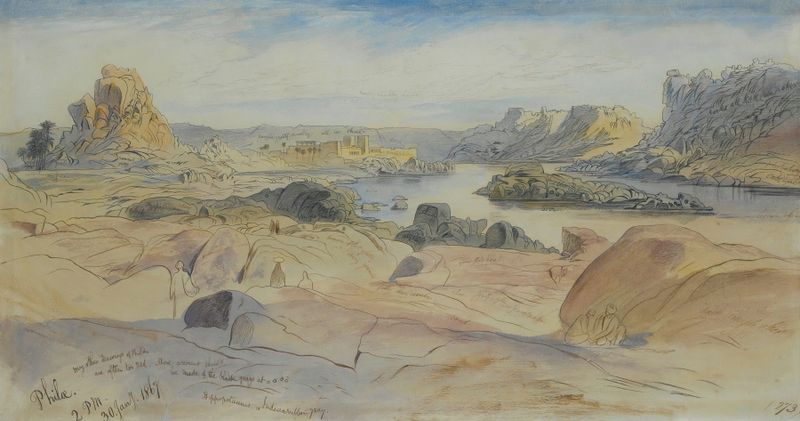
Philae, Egypt
Edward Lear
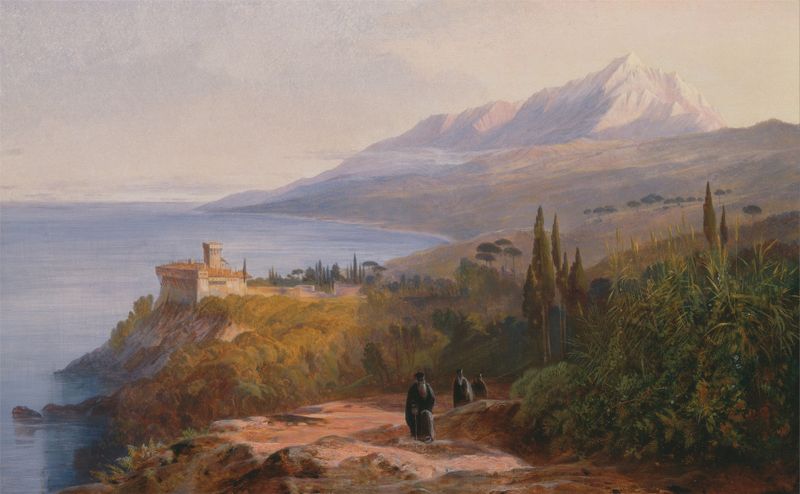
Mount Athos and the Monastery of Stavronikétes
Edward Lear
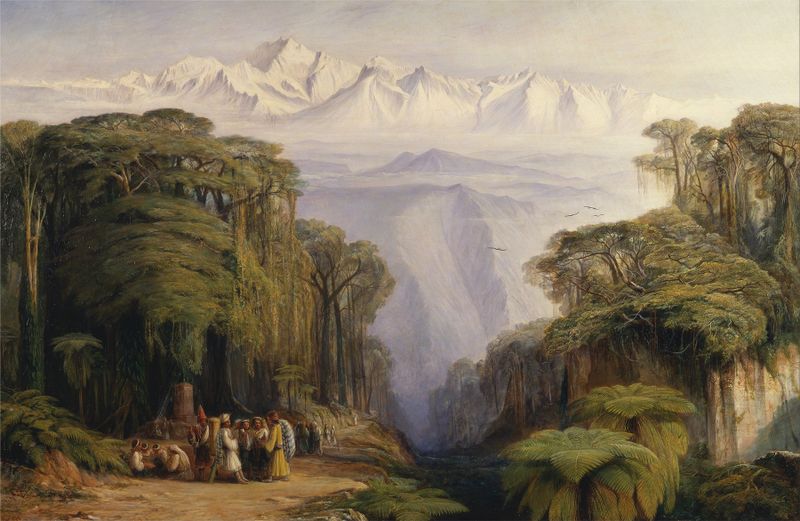
Kangchenjunga from Darjeeling
Edward Lear
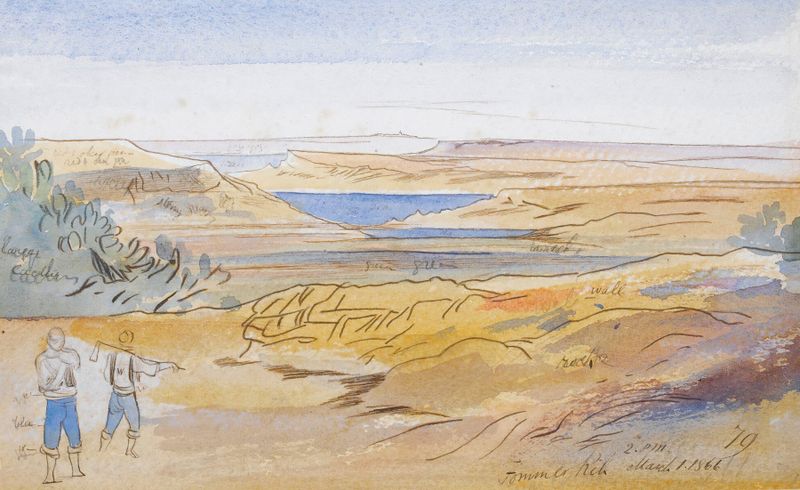
Fomm Ir-Rih, Malta
Edward Lear
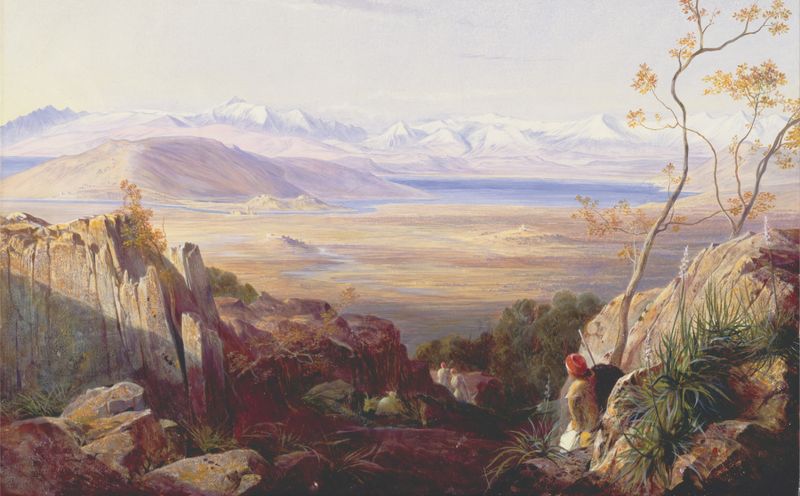
Butrinto, Albania
Edward Lear
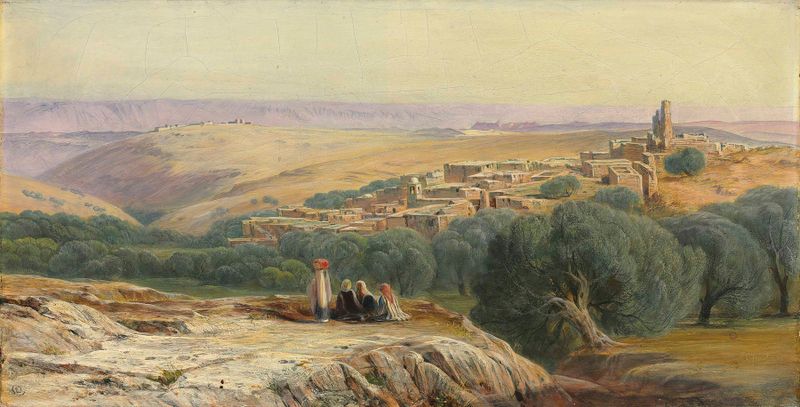
The Plains of Bethany
Edward Lear

Karnak, 9-30 pm, 22 January 1867
Edward Lear
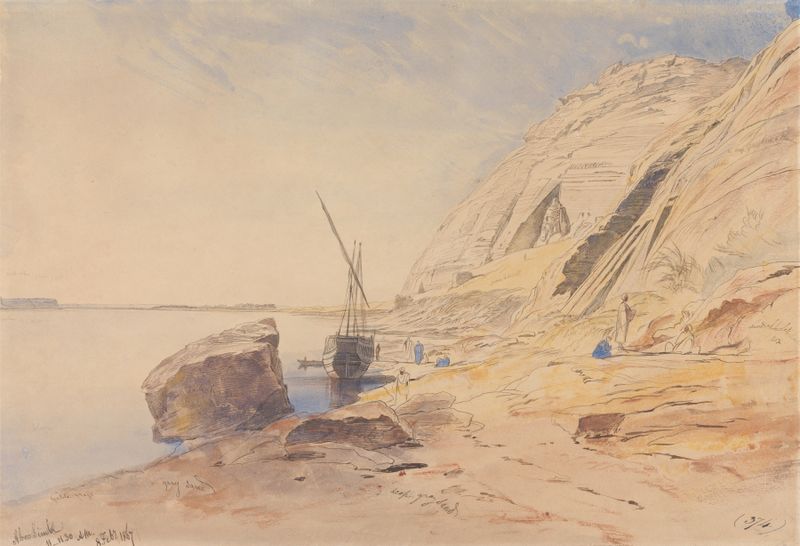
Abu Simbel, 11-11;30 am, 8 February 1867 (374)
Edward Lear

A View Of Mount Athos And The Pantokrator Monastery, Greece
Edward Lear





