
The Road from Montbuisson to Louveciennes — History & Facts
What first catches the eye in The Road from Montbuisson to Louveciennes is the sheer expanse of sky, a pale, luminous blue that seems to dissolve into the horizon and flood the entire scene with gentle light. The road itself, a pale ribbon winding through the green countryside, leads the viewer’s gaze into the heart of the landscape, where small figures—walkers and a carriage—move quietly through their day. The brushwork is brisk but sensitive, suggesting the shimmer of sunlight on grass and the restless movement of clouds.
Every element in the painting serves to evoke a sense of openness and ease, from the loose, almost sketch-like rendering of the trees to the subtle play of pinks and blues in the earth and sky. There is no drama here, only the quiet rhythm of rural life and the painter’s delight in capturing a fleeting moment of atmosphere. Painted in 1875, this work belongs to the world of Impressionism, when artists like Alfred Sisley sought to capture the changing light and everyday landscapes of modern France. The road to Louveciennes—once a rural escape for Parisians—became a favorite subject for painters eager to explore the new possibilities of painting en plein air.
Unlike the grand historical canvases of earlier decades, such scenes were rarely commissioned; instead, they reflected the artist’s own fascination with the world as it was, unposed and unscripted. Today, the painting resides in the Musée de l'Orangerie, a fitting home for a work that invites viewers to linger in the calm and clarity of a summer’s day, long after the figures have passed from view.
More Artworks by Alfred Sisley
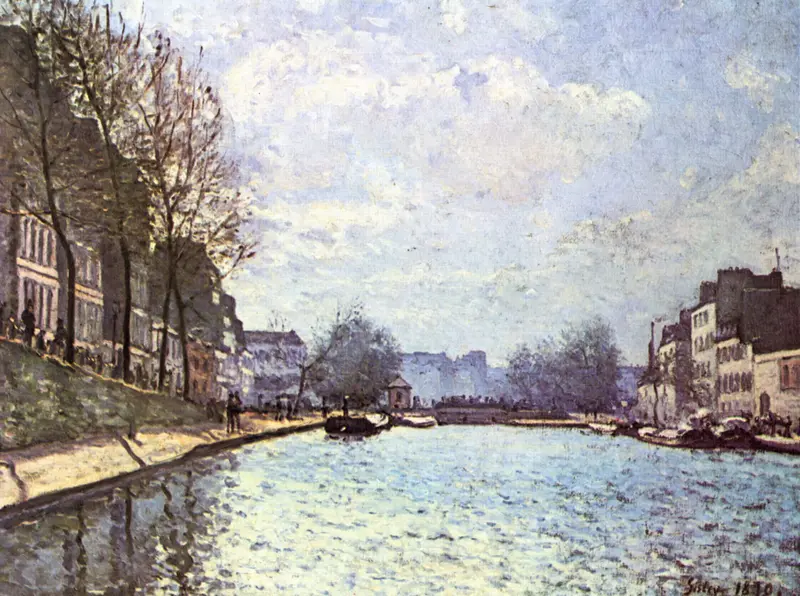
View of the Canal Saint-Martin
Alfred Sisley

Le Loing à Saint-Mammès
Alfred Sisley
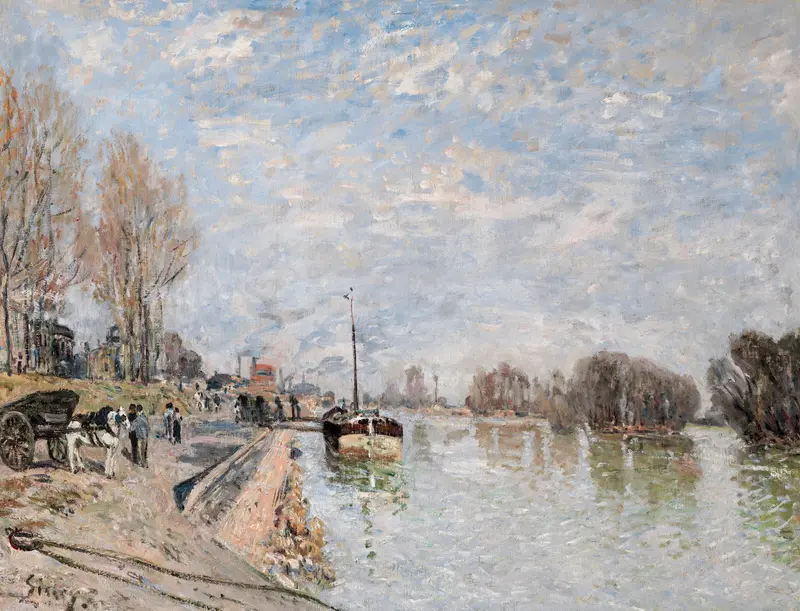
La Seine à Suresnes
Alfred Sisley
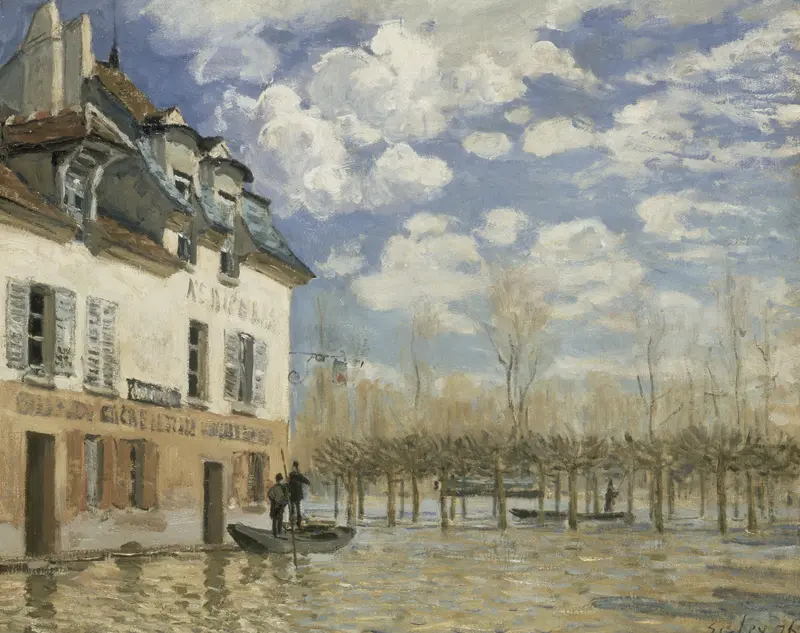
Boat in the Flood at Port Marly
Alfred Sisley
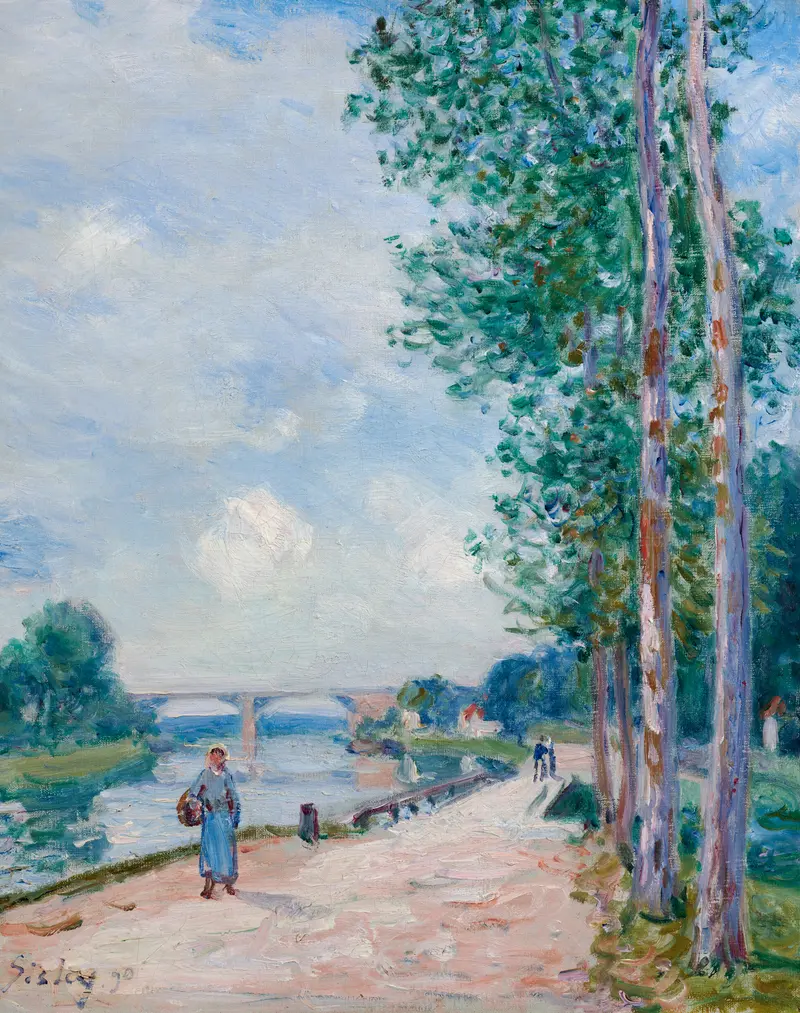
Les bords du Loing près de Moret
Alfred Sisley
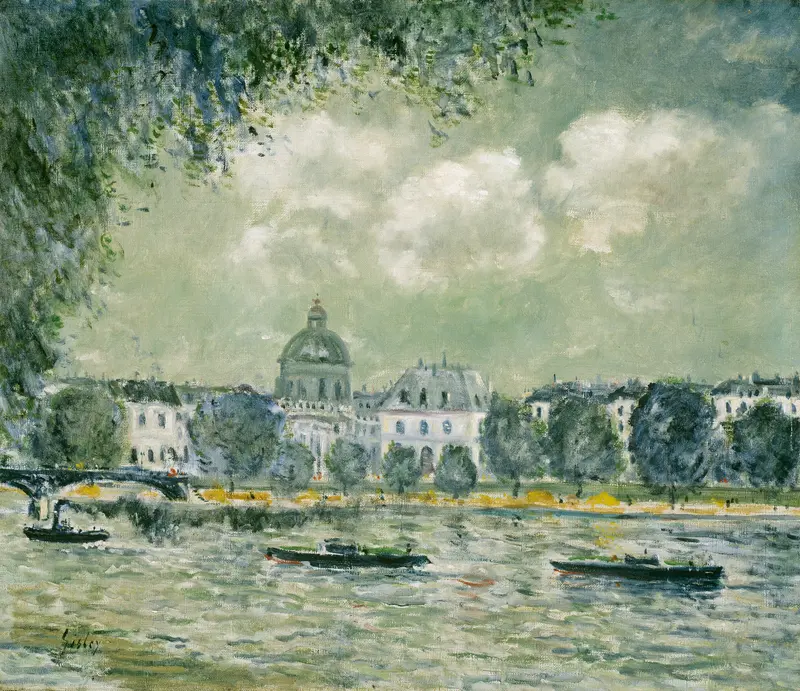
Landscape along the Seine with the Institut de France and the Pont des Arts
Alfred Sisley

Printemps au bord du Loing
Alfred Sisley
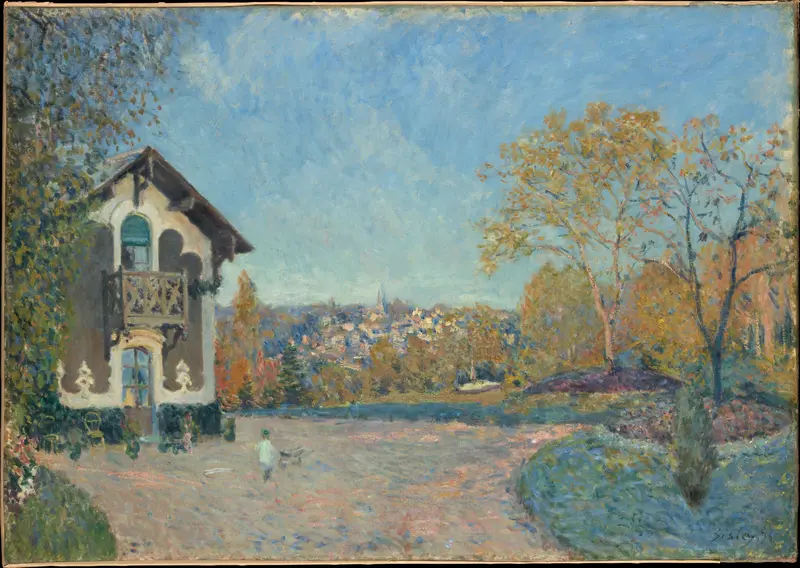
View of Marly-le-Roi from Coeur-Volant
Alfred Sisley
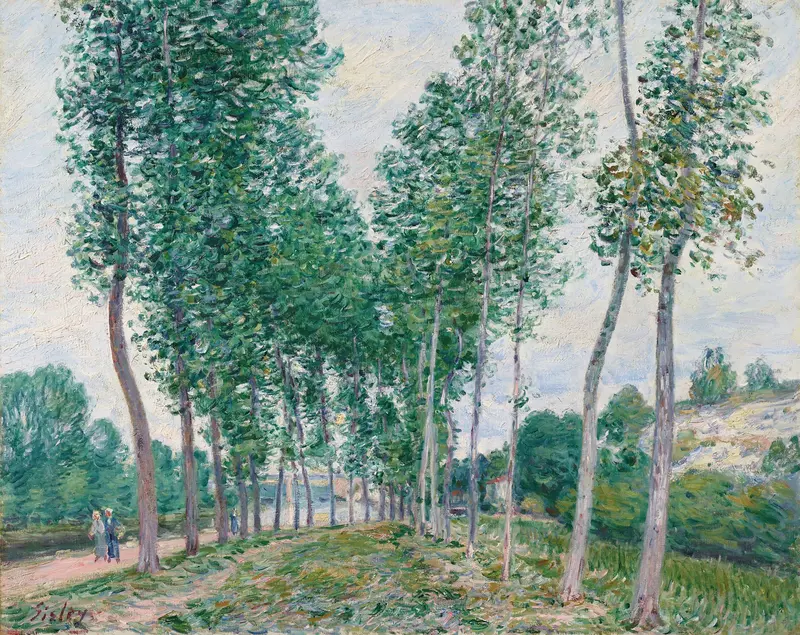
L’allée des peupliers au bord du Loing
Alfred Sisley
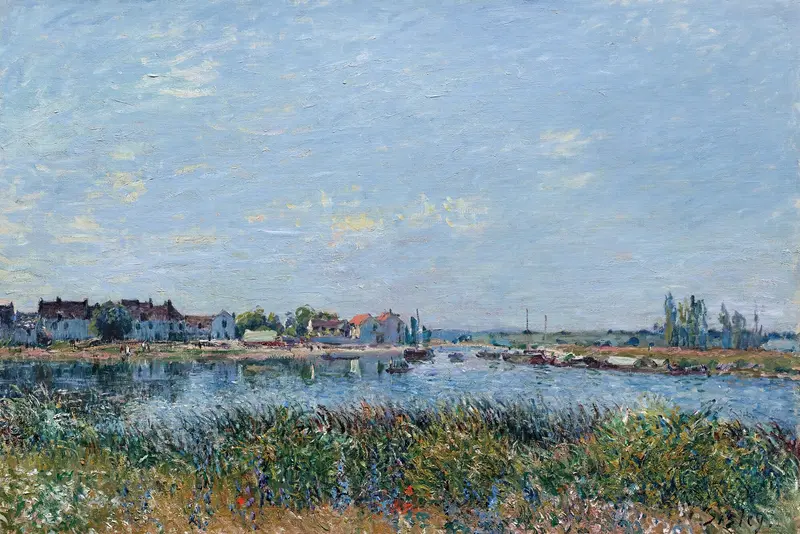
Saint-Mammès, Le Matin
Alfred Sisley
More Landscape Art

The Starry Night
Vincent van Gogh

View of Delft
Johannes Vermeer

Water Lilies
Claude Monet

The Grand Canal, Venice, looking north-west from the Ca' Corner to the Ca' Contarini degli Scrigni, with the campanile of Santa Maria della Carità
Canaletto

Windsor Castle
Canaletto

The Grand Canal looking North-East from the Palazzo Dolfin-Manin to the Rialto Bridge
Canaletto