
The ruins of Hampton, Va. — History & Facts
Can paint confess what words never could? In The Ruins of Hampton, Va., the silence of destruction speaks volumes, inviting a profound contemplation of loss and resilience. Look closely at the foreground, where crumbling walls and shattered timbers assert their presence against the backdrop of a stark sky. The artist employs a muted palette, infusing shades of grey, ochre, and faded blue that echo the desolation of the landscape. Notice how the light struggles to penetrate the remnants of the building, casting long shadows that stretch like memories across the ground, evoking a sense of what was once whole. Hidden within the ruins are stories of lives interrupted, a contrast between the stark physicality of decay and the whispers of the past.
The gnarled branches of nearby trees seem to reach out, as if mourning the vanished vibrancy of the town. This interplay of nature and architecture creates an unsettling dialogue, reminding us that time is both a destroyer and a healer. The void left by absence is palpable, leaving viewers to grapple with their own interpretations of history and grief. William McIlvaine created this work in 1862, during a tumultuous period in American history marked by the Civil War.
Living in Virginia, he witnessed firsthand the devastation wrought by conflict. This painting emerges as a poignant testament to the impact of war on communities, encapsulating the stark realities faced by individuals and the broader societal shifts occurring in a nation divided.
More Artworks by William McIlvaine
Browse all →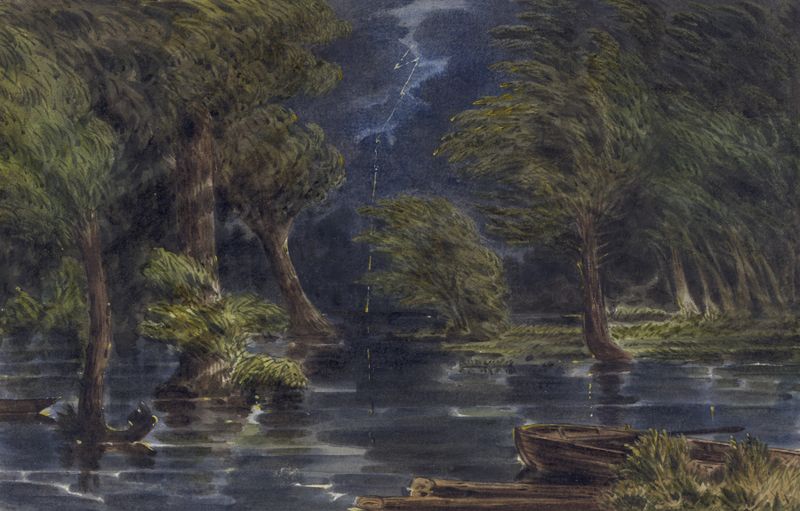
The Chickahominy Swamp
William McIlvaine
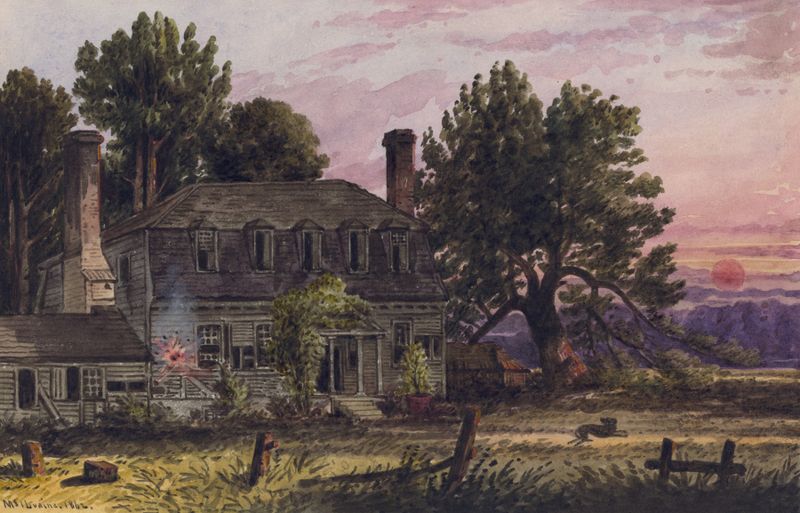
The Moore House near Yorktown, Va. (Front)
William McIlvaine
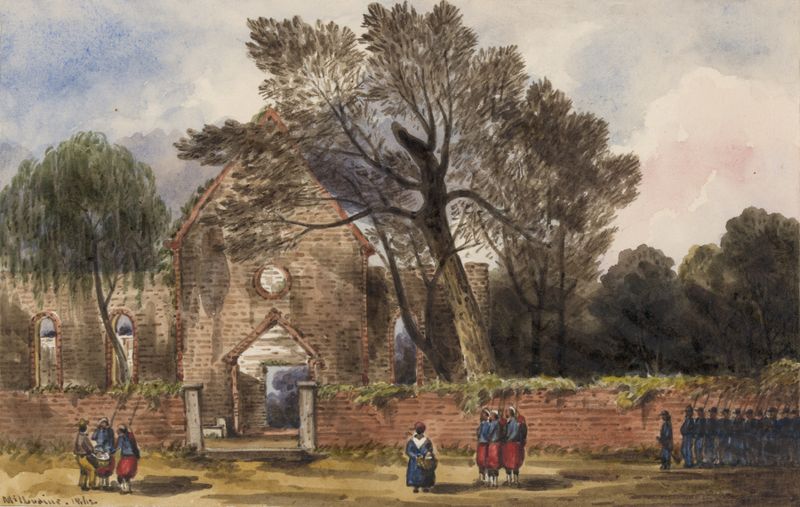
Ruins of church at Hampton, Va.
William McIlvaine

The Moore House near Yorktown, Va. (Rear)
William McIlvaine
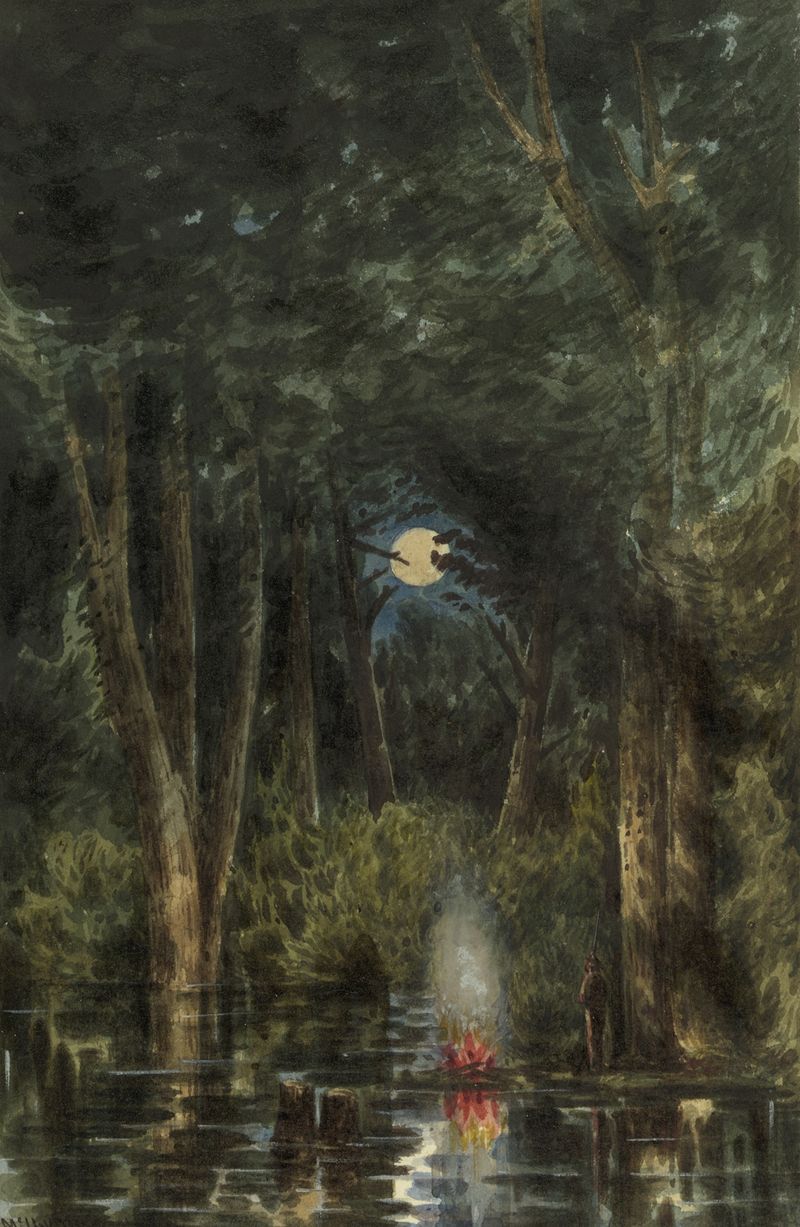
View in the Chickahominy Swamp
William McIlvaine
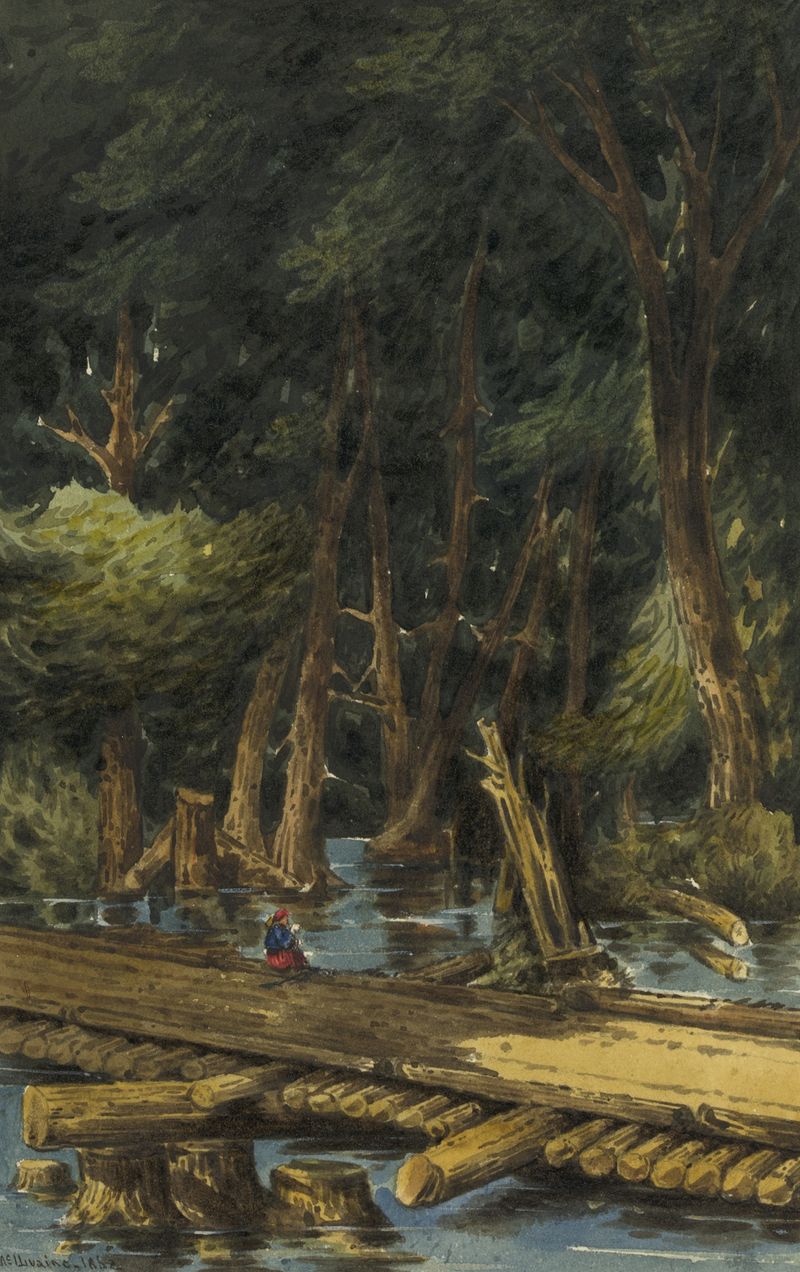
The Chickahominy – Alexanders Bridge
William McIlvaine
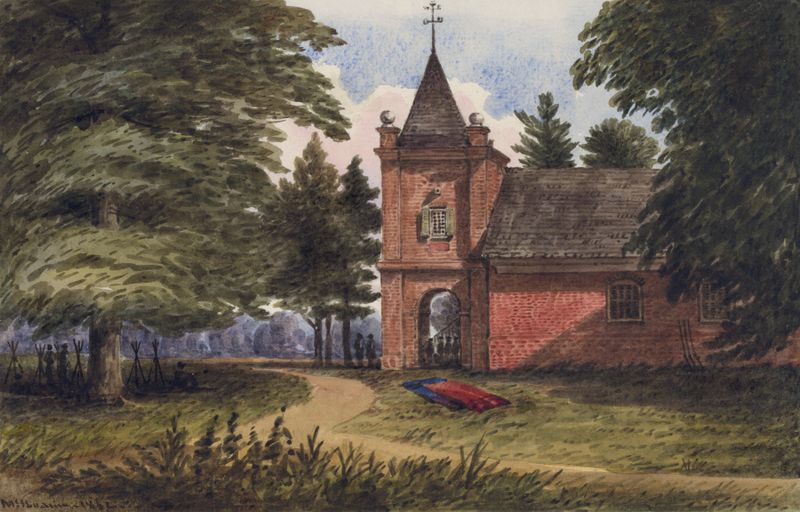
St. Peters Church, near White House, Va.
William McIlvaine

St. Peter’s Church interior
William McIlvaine

The Chickahominy – Sumners Upper Bridge
William McIlvaine
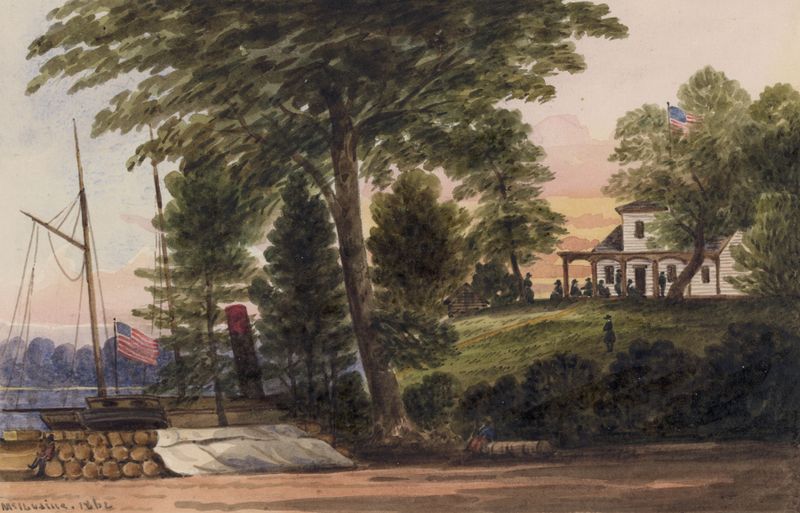
The White House – Pamunkey River, Va.
William McIlvaine





