St. Peter’s Church interior — History & Facts
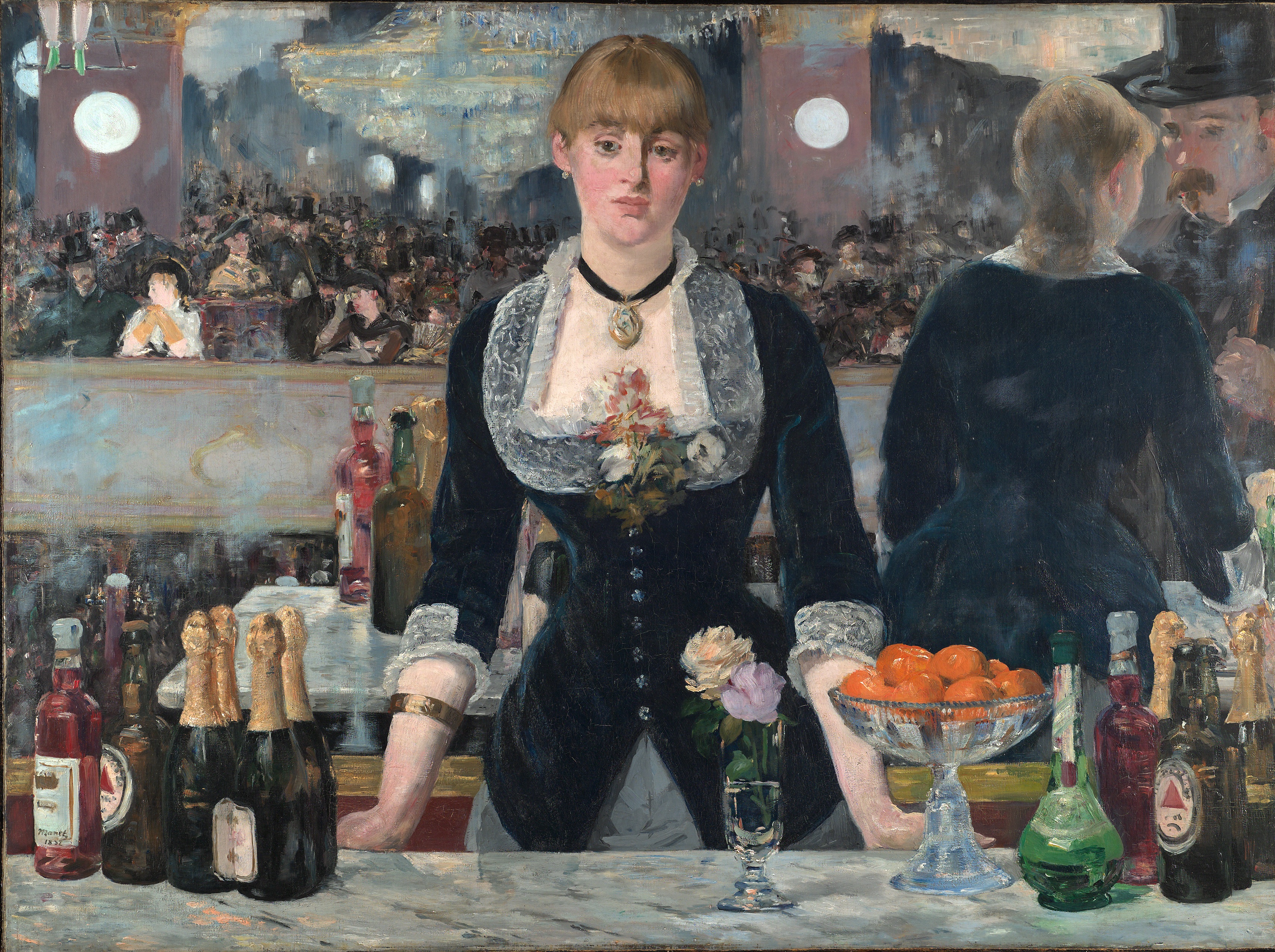
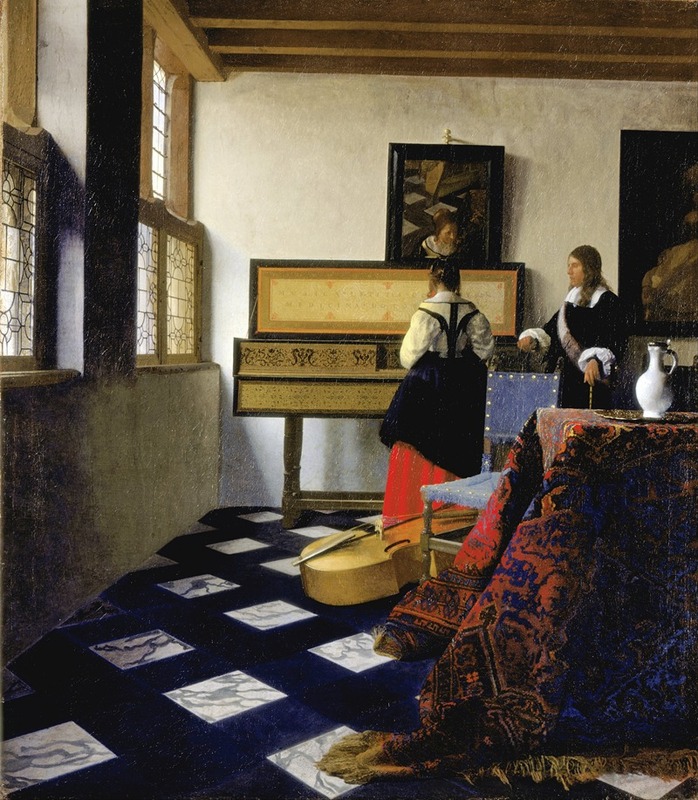
Could beauty survive in a century of chaos? In the delicate interplay of light and shadow within a sacred space, the dream of tranquility emerges, inviting contemplation. Look to the left at the ornate columns that reach skyward, their intricate designs weaving a narrative of devotion and artistry. Notice how the soft, golden light filters through stained glass, casting colorful patterns upon the stone floor. The composition leads your gaze upward to the vaulted ceiling, where grandeur meets serenity in harmonious symmetry, drawing the viewer into a world where time pauses and reverence resides. Beneath this serene surface, a tension exists between the sacred and the fleeting nature of existence.
The juxtaposition of transient light against the enduring architecture evokes a sense of impermanence, while the vibrant hues of the stained glass reflect the hopes and struggles of those who sought refuge within these walls. Each detail, from the flicker of candlelight to the shadows that linger, speaks to the resilience of faith amid life's uncertainties. In 1864, William McIlvaine painted this interior in a world teetering on the brink of change. As the Industrial Revolution transformed landscapes and lives, McIlvaine found solace in capturing the divine serenity of St.
Peter's Church, a testament to the enduring power of spiritual beauty amid societal upheaval. The work stands as a poignant reminder of art's role in preserving the essence of human experience during tumultuous times.
More Artworks by William McIlvaine
Browse all →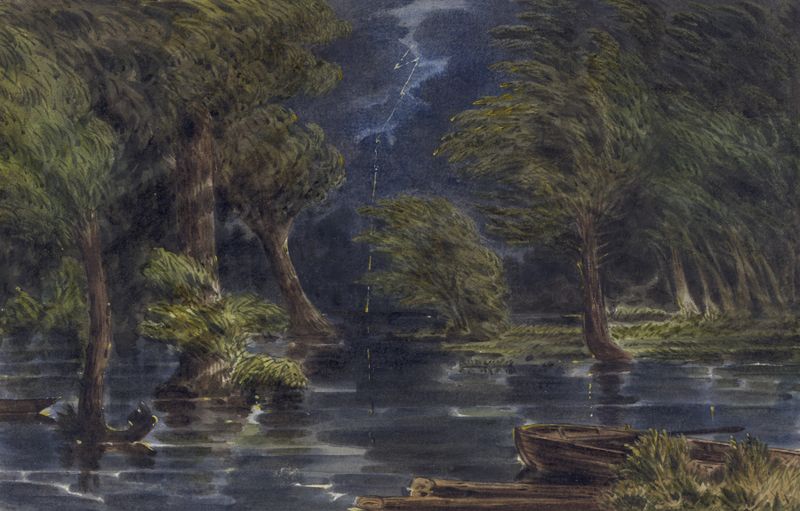
The Chickahominy Swamp
William McIlvaine
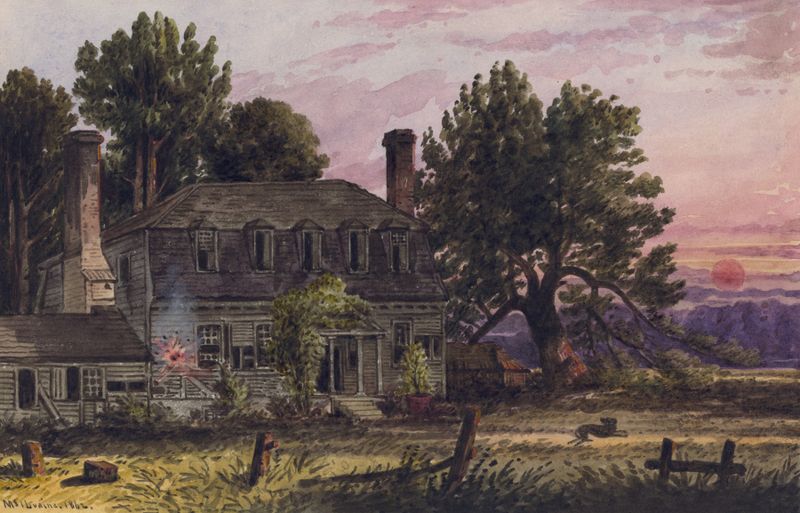
The Moore House near Yorktown, Va. (Front)
William McIlvaine
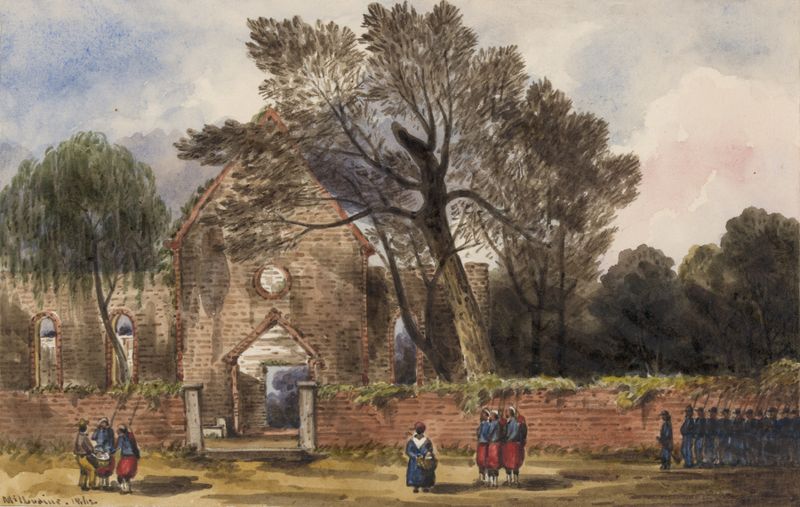
Ruins of church at Hampton, Va.
William McIlvaine

The Moore House near Yorktown, Va. (Rear)
William McIlvaine
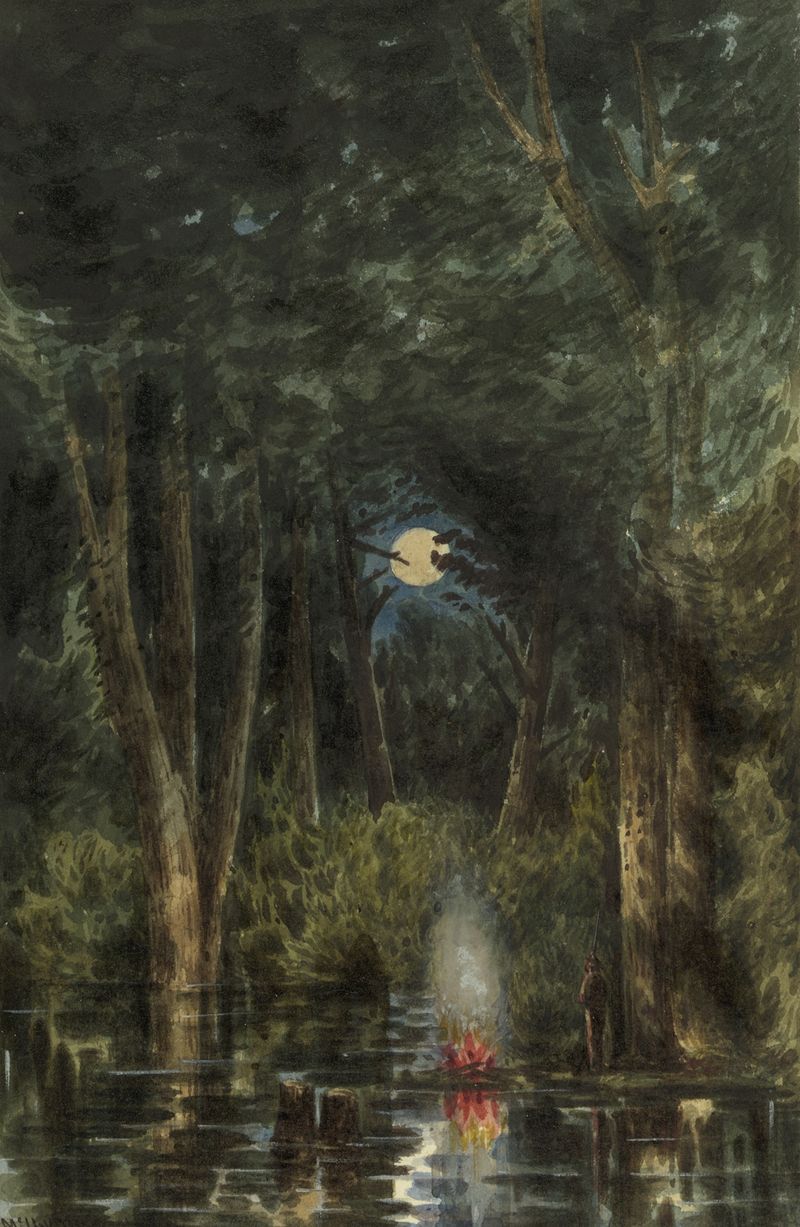
View in the Chickahominy Swamp
William McIlvaine
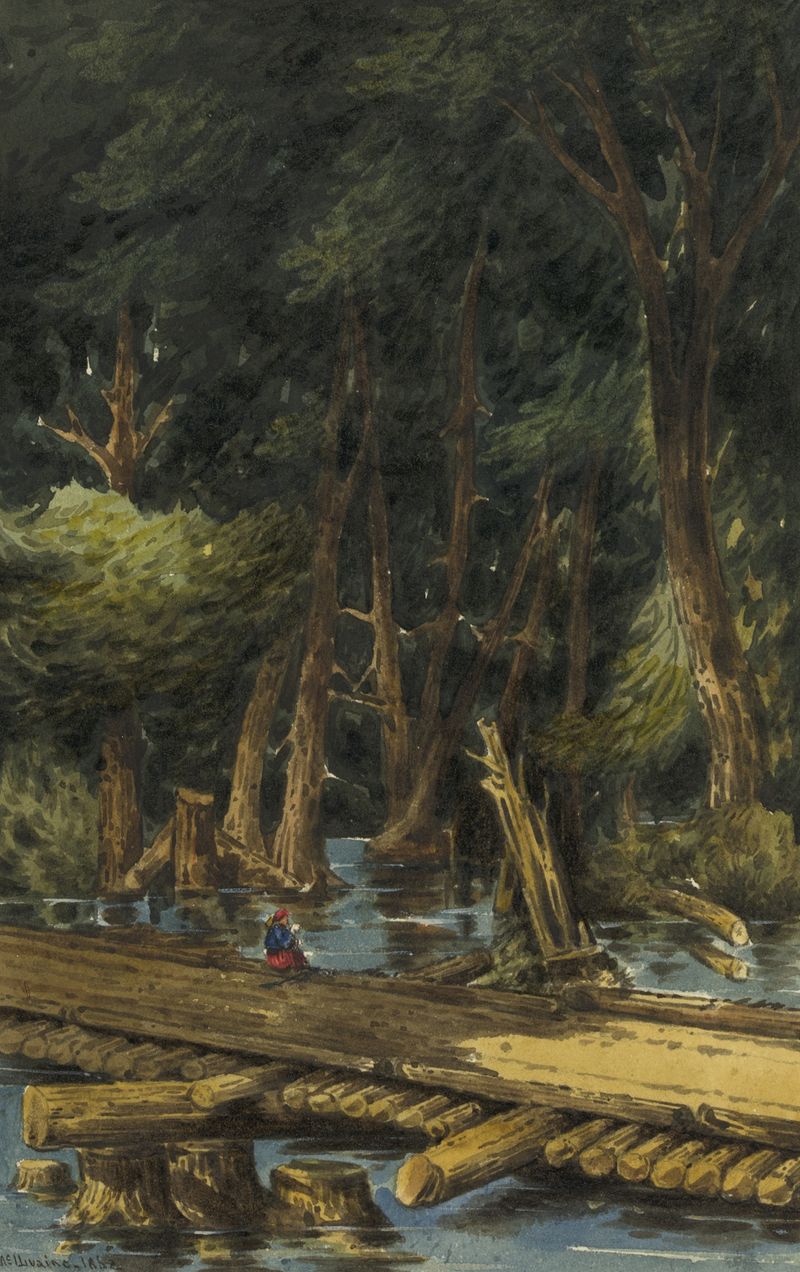
The Chickahominy – Alexanders Bridge
William McIlvaine
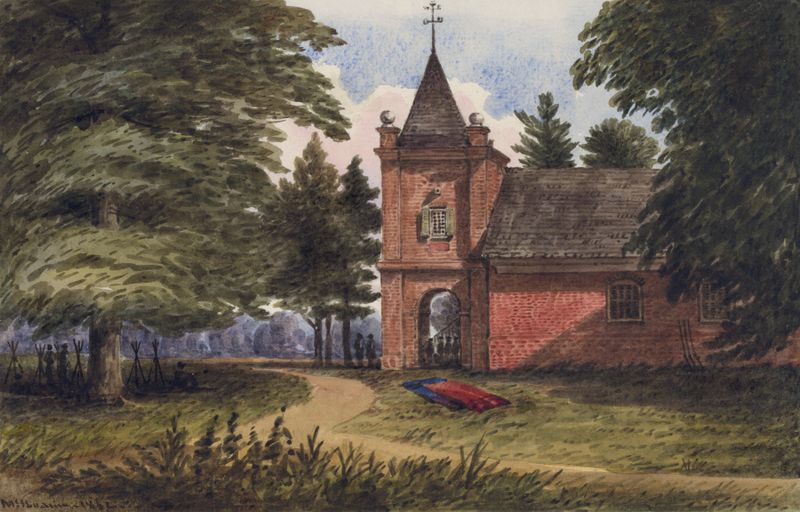
St. Peters Church, near White House, Va.
William McIlvaine
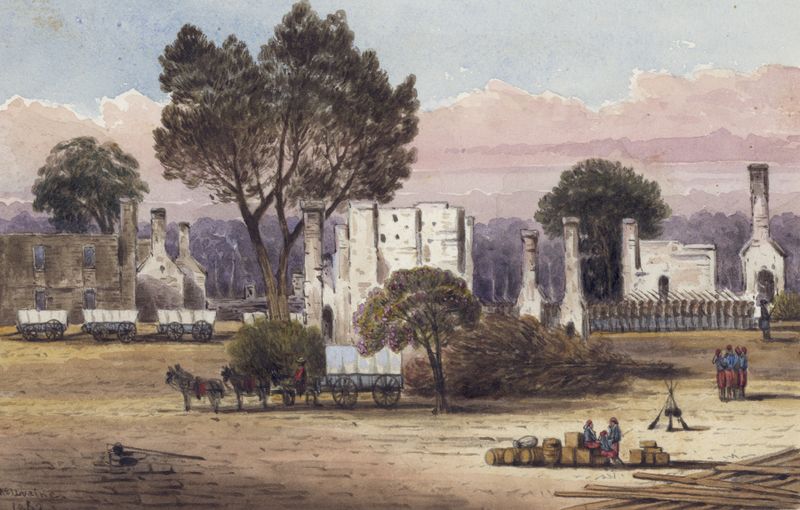
The ruins of Hampton, Va.
William McIlvaine

The Chickahominy – Sumners Upper Bridge
William McIlvaine
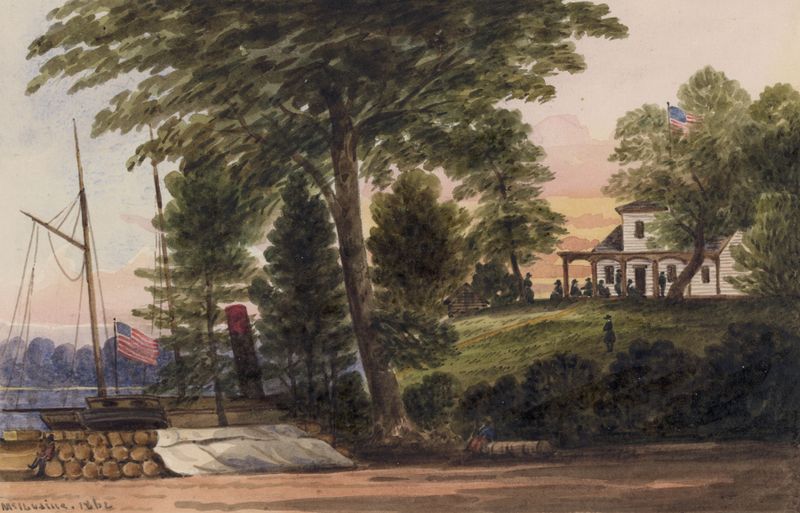
The White House – Pamunkey River, Va.
William McIlvaine