
The ruins of the temple of the sun, Palmyra — History & Facts
In The ruins of the temple of the sun, Palmyra, Carl Haag presents a striking landscape dominated by the remnants of ancient architecture. The painting features warm earth tones, with sandy yellows and browns contrasting against the clear blue sky. The ruins are depicted with intricate details, showcasing columns and stone structures that hint at the temple's former grandeur.
Sparse vegetation surrounds the site, emphasizing the desolation of this once-thriving location. The painting is rendered in oil on canvas, a medium that allows for rich color and texture. Haag's brushwork is meticulous, capturing the weathered surfaces of the ruins and the play of light across the landscape. The composition draws the viewer's eye toward the temple ruins, creating a sense of depth and perspective.
The approximate dimensions of the work are 100 x 150 cm, making it a sizable representation of this historical site. Carl Haag was a German painter known for his Orientalist works, often depicting scenes from the Middle East. This painting reflects his fascination with ancient cultures and ruins, particularly those of Palmyra, which was a significant trading hub in antiquity. An interesting fact about this work is that it was created during a time when European interest in the East was at its peak, influencing many artists to explore and depict exotic locales.
Haag's attention to detail and historical accuracy makes this piece a valuable representation of 19th-century Orientalism.
More Artworks by Carl Haag

Dance Of The Almeh
Carl Haag
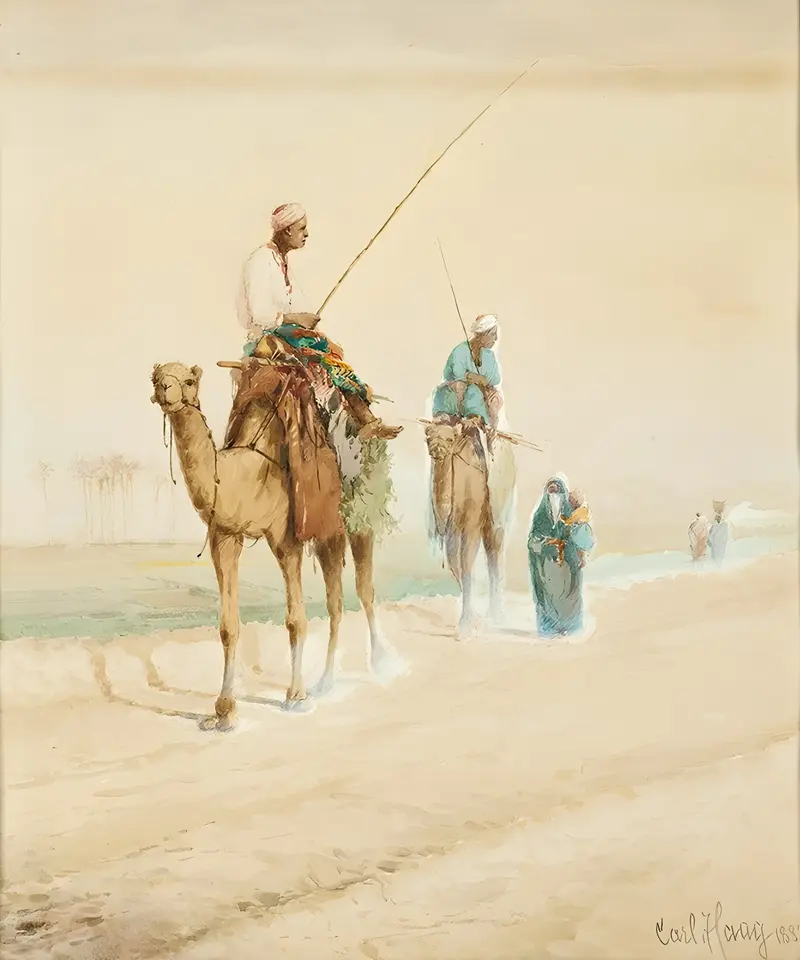
Arab travellers on an Egyptian road
Carl Haag
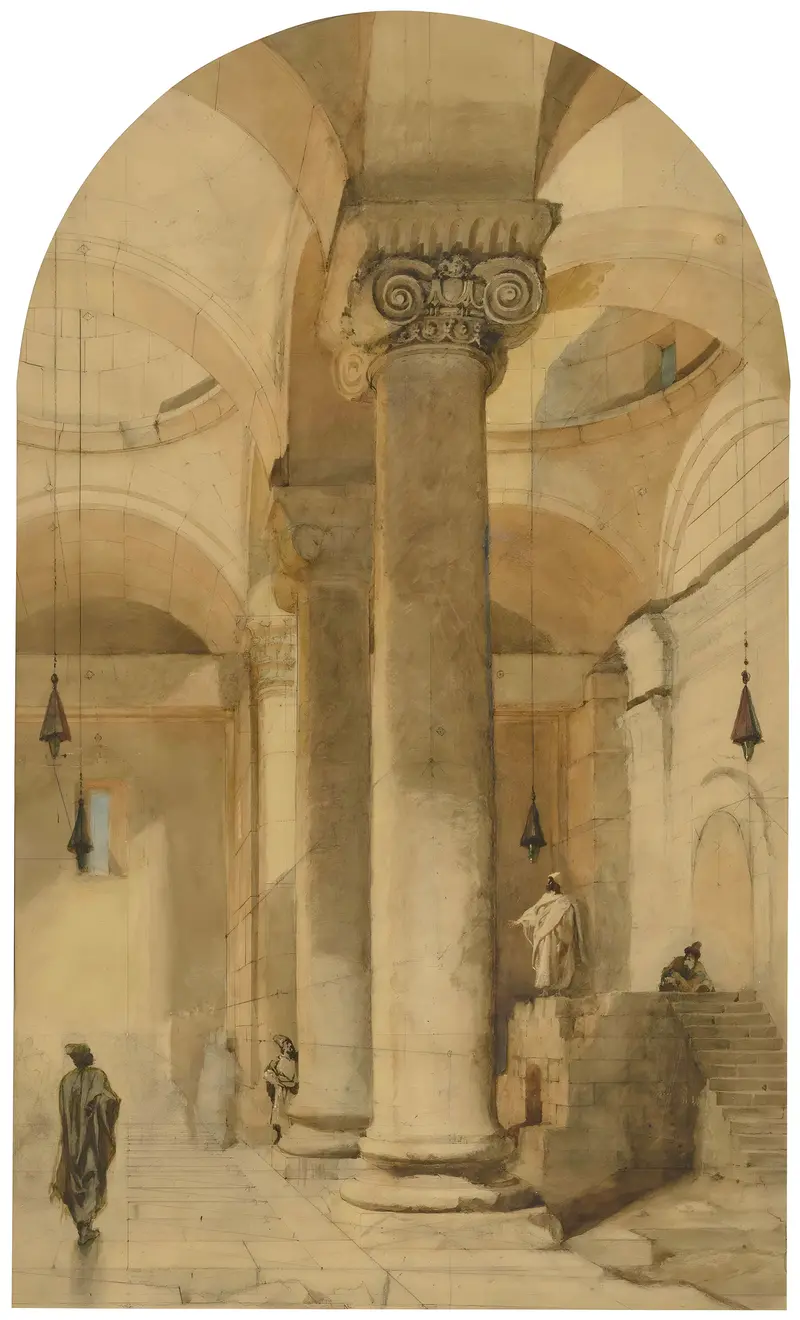
Interior of the Golden Gateway in the Temple area of Jerusalem
Carl Haag
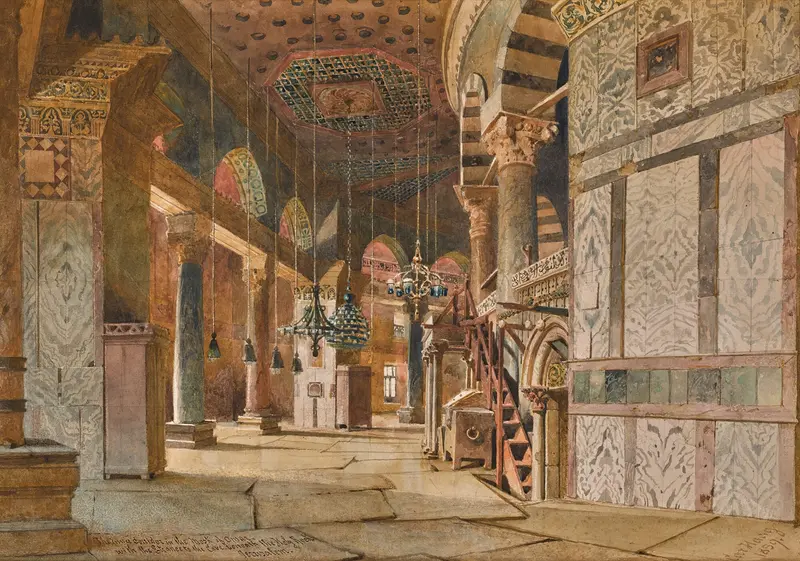
The inner corridor of the dome of the rock, Jerusalem
Carl Haag
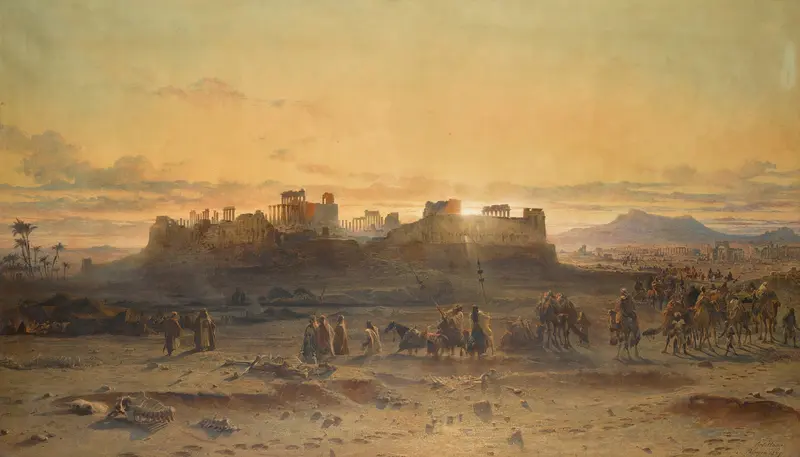
The ruins of the temple of the sun, Palmyra
Carl Haag
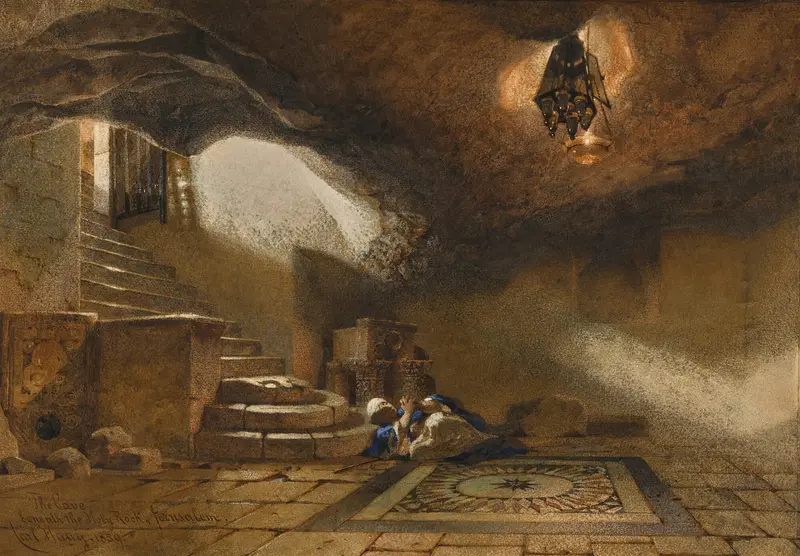
The cave beneath the Holy rock, Jerusalem
Carl Haag
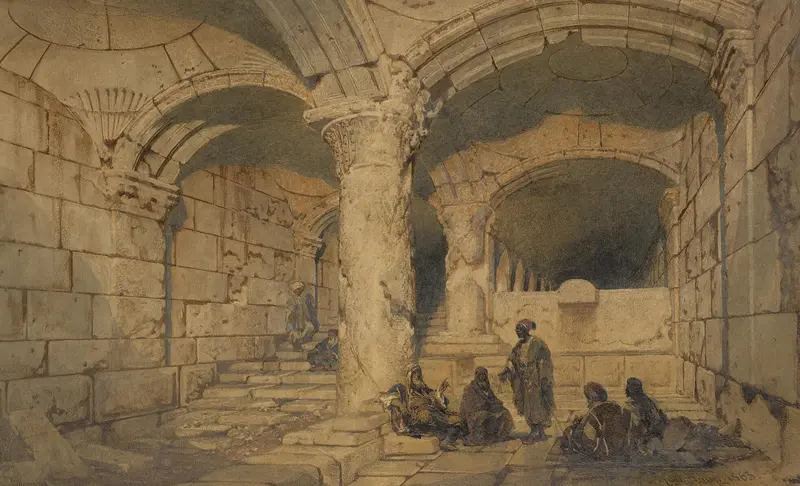
Arab figures in a vault within the Al-aqsa mosque, Jerusalem
Carl Haag
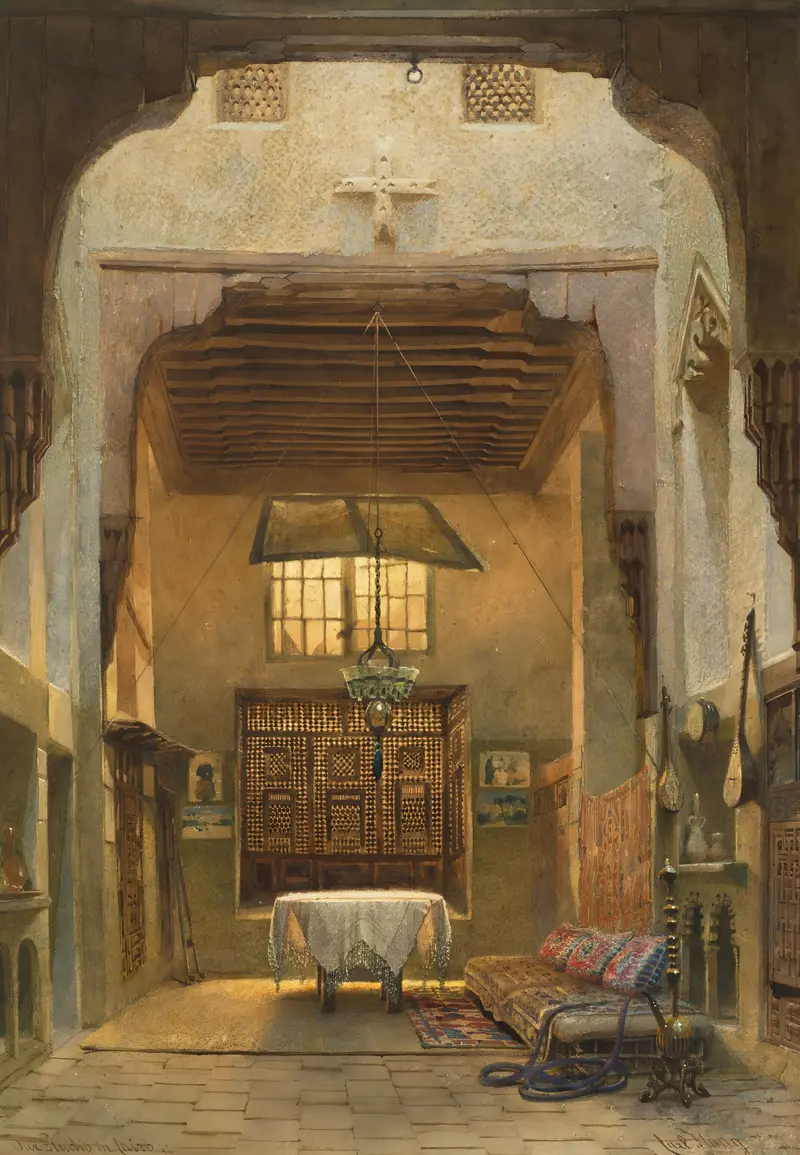
The artist’s studio in Cairo
Carl Haag
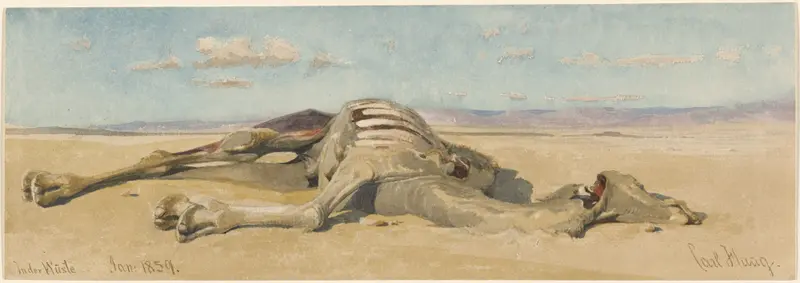
In der Wüste (In the Desert)
Carl Haag
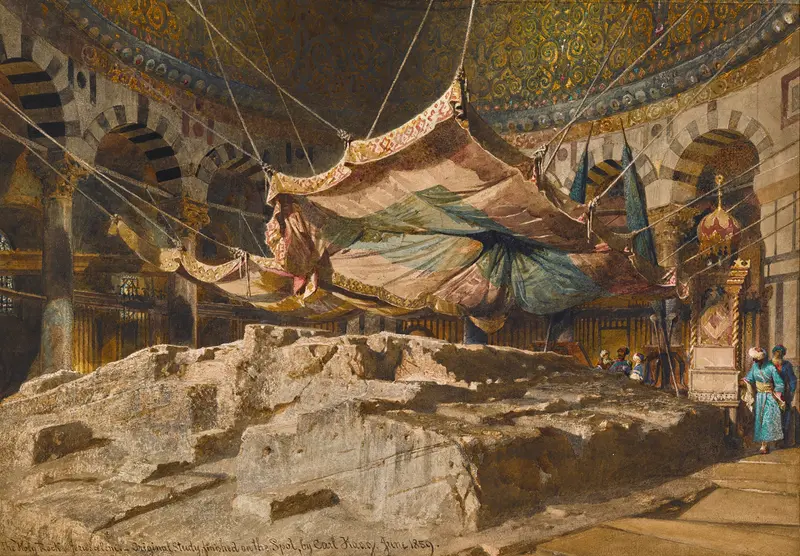
The Holy rock, Jerusalem
Carl Haag





