Discover insights about this artwork
The Sick Child I — History & Facts
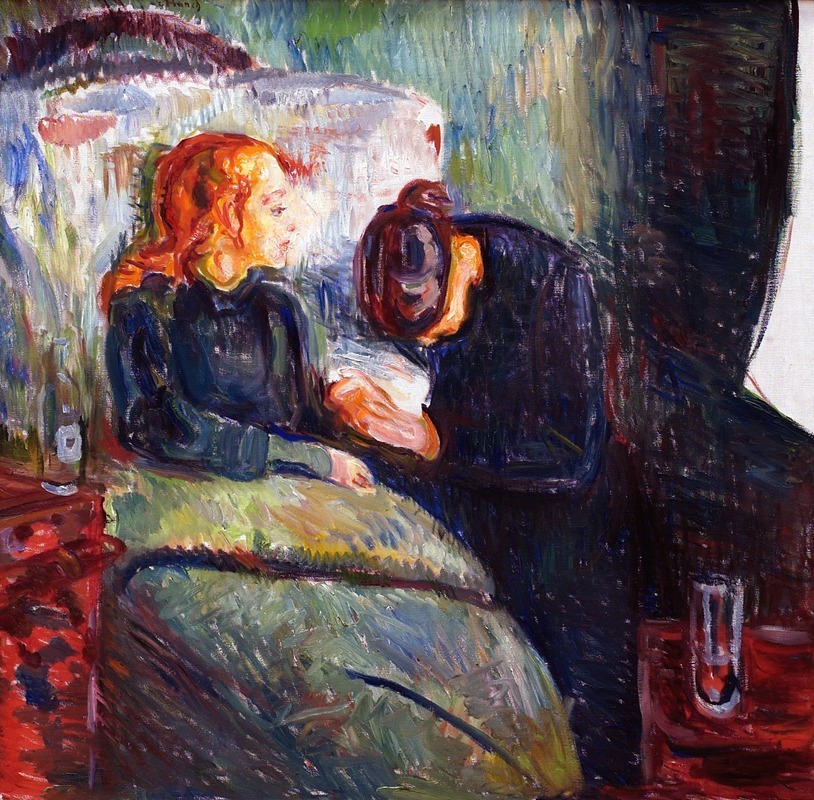
In The Sick Child I, Edvard Munch presents a somber scene filled with muted colors. The central figure, a sick child, is depicted with a pale complexion, surrounded by dark, shadowy forms. The background features a blurred, indistinct setting that adds to the feeling of isolation.
The overall atmosphere is heavy, reflecting the emotional weight of illness and despair. Munch uses oil on canvas to create this work, employing a loose brushstroke technique that enhances the emotional impact. The colors are predominantly dark, with splashes of sickly greens and yellows that evoke a sense of discomfort. The composition is intimate, focusing closely on the child and the figures around them, which amplifies the viewer's sense of empathy.
The painting's dimensions are approximately 80 x 100 cm, making it a significant piece within Munch's oeuvre. This painting is part of Edvard Munch's exploration of themes related to illness and death, which were deeply personal to him. The Sick Child I is one of several works Munch created during the 1880s, reflecting his own experiences with loss and grief. An interesting fact about this work is that it was inspired by the illness of Munch's own sister, who died of tuberculosis.
This personal connection adds a layer of depth to the already intense emotional expression seen in the painting.