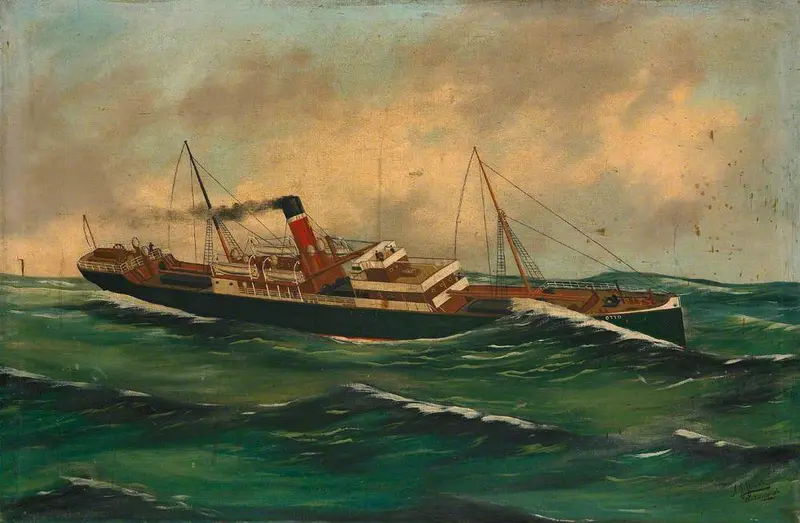
The Steam Ship Wharfe at Sea — History & Facts
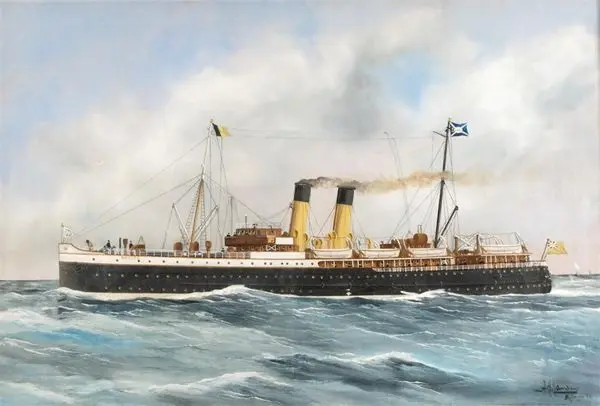
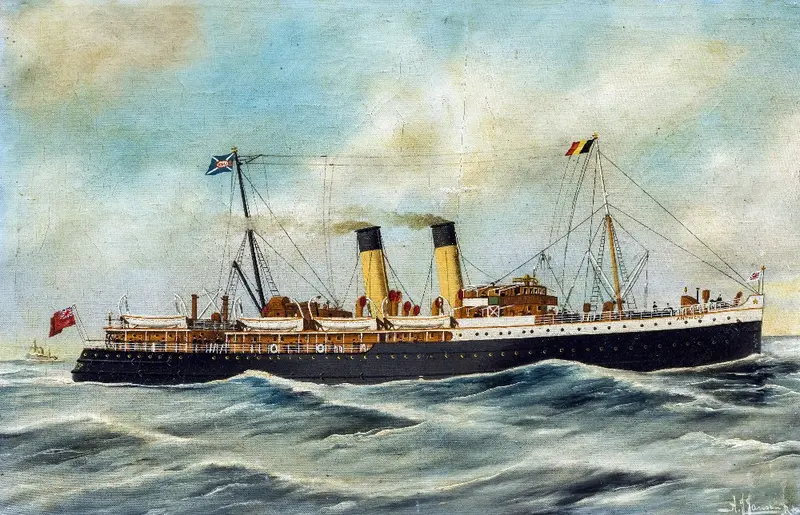
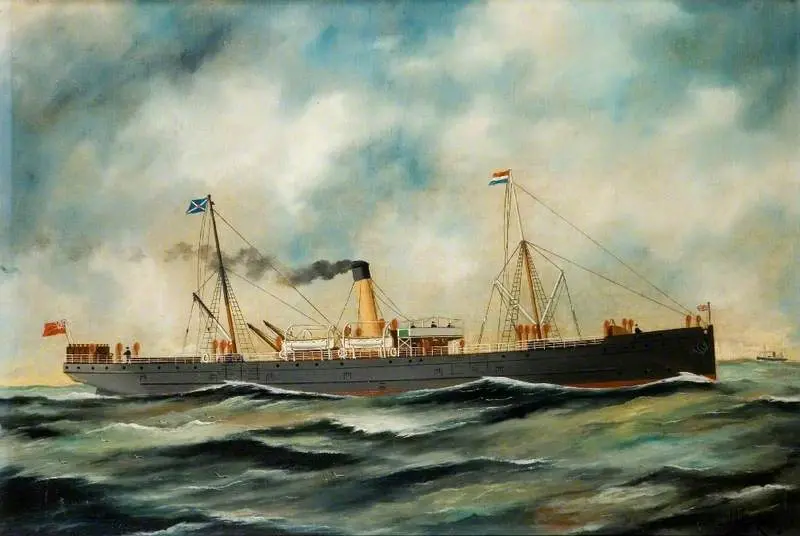
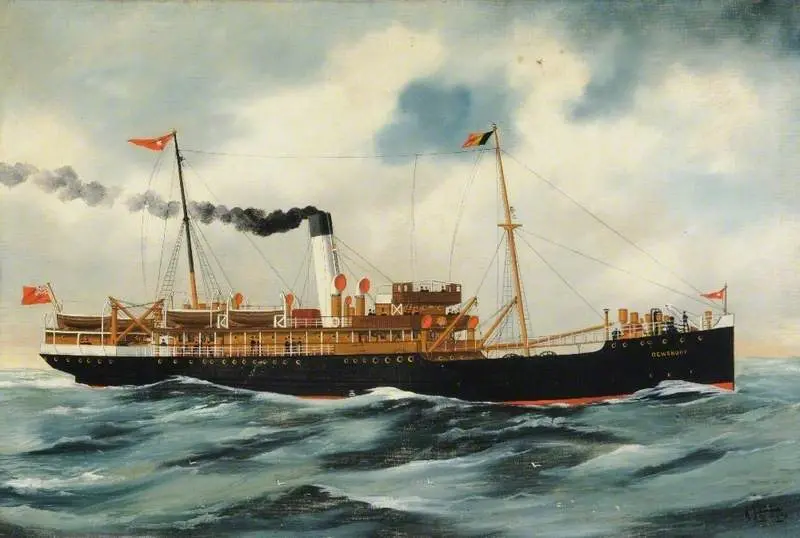
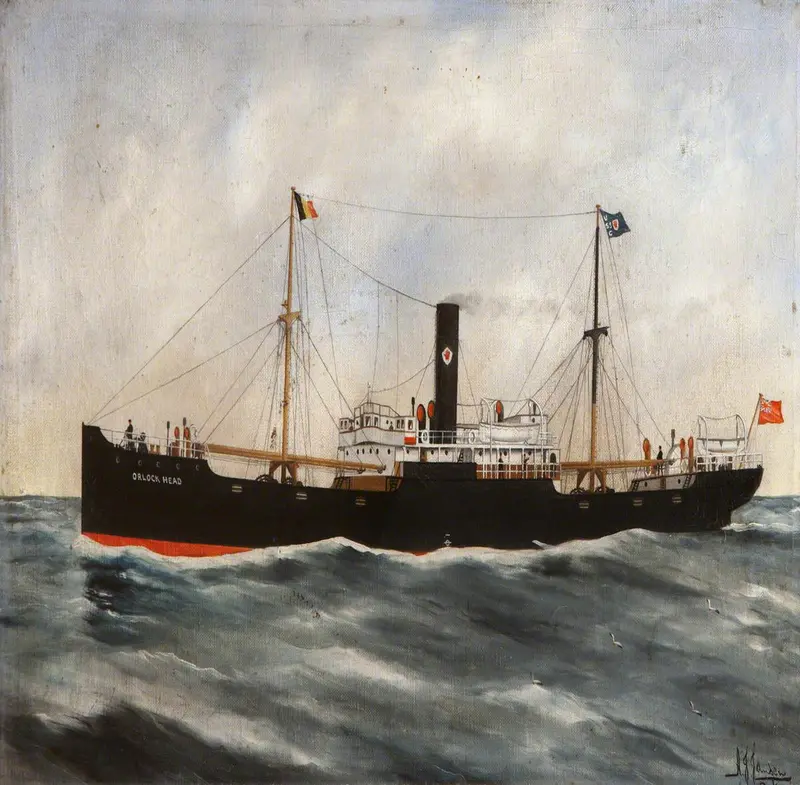
The eye is drawn first to the proud silhouette of the steamship, slicing across the restless water, its hull painted with meticulous care and its flags snapping crisply in the wind. The vessel’s black body stands in sharp contrast to the pale, cloud-streaked sky, while the angled smokestack sends a trail of smoke drifting into the blue. Every line and rigging detail serves to anchor the ship’s presence, suggesting both technical precision and the artist’s fascination with maritime engineering.
The low horizon gives the sky an expansive role, dwarfing the ship and emphasizing the vastness of the sea it traverses. The sense of movement is subtle but persistent: the angled waves, the tilt of the funnel, the tautness of the flags all point to a journey underway, the ship neither at rest nor in peril, but caught in the steady business of passage. Painted in 1895, The Steam Ship Wharfe at Sea belongs to a period when steam-powered vessels were symbols of industrial progress and national pride. Marine paintings of this era were often commissioned by shipping companies or shipowners, eager to celebrate their newest technological achievements or commemorate a vessel’s launch.
The artist, A. J. Jansen, signs and dates his work in the lower right, but history has kept few traces of his career or this ship’s particular story.
Such paintings were both records and aspirations, capturing the dignity of modern transport at a moment when the world’s horizons were expanding rapidly. Stand before this image and consider the confidence of an age that found poetry in steel, steam, and the open sea.