The Steam Vessel 'St Petersburg'. — History & Facts
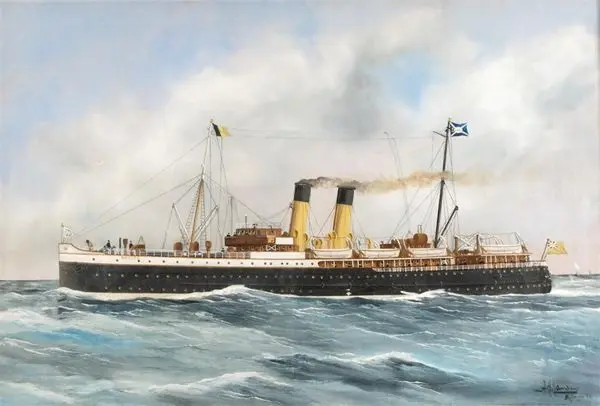
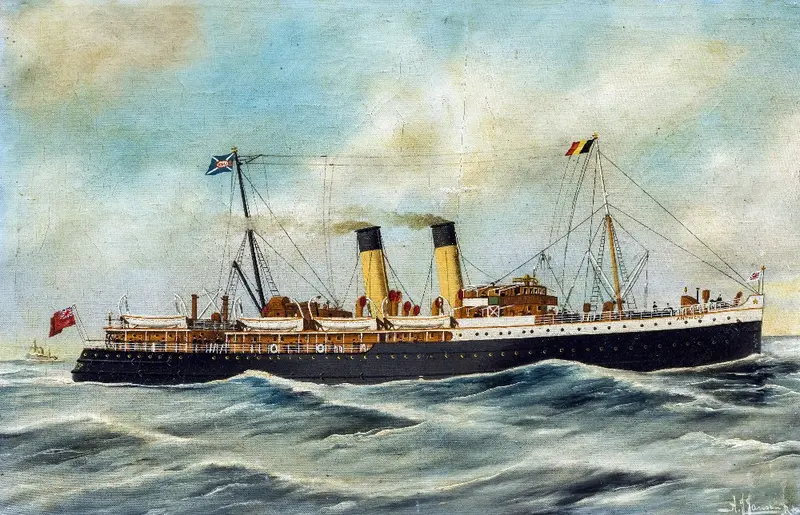
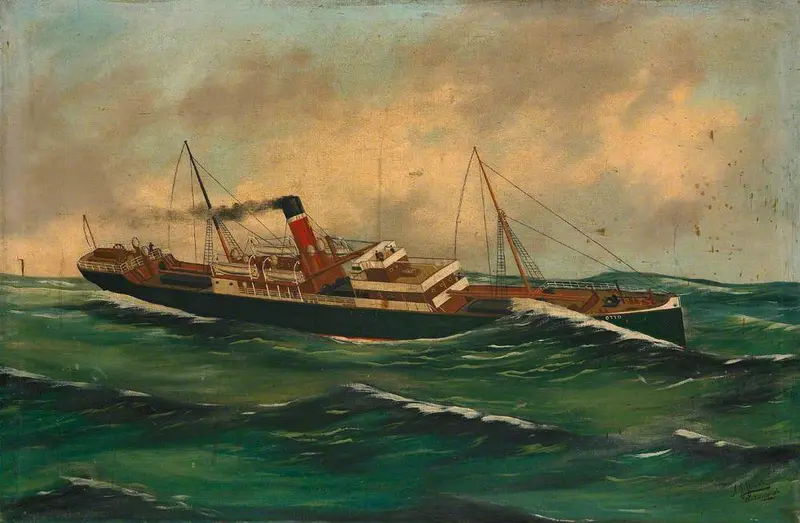
The first thing that arrests the viewer in The Steam Vessel 'St Petersburg' by A. J. Jansen is the ship’s proud silhouette, stretched taut against a sky that seems to open endlessly above the restless sea.
The vessel’s hull, painted a deep, almost impenetrable black, slices through the churning blue-green water, while the ochre funnels send up ribbons of smoke that dissolve into the clouds. Flags whip crisply at the masts—each one a coded announcement of nationality and allegiance—while the careful rendering of deck details invites the eye to linger over lifeboats, railings, and the bustle of unseen activity. The low horizon grants the sky a commanding presence, making the ship feel both powerful and alone, a moving island of industry in a vast, indifferent world. Painted in the 1910s, this work belongs to an era when steamships were the engines of global connection and national pride.
Marine paintings like this were often commissioned by shipping lines or proud captains, intended as records of technological achievement and symbols of modernity. The artist’s attention to the ship’s features—its flags, its lines, its confident stance—reflects a time when vessels such as the St Petersburg were both marvels of engineering and emblems of their nations’ ambitions. Little is recorded about Jansen’s career or the specific journey of this painting, but its presence in a modern online collection speaks to the enduring fascination with the age of steam.
Every detail, from the wake in the water to the crispness of the rigging, invites us to imagine the world of industry and adventure that once surged across these painted waves.