The steamship Notts — History & Facts
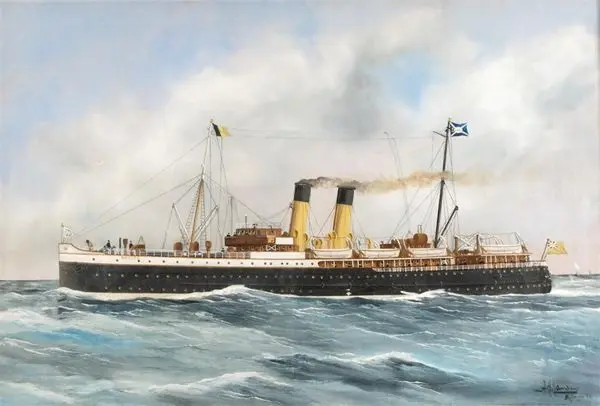
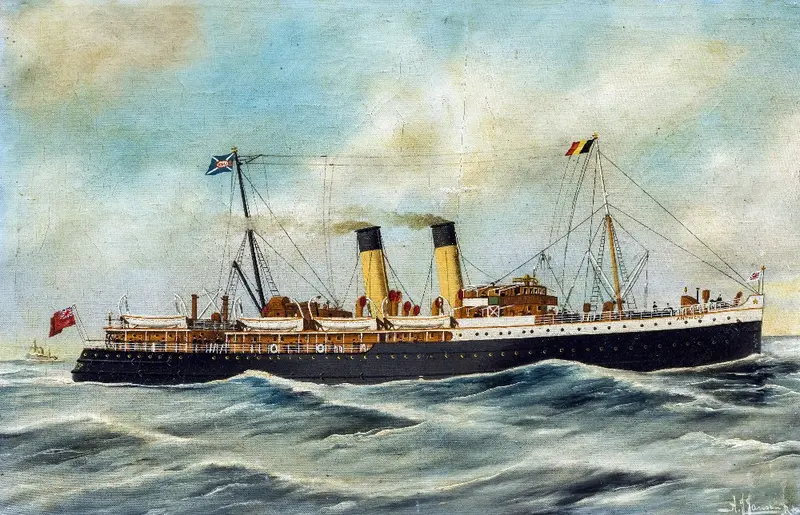
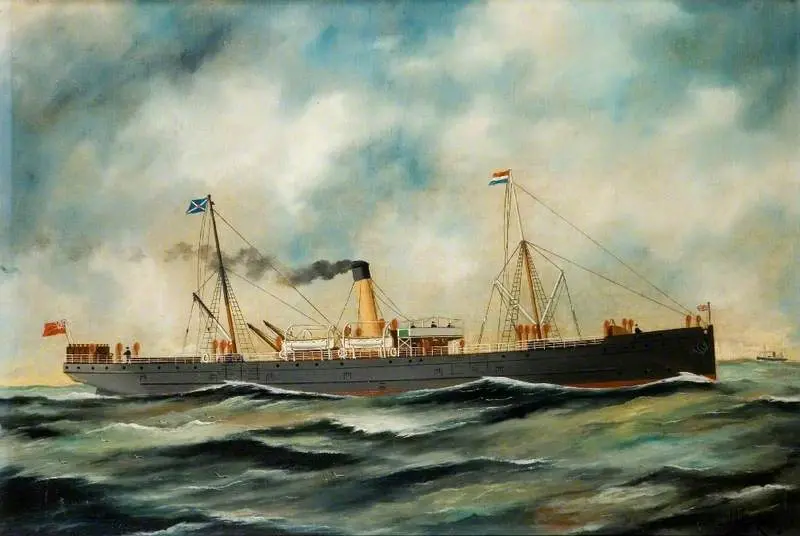
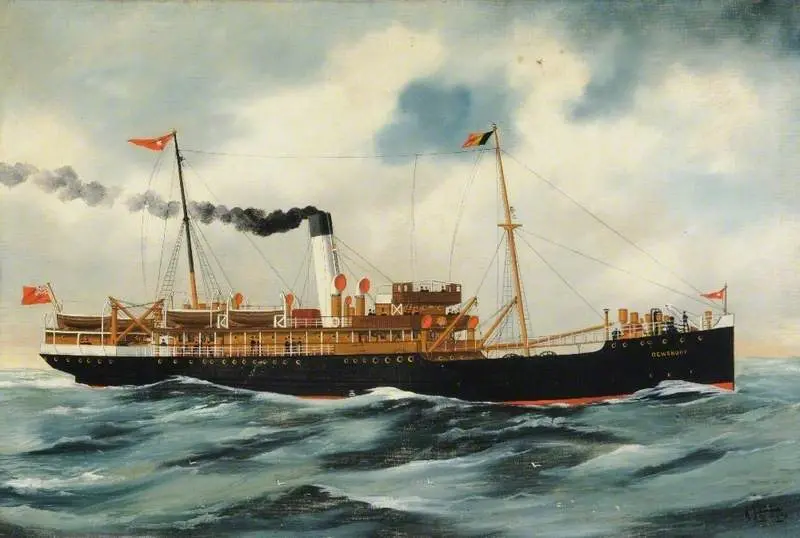
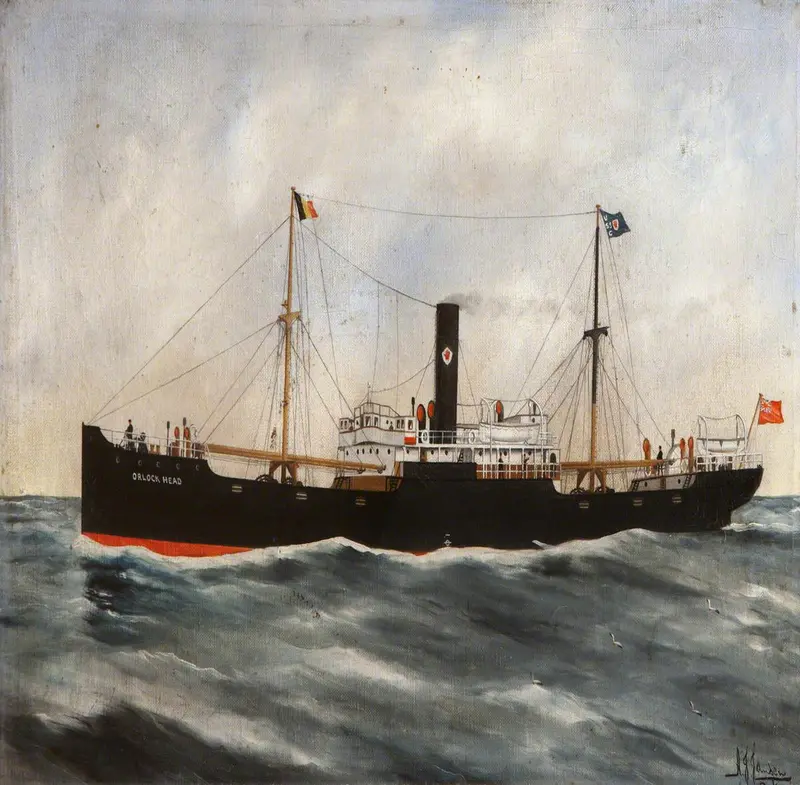
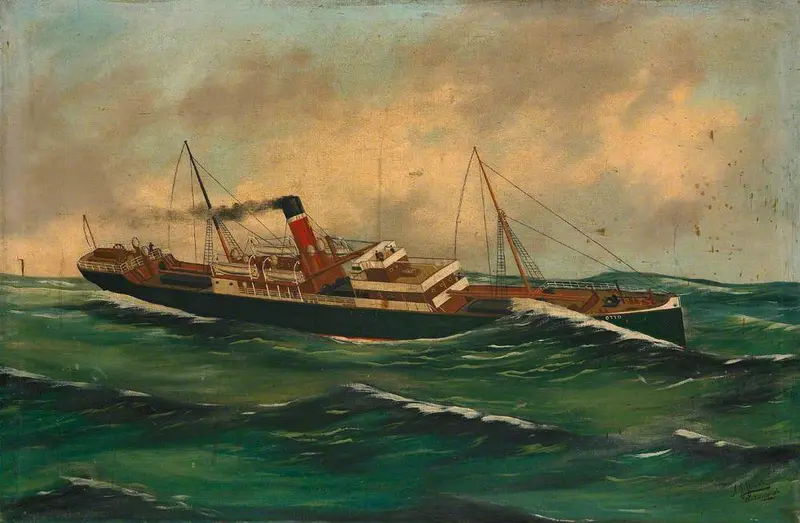
What first catches the eye in The steamship Notts is the sense of pride and precision with which the vessel is presented, cutting cleanly across a restless sea beneath a sky of shifting clouds. The artist, A. J.
Jansen, chooses a low horizon, granting the ship a heroic stature against the open expanse, while the careful rendering of rigging, flags, and lifebelts signals both the importance of detail and the dignity of the subject. The black hull and white funnel, capped with a plume of smoke, mark the ship as a creature of the industrial age, its progress powered by steam and ambition. The red ensign at the stern and the house flag at the masthead quietly declare the ship’s British identity and its connection to a particular line or owner.
Every element serves to celebrate not just a vessel, but a way of life built on maritime trade and technological progress. Painted in 1910, this work belongs to a tradition of ship portraiture that flourished in the age of steam, when shipowners and captains often commissioned such images to commemorate a new launch or a successful voyage. These paintings were both records and advertisements, hung in offices or parlors as emblems of achievement and reliability. By the early twentieth century, the world of shipping was changing rapidly—steamships like the Notts were the backbone of commerce, linking ports and continents with new speed and regularity.
Little is recorded about this particular painting beyond its date and private collection, but it stands as a testament to the pride invested in these vessels and the artists who captured them. Look again at the careful brushwork and the way the ship seems to stride forward: this is the portrait of an era in motion.