The steamship Titanic — History & Facts
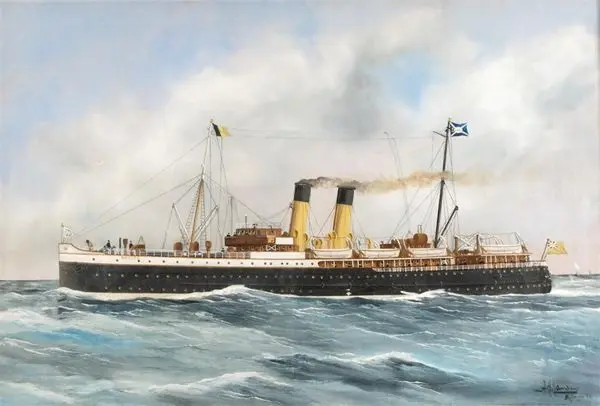
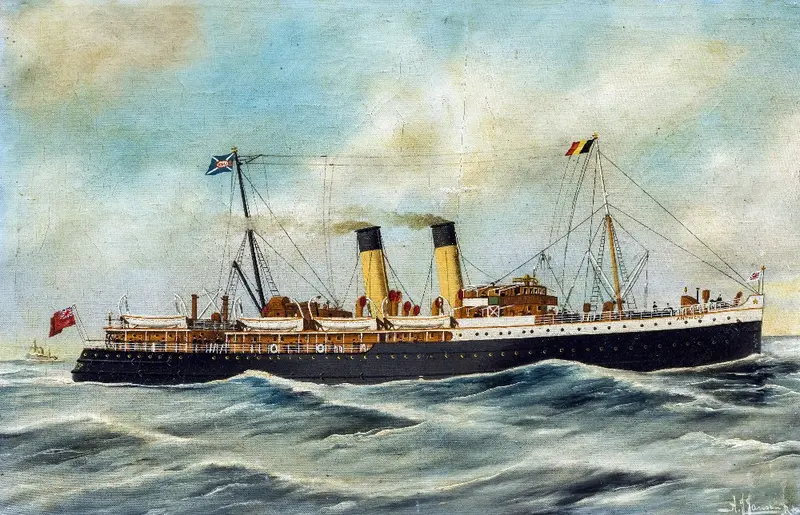
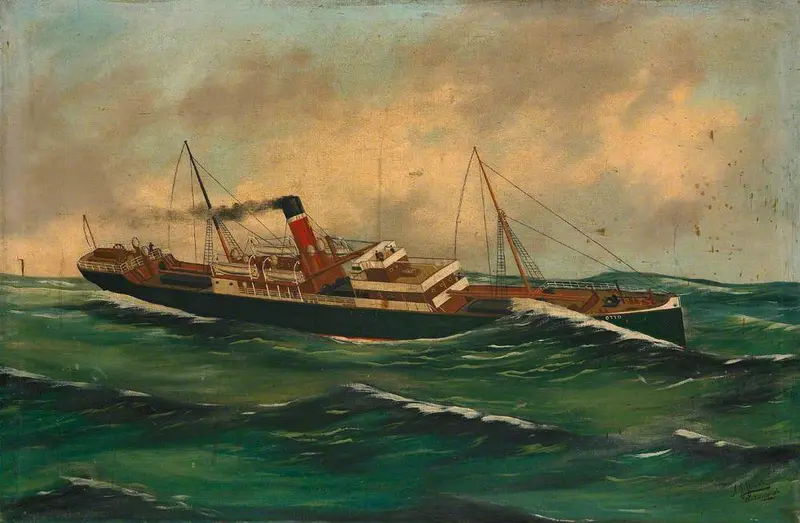
What catches the eye first in The steamship Titanic by A. J. Jansen is not just the ship’s imposing scale, but the way it slices through the churning blue water, a parade of yellow funnels trailing thick smoke into a sky heavy with anticipation.
The artist draws our gaze along the ship’s gleaming hull, studded with portholes, and up to the fluttering flags that crown its masts—each detail a badge of pride and ambition. The iceberg looms to the left, stark and jagged, its pale mass a silent counterweight to the Titanic’s engineered confidence. Light glances off the ship’s white superstructure, setting it apart from the moody sea and sky, while the palette’s cool blues and sharp whites lend the scene a sense of brisk, forward momentum.
This is a portrait not of disaster, but of a vessel at the height of its promise, poised between triumph and fate. Painted in 1913, just a year after the Titanic’s maiden voyage, this work belongs to a tradition of maritime portraiture that flourished in the age of steam. Such paintings were often commissioned by shipping lines, proud captains, or passengers eager to commemorate a journey, and they served as emblems of technological progress and national prestige. The Royal Museums Greenwich, where this painting now resides, holds it as part of the National Maritime Museum’s collection—an institution dedicated to preserving the stories of ships and sailors who shaped the modern world.
History has kept few traces of A. J. Jansen, but the painting’s date and subject capture a moment when the Titanic was still a marvel, her legend not yet shadowed by tragedy.
Look again at the ship’s confident lines and the iceberg’s silent presence; the painting invites us to linger at the edge of history, suspended in the moment before everything changed.