The Temptation of Frithiof — History & Facts
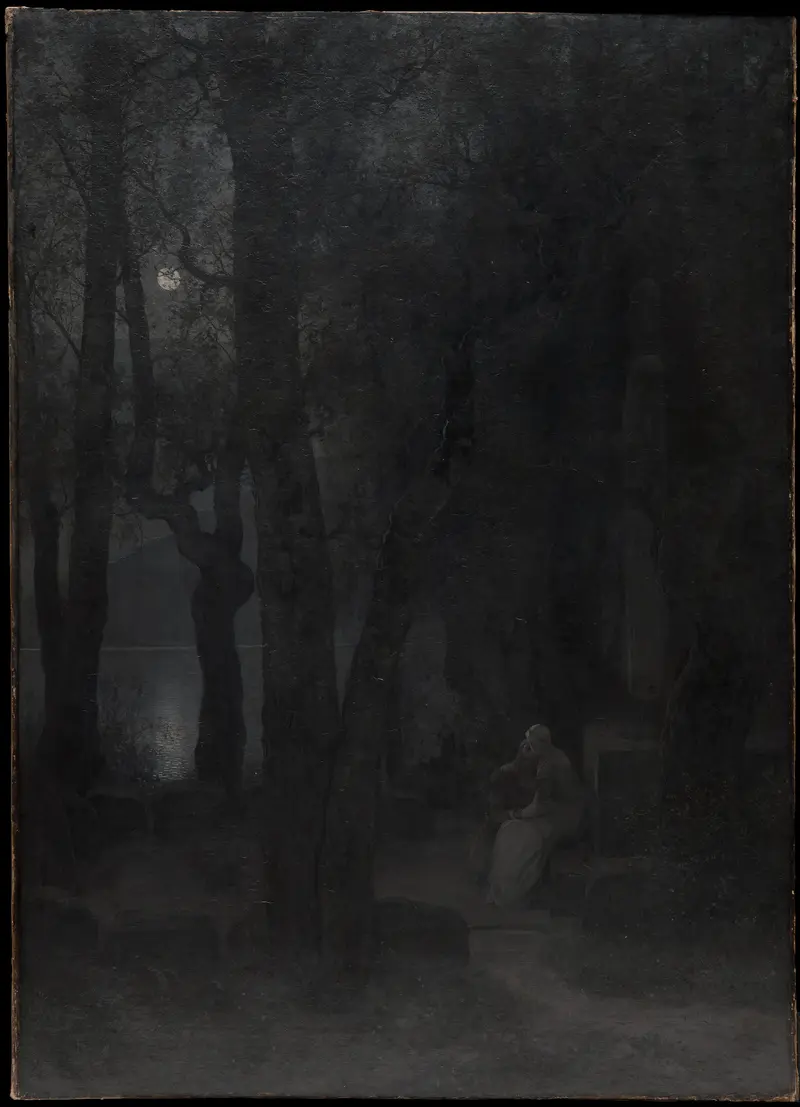
What first draws the eye in The Temptation of Frithiof is not a heroic gesture or a dramatic clash, but a hush: a lone figure, half-shadowed, sits at the foot of a pine, the forest pressing in with a density that almost swallows him whole. The play of light is deliberate—notice how a pale shaft falls across the man’s chest and face, making him the quiet heart of the scene. His posture is heavy, contemplative, as if the weight of the woods themselves rests on his shoulders.
Every twisted branch and tangle of roots seems to lean in, amplifying the sense of isolation and inward struggle. The subdued palette, all greys and muted greens, holds the mood in suspension—this is not a moment of action, but of waiting, of decision. Painted in the 1880s by August Malmström, this work belongs to a period when Nordic artists were drawn to the mythic past and the wild Northern landscape. The dense, almost impenetrable forest would have resonated with viewers steeped in Scandinavian legend, where nature is both adversary and confidant.
Such paintings were often commissioned or collected by national museums and private patrons eager to claim a visual heritage rooted in saga and folklore. Today, The Temptation of Frithiof resides in the Nationalmuseum, its brooding silence a reminder of the era’s fascination with the intersection of myth and landscape. The longer you look, the more the forest seems to close in, inviting you to wonder what choice—or temptation—waits in its depths.
More Artworks by August Malmström

Tonttu
August Malmström
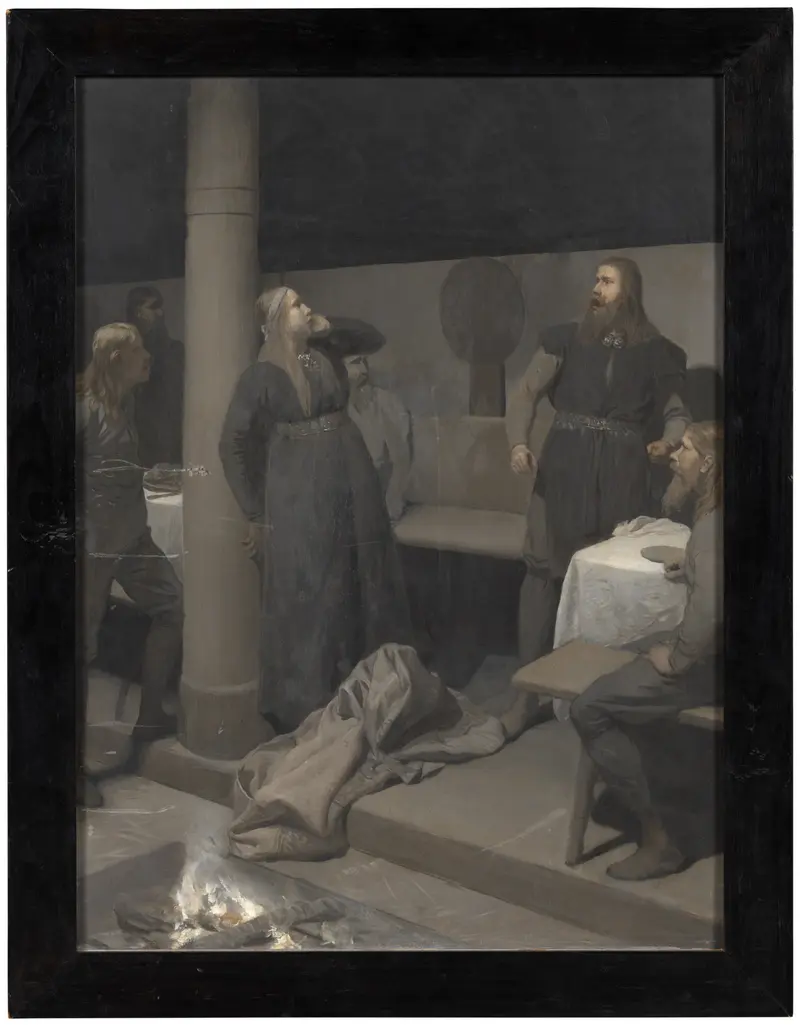
Hallgerd’s Slap
August Malmström
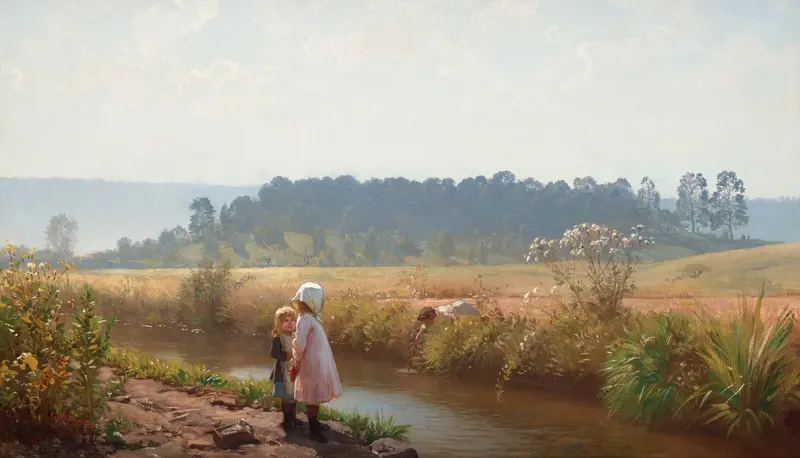
Children playing at the stream
August Malmström
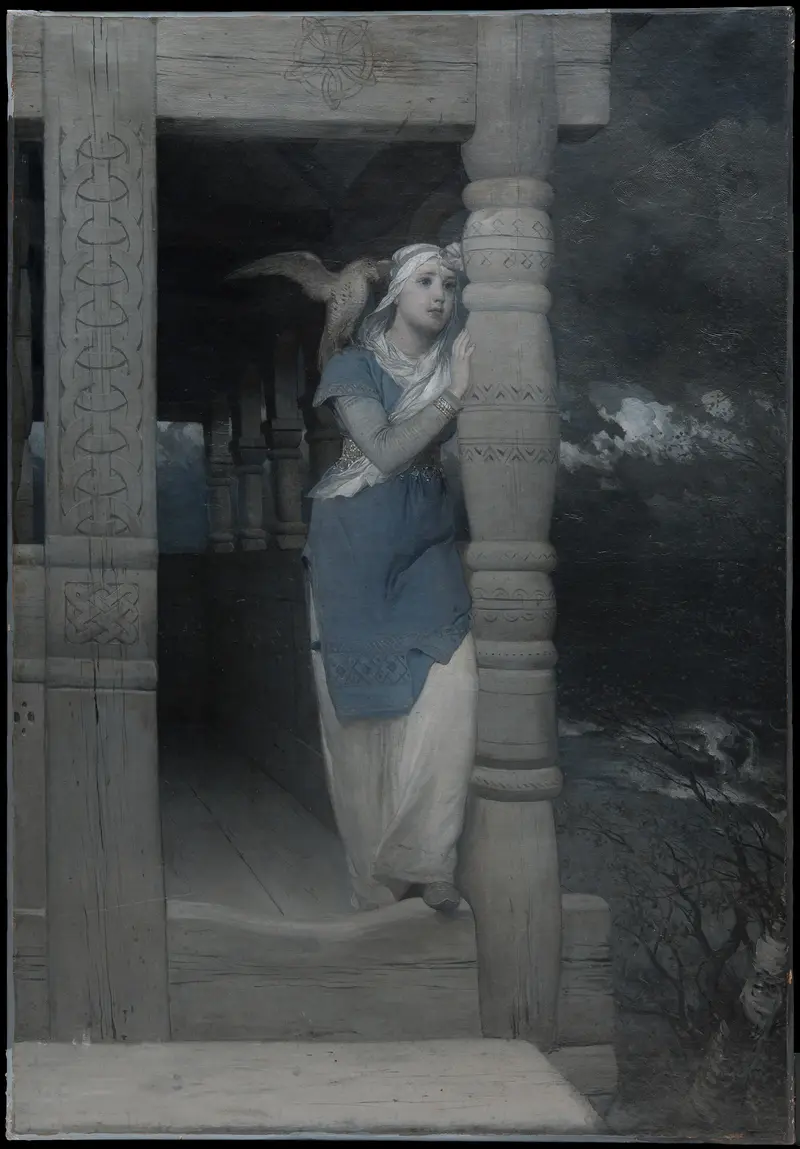
Ingeborg's Lament
August Malmström
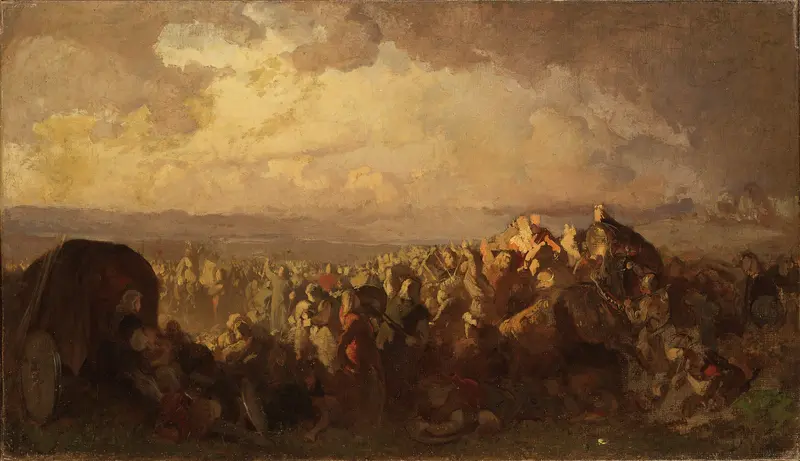
The Battle of Bråvalla. Study
August Malmström
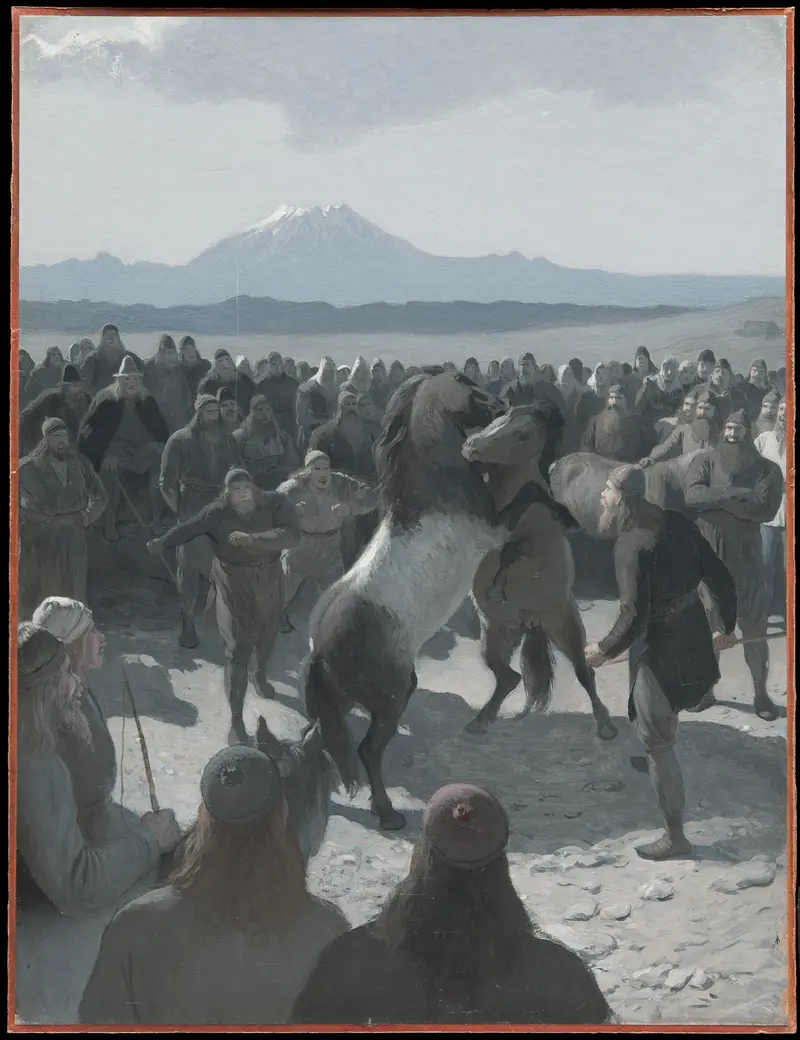
The Horse-Fight at Hlidarendi
August Malmström
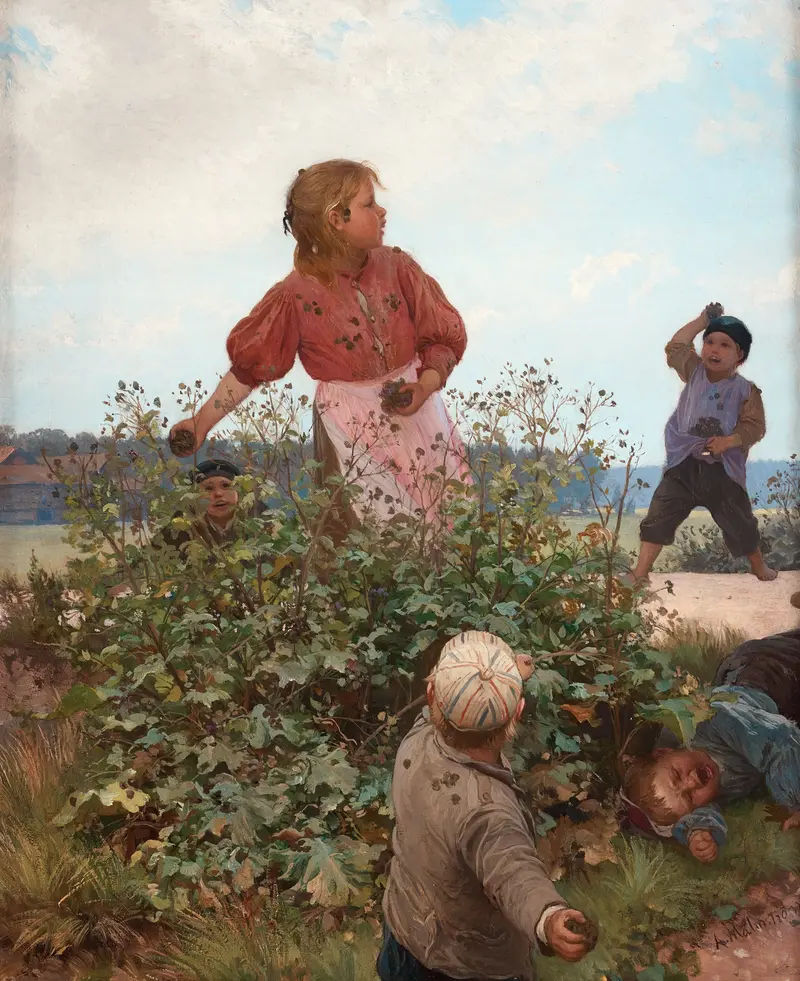
A modern Blenda
August Malmström
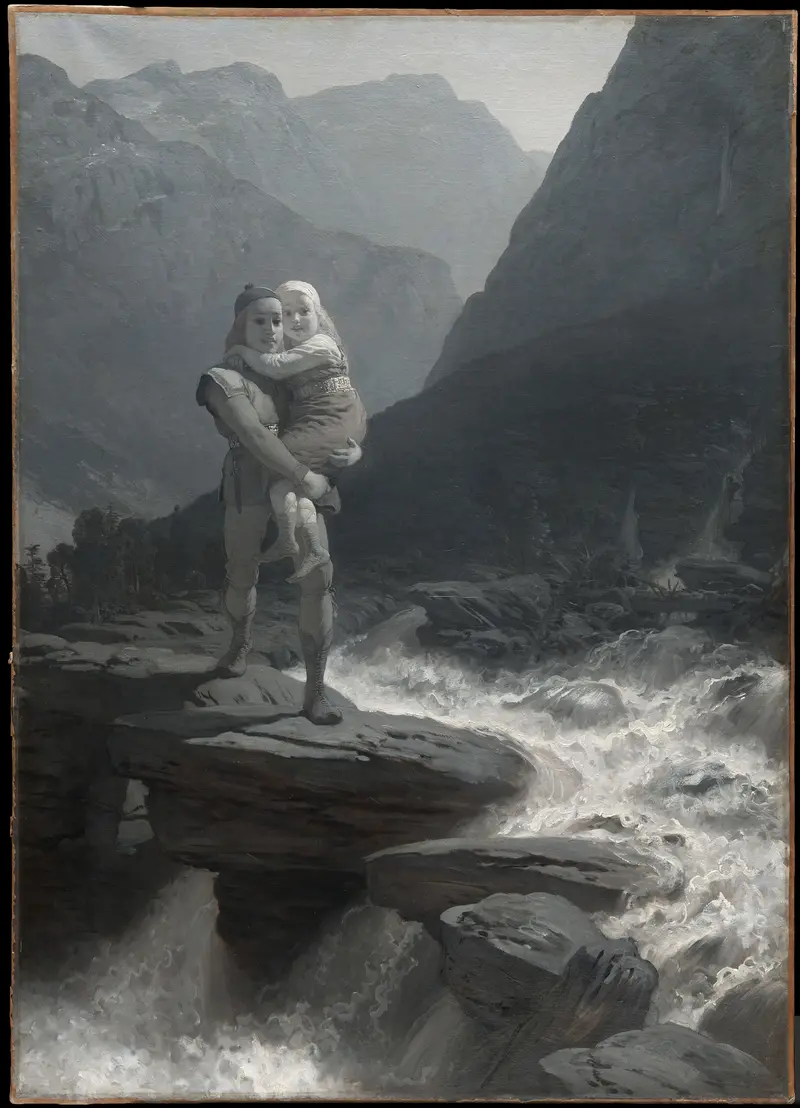
Frithiof and Ingeborg
August Malmström
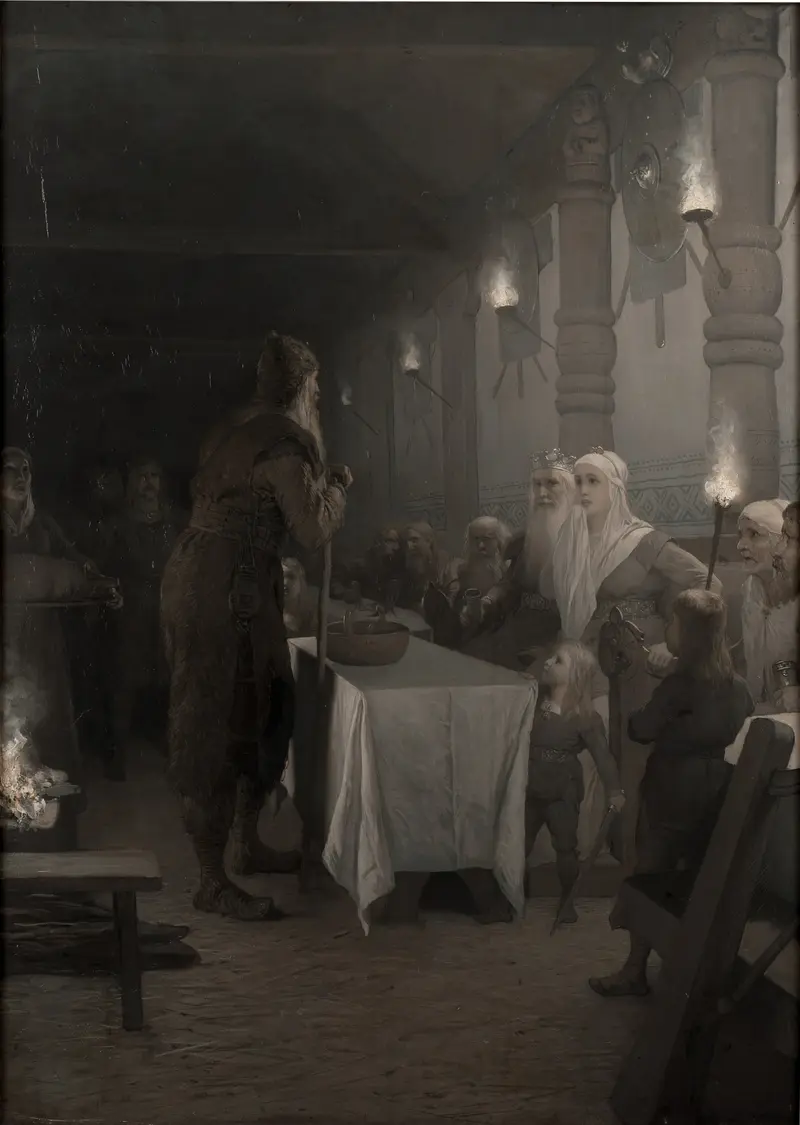
Frithiof kommer till Kung Ring (ur Frithiofs saga)
August Malmström
Frithiofs lycka (ur Frithiofs saga)
August Malmström