The Ten Largest, No. 1, Childhood — History & Facts
A deep blue ground carries a ring of white, petal-like flowers across the top and a cluster of round pink and white rose shapes at the right. Below them, a pale disk edged with small yellow dots holds two white ovals and a pair of letters, and orange looping script fills the lower half. A row of yellow, blue and white discs runs along the bottom edge. Moderna Museet's audio guide says the first two paintings of the series have blue backgrounds and represent Childhood.
In the middle of this one is a circle with two grains of wheat or egg shapes, and the letters "a" and "v" stand for vestal and ascetic. The duality of male and female, symbolized in Hilma af Klint's work by the rose and the lily, is already present in the first picture, the guide says, with yellow tied to asceticism and the male principle and blue to the Vestal Virgins and the female. She began the series in autumn 1907 and, the museum says, painted all ten in just forty days. She stipulated that her abstract works not be shown until twenty years after her death, and they stayed all but unseen until 1986, the Guggenheim says.
It belongs to the Hilma af Klint Foundation in Stockholm.
More Artworks by Hilma af Klint

Portrait
Hilma af Klint
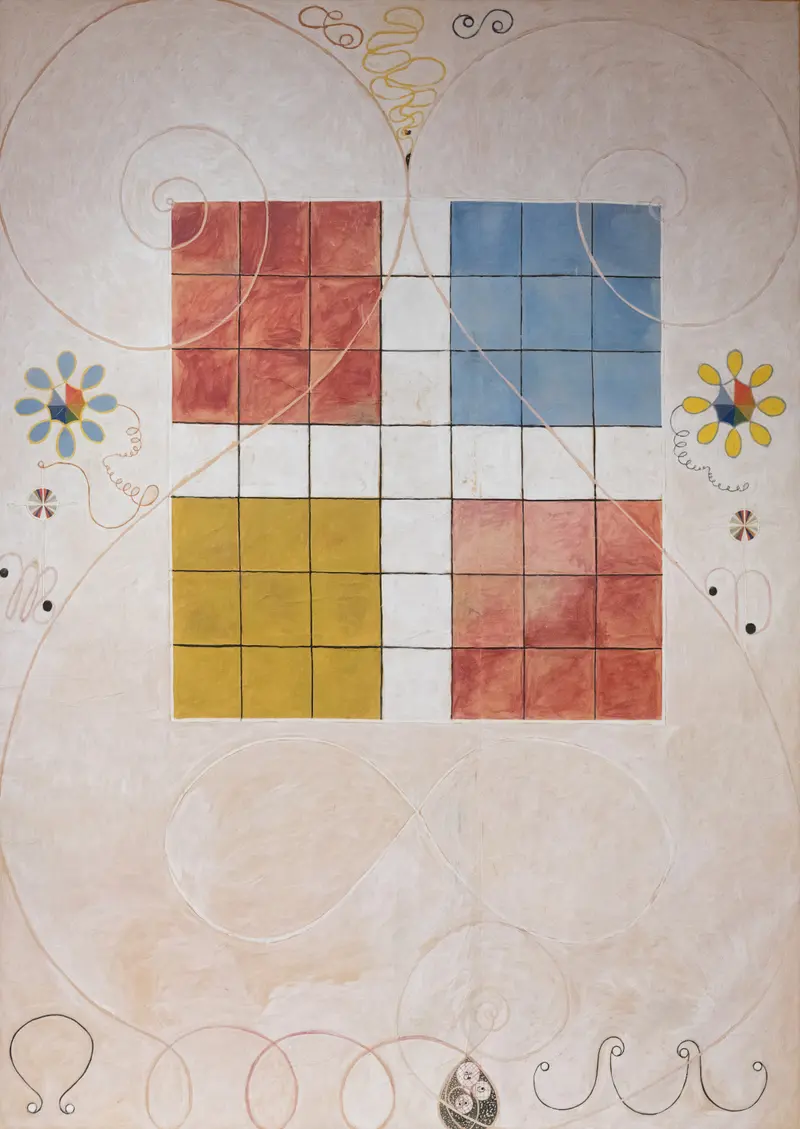
The Ten Largest, No. 10, Old Age
Hilma af Klint
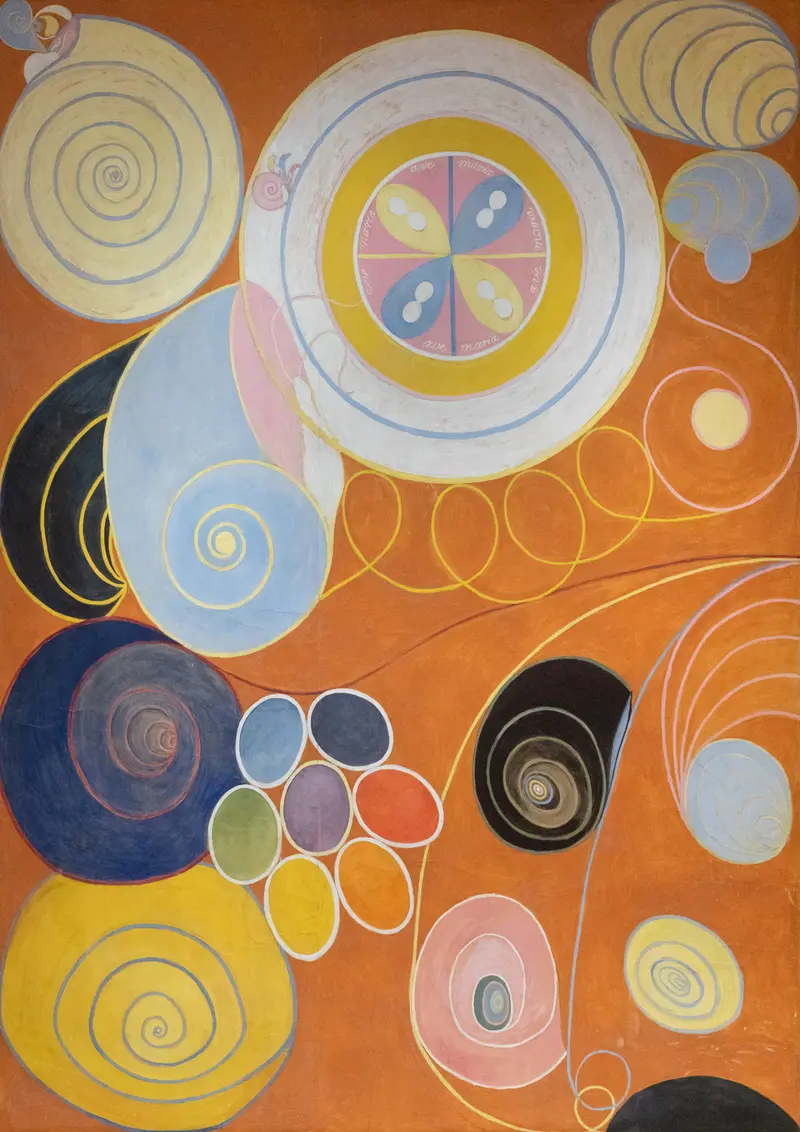
The Ten Largest, No. 3, Youth
Hilma af Klint
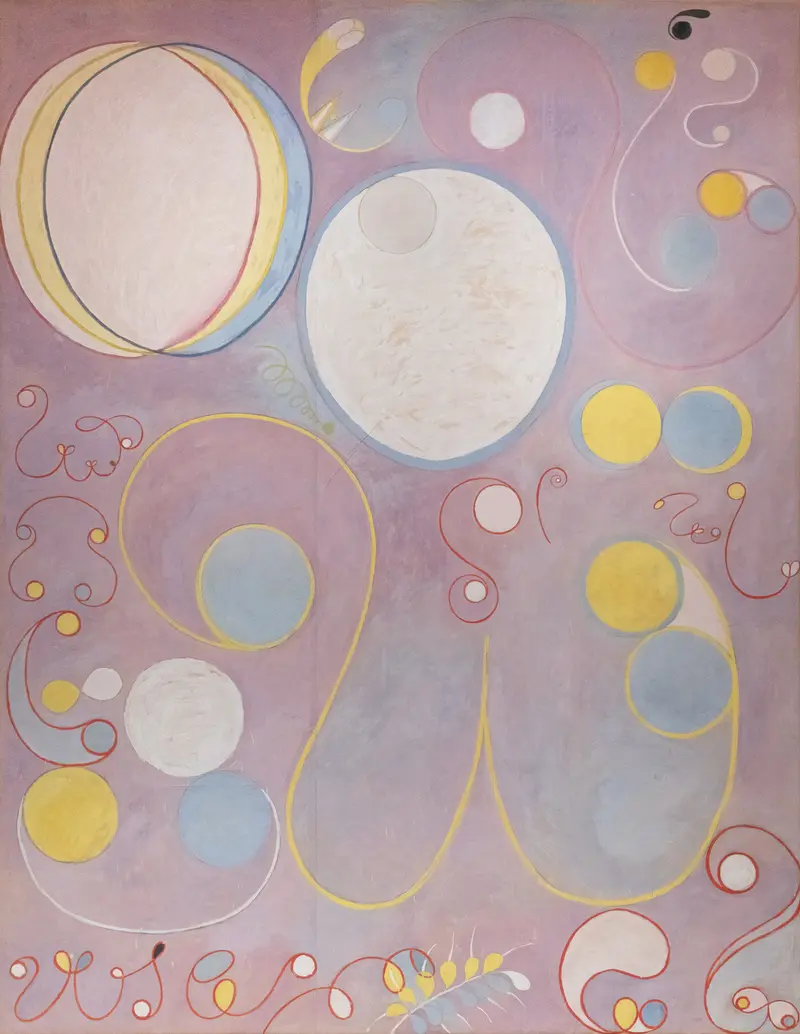
The Ten Largest, No. 8, Adulthood
Hilma af Klint
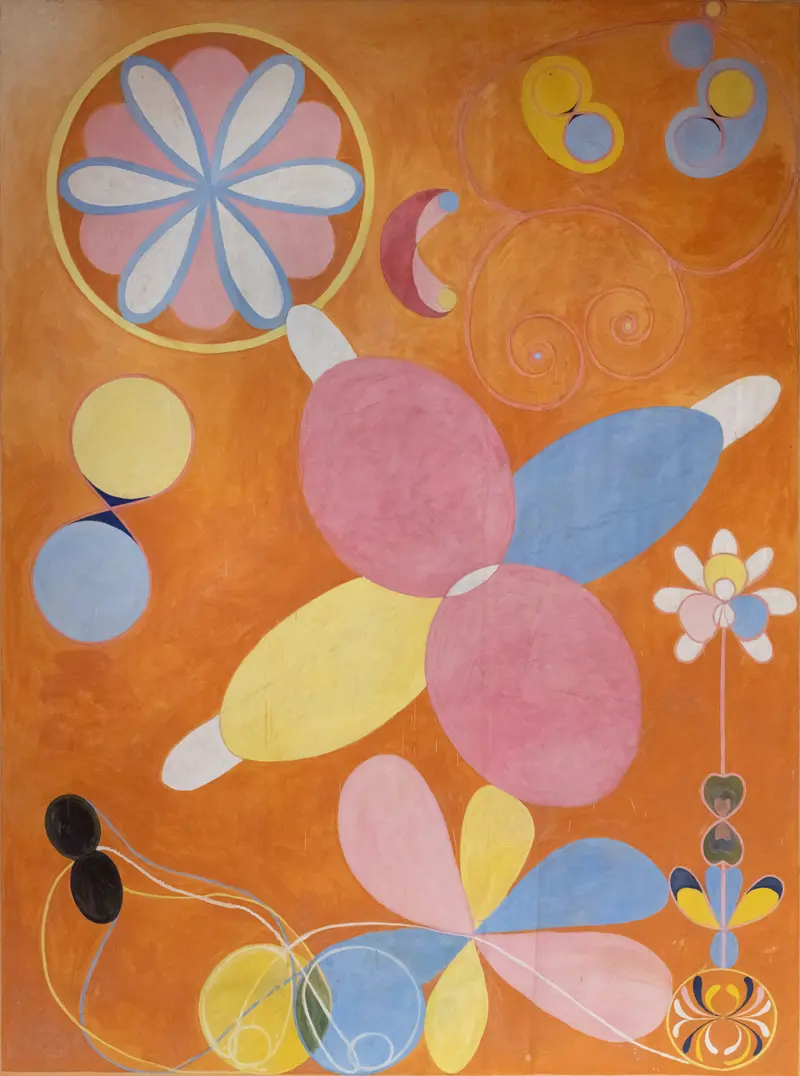
The Ten Largest, No. 4, Youth
Hilma af Klint
The Ten Largest, No. 6, Adulthood
Hilma af Klint
The Ten Largest, No. 7, Adulthood
Hilma af Klint

The Swan, No. 17, Group IX/SUW
Hilma af Klint
The Ten Largest, No. 2, Childhood
Hilma af Klint
The Ten Largest, No. 5, Adulthood
Hilma af Klint