The tourist hotel in Rättvik — History & Facts
When Nils Dardel painted The tourist hotel in Rättvik, he captured not just a building but a cultural phenomenon: the rise of Swedish tourism in the early twentieth century. Rättvik, a lakeside town in Dalarna, became a magnet for artists, writers, and city dwellers seeking the "authentic" Swedish countryside, especially after the railway arrived in 1894. The hotel itself—an icon of modern comfort set amid folk traditions—stood as a symbol of this new era.
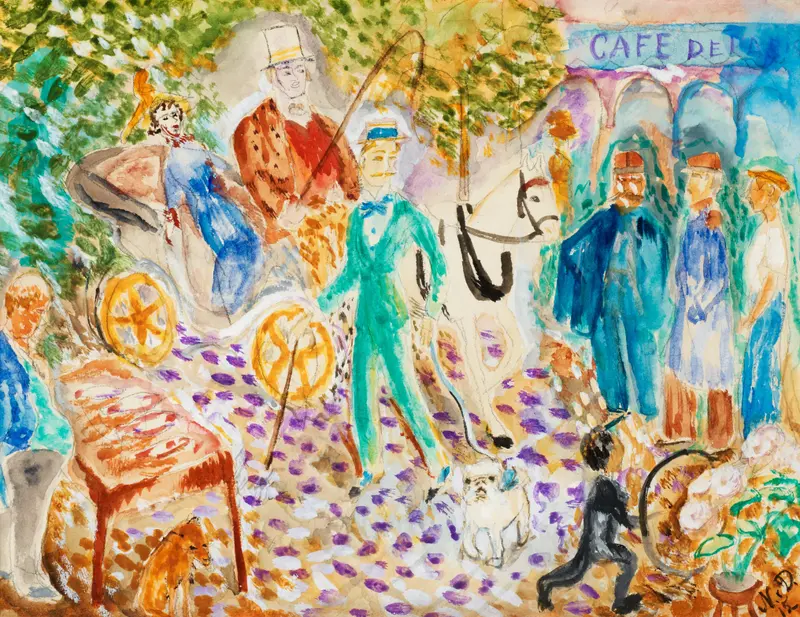
Dardel, known for his cosmopolitan life and sharp eye for society’s quirks, turned his attention to this meeting point of rural nostalgia and urban leisure. The scene unfolds on a sunlit terrace, where guests lounge in wicker chairs, their crisp attire contrasting with the rustic log architecture behind them. Dardel’s brush lingers on the details: a waiter in white apron balancing a tray, a woman with a parasol glancing toward the lake, the bright flags fluttering above. The composition captures a moment of anticipation and ease, as if the guests are suspended between journeys—much like the hotel itself, a waypoint rather than a destination.
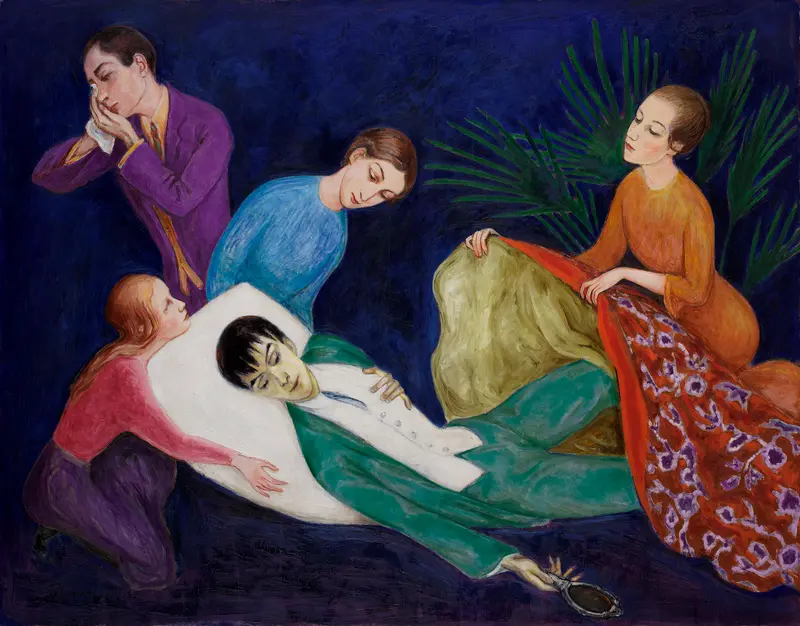
The artist’s use of bold, clear colors and simplified forms recalls his earlier works from the Swedish Modernism movement, yet here the mood is gentler, less ironic than in his famous The Dying Dandy. The painting invites us to reflect on how leisure and longing intertwine in a rapidly changing world. The precise date and medium of The tourist hotel in Rättvik remain uncertain, and the painting’s early history is not well documented. It likely belonged to a private collection for much of its life, only surfacing in exhibitions devoted to Dardel’s work in the late twentieth century.
Today, it stands as a testament to the artist’s fascination with social rituals and places of encounter, bridging his more satirical portraits and his lyrical landscapes. In the absence of detailed records, the painting’s subject and style anchor it firmly in the period when Swedish artists were negotiating the boundaries between tradition and modernity—a negotiation still visible in the hotel’s wooden walls and the travelers’ restless gazes.