
Lucienne vid spegeln — History & Facts
No other painting by Nils Dardel has sparked as much speculation about its sitter as Lucienne vid spegeln. For decades, art historians have debated the identity of Lucienne: was she a muse, a lover, or a figment of the artist’s imagination? The painting’s title, in Swedish, simply means "Lucienne at the Mirror," but no Lucienne appears in Dardel’s known circle, and no letters or diaries mention her by name. This air of mystery has made the work a touchstone for those fascinated by the blurred lines between reality and invention in early 20th-century portraiture. At the heart of the image, a woman in a patterned robe sits before a mirror, her gaze not meeting her reflection but instead drifting outward, as if caught in thought.
The mirror, a classic symbol of self-examination and vanity, here becomes a portal to ambiguity: Lucienne’s features are rendered with both intimacy and distance, her expression poised between confidence and uncertainty. The interplay of cool and warm tones—Dardel’s signature—creates an atmosphere both inviting and slightly unreal. Unlike the brash psychological probing of Otto Dix’s portraits, Dardel’s approach is gentler, layering his subject’s identity in color and gesture rather than harsh line. The precise origins and early history of Lucienne vid spegeln remain unclear, as does its intended recipient or exhibition context.
What is certain is that the work belongs to a period when Nils Dardel was experimenting with portraiture and personal symbolism, often blending reality and fantasy in his sitters. Today, the painting is held in a Swedish public collection, where it stands as a testament to Dardel’s fascination with the inner lives of his subjects. Its unresolved questions continue to invite viewers to look, and look again, for Lucienne’s true story.
More Artworks by Nils Dardel

Skeleton on Horseback
Nils Dardel
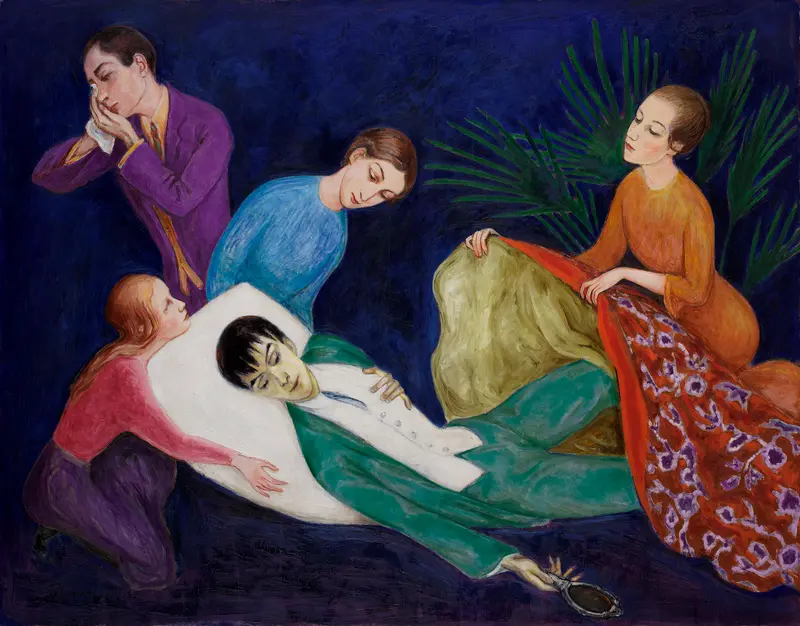
The Dying Dandy
Nils Dardel

Exotiskt landskap
Nils Dardel
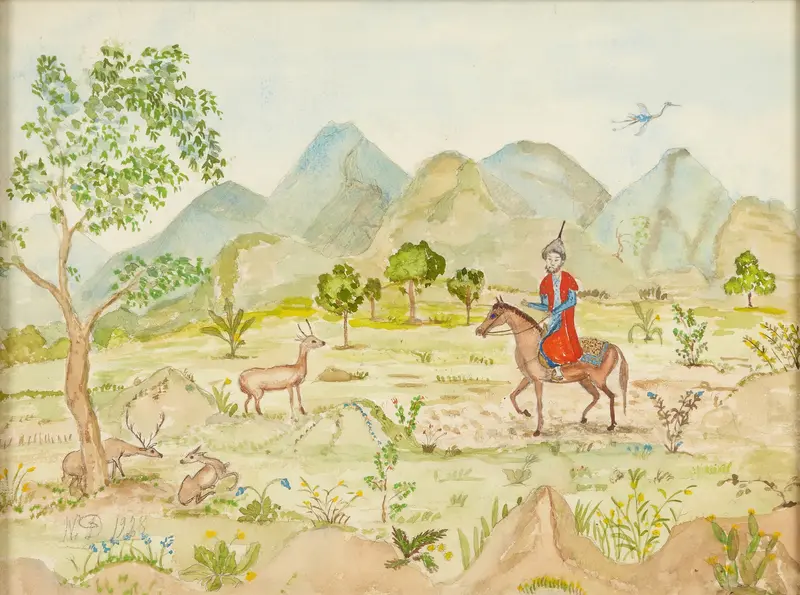
Landskap med ryttare
Nils Dardel

Indianlägret
Nils Dardel

Olja på duk
Nils Dardel
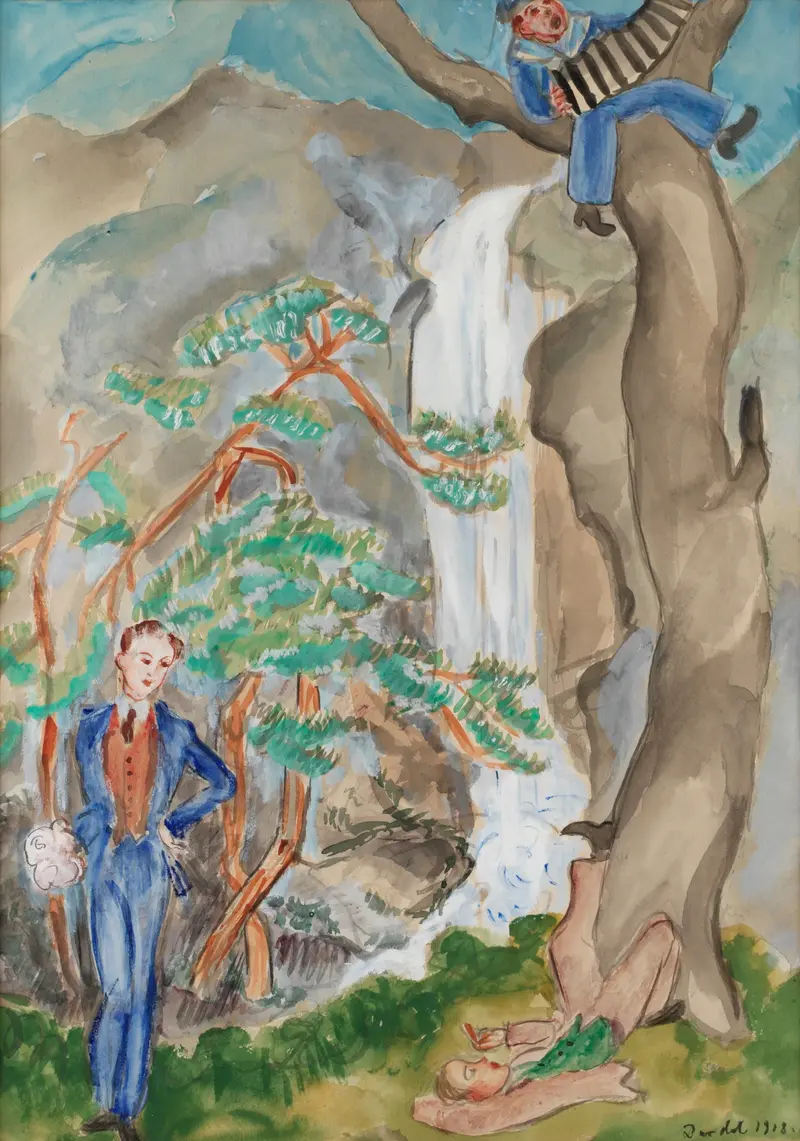
Uppvaktning (‘Sjömansgosse, Hildesborg’)
Nils Dardel
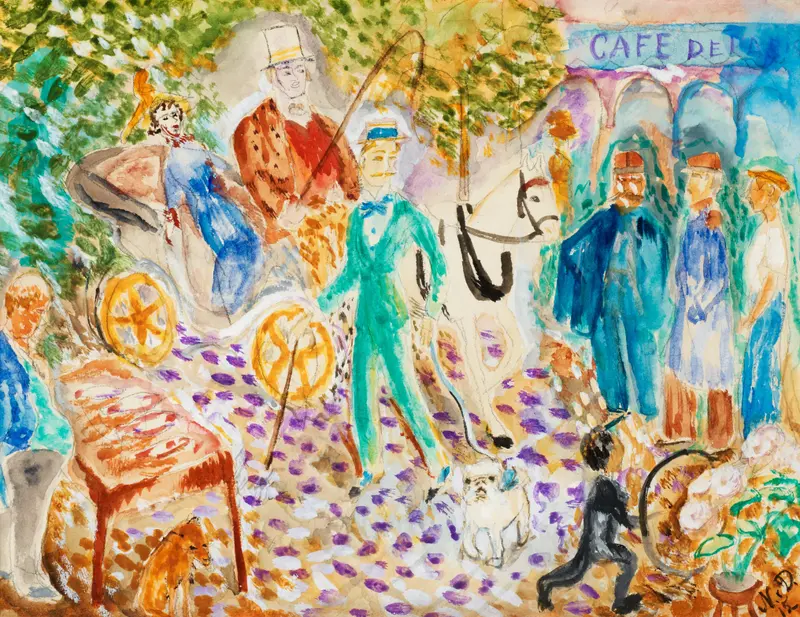
Parisergata
Nils Dardel
Dödens husarer
Nils Dardel

Cissi Olsson som Anitra i Peer Gynt
Nils Dardel





