
Skeleton on Horseback — History & Facts
Few paintings have sparked as much speculation as Skeleton on Horseback by Nils Dardel. The work’s date and original context remain elusive, yet it has become an icon of Dardel’s fascination with the uncanny and the theatrical. While some believe it was inspired by the trauma of World War I, others see it as a personal meditation on mortality and fate—an interpretation fueled by Dardel’s own brushes with illness and his lifelong interest in the macabre.
The painting’s mysterious provenance and lack of documentation have only deepened its allure, making it a frequent subject of debate among art historians. The scene captures the chilling moment when death arrives not as a shadowy figure, but as a skeletal rider astride a spectral horse. The skeletal form, rendered with an almost playful clarity, brandishes a scythe or standard—symbols of death’s inescapable reach—while the horse’s exaggerated, elongated limbs propel the duo forward with uncanny energy. The background, often interpreted as a barren or dreamlike landscape, isolates the figures and draws the eye to their ghostly procession.
Unlike the solemnity of Arnold Böcklin’s The Isle of the Dead, Dardel’s vision is theatrical, almost carnival-like, suggesting a dance between fear and fascination. The painting’s vivid palette and stylized forms hint at the influence of the Expressionist movement, yet its subject is rooted in centuries-old allegories of the danse macabre. As with many works by Nils Dardel, the precise journey of Skeleton on Horseback through collections and exhibitions is difficult to trace. No records survive of a patron or commission, and the painting’s medium is still debated—some suggest oil on canvas, others watercolor or gouache.
Today, it is most often reproduced in monographs and retrospectives of Dardel’s career, where it stands as a testament to his unique blend of fantasy and existential reflection. The painting’s enigmatic aura continues to attract scholars and viewers alike, ensuring its place as one of the most discussed and enigmatic images in early twentieth-century Swedish art.
More Artworks by Nils Dardel
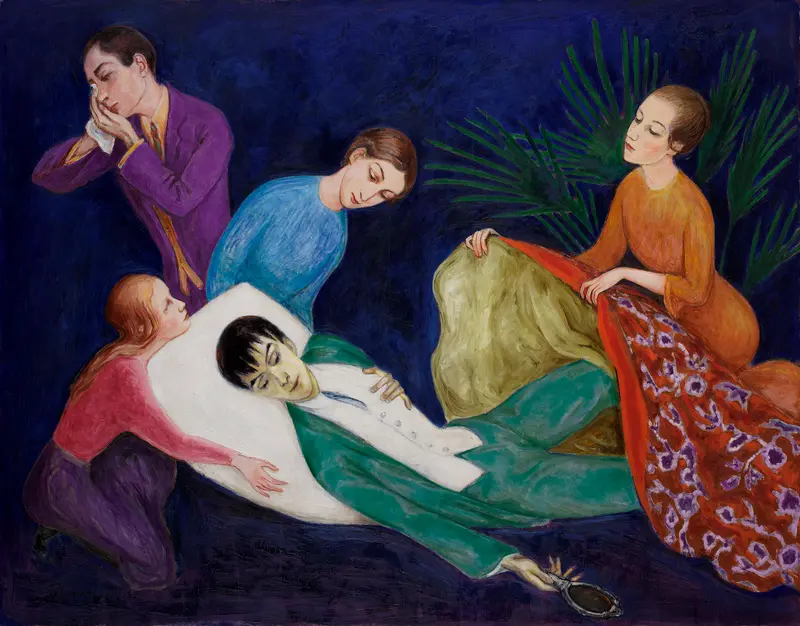
The Dying Dandy
Nils Dardel

Exotiskt landskap
Nils Dardel
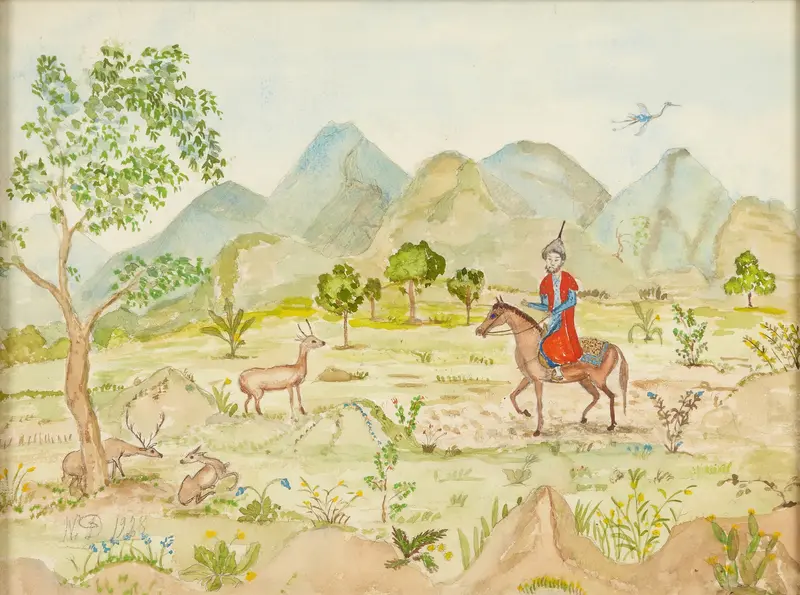
Landskap med ryttare
Nils Dardel
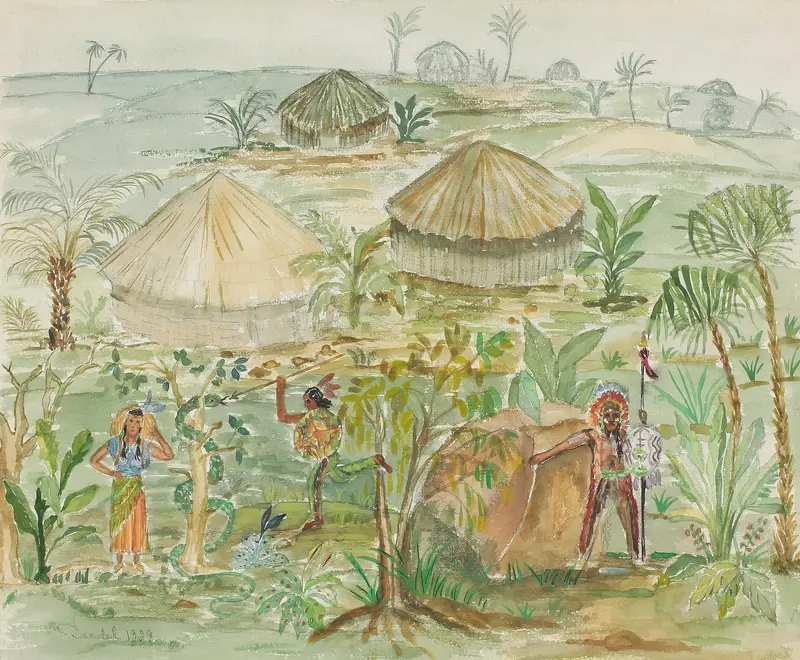
Indianlägret
Nils Dardel
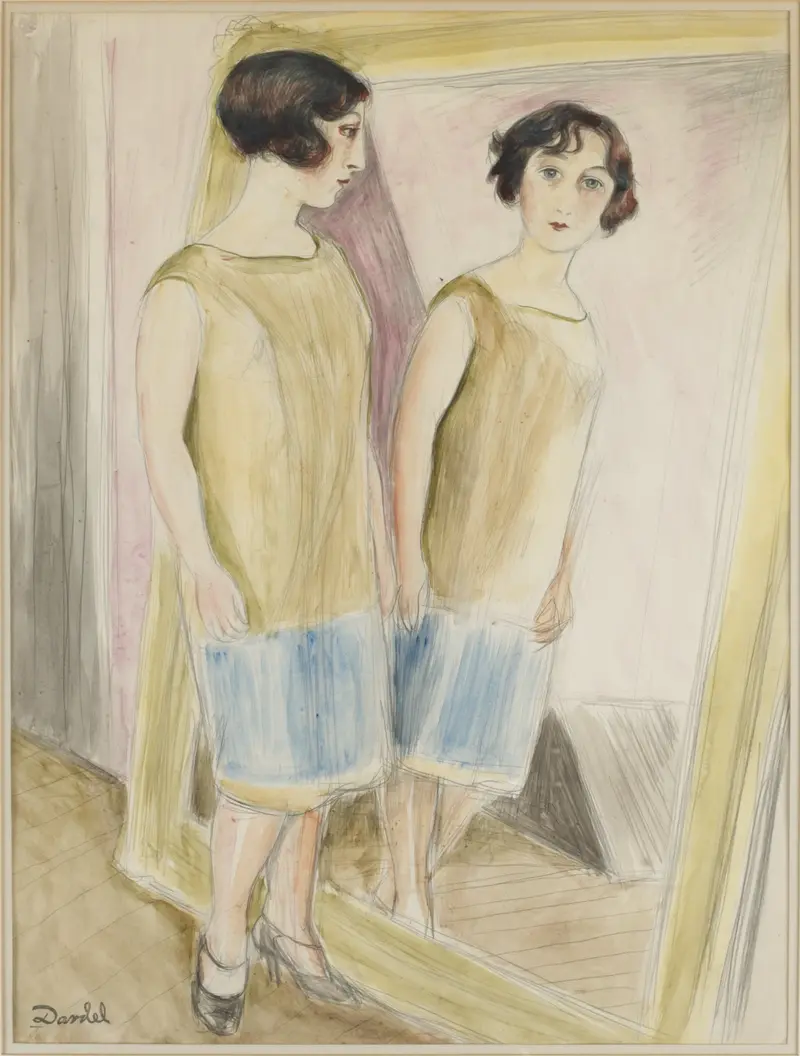
Lucienne vid spegeln
Nils Dardel

Olja på duk
Nils Dardel
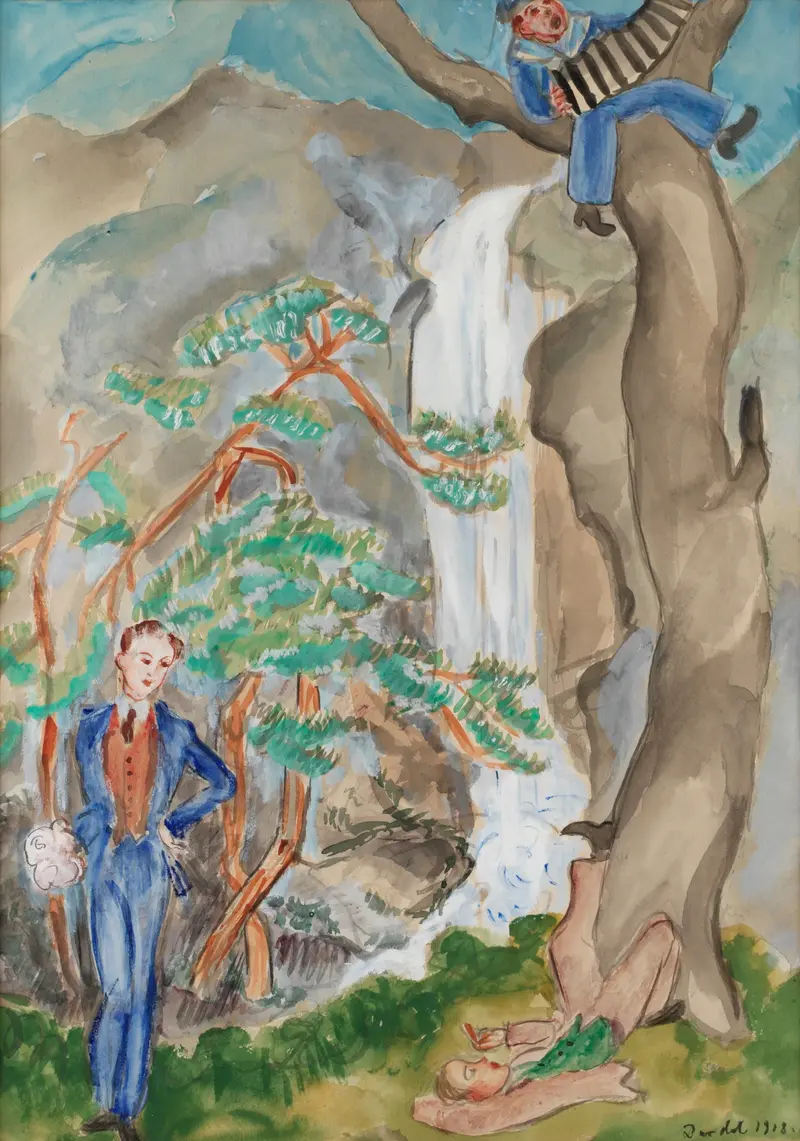
Uppvaktning (‘Sjömansgosse, Hildesborg’)
Nils Dardel
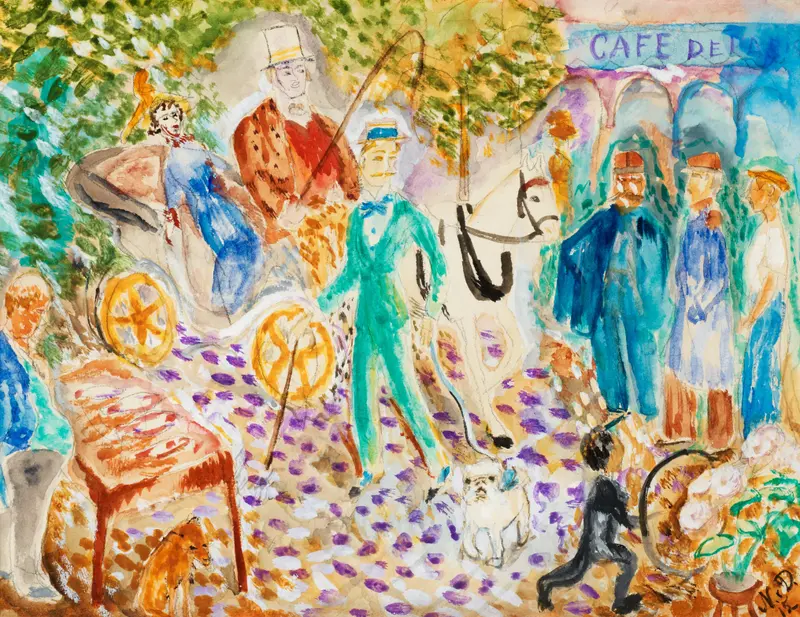
Parisergata
Nils Dardel
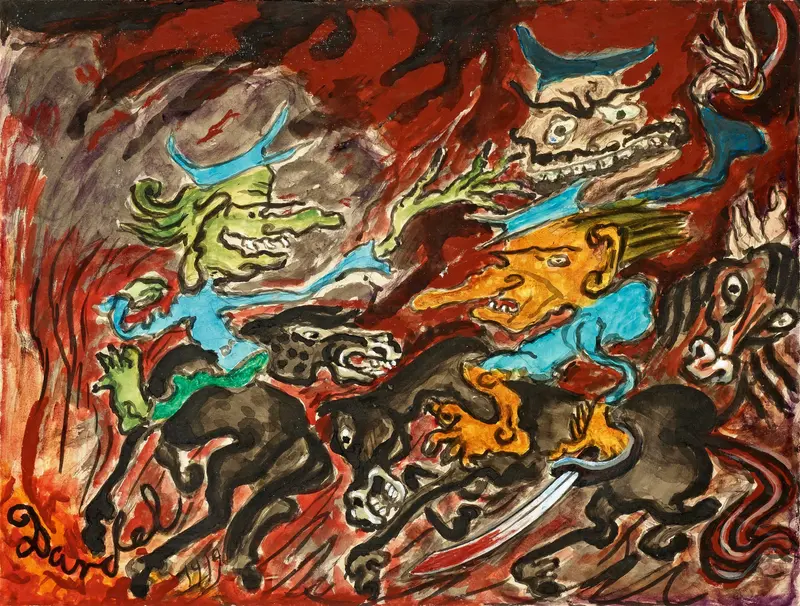
Dödens husarer
Nils Dardel
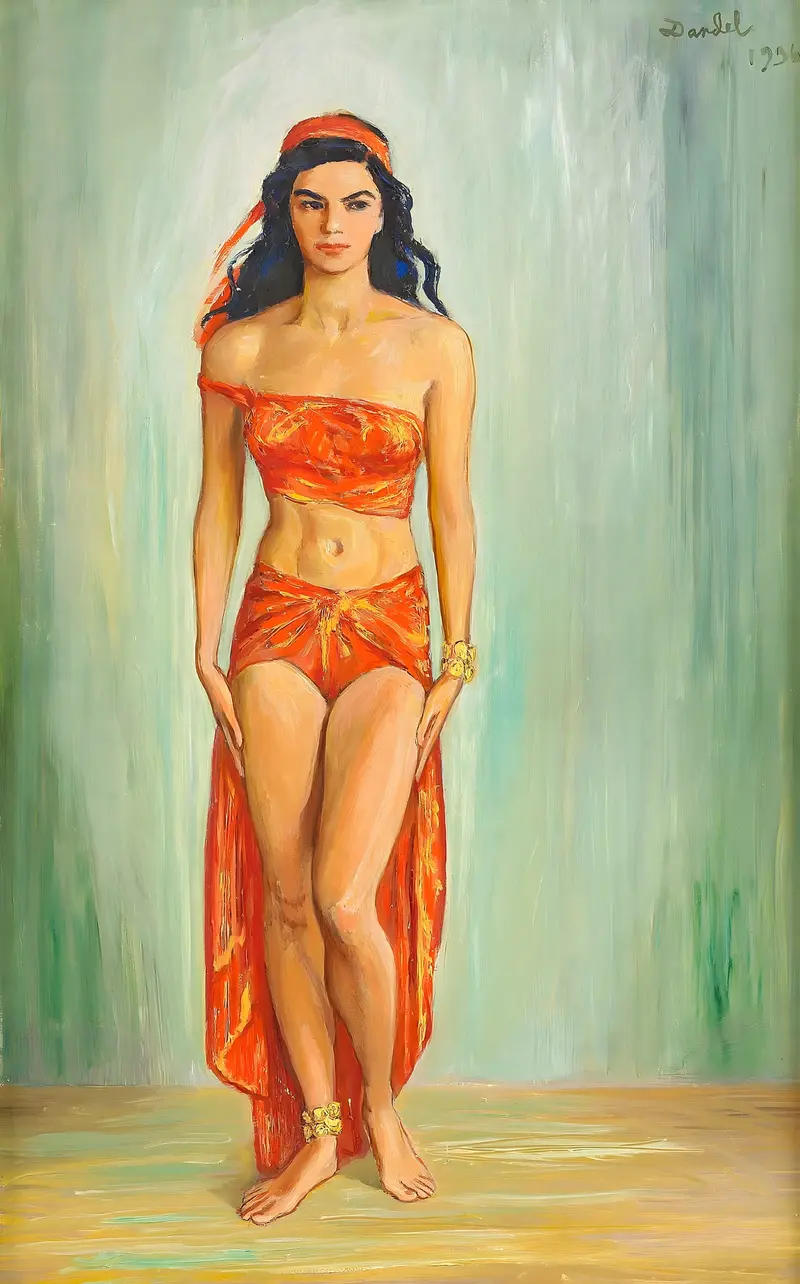
Cissi Olsson som Anitra i Peer Gynt
Nils Dardel





