
Dödens husarer — History & Facts
Few paintings by Nils Dardel have sparked as much speculation as Dödens husarer, whose title—translating to "The Hussars of Death"—recalls the fearsome cavalry units that haunted the battlefields of Europe. The motif is believed to draw inspiration from the artist’s fascination with mortality and the macabre, a recurring theme in his oeuvre. What sets this work apart is its enigmatic provenance: no definitive date or commission is recorded, and its first public appearance remains shrouded in mystery, inviting viewers to puzzle over its origins and intent. At the heart of Dödens husarer lies a dramatic tableau: spectral riders, clad in dark uniforms and skull-adorned shakos, charge through a desolate landscape.
The moment Dardel captures is one of frozen motion—horses rear, sabres gleam, and the pallor of the riders’ faces blurs the line between soldier and specter. The hussars, symbols of both martial glory and impending doom, seem to emerge from a dream or nightmare, their presence heightened by an unnatural light that isolates them from the background. This vision stands in stark contrast to the romanticized cavalry scenes of Théodore Géricault, whose The Charging Chasseur exalts heroism, while Dardel’s riders embody a more existential dread. The painting’s journey through time is as shadowy as its subject.
Without a known patron or early exhibition history, Dödens husarer has circulated primarily through private collections, surfacing occasionally in retrospectives of Nils Dardel’s work. Its uncertain date places it somewhere within the artist’s mature period, when he was increasingly preoccupied with themes of death and the uncanny. Today, the painting is recognized as a striking example of early 20th-century Swedish Symbolism, and it continues to intrigue both scholars and the public with its unresolved mysteries and haunting imagery.
More Artworks by Nils Dardel

Skeleton on Horseback
Nils Dardel
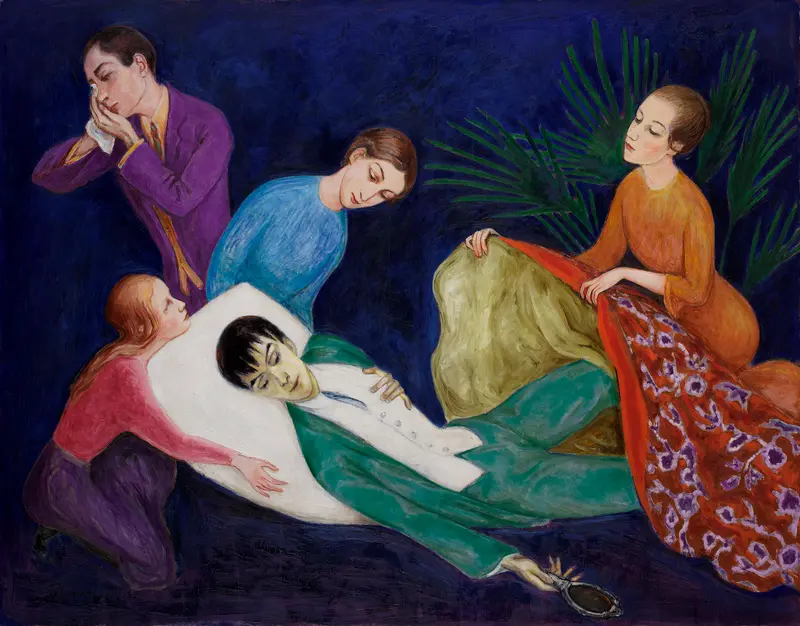
The Dying Dandy
Nils Dardel

Exotiskt landskap
Nils Dardel
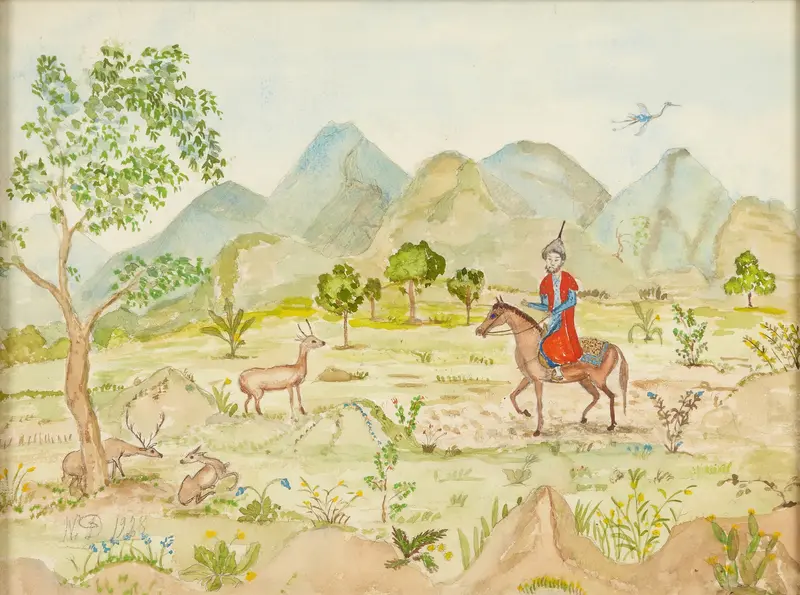
Landskap med ryttare
Nils Dardel
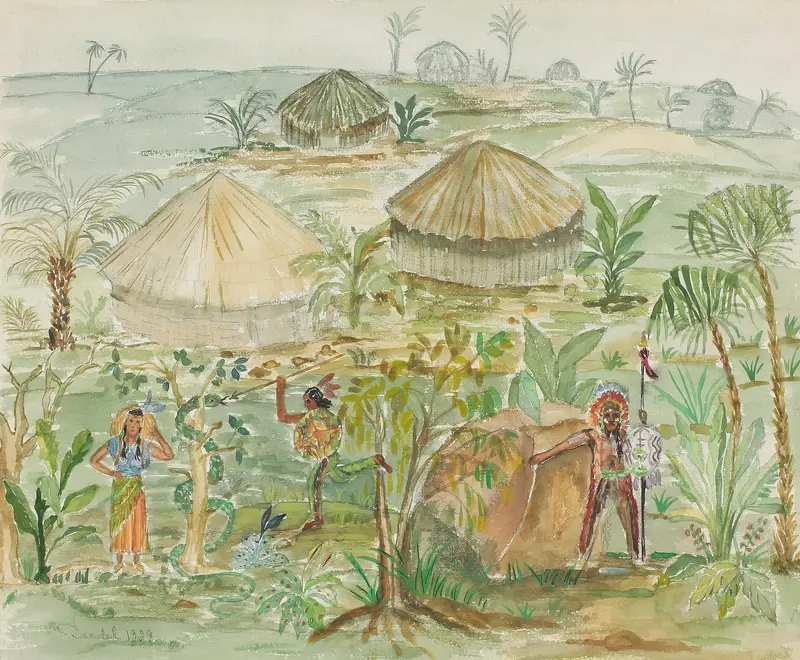
Indianlägret
Nils Dardel
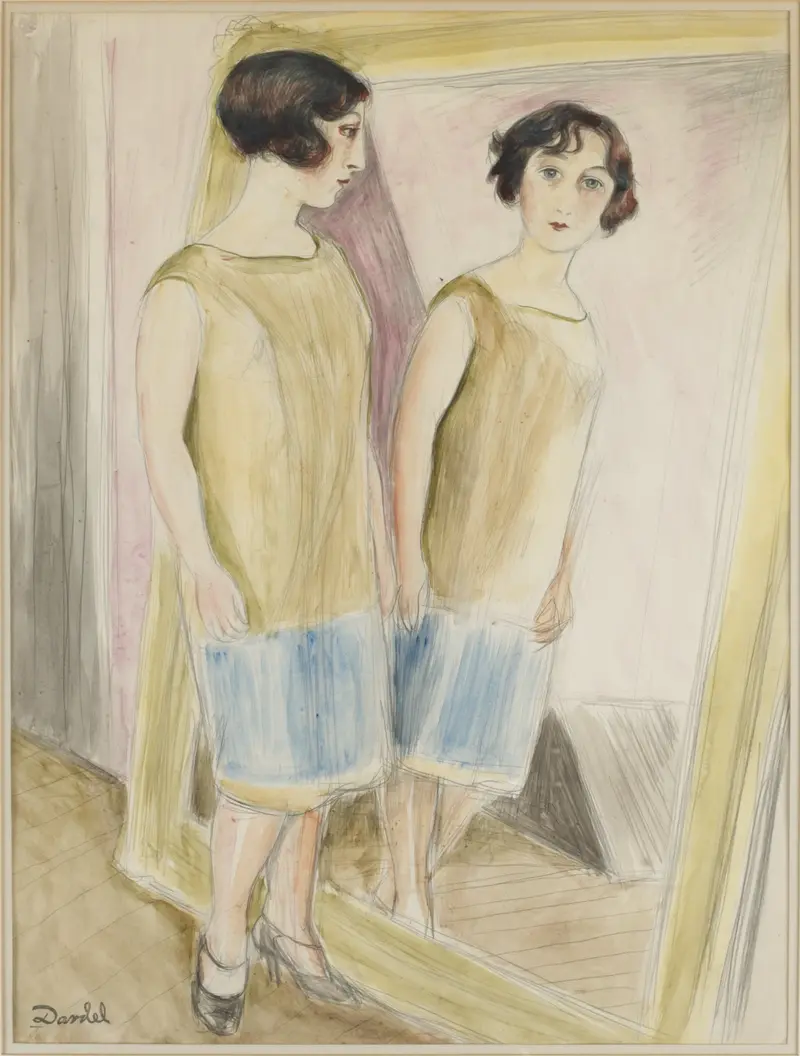
Lucienne vid spegeln
Nils Dardel

Olja på duk
Nils Dardel
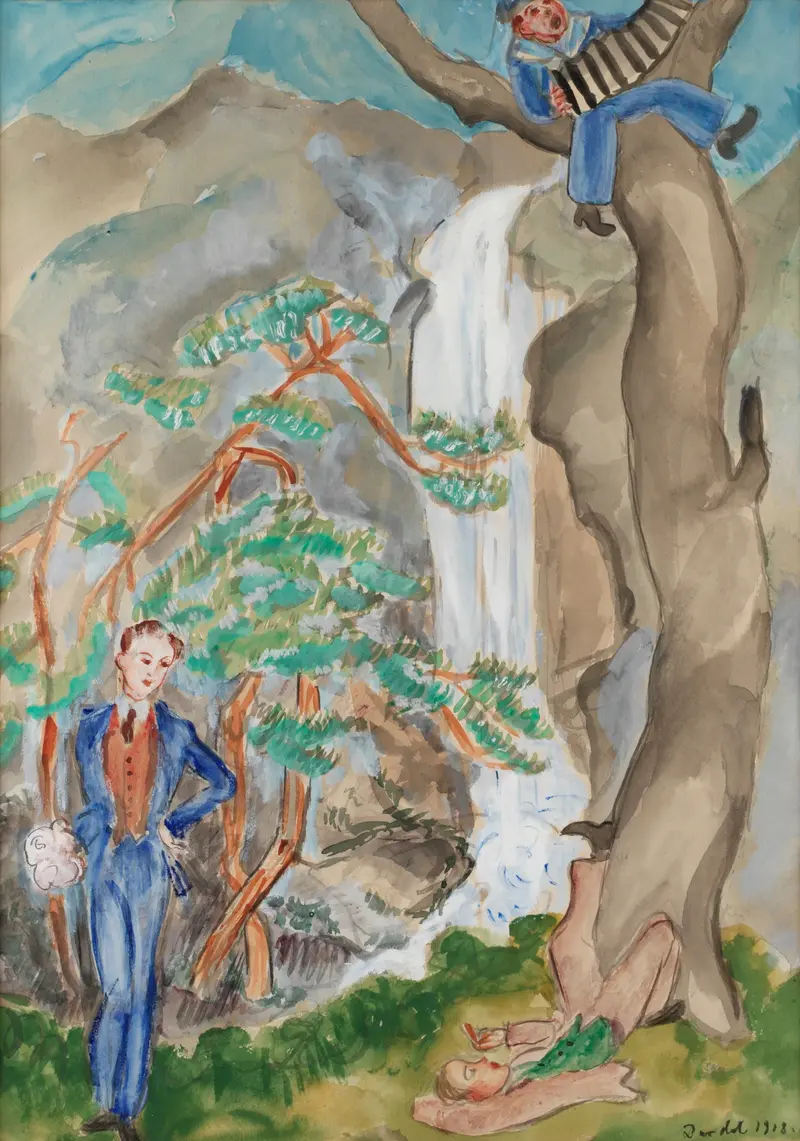
Uppvaktning (‘Sjömansgosse, Hildesborg’)
Nils Dardel
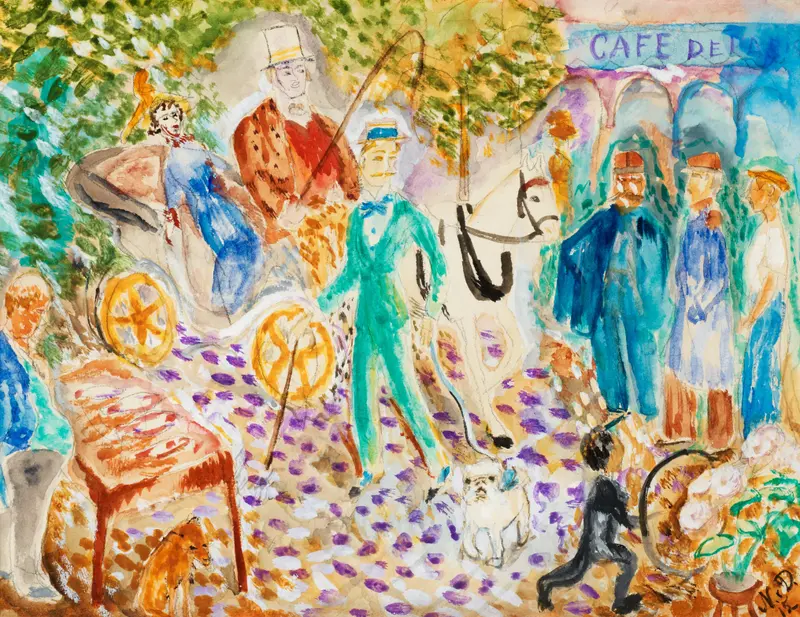
Parisergata
Nils Dardel
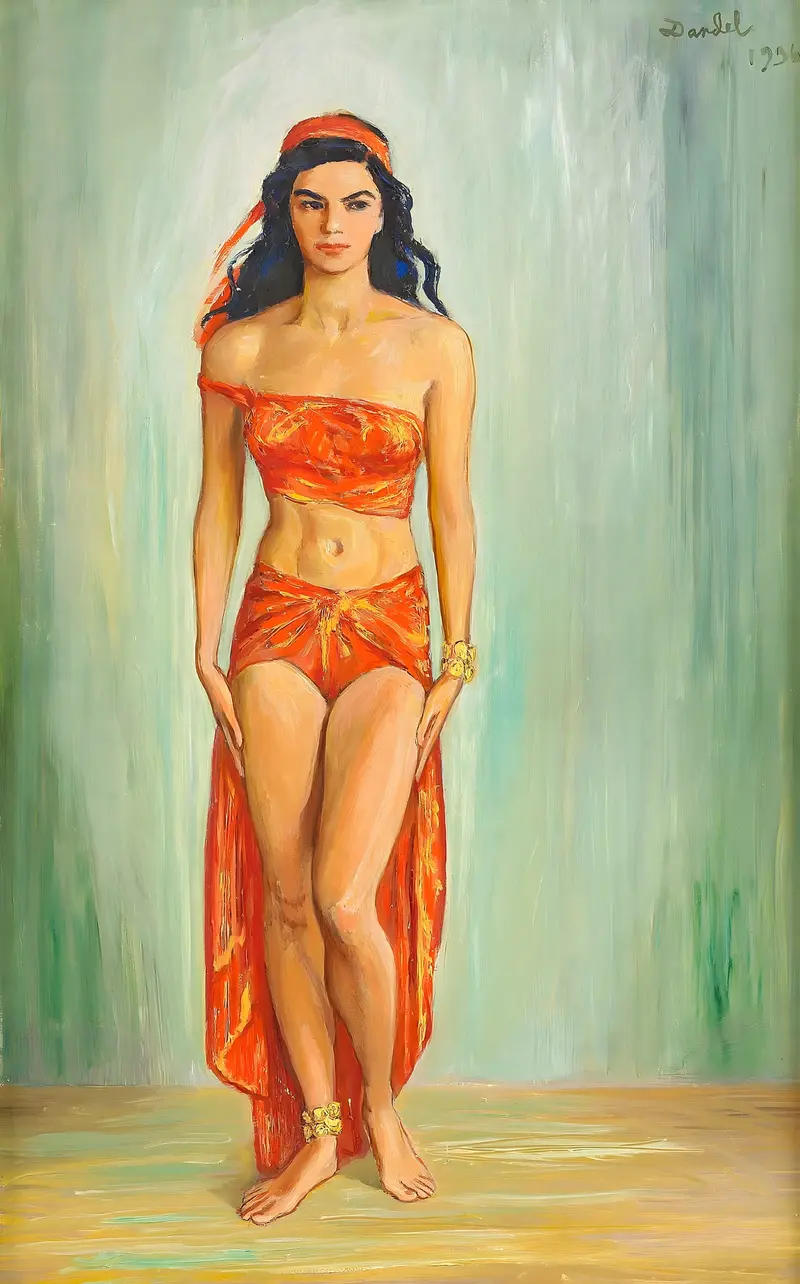
Cissi Olsson som Anitra i Peer Gynt
Nils Dardel





