
The Towing Path — History & Facts
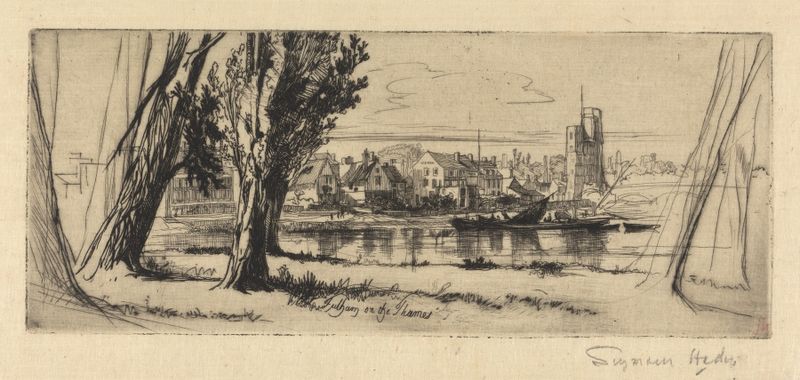
In its stillness lies a truth that transcends mere representation. The silence of Haden’s work invites us to ponder the unseen narratives that unfold in quiet moments. Focus on the winding path depicted in the foreground, where the lines of the landscape guide the eye toward the horizon. The muted earth tones contrast beautifully with delicate touches of green, evoking a sense of calm serenity.
Notice how the gentle play of light and shadow weaves through the scene, illuminating textures in the foliage and the subtle ripples of water, enhancing the sense of depth and tranquility. The composition emphasizes solitude, suggesting a journey taken alone, yet surrounded by nature's whispers. The juxtaposition of rugged terrain against the smoothness of the water hints at the balance between struggle and peace, evoking feelings of introspection. Each brushstroke captures the essence of a fleeting moment, inviting viewers to reflect on their own paths and the quiet spaces we often overlook. In 1864, Haden found himself at a transformative phase in his career as an etcher, deeply influenced by the Impressionist movement and his interest in capturing atmospheric effects.
Living in England and engaged with a community of artists, he embraced the nuances of light and shadow, seeking to convey the silent stories of his surroundings. This piece reflects that exploration, resonating with the tension and beauty of the natural world in a moment of contemplation.
More Artworks by Francis Seymour Haden
Browse all →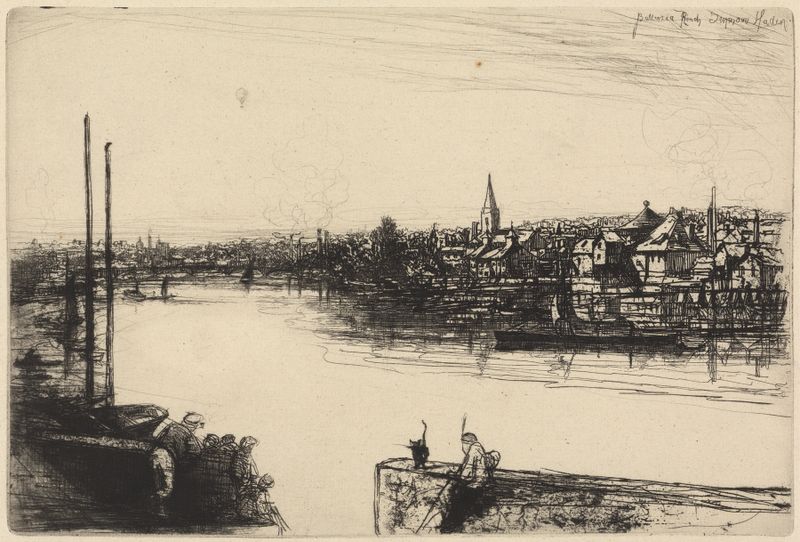
Battersea Reach
Francis Seymour Haden

Nine Barrow Down
Francis Seymour Haden
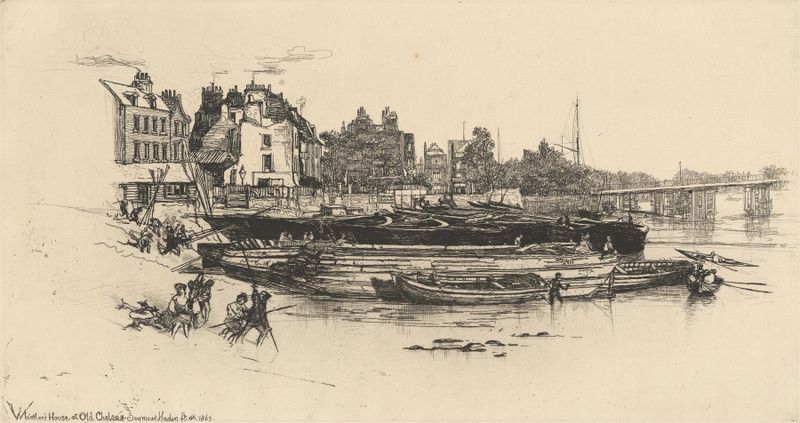
Whistler’s House at Old Chelsea
Francis Seymour Haden

The Mill-Wheel
Francis Seymour Haden
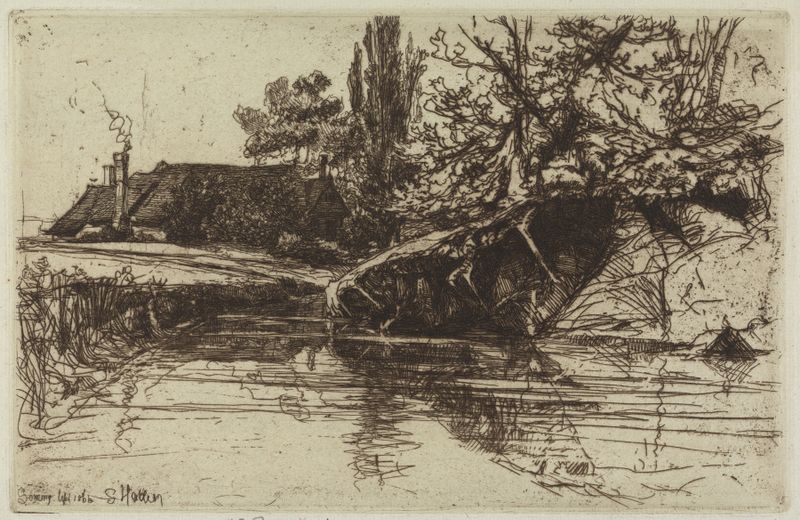
The Moat House
Francis Seymour Haden

By Twickenham
Francis Seymour Haden

Newcastle Emlyn
Francis Seymour Haden
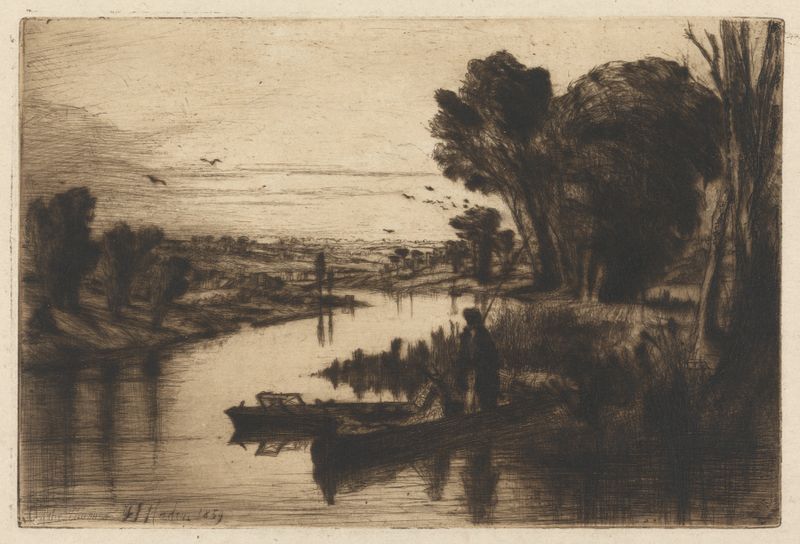
On the Thames
Francis Seymour Haden

Kidwelly Castle
Francis Seymour Haden
Fulham on the Thames
Francis Seymour Haden





