The tramp steamship Mersey in fair winds — History & Facts
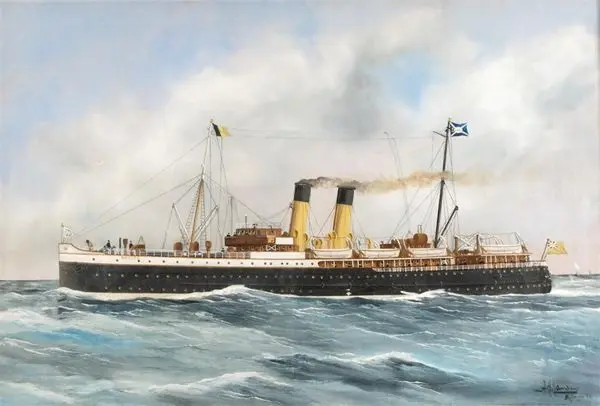
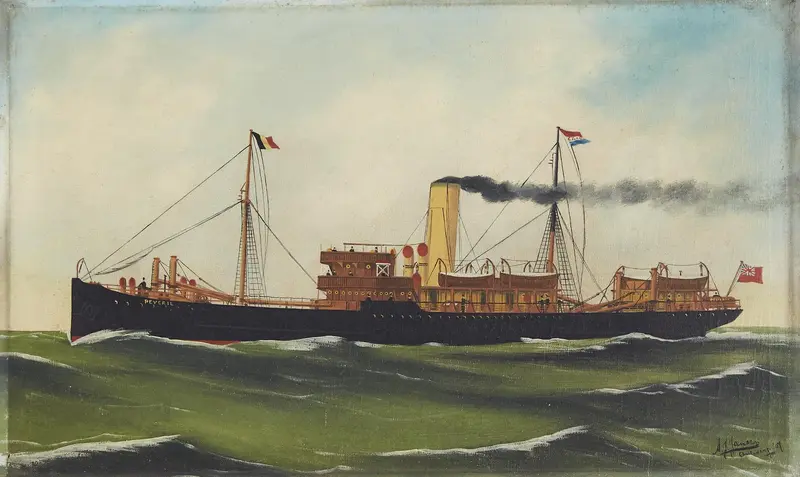
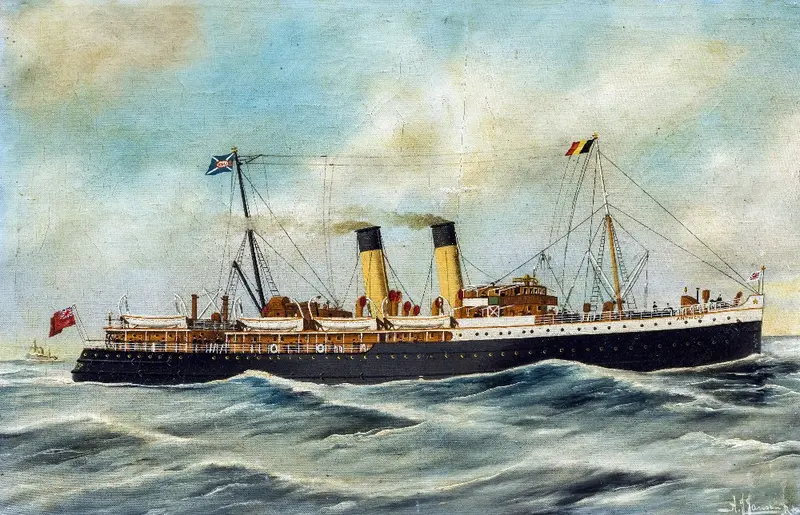
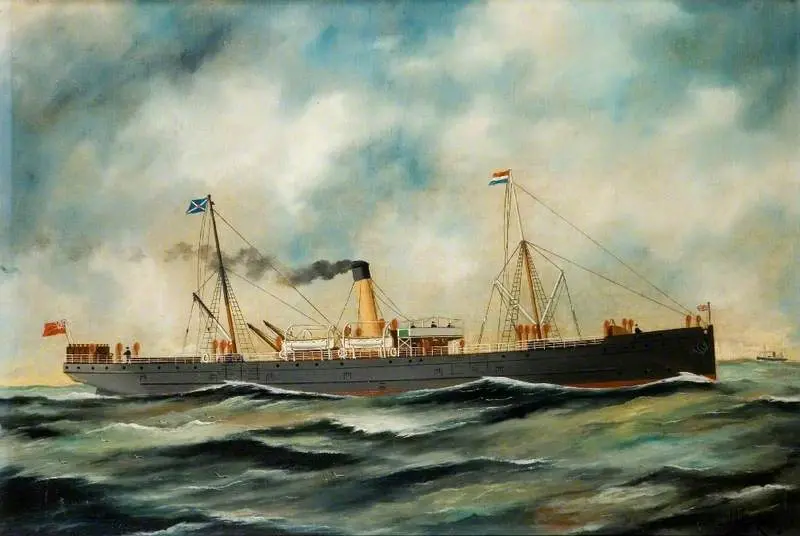
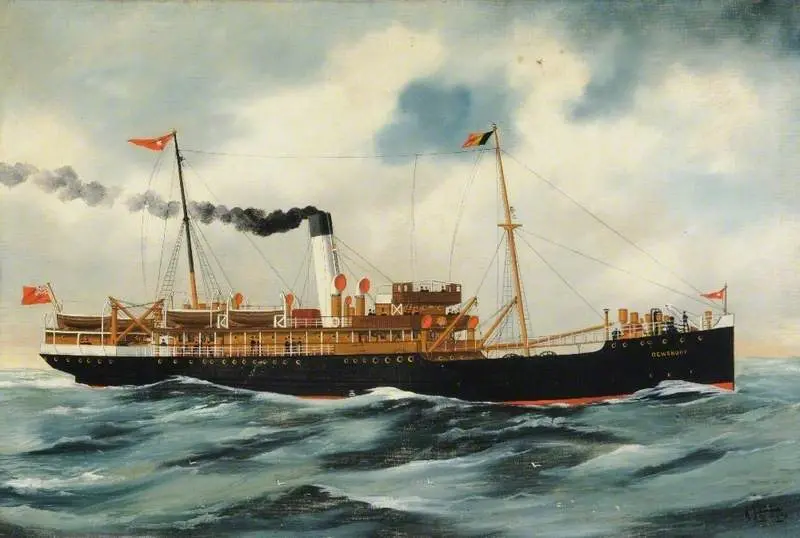
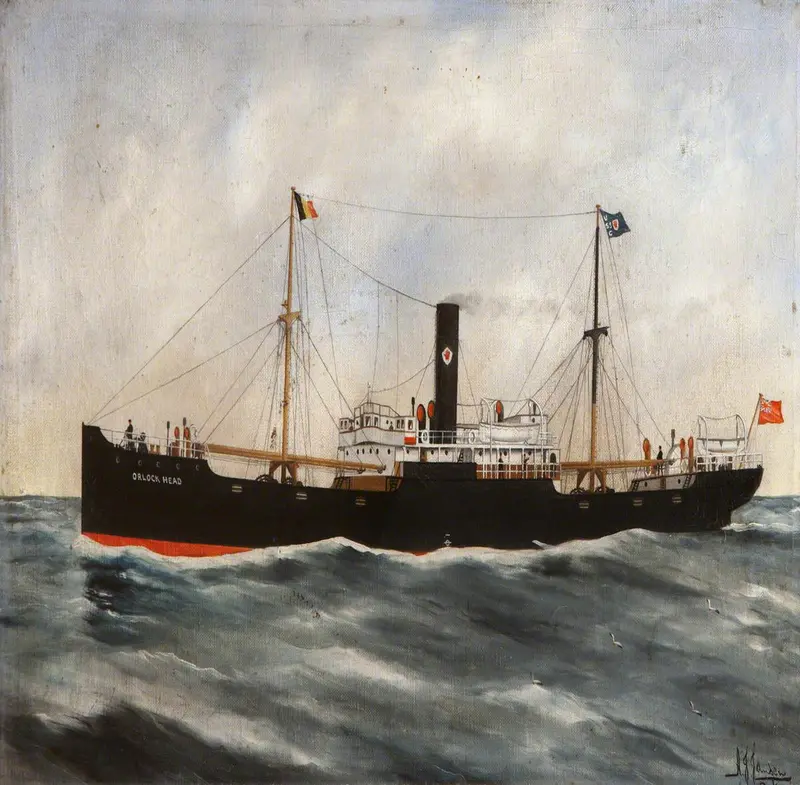
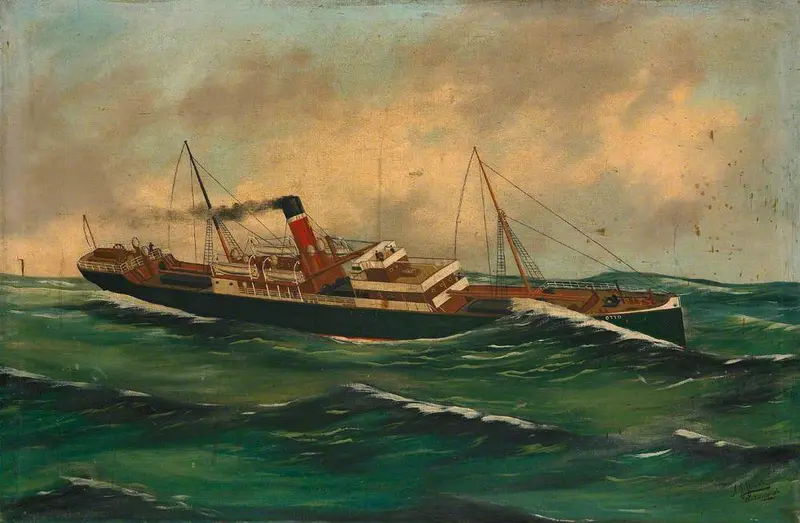
What first catches the eye is the proud silhouette of the Mersey, a tramp steamship slicing through wind-ruffled seas, her hull cutting a crisp line against the restless blue. The artist, A. J.
Jansen, gives the vessel a sense of dignity and purpose, the flags at her masts fluttering with coded messages of identity and allegiance. The low horizon grants the sky and sea equal claim to the scene, while the ship’s black hull and ochre funnel draw the gaze to the heart of the composition. The careful rendering of rigging and deck detail invites the viewer to linger, imagining the routines of crew and the unseen cargo below.
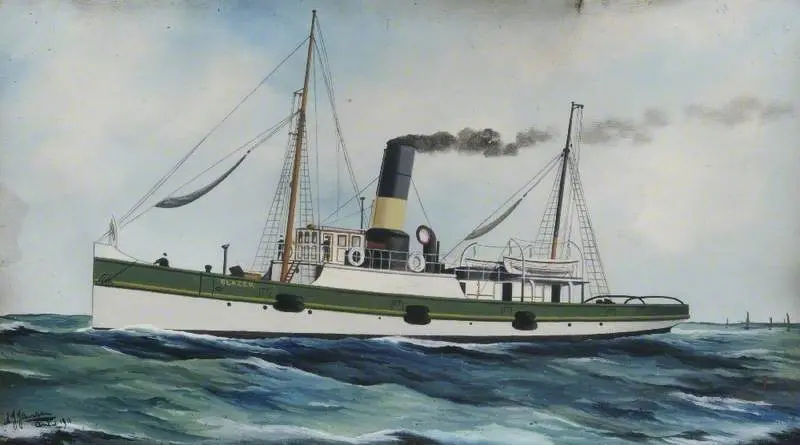
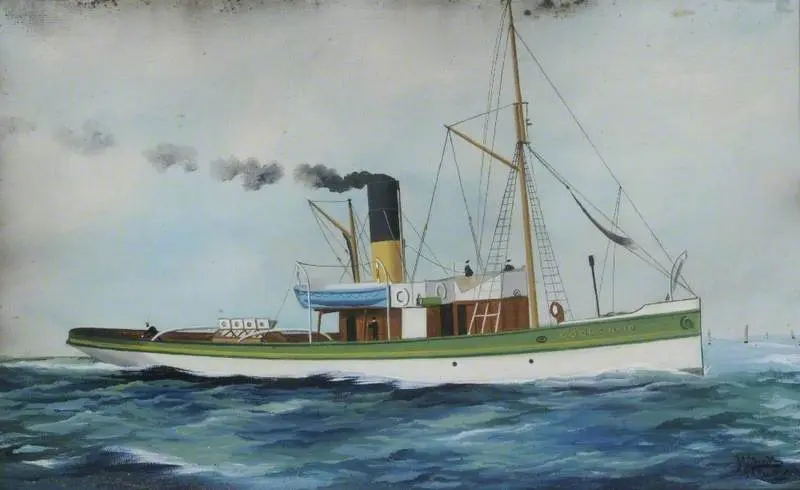
Even the smoke streaming from the funnel is painted with intention, a sign of steady progress and the age of steam. Painted in 1913, this image belongs to a world on the cusp of change, when steamships like the Mersey were the workhorses of global trade, carrying goods and fortunes between continents. Such portraits were often commissioned by shipping companies or captains, eager to commemorate a vessel’s launch or a successful voyage. The genre flourished as a celebration of maritime achievement and technological prowess, each ship’s likeness a testament to the ambitions of its era.
While little is recorded about this particular painting’s journey, its survival in a modern collection hints at the enduring fascination with the age of steam and the anonymous labor that powered it. Look again at the Mersey—she is both a machine and a memory, her image a bridge to the vanished world of early twentieth-century seafaring.