
The Two Asses — History & Facts
In that stillness, art invites us to question our perceptions and the illusions we accept. What forms do reality and imagination take when seen through the lens of creativity? Focus on the intricate play of light and shadow in The Two Asses, where the soft gray hues contrast sharply against the defined outlines of the two figures. The artist’s deft engraving technique creates a lifelike texture, allowing the viewer’s eye to trace the contours and expressions of the animals.
Look closely at the positioning of the animals’ heads; the slight tilt suggests an unspoken dialogue between them, creating an intimacy that draws you in. At first glance, this may appear to be a simple depiction of two donkeys, yet the tension lies beneath the surface. The creatures embody duality, representing both burden and companionship, each standing in their own space yet connected through shared existence. This subtle interplay evokes reflections on the nature of dependence and independence within relationships, encouraging the viewer to explore the depths of their own interactions. In 1863, Francis Seymour Haden created this work during a time when the art world was shifting towards realism and the emphasis on the ordinary.
Living in London, he was part of a vibrant community of artists who sought to capture the nuances of everyday life. This piece reflects not only his skill as an engraver but also his philosophical inquiries into perception, inviting a dialogue with the viewer that transcends the visual realm.
More Artworks by Francis Seymour Haden
Browse all →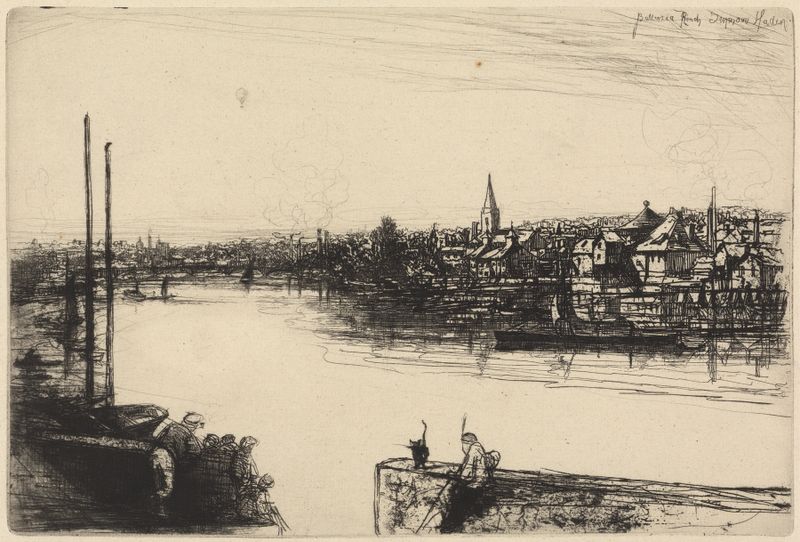
Battersea Reach
Francis Seymour Haden

Nine Barrow Down
Francis Seymour Haden
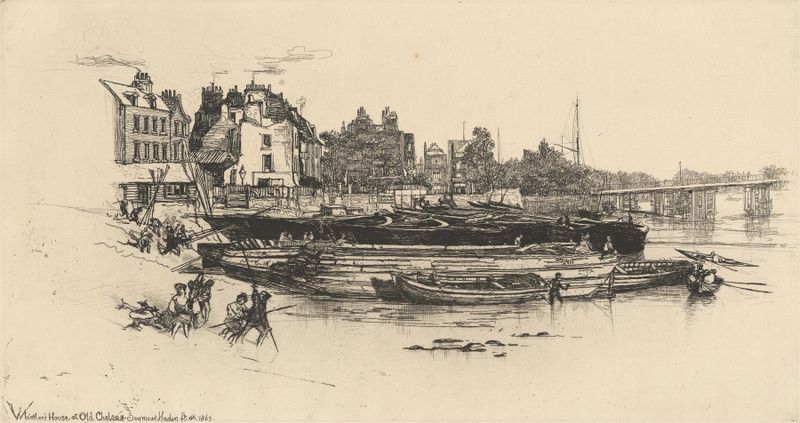
Whistler’s House at Old Chelsea
Francis Seymour Haden

The Mill-Wheel
Francis Seymour Haden
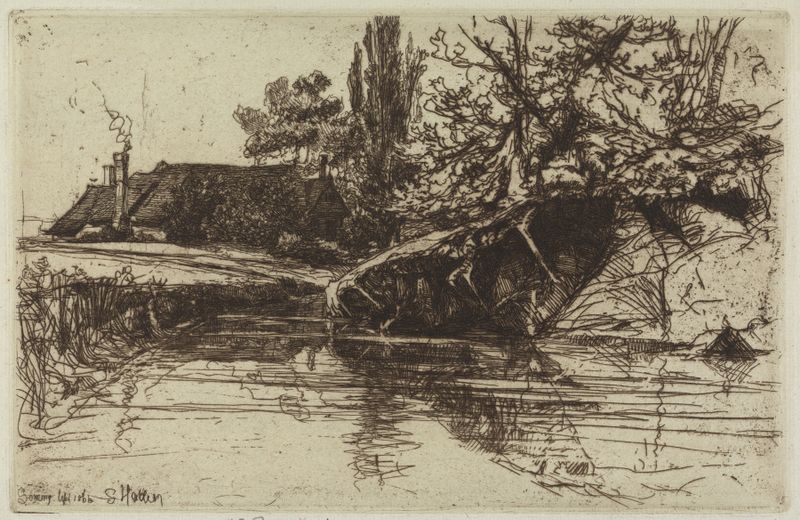
The Moat House
Francis Seymour Haden

By Twickenham
Francis Seymour Haden

Newcastle Emlyn
Francis Seymour Haden
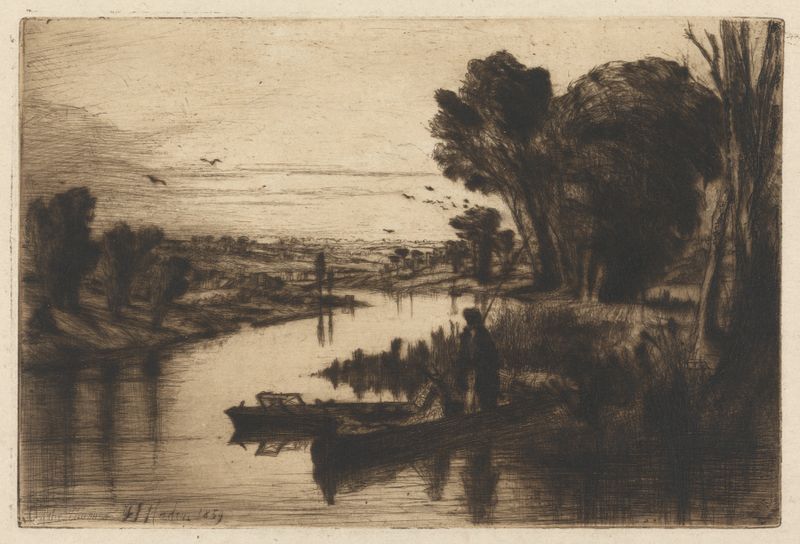
On the Thames
Francis Seymour Haden

Kidwelly Castle
Francis Seymour Haden
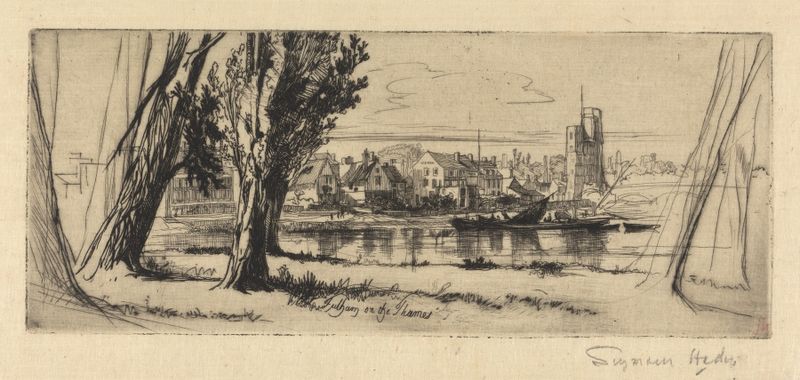
Fulham on the Thames
Francis Seymour Haden





