
The Vesper Hymn — History & Facts
What if silence could speak through light? In The Vesper Hymn, a tranquil moment unfolds, inviting viewers to ponder the serene communion between nature and the divine. Look to the left at the lush greenery that cradles the scene; the intricate detail of the foliage draws the eye, suggesting life and renewal. The sunset casts a golden hue over the landscape, illuminating the figures in reverence, their silhouettes blending harmoniously with the natural world. Notice how the soft light contrasts with the deepening shadows, emphasizing the transition from day to night — a poignant metaphor for the cycle of existence. Yet, amidst this peace lies a tension between the seen and the unseen.
The figures, appearing both solemn and joyous, seem to embody the duality of earthly life and spiritual elevation. The organized chaos of nature around them contrasts with human fragility, hinting at the awakening of consciousness that often accompanies moments of contemplation. Each brushstroke, from the delicate texture of the clouds to the glimmer of the water below, invites deeper reflection on the connection between humanity and the cosmos. In 1838, Thomas Cole painted this piece during a period of burgeoning romanticism in America, a time when artists sought to express personal emotion through nature.
He was deeply influenced by the landscape and the transcendental ideals of the period, which celebrated individual experience and the divine spirit found in the natural world. This artwork emerged from his own quest for understanding amid the tumultuous changes of the time, capturing a moment that resonates with timeless significance.
More Artworks by Thomas Cole
Browse all →
View from Mount Holyoke, Northampton, Massachusetts, after a Thunderstorm—The Oxbow
Thomas Cole
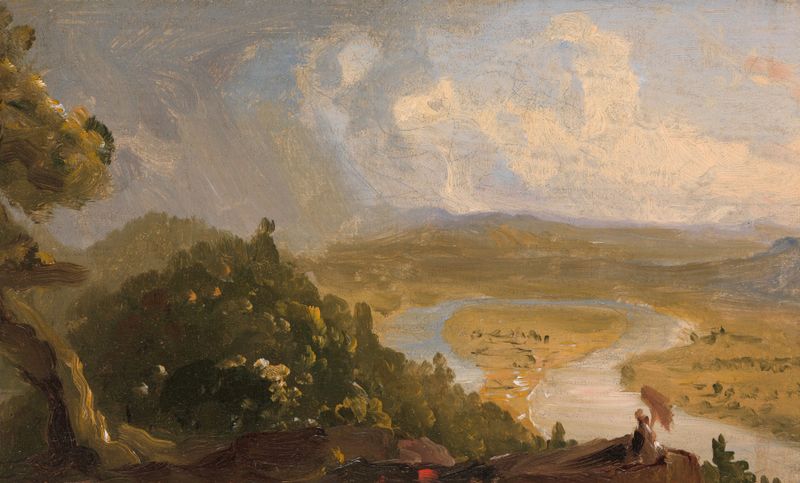
Sketch for View from Mount Holyoke, Northampton, Massachusetts, after a Thunderstorm (The Oxbow)
Thomas Cole
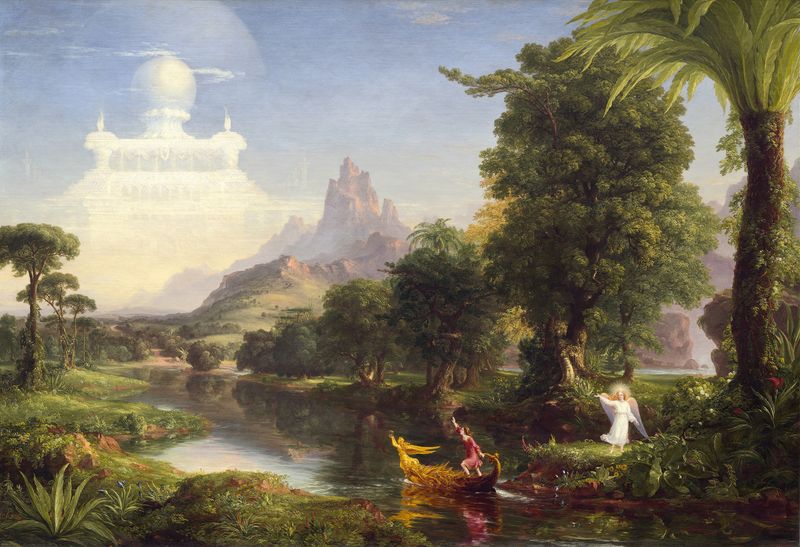
The Voyage of Life – Youth
Thomas Cole
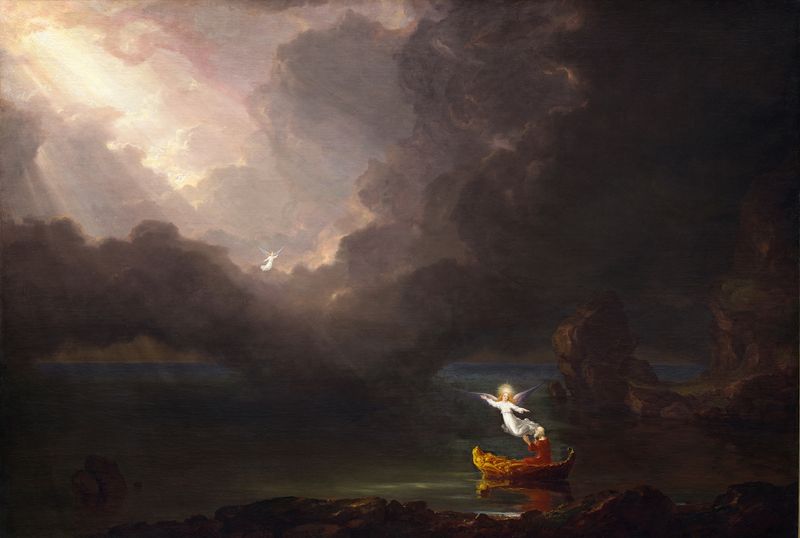
The Voyage of Life – Old Age
Thomas Cole
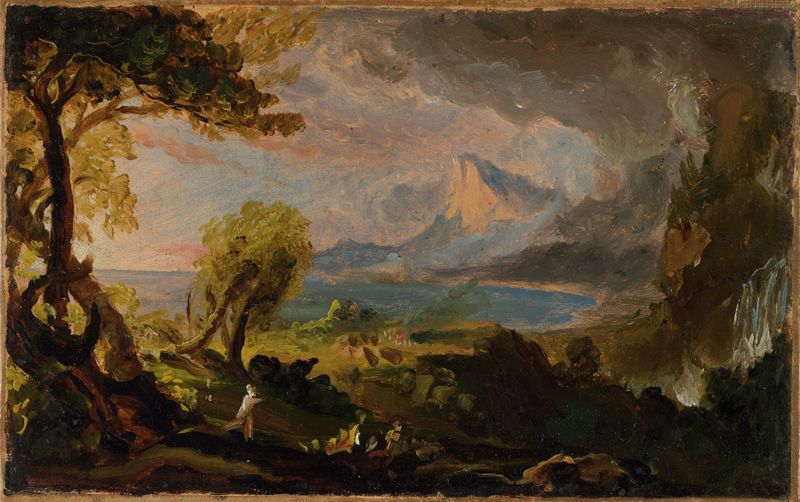
The Course of Empire–The Savage State
Thomas Cole

Landscape
Thomas Cole

New England Scenery
Thomas Cole

Sunrise in the Catskills
Thomas Cole
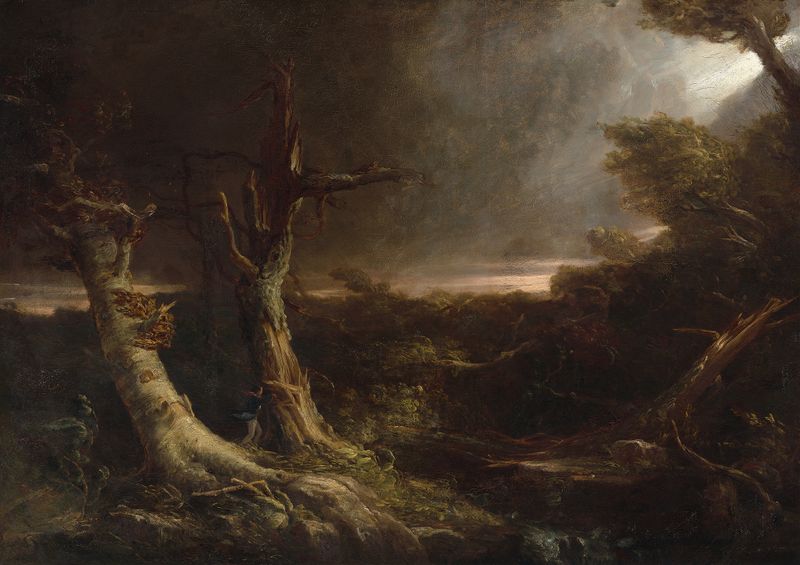
Tornado in an American Forest
Thomas Cole
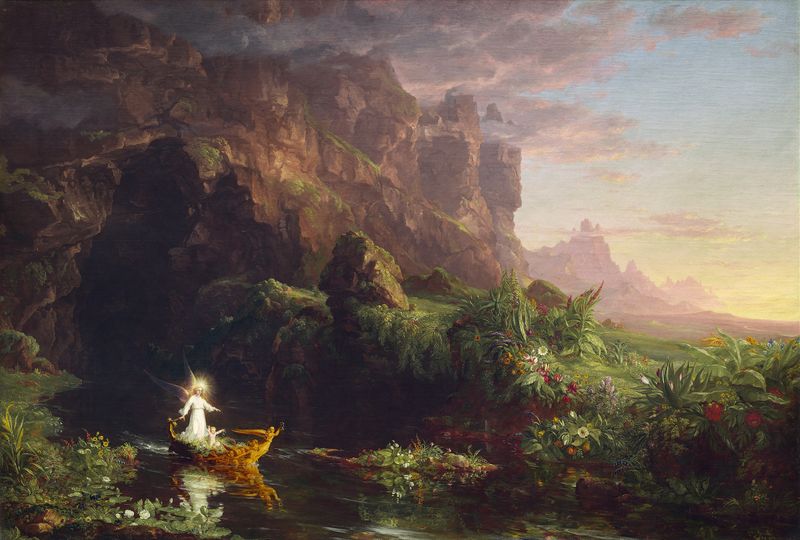
The Voyage of Life – Childhood
Thomas Cole





