
The Villa Malta, Rome — History & Facts
Is this a mirror — or a memory? In Dahl’s tranquil composition, the viewer is invited to reflect on the legacy of a place steeped in history, where nature and architecture intertwine seamlessly. Look to the left at the soft, verdant hills that cradle the villa, their lush greenery inviting us to explore further. Notice how the morning light bathes the façade of the villa, the warm hues of ochre contrasting with the cool blues of the sky. The gentle strokes depict not just a building but a moment frozen in time, each detail meticulously rendered to evoke a sense of nostalgia and longing.
The reflection of the villa in the water creates a dialogue between reality and its echo, suggesting that memory is as much a part of the landscape as the structures themselves. Within the layers of paint lies a conversation about permanence and transience. The villa stands proud and unyielding, yet the rippling water suggests a fleeting nature, hinting at the impermanence of human endeavors against the backdrop of nature's endurance. The subtle interplay between light and shadow speaks to the passage of time, each brushstroke revealing the emotional weight of both triumph and decay that accompanies legacy. In 1821, Dahl was in his prime, residing in Rome, where he immersed himself in the beauty of the Italian landscape.
This era marked a shift in his work, where he began to embrace the Romantic ideals of nature's sublime power and introspective reflection. The world of art was evolving as well, with a growing interest in capturing the essence of place, memory, and emotional truth, all of which resonate powerfully in this painting.
More Artworks by Johan Christian Dahl
Browse all →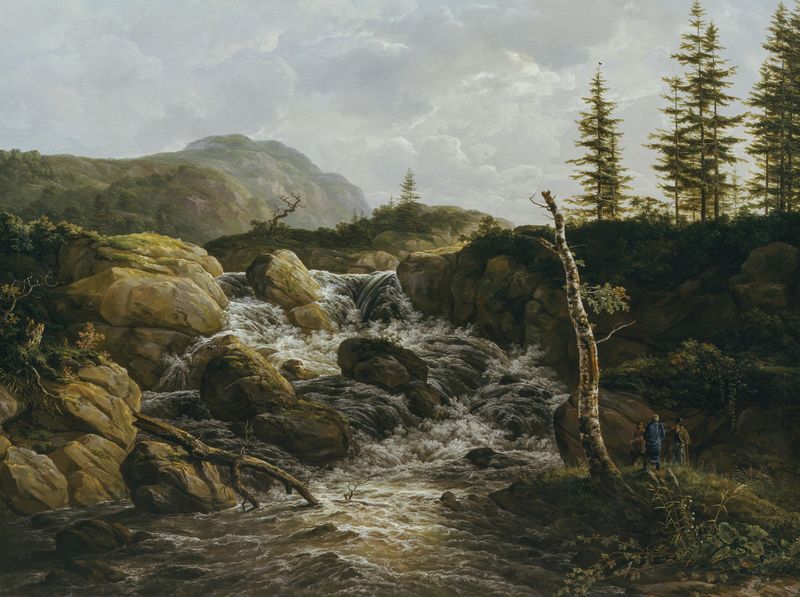
Mountainous Landscape with a Waterfall, Norway
Johan Christian Dahl
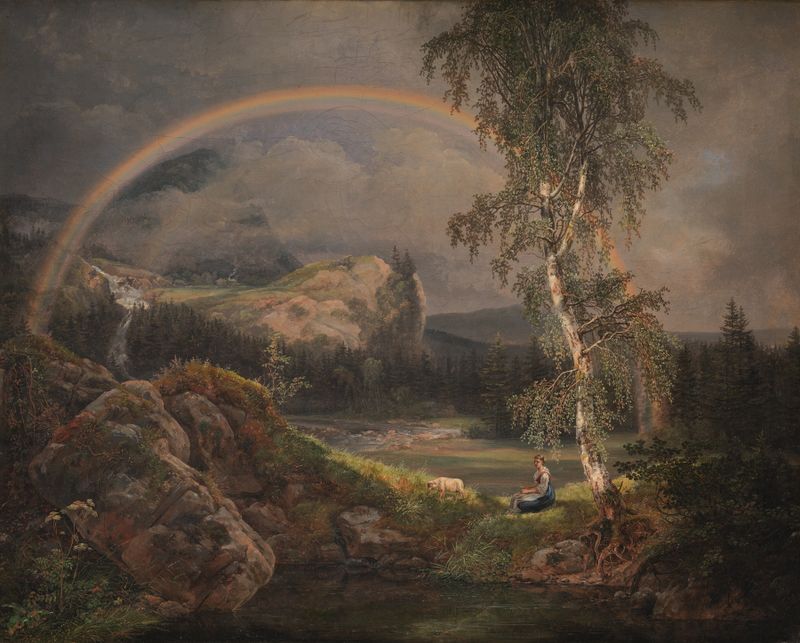
Norwegian Landscape with a Rainbow
Johan Christian Dahl
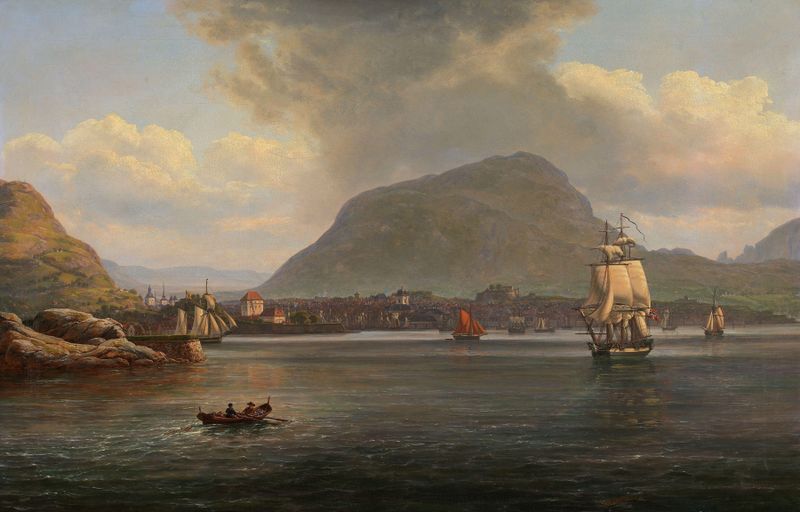
Bergen seen from the northern Inlet
Johan Christian Dahl
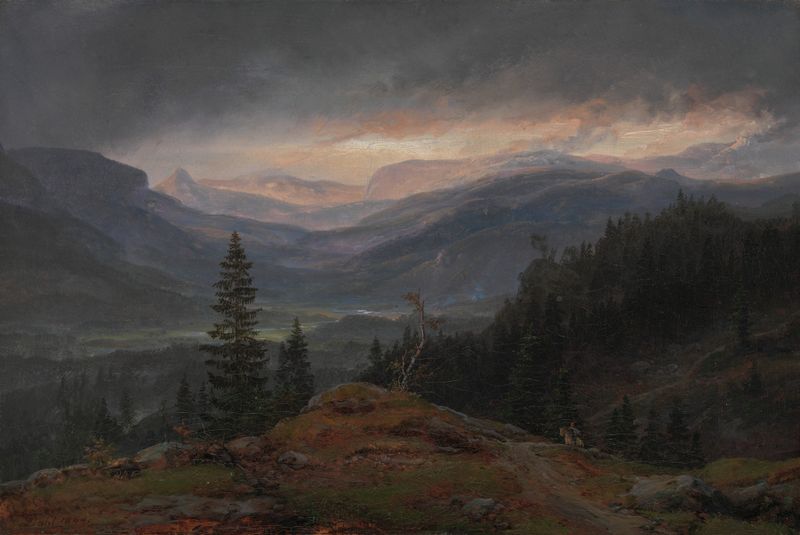
View over Hallingdal
Johan Christian Dahl
View over Øresund near the Lime Works
Johan Christian Dahl
A Shipwreck on the Coast of Norway
Johan Christian Dahl
View of a Lake, Norway
Johan Christian Dahl
The Watzmann
Johan Christian Dahl
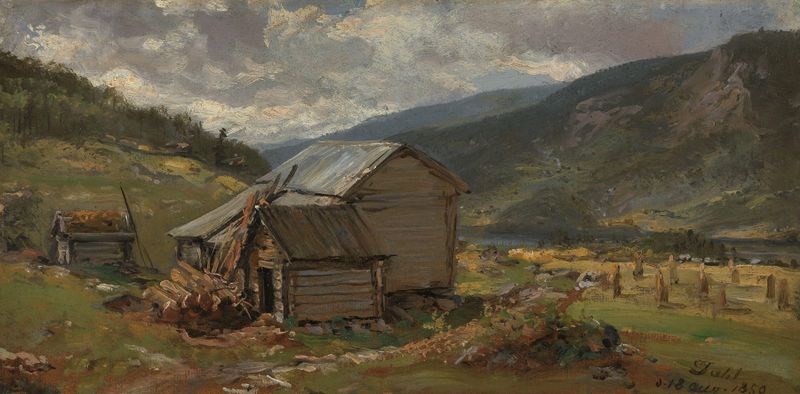
View of Hjelle in Valdres
Johan Christian Dahl

View At Skjolden In Lyster
Johan Christian Dahl





