
The Village Ford — History & Facts
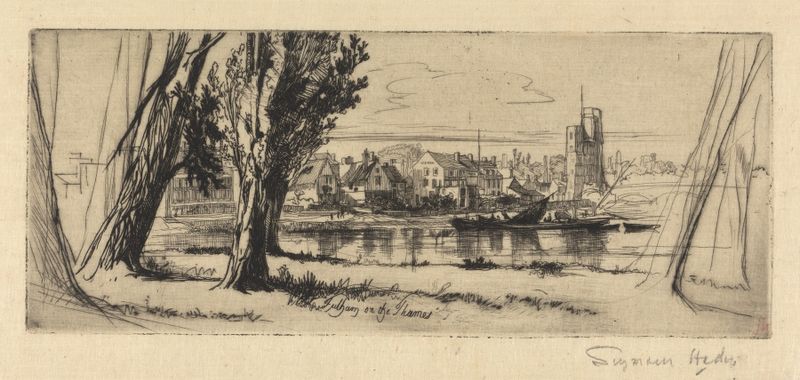
In The Village Ford, the delicate interplay of light and shadow reveals a poignant truth about grief and the passage of time. Focus first on the serene waterway that meanders through the village, its surface shimmering softly under the gentle caress of sunlight. Notice how the artist employs a subtle palette of earthy tones—a blend of greens, browns, and metallics—that evoke a sense of calm yet hint at underlying sorrow. The brushwork captures the fluidity of the water, drawing your eyes along the current and inviting reflection on loss and longing. Within this tranquil scene lies a deeper narrative.
The solitary figure, seemingly immersed in thought, stands at the edge of the ford, embodying the weight of grief. The juxtaposition of the idyllic setting with the solitary presence creates an emotional tension, suggesting that even in peaceful moments, pain lingers beneath the surface. The intricate details of the foliage surrounding the water further symbolize the passage of life, reminding us that beauty often emerges amidst heartache. Francis Seymour Haden painted this piece in 1881, a time during which he was deeply engaged with the aesthetics of landscape and printmaking.
Living in England, he was influenced by the burgeoning Impressionist movement, which emphasized capturing momentary effects of light. This painting reflects his fascination with nature and its complexities, as well as his personal experiences that resonate with themes of loss and remembrance prevalent in his work.
More Artworks by Francis Seymour Haden
Browse all →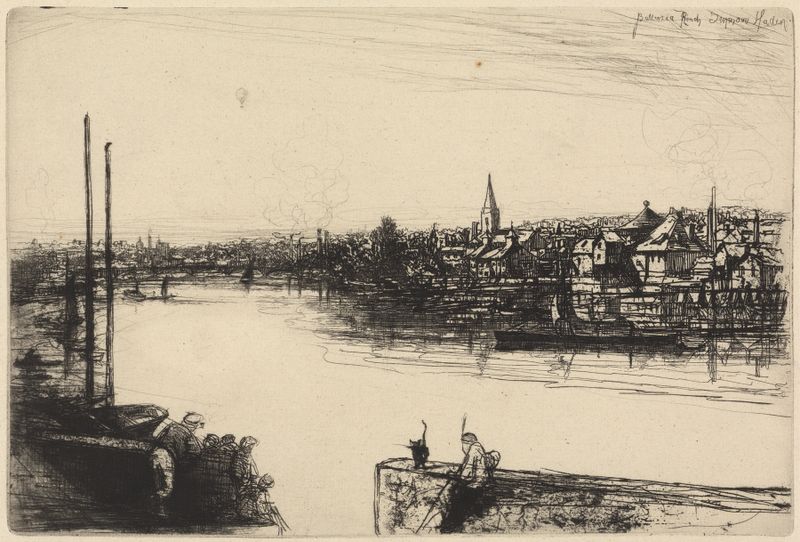
Battersea Reach
Francis Seymour Haden

Nine Barrow Down
Francis Seymour Haden
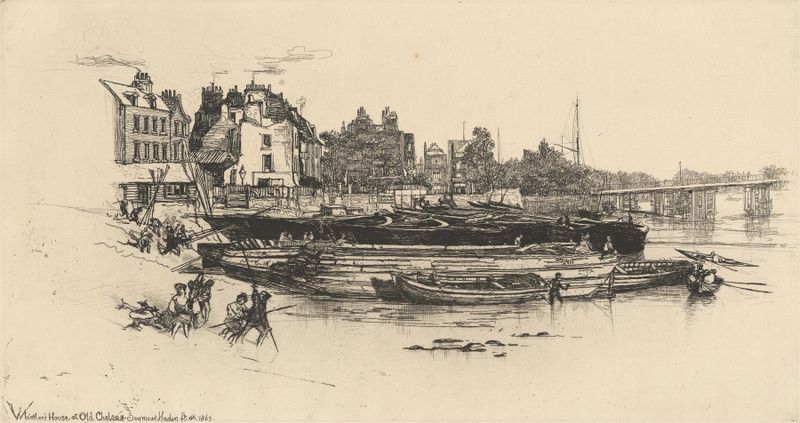
Whistler’s House at Old Chelsea
Francis Seymour Haden

The Mill-Wheel
Francis Seymour Haden
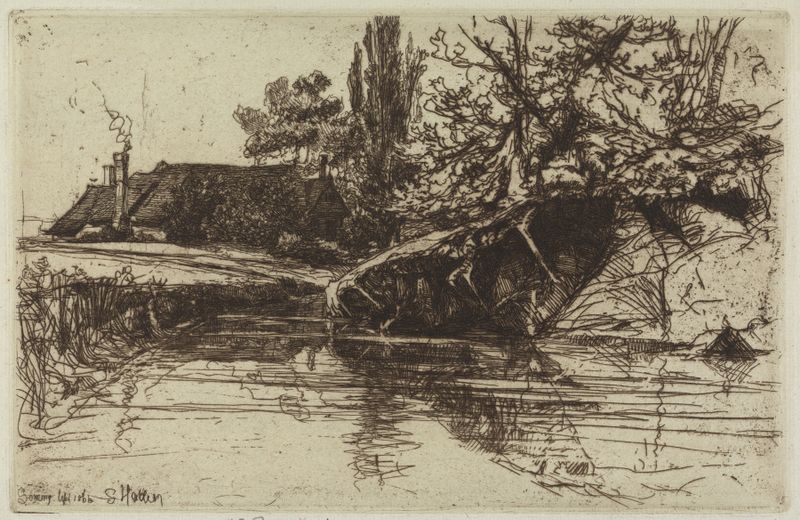
The Moat House
Francis Seymour Haden

By Twickenham
Francis Seymour Haden

Newcastle Emlyn
Francis Seymour Haden
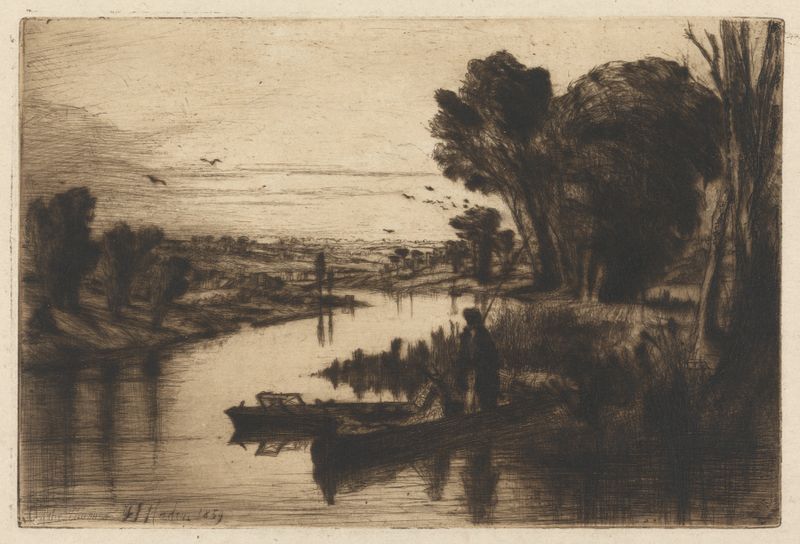
On the Thames
Francis Seymour Haden

Kidwelly Castle
Francis Seymour Haden
Fulham on the Thames
Francis Seymour Haden





