
The Virgin and Child with the Young St. John (Tondo) — History & Facts
Few images from the Florentine Renaissance have inspired as much discussion as The Virgin and Child with the Young St. John (Tondo) by Sandro Botticelli. The circular format itself—known as a tondo—was a fashionable choice among wealthy patrons in late 15th-century Florence, often commissioned to celebrate births or marriages.
Unlike many of Botticelli’s large altarpieces, the tondo format suggests a more intimate, domestic setting, intended for private devotion. Scholars still debate the original patron and precise date of this work, but its refined elegance and tender mood have made it a touchstone for Botticelli’s late style. At the heart of the painting, the Virgin Mary gently supports the Christ Child, while the young St. John the Baptist, patron saint of Florence, kneels in adoration.
Botticelli captures a moment of quiet interaction: the Christ Child turns toward John, extending a hand in blessing, while Mary’s gaze lingers protectively over both boys. The delicate flowers at their feet—often interpreted as symbols of purity and Christ’s future Passion—anchor the figures in a serene, idealized landscape. Botticelli’s use of linear grace and soft, flowing contours sets his vision apart from the more sculptural approach of Michelangelo’s tondi, such as the Doni Tondo, emphasizing spiritual intimacy over heroic drama. The journey of this particular tondo remains partly shrouded in mystery, as is often the case with Botticelli’s smaller devotional works.
While its early provenance is unclear, paintings of this type were highly sought after by Florentine families and frequently passed through private collections before entering public museums. Today, The Virgin and Child with the Young St. John (Tondo) stands as a testament to Botticelli’s enduring appeal and his ability to blend human warmth with spiritual symbolism, reflecting the values and tastes of Renaissance Florence at the height of its cultural flowering.
More Artworks by Sandro Botticelli

Virgin and Child
Sandro Botticelli

Madonna and Child and the Young St John the Baptist
Sandro Botticelli

Madonna and Child with six angels and Saint John the Baptist as Child
Sandro Botticelli

Adoration of the Magi
Sandro Botticelli

Virgin and Child with the Young Saint John the Baptist
Sandro Botticelli
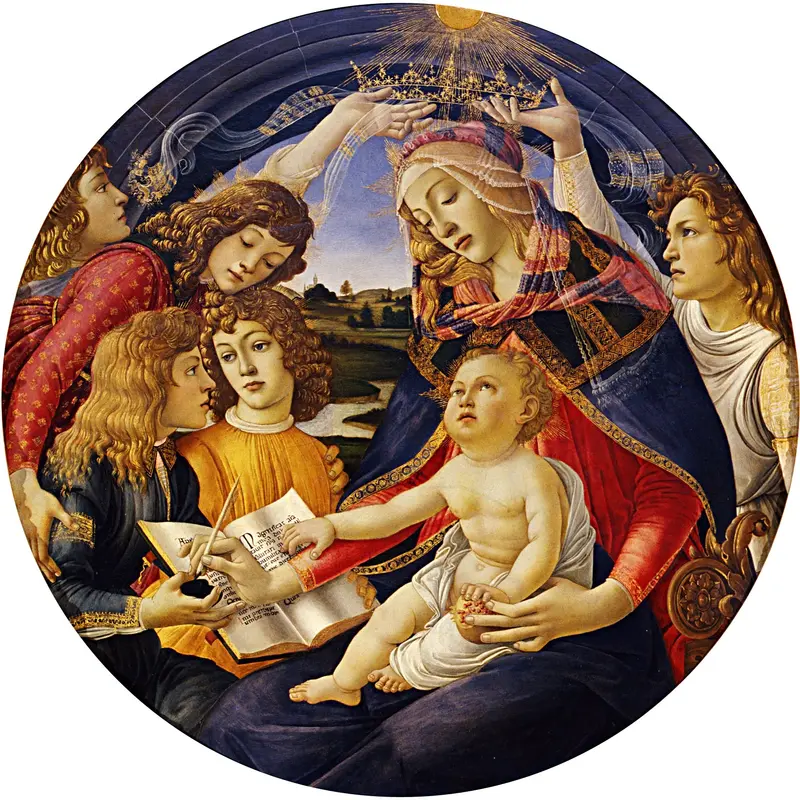
Madonna of the Magnificat
Sandro Botticelli
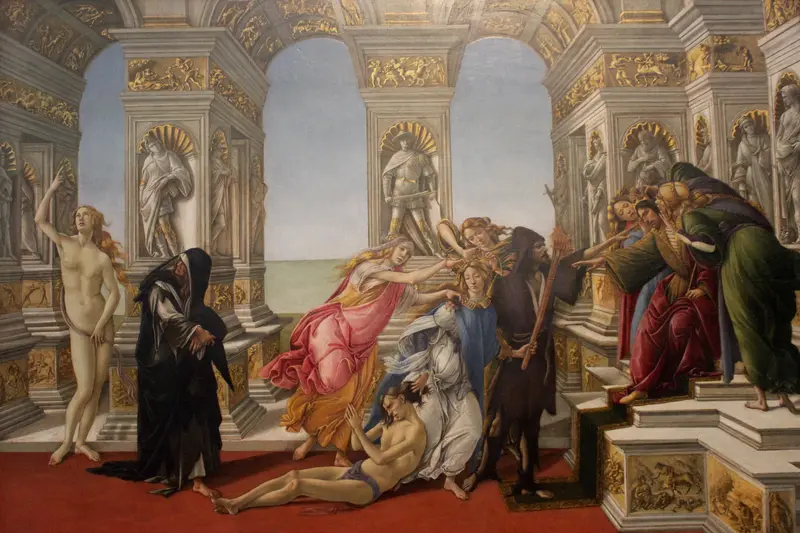
Calumny of Apelles
Sandro Botticelli

Portrait of a young man holding a roundel
Sandro Botticelli

The Trinity with Saint Mary Magdalene and Saint John the Baptist, the Archangel Raphael and Tobias
Sandro Botticelli

Idealized Portrait of a Lady (Portrait of Simonetta Vespucci as Nymph)
Sandro Botticelli





