
The Well in the Wood at Ariccia — History & Facts
A shaft of afternoon light catches the pale stone of a well, drawing the viewer’s attention to a quiet moment of daily life paused at the forest’s edge. The path leads us into the scene, where a traveler leans to draw water while a small caravan—women, children, and animals—passes by, their journey momentarily slowed by the promise of refreshment. The lush canopy overhead frames the figures below, while the dappled shadows on the ground suggest a world both sheltered and alive with movement.
Every gesture is purposeful: the woman steadying her child on a donkey, the rhythmic sway of baskets, the attentive dog at the man’s feet. The palette is grounded in earthy greens and browns, but the spots of red and white in the figures’ clothing catch the eye, animating the procession with a sense of warmth and community. Painted in 1831, The Well in the Wood at Ariccia belongs to the world of early nineteenth-century German Romanticism, when artists like Adrian Ludwig Richter sought out the Italian countryside to capture its blend of the picturesque and the everyday. Such works were often made for a growing middle-class audience eager for images of travel, nature, and rural tradition—scenes that promised both escape and familiarity.
While little is recorded about the specific origins or later journey of this painting, its presence in a digital collection today allows us to glimpse a moment shaped by both observation and longing. The next time you look, notice how the path disappears into the distance, inviting you to imagine where these travelers might go once they leave the shelter of the trees.
More Artworks by Adrian Ludwig Richter

Landschaft bei den Sabiner Bergen (Rocca di Mezzo)
Adrian Ludwig Richter

The Fountain at Grottaferrata
Adrian Ludwig Richter
Hirten am Feuer (Abendlandschaft)
Adrian Ludwig Richter
Herbstlicher Wald mit Schäferfamilie
Adrian Ludwig Richter
The Bay Of Naples, Capri Beyond
Adrian Ludwig Richter
Italienische Flusslandschaft
Adrian Ludwig Richter
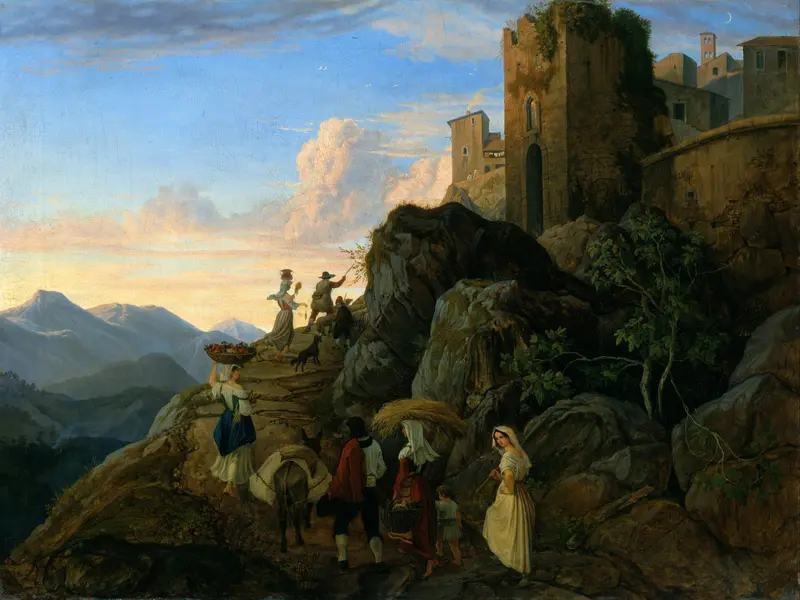
Civitella
Adrian Ludwig Richter
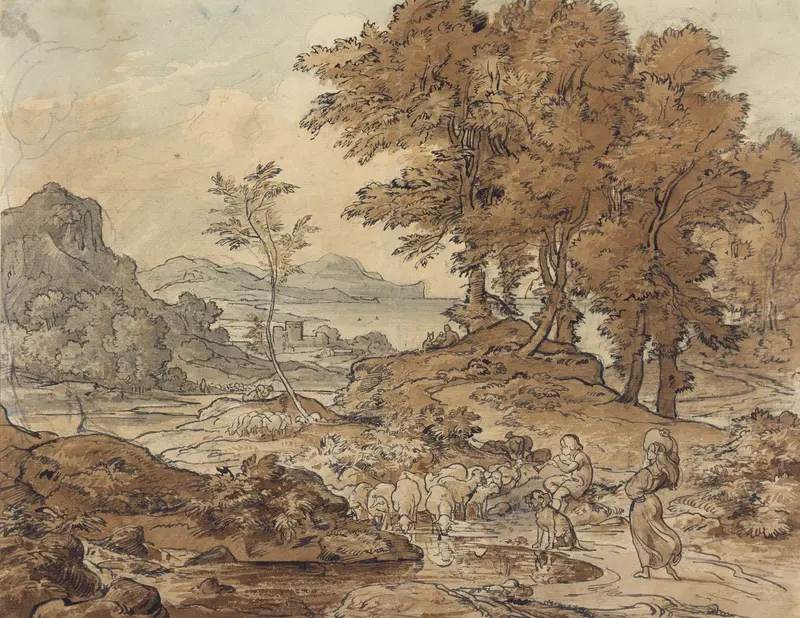
Italienische Landschaft mit Schafherden
Adrian Ludwig Richter
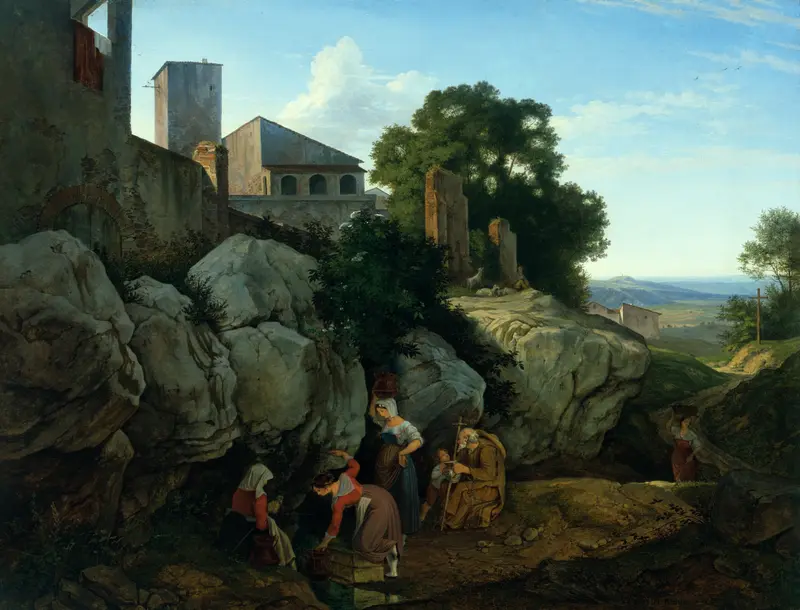
Ariccia
Adrian Ludwig Richter
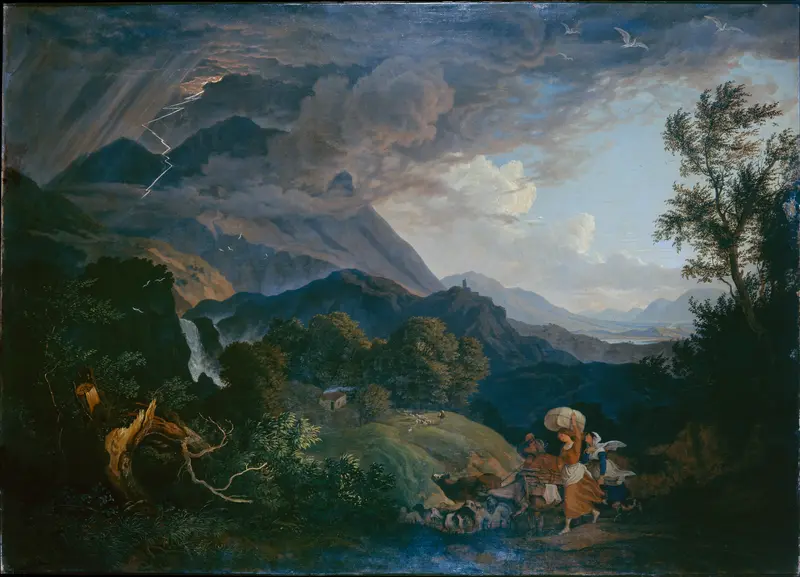
Thunderstrom over Monte Scalambra near Olevano in the Sabine Mountains
Adrian Ludwig Richter
More Genre Scene Art

Banquet of the Officers of the St George Civic Guard
Frans Hals

Rembrandt and Saskia in the Scene of the Prodigal Son
Rembrandt van Rijn

Bal du moulin de la Galette
Pierre-Auguste Renoir

Quadrille at the Moulin Rouge
Henri de Toulouse-Lautrec

A Burial at Ornans
Gustave Courbet

When Will You Marry?
Paul Gauguin