
Thebes — History & Facts
When did color learn to lie? In the delicate brushstrokes of an artist who wandered between worlds, the hues of Thebes invite contemplation on the legacy of place and memory. Begin your exploration by noticing the layered blues that engulf the horizon, which immediately draw your eyes to the sky. Then, let your gaze drift towards the intricate details of ancient architecture, where crumbling stone façades whisper stories of a long-gone civilization. The warm ochres and muted greens surrounding the structures create a mesmerizing contrast, suggesting both the vibrancy of the past and the slow encroachment of time. The painting’s emotional depth reveals itself in the interplay of light and shadow; the sun casts a gentle glow on the ruins, illuminating the beauty of decay while also hinting at the passage of time.
Each stroke seems to carry the weight of history, as if the colors themselves are steeped in the essence of the lives that once thrived there. The quietude of the landscape speaks to both nostalgia and loss, encapsulating the fragility of human legacy as nature slowly reclaims what was once vibrant and alive. Edward Lear created Thebes between 1884 and 1885 during his travels through Egypt, a period marked by his growing interest in landscape painting. At this time, he was grappling with his own legacy as a beloved illustrator and poet, seeking to redefine himself as an artist.
The world of art was evolving, and Lear was at the crossroads, infusing his new visions with both personal and cultural reflections inspired by the echoes of antiquity surrounding him.
More Artworks by Edward Lear
Browse all →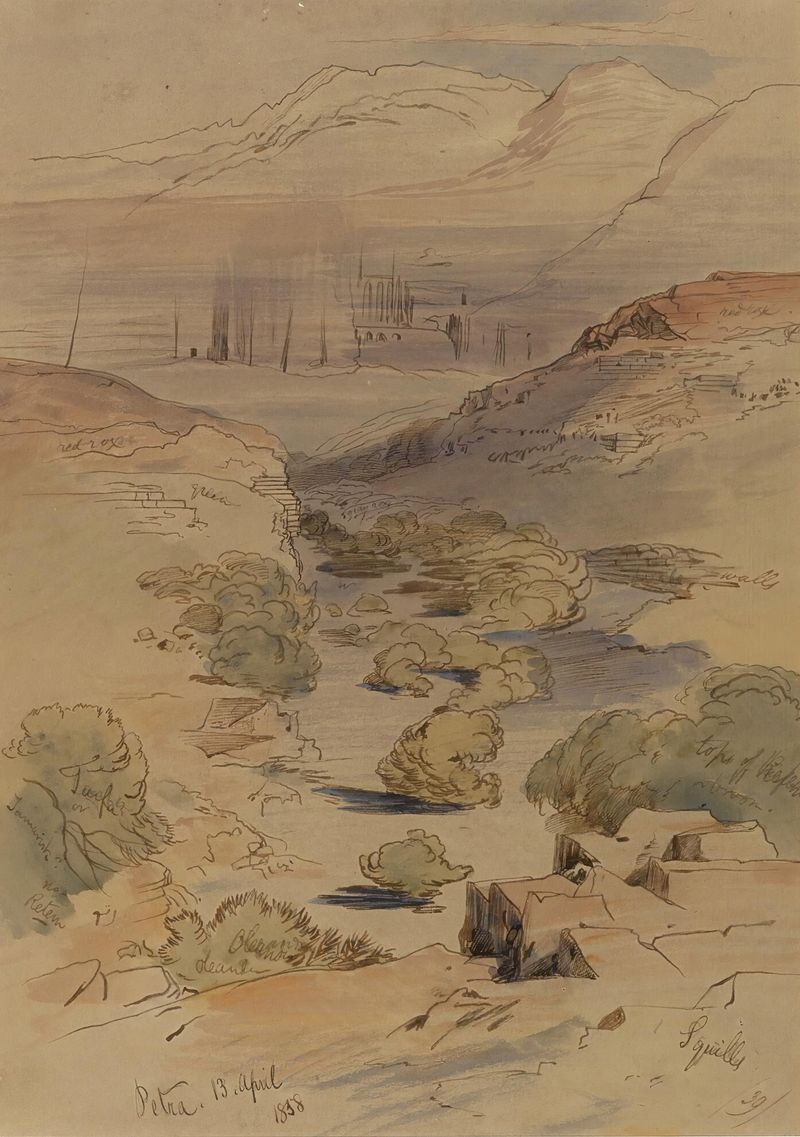
Petra
Edward Lear
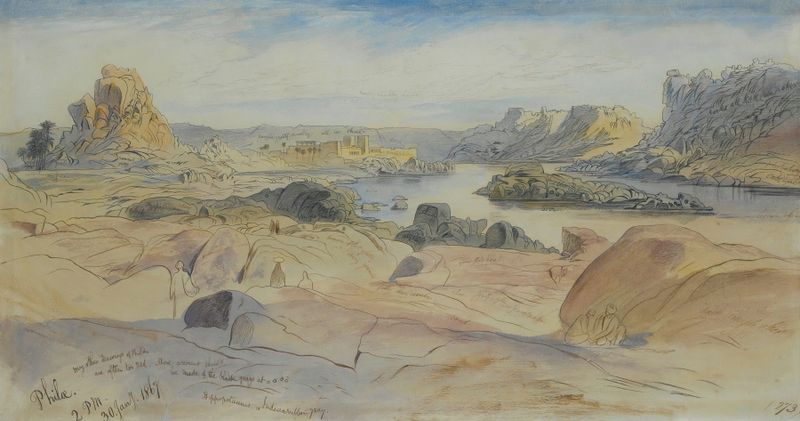
Philae, Egypt
Edward Lear
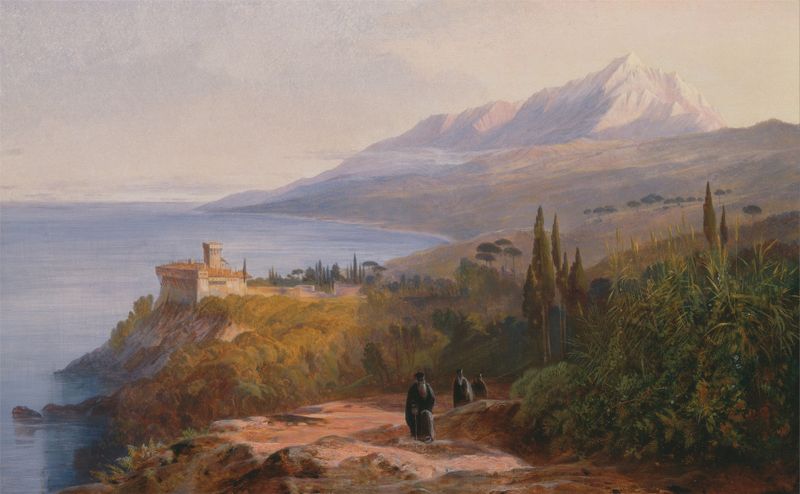
Mount Athos and the Monastery of Stavronikétes
Edward Lear
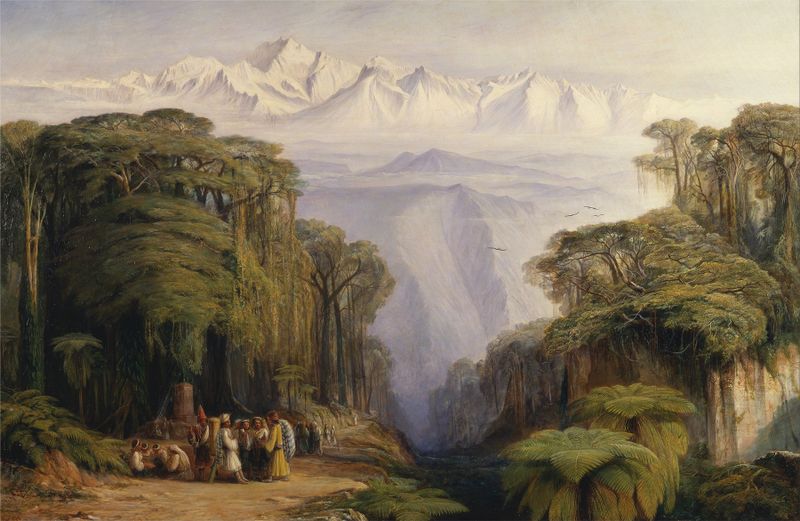
Kangchenjunga from Darjeeling
Edward Lear
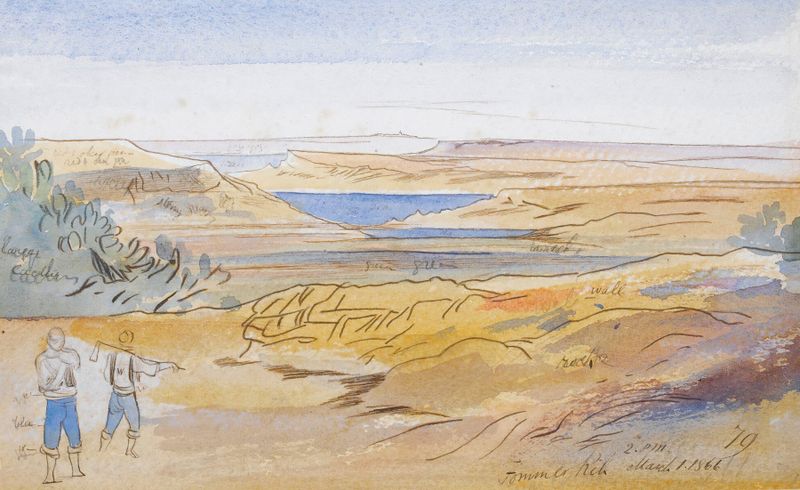
Fomm Ir-Rih, Malta
Edward Lear
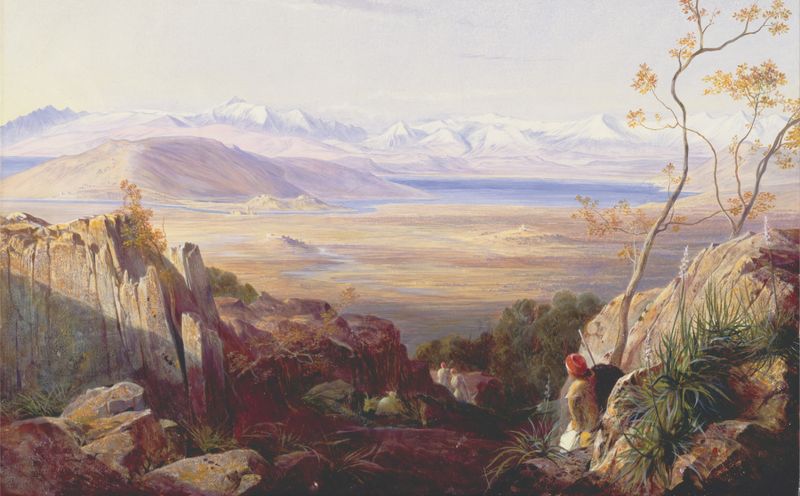
Butrinto, Albania
Edward Lear
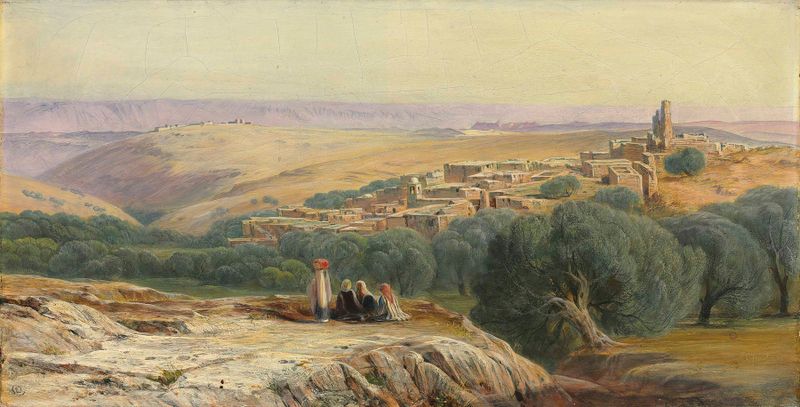
The Plains of Bethany
Edward Lear

Karnak, 9-30 pm, 22 January 1867
Edward Lear
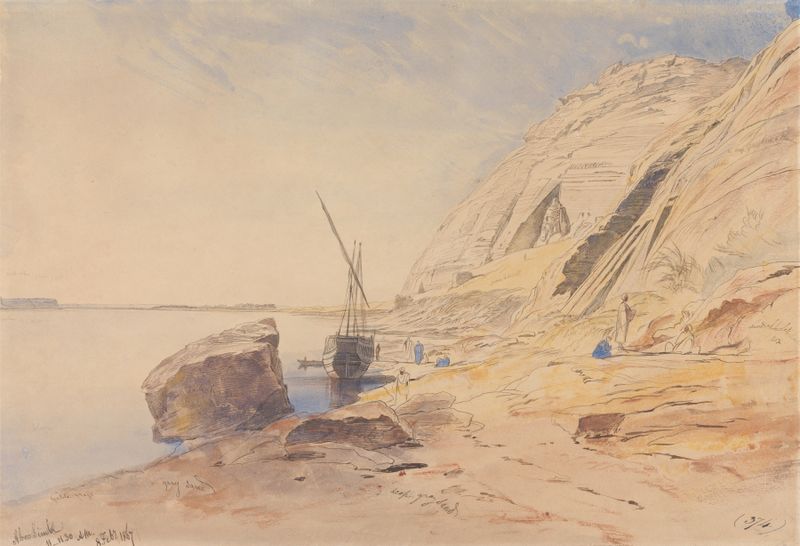
Abu Simbel, 11-11;30 am, 8 February 1867 (374)
Edward Lear

A View Of Mount Athos And The Pantokrator Monastery, Greece
Edward Lear





