
Titelblad van Cicero's Orationes — History & Facts
When did color learn to lie? As innocence dances in the shadows of intention, we confront a moment that transcends mere representation, urging us to question the very fabric of truth in art. Look closely at the intricate title page, where the delicate lines and expert engravings draw your gaze immediately to the central figure of Cicero. Notice how Dürer masterfully balances light and shadow, creating depth that breathes life into the composition. The vividness of the ink contrasts starkly against the blankness of the paper, emphasizing the weight of Cicero's words.
Layers of ornamental details frame the scene, leading the eye toward the text itself, where ideas and rhetoric intertwine. Beyond the surface, the work reveals a complex interplay between wisdom and naiveté. The bold presence of Cicero suggests authority, yet the ethereal quality of the surrounding designs evokes a sense of fragility, as if knowledge is as transient as the delicate ink on the page. Each meticulously crafted element speaks to a nuanced relationship between thought and emotion, while subtly reminding viewers that even the most profound truths can harbor a veil of deceit. In 1520, Dürer was immersed in the vibrant intellectual currents of the Renaissance, a time when classical texts were being rediscovered and celebrated.
Living in Nuremberg, he was at the forefront of a movement that sought to merge artistic expression with philosophical inquiry. The creation of this piece coincided with a growing interest in humanism and the power of words, marking a pivotal moment in art history where the visual became deeply intertwined with the literary.
More Artworks by Albrecht Dürer
Browse all →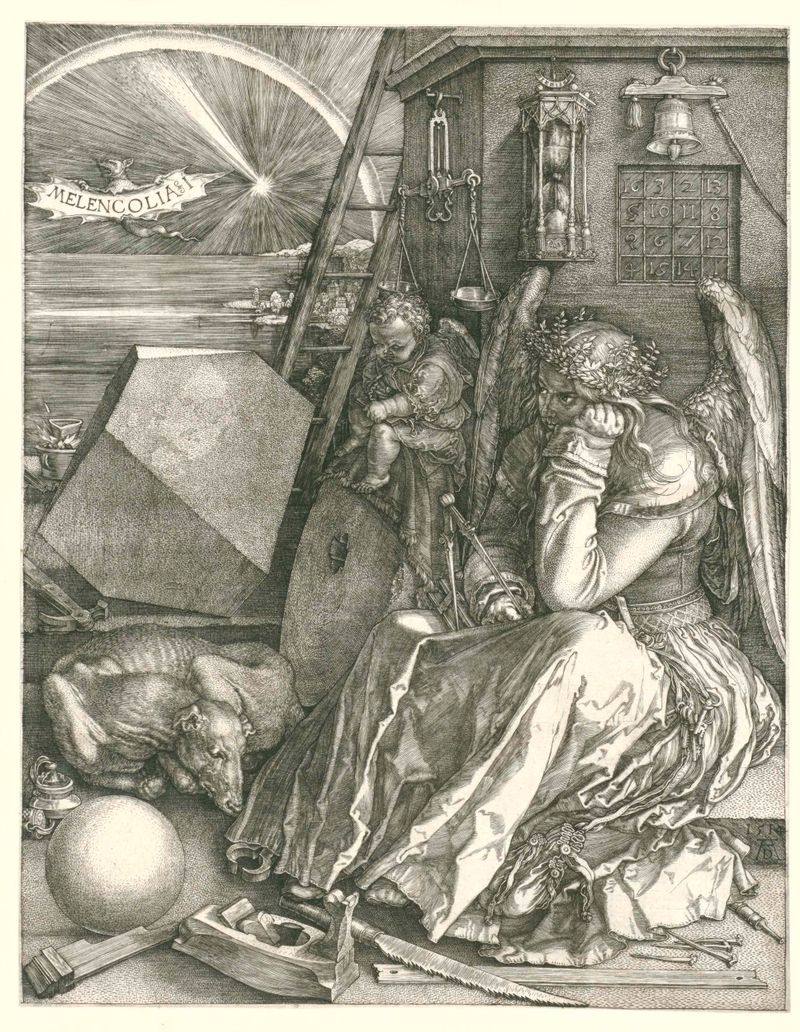
Melancholia
Albrecht Dürer
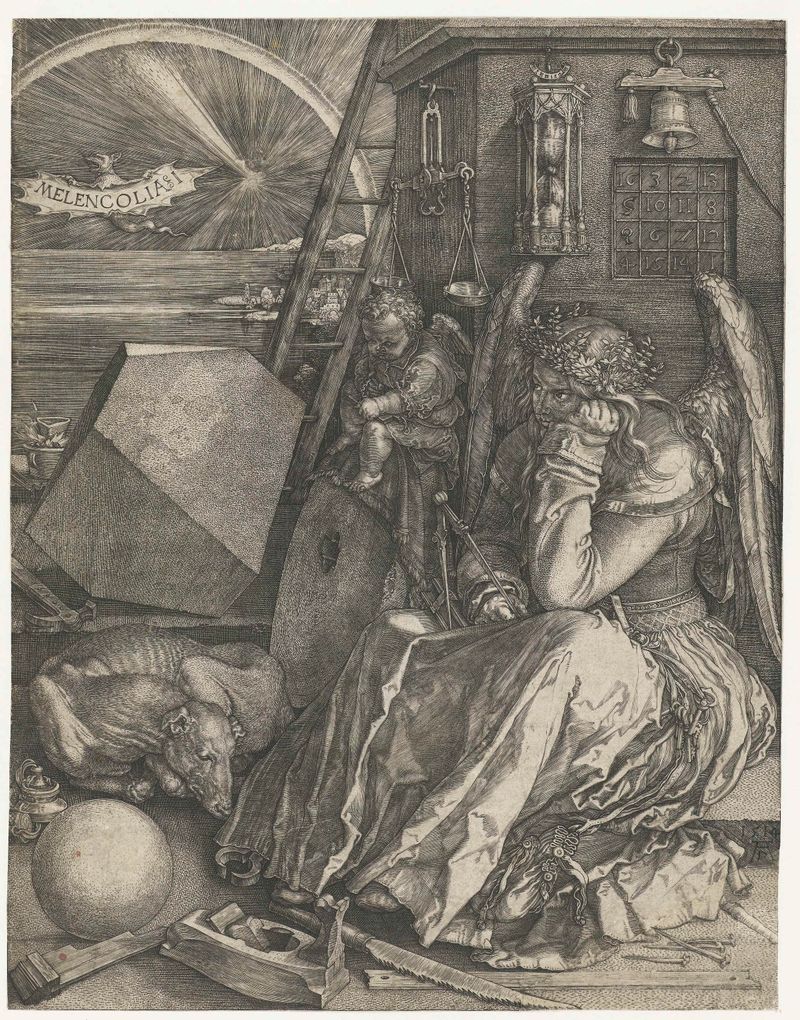
Melancholie
Albrecht Dürer
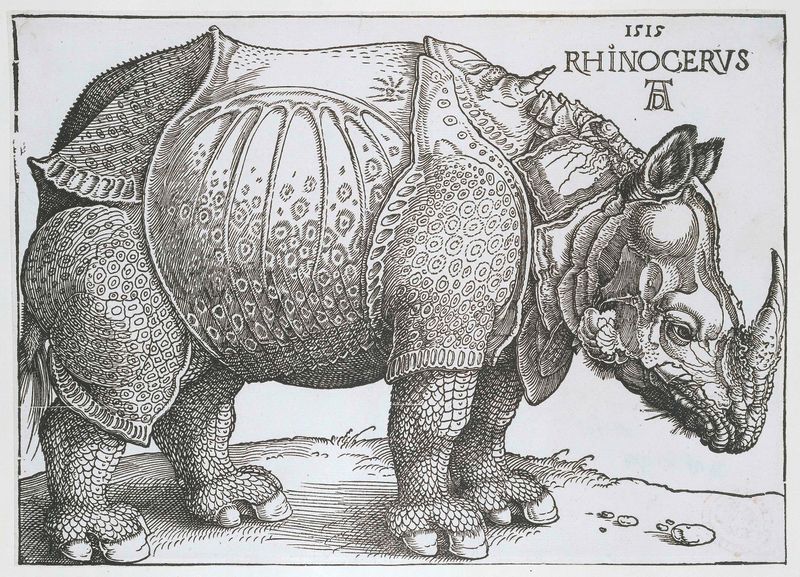
Neushoorn
Albrecht Dürer
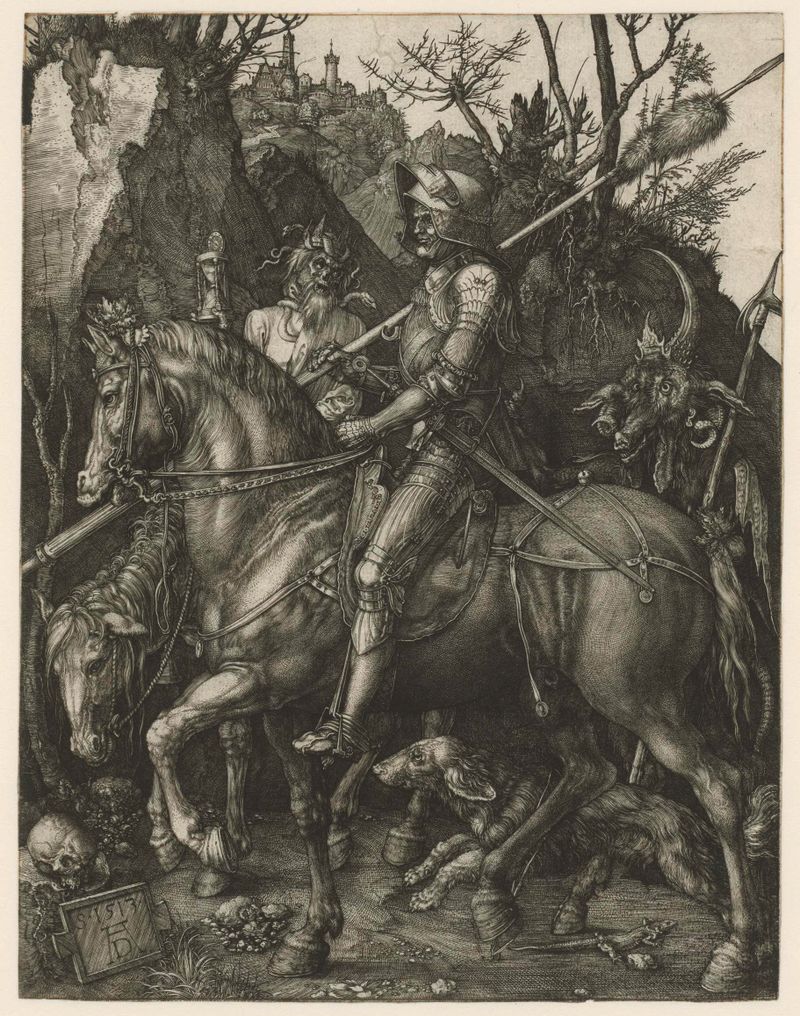
Knight, Death, and the Devil
Albrecht Dürer

De vier ruiters van de apocalyps
Albrecht Dürer

De vier ruiters van de apocalyps
Albrecht Dürer
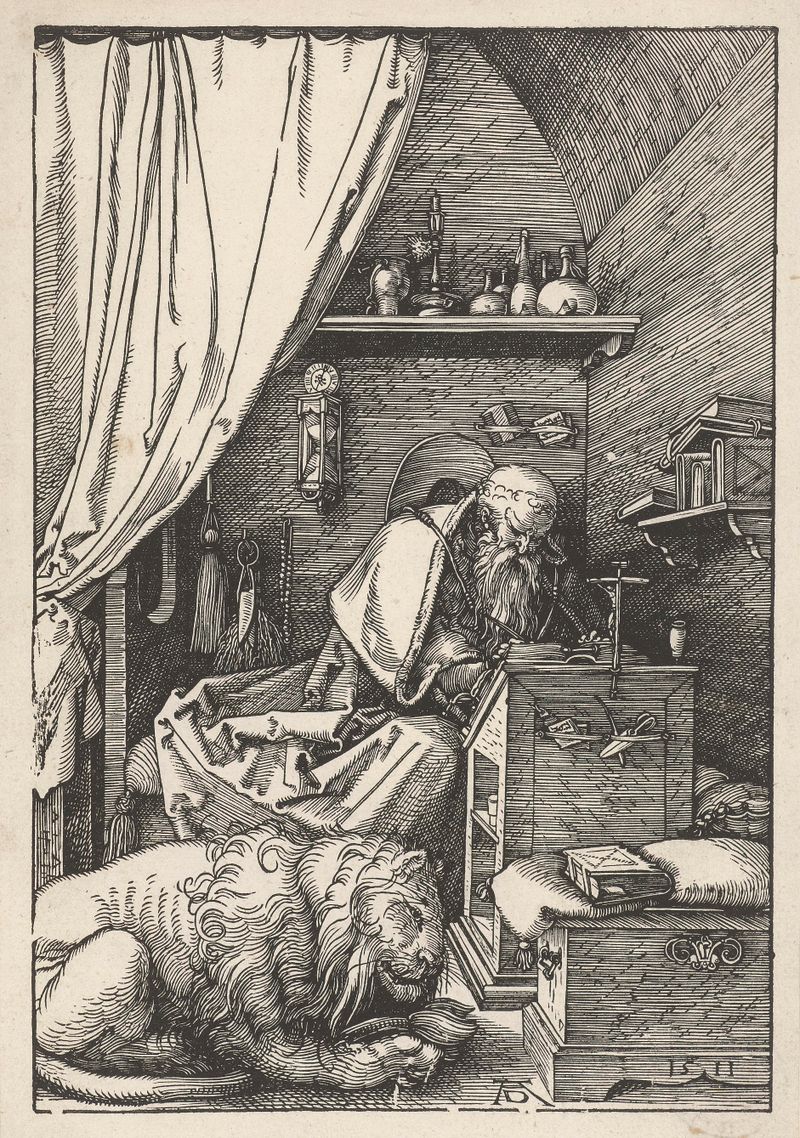
De Heilige Hiëronymus in zijn studeervertrek
Albrecht Dürer
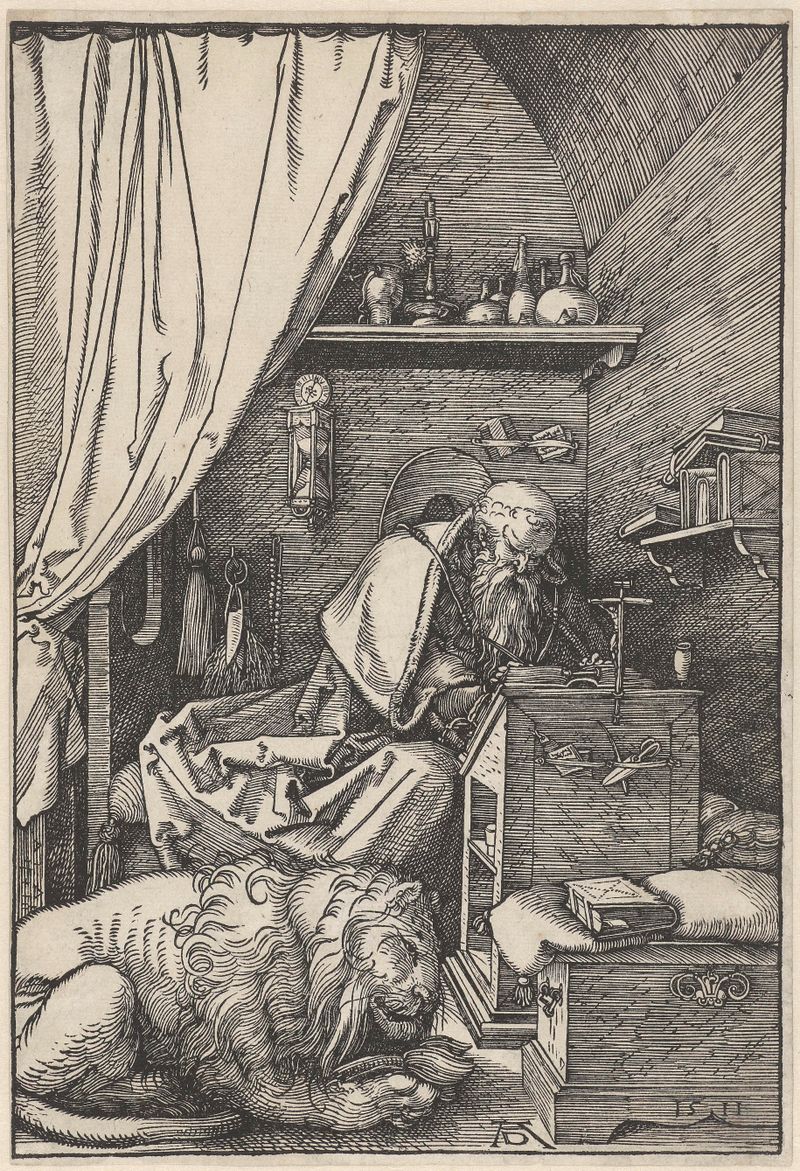
De Heilige Hiëronymus in zijn studeervertrek
Albrecht Dürer
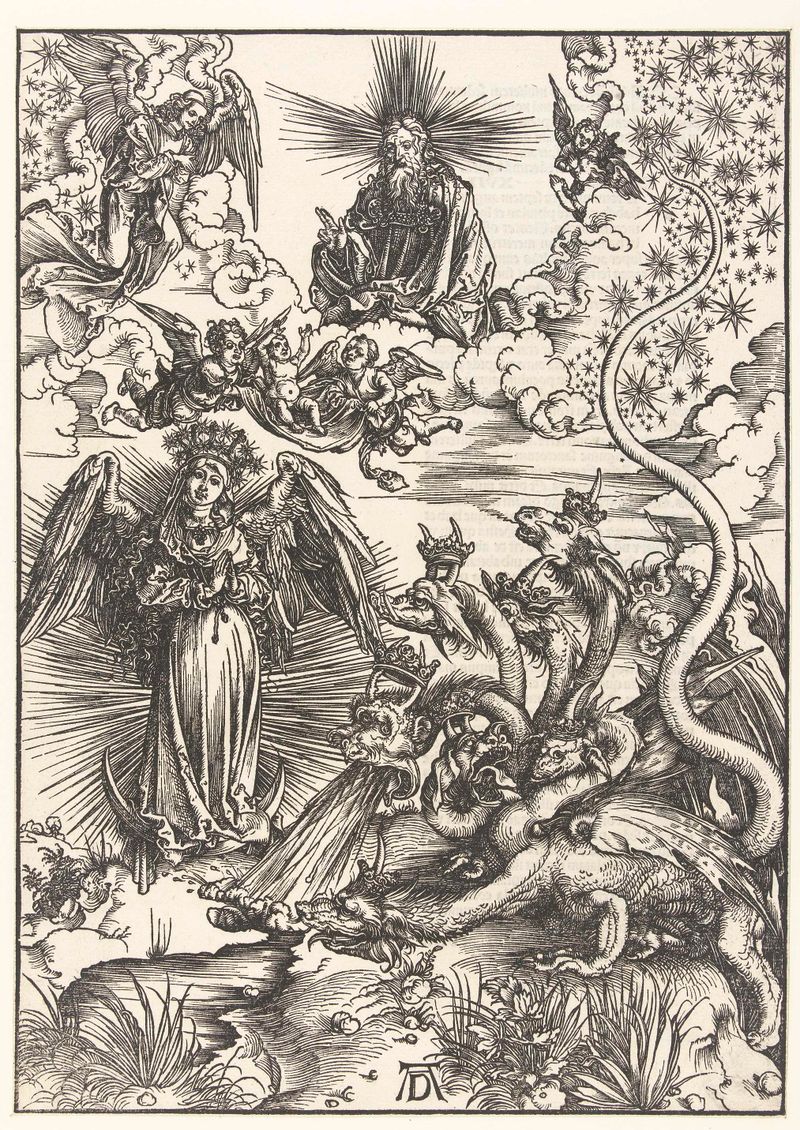
De apocalyptische vrouw en de zevenkoppige draak
Albrecht Dürer
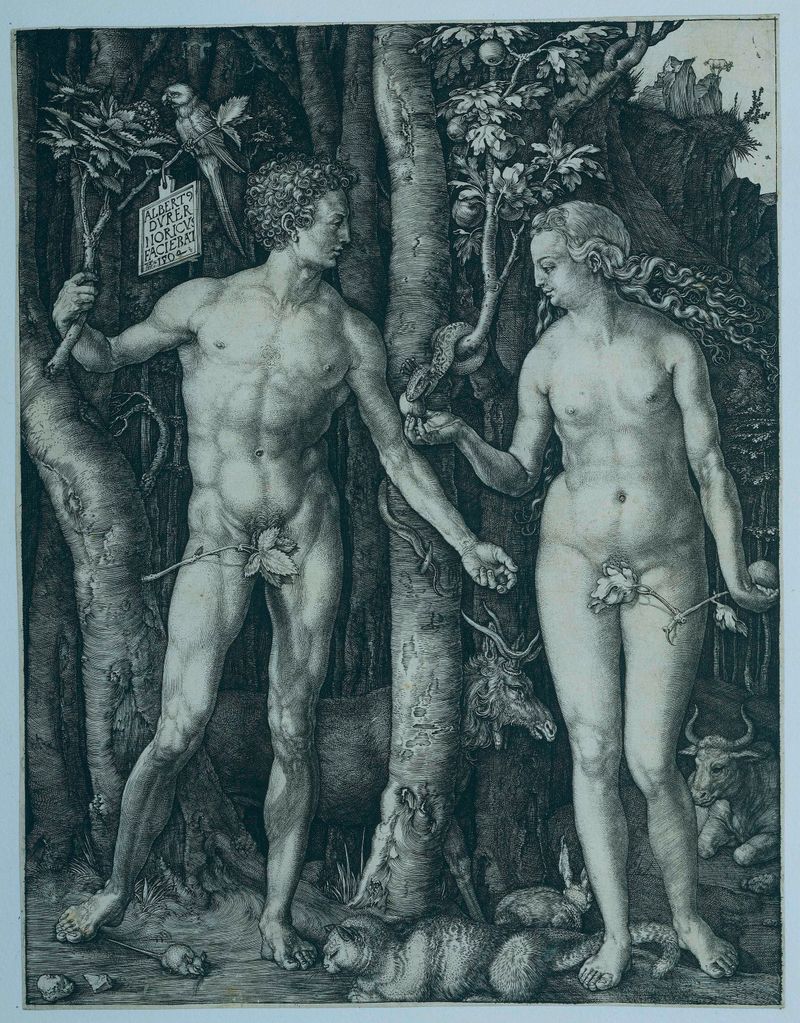
Adam en Eva
Albrecht Dürer
More Historical Art
Browse all →
The Night Watch Militia Company of District II under the Command of Captain Frans Banninck Cocq
Rembrandt van Rijn
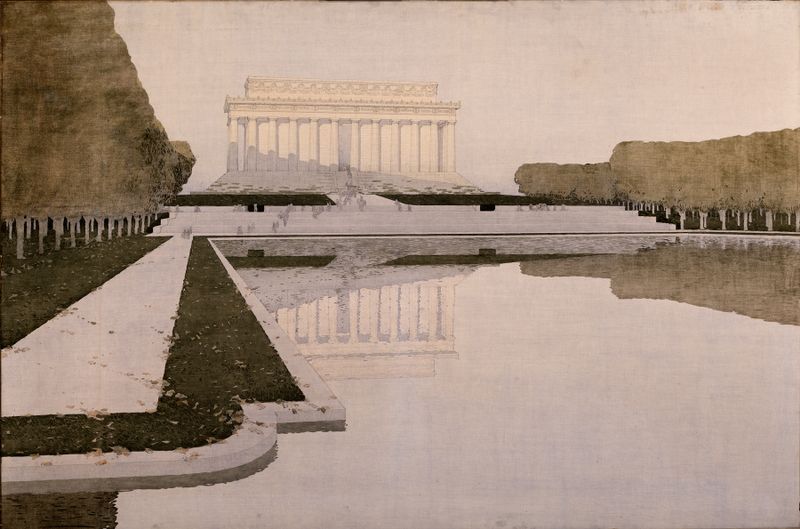
Lincoln Memorial
Henry Bacon
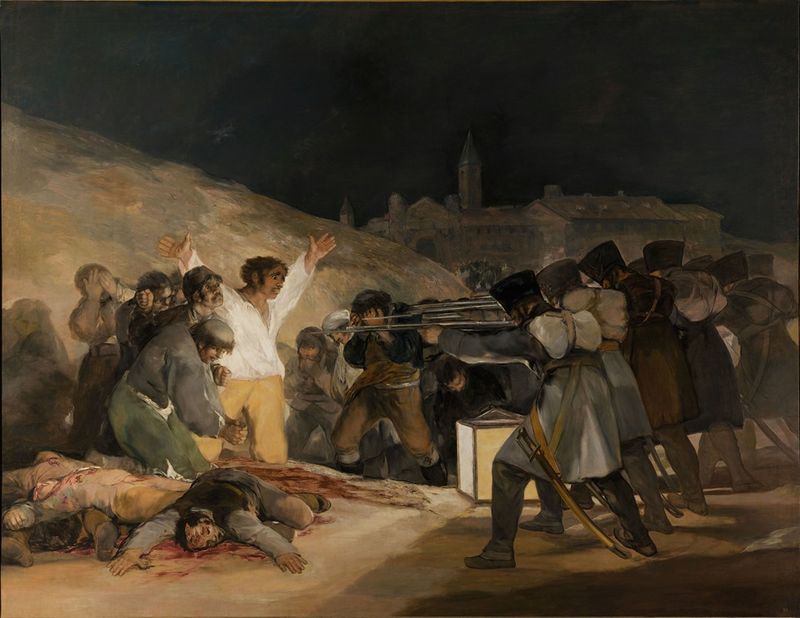
The Third of May 1808
Francisco de Goya

Isaac and Rebecca, Known as ‘The Jewish Bride’
Rembrandt van Rijn
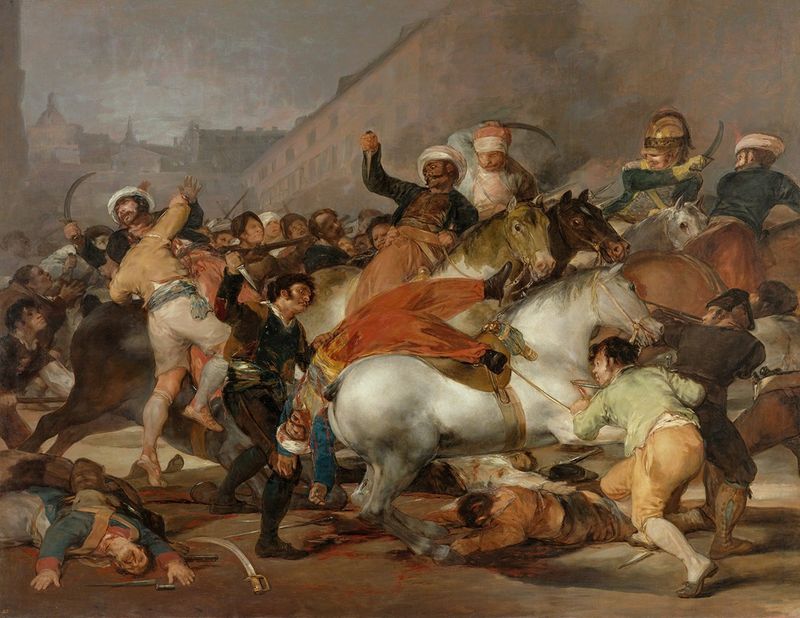
The Charge of the Mamelukes (1814)
Francisco de Goya
De vier ruiters van de apocalyps
Albrecht Dürer