
Tobit wordt blind — History & Facts
In the hushed moments of despair, the weight of unspoken pain carries a profound violence that resonates through the ages. Look closely at the anguished figure of Tobit, seated in the foreground, his blind eyes turned inward, embodying an unsettling stillness. Focus on the stark contrast created by the dark tones of his robe against the muted light that bathes the room, highlighting the somber textures of the furnishings around him. The shadows dance along the walls, amplifying the isolation that envelops him, while a spectral hand points toward the heavens, suggesting a silent plea for mercy or divine intervention. Delve deeper into the intricate details: the tattered scroll at Tobit’s side speaks to his lost wisdom, while the knife and the fish on the table hint at a violent past entwined with sacrifice.
The juxtaposition of his physical blindness and spiritual clarity raises questions about perception and truth, evoking a tension between sight and insight. This poignant still life captures the violent moments of transition, as despair and hope fight for dominance within a fragile frame. Hans Holbein (II) painted this work in 1538 during a period marked by religious strife and humanism's rise. Working in Basel, he captured the complexities of moral and social dilemmas through biblical narratives.
The era pulsated with the tension of reform and conflict, and in this setting, Holbein's powerful imagery serves as a reflection of the human condition—poignant, fraught, and timeless.
More Artworks by Hans Holbein (II)
Browse all →
Portret van Erasmus
Hans Holbein (II)
Priester en de Dood
Hans Holbein (II)
Rechter en de Dood
Hans Holbein (II)
Kind en de Dood
Hans Holbein (II)
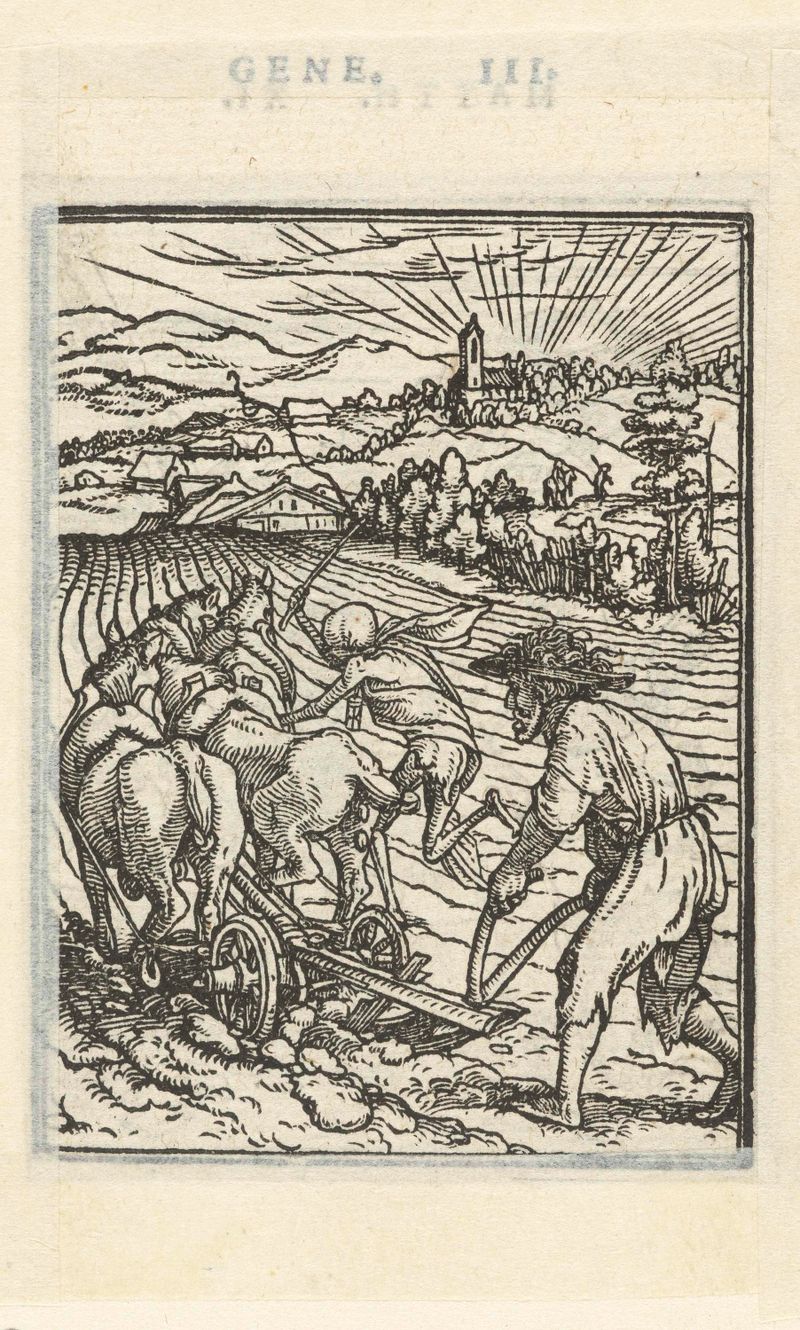
Boer en de Dood
Hans Holbein (II)
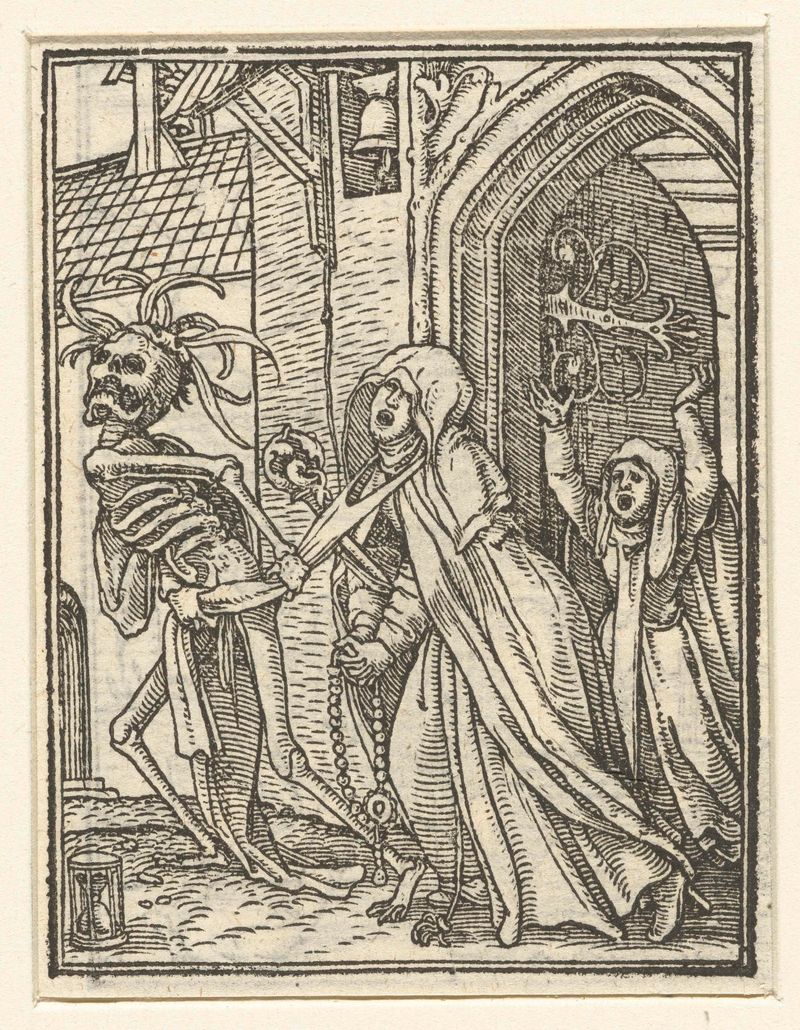
Abdis en de Dood
Hans Holbein (II)
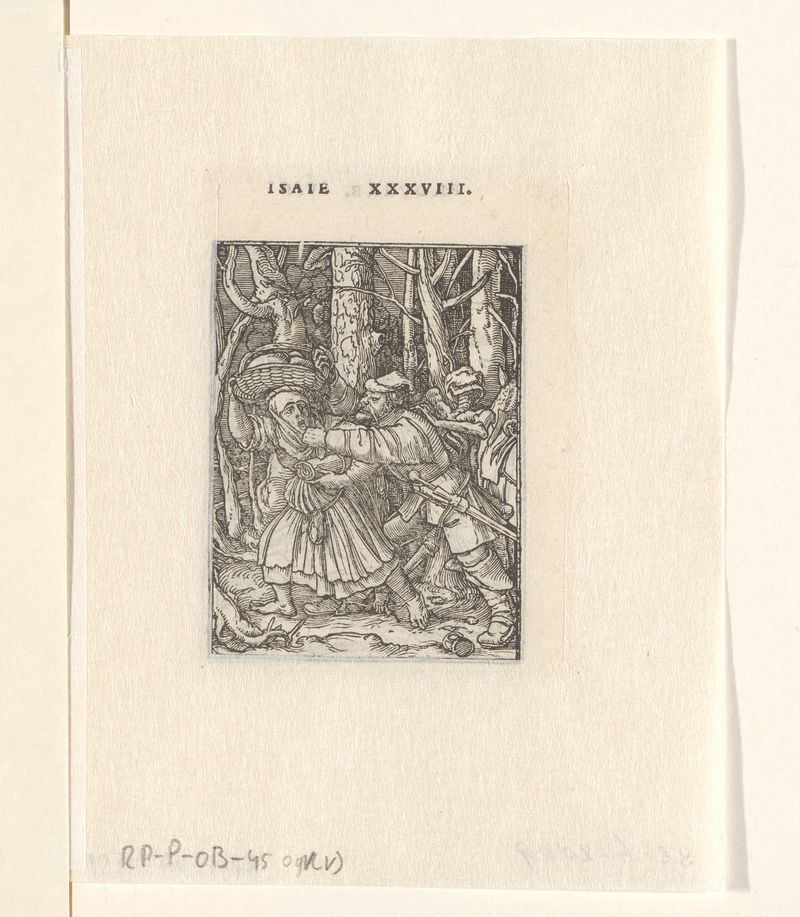
Dief en de Dood
Hans Holbein (II)
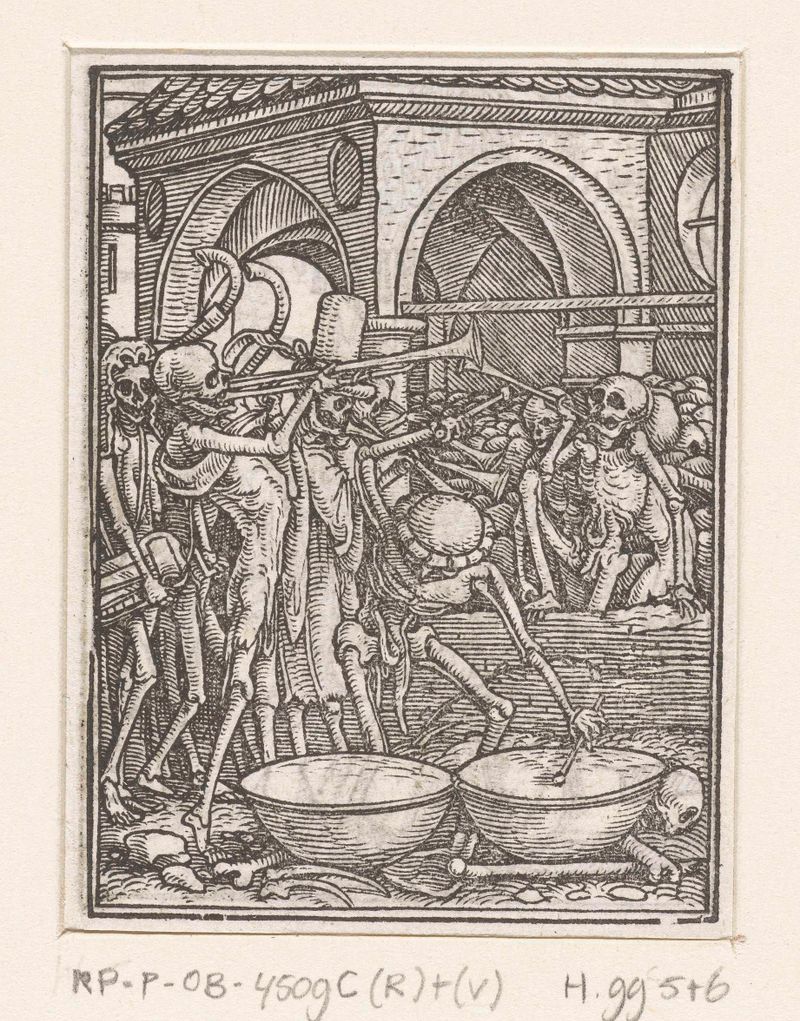
Skeletons Making Music from Dance of the Dead
Hans Holbein (II)
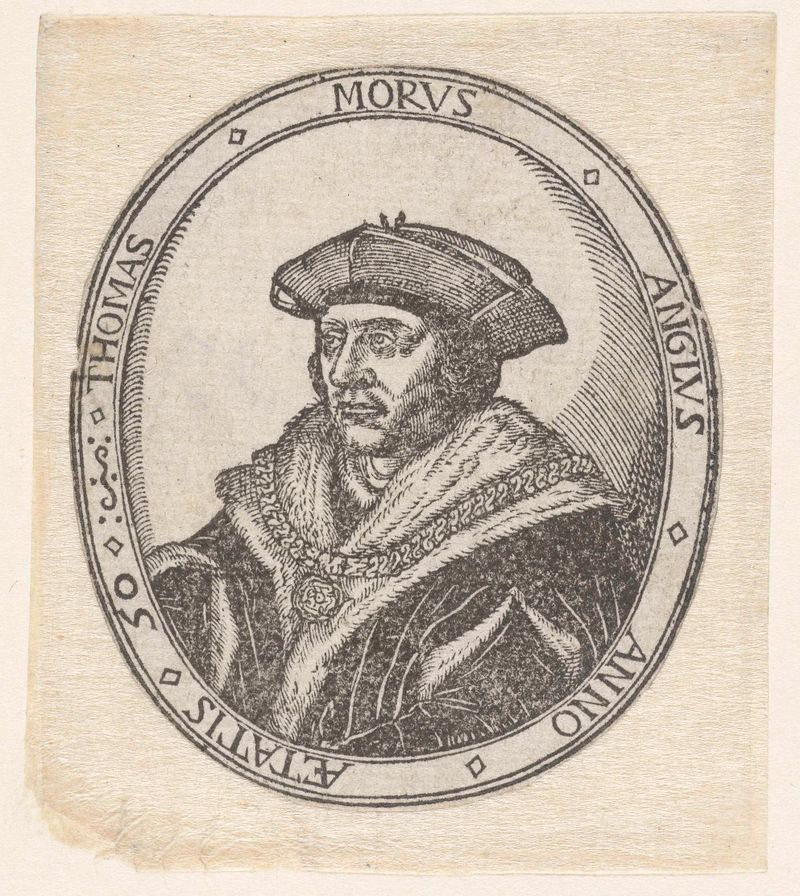
Portret van Thomas More
Hans Holbein (II)
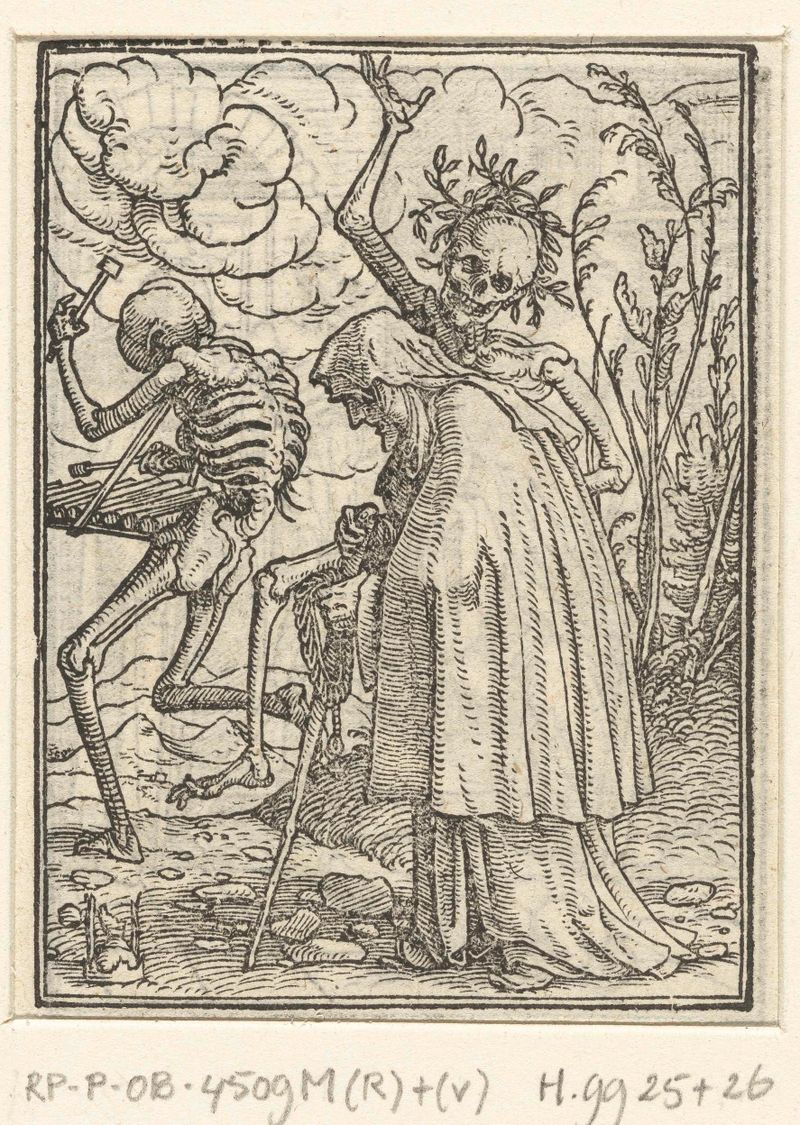
Oude vrouw en de Dood
Hans Holbein (II)
More Religious Art
Browse all →
The Return of the Prodigal Son
Rembrandt van Rijn

The Garden of Earthly Delights
El Bosco

Count Orgaz’ funeral
El Greco

The Hundred Guilder Print: the central piece with Christ preaching, the plate arched
Rembrandt van Rijn

The Descent from the Cross
Rogier van der Weyden

The return of the prodigal son
Rembrandt van Rijn