Train Smoke — History & Facts
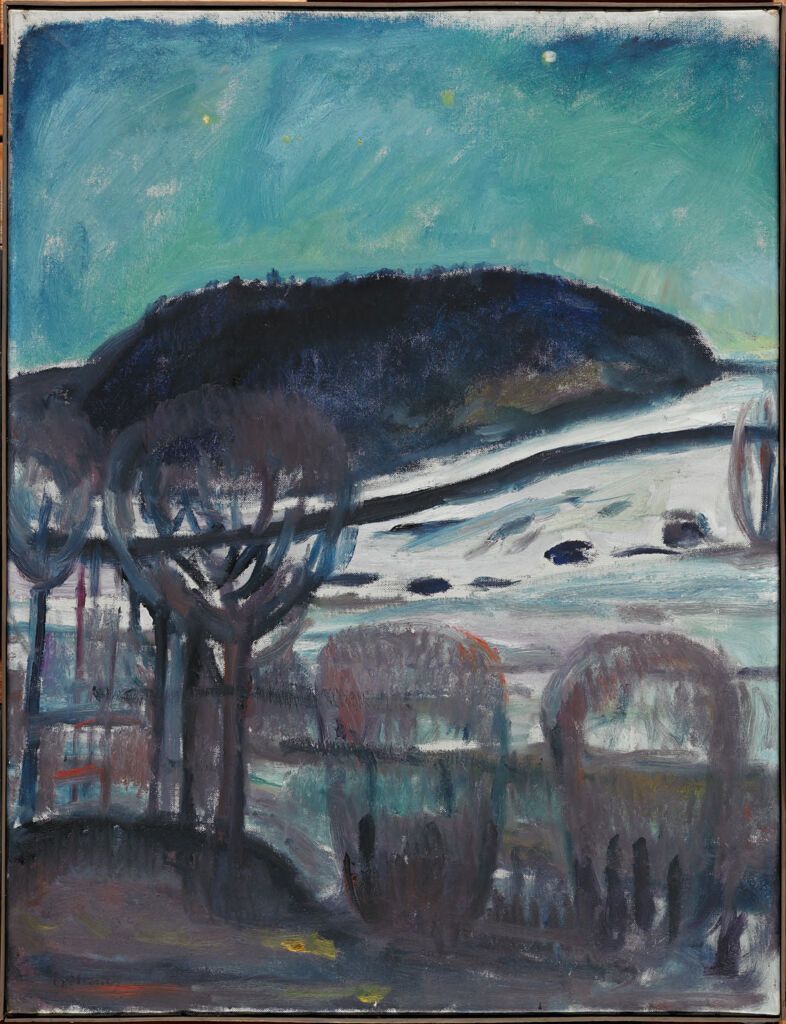
What if silence could speak through light? In Edvard Munch's Train Smoke, the interplay of dark and luminous hues creates a haunting beauty that transcends mere representation, inviting viewers into a realm where emotion and environment intertwine. Look to the left at the thick plume of smoke curling into the air, a stark contrast against the muted tones of the sky. The train itself, partially obscured, emerges as a ghostly silhouette, its presence felt more than seen. The delicate brushstrokes and layering of color evoke movement, as if the smoke is alive, swirling and dancing in its ascent.
Notice how the hazy backdrop blends seamlessly into the foreground, creating a sense of depth that pulls you into the scene—an ethereal moment suspended in time. Within this composition lies a powerful tension between the natural and the industrial, an exploration of progress shadowed by melancholy. The interplay of light and dark conveys a sense of longing, suggesting an emotional landscape shaped by both beauty and isolation. The absence of human figures heightens the solitude, urging the viewer to reflect on the relationship between man and machine, and the ephemeral nature of existence.
Munch captures not just the smoke of the train, but the weight of the silence it leaves behind. In 1910, while living in Norway, the artist was navigating a period of personal turmoil and existential questioning. This was a time when the art world was shifting towards modernism, and Munch's work straddled the line between traditional representation and the emotional expressionism that defined his legacy. Train Smoke emerges from this pivotal moment, reflecting both his profound introspection and the broader changes in society’s landscape.