
Travaux du métro entre le pont Saint Michel et le Petit Pont — History & Facts
When did color learn to lie? The palette may dazzle, yet it conceals a deeper story beneath the surface—a tale of labor and hope entwined with the grit of urban life. Focus first on the vibrant hues that define the scene, drawing your gaze toward the interplay of warm ochres and cool blues. Notice the carefully rendered figures, each imbued with a laborious intensity, as they toil beneath the arching structures of a city in transition. The swift brushstrokes convey both movement and urgency, while the stark contrasts between light and shadow evoke the duality of struggle and aspiration. Delve deeper into the juxtaposition of the mundane and the monumental.
The workers, though absorbed in their tasks, reflect a collective resilience, elevating their ordinary labor to an act of profound significance. Look closely at the expressions—some faces wear fatigue, while others glimmer with unyielding determination, suggesting a flicker of hope amidst the chaos. This tension between struggle and ambition is captured in the way the city around them looms large, a silent witness to their efforts. In 1906, Charles Jouas painted this piece in Paris, at a time when the city was undergoing considerable change with the expansion of its metro system.
Amidst rapid modernization and shifting societal norms, Jouas sought to capture the spirit of perseverance found in everyday life. His work reflects not only the physical transformation of the metropolis but also the emotional landscape of those who contributed to its evolution, marking a significant moment in the history of urban art.
More Artworks by Charles Jouas
Browse all →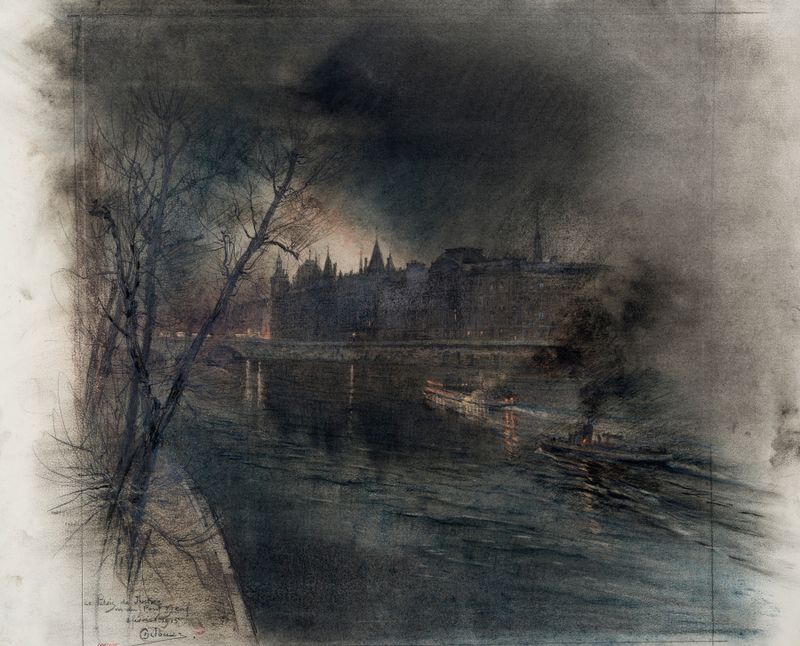
Le Palais de Justice vu du Pont-Neuf
Charles Jouas
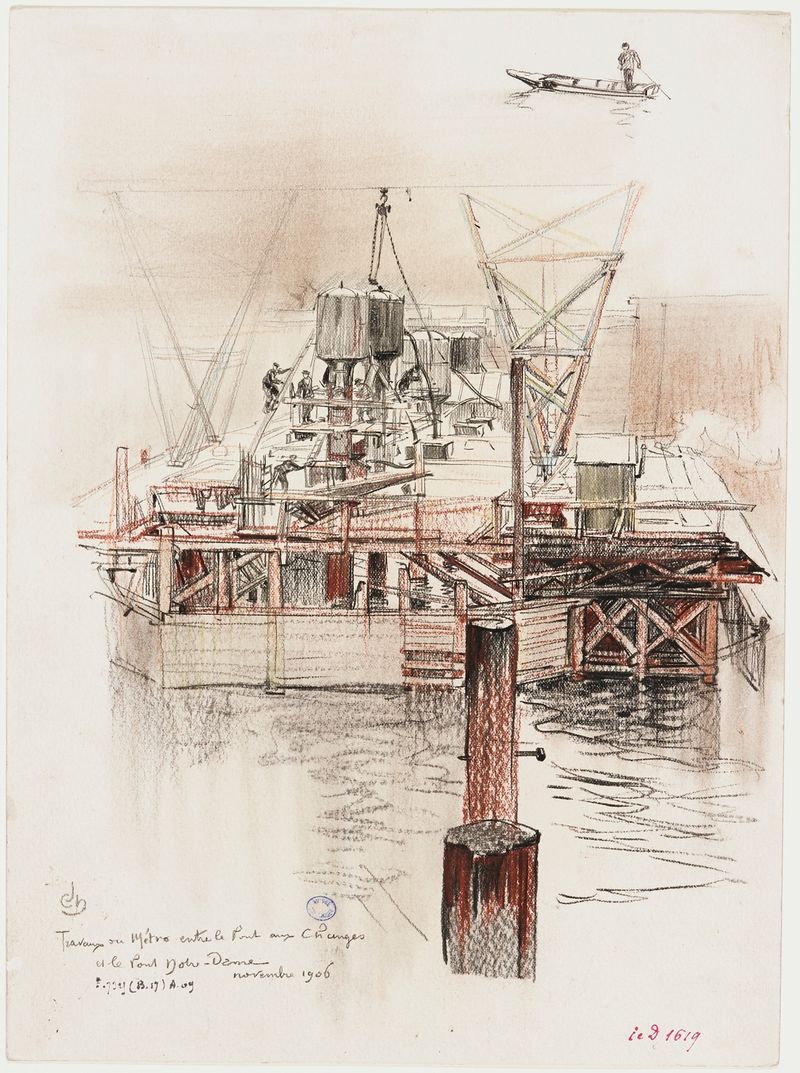
Travaux du métro entre le pont au Change et le pont Notre Dame
Charles Jouas
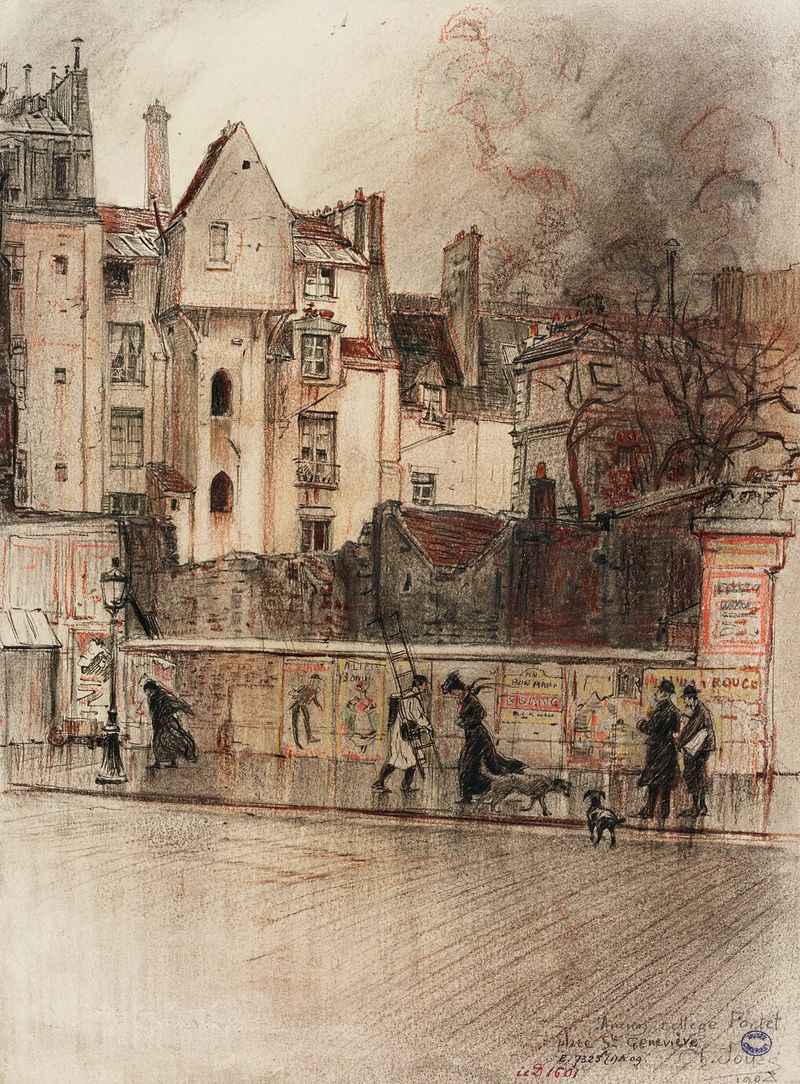
La tour de Calvin (ancien collège de Fortet), place Sainte Geneviève
Charles Jouas

Travaux du métro entre le pont au Change et le pont Notre Dame
Charles Jouas
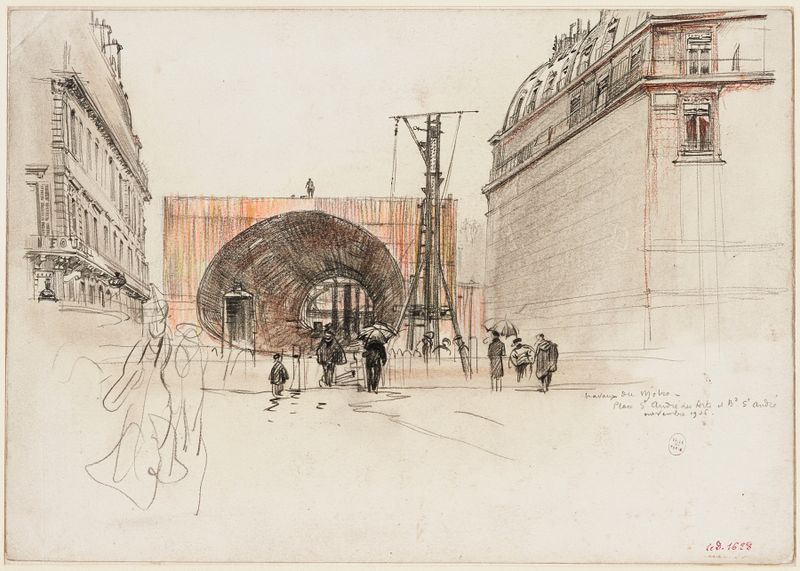
Travaux du métropolitain rue Danton et boulevard Saint-André (le caisson), 6ème aarondissement, Paris
Charles Jouas
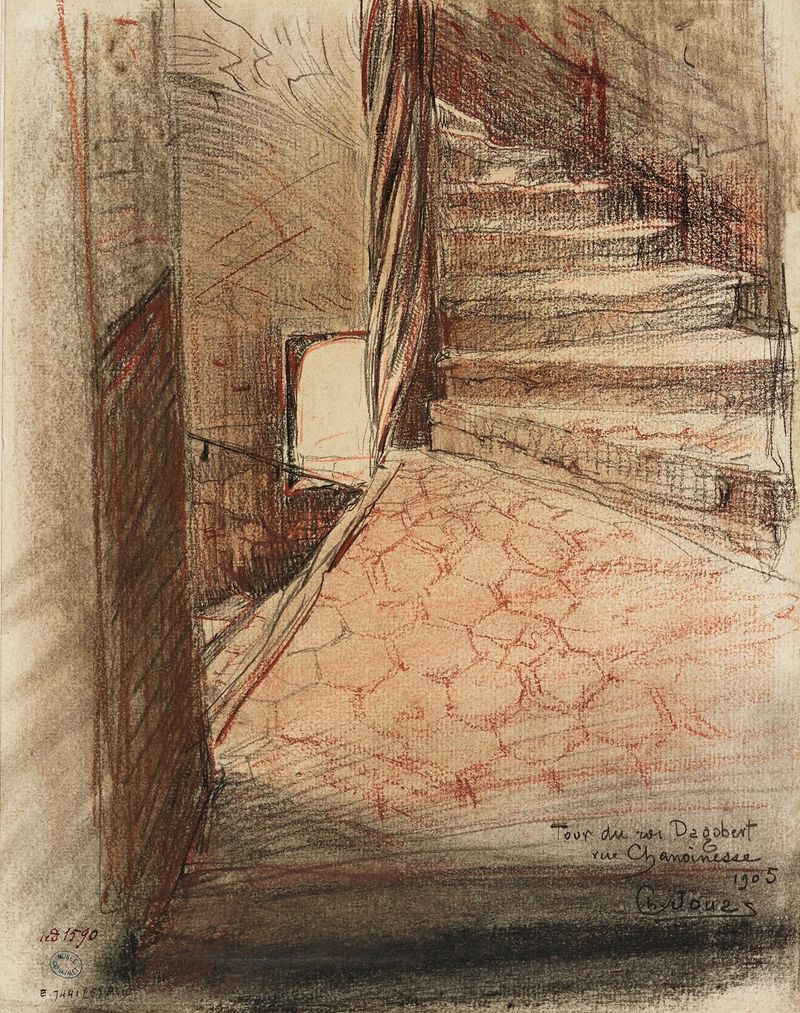
Escalier de la tour Dagobert, rue Chanoinesse
Charles Jouas

Escalier intérieur, 16 rue du Cloître Notre-Dame
Charles Jouas

L’escalier de la rue des Barres
Charles Jouas
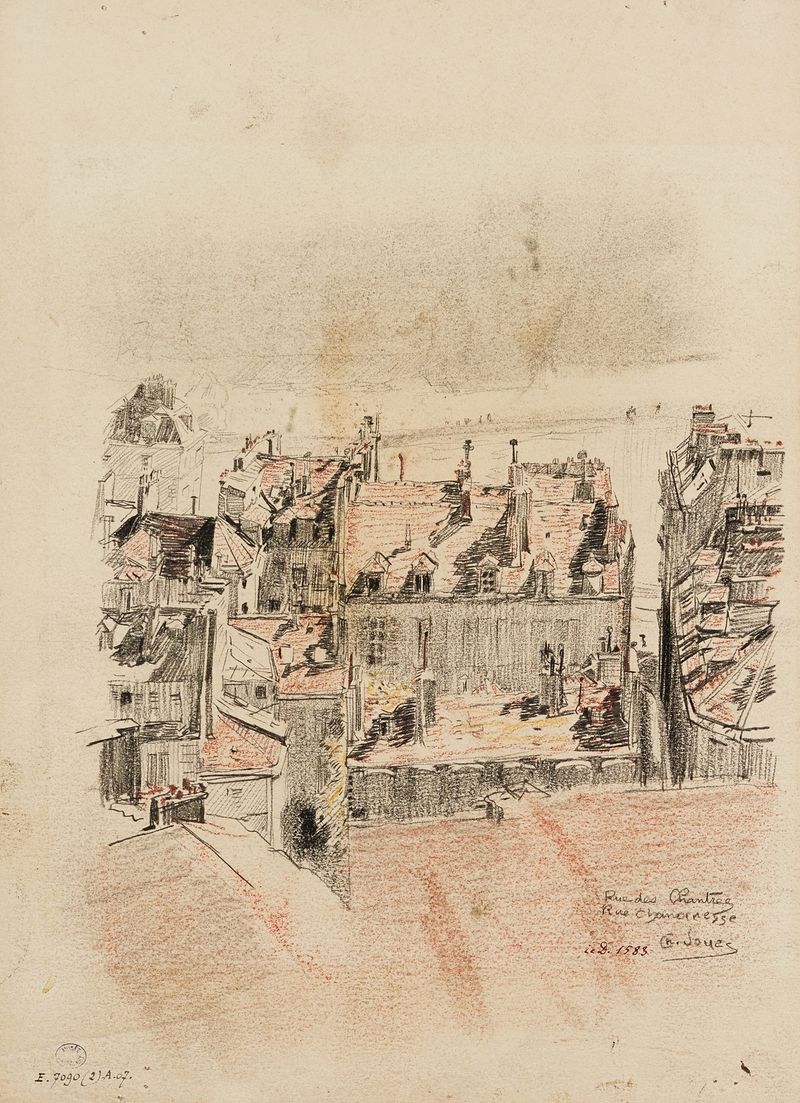
Rue des Chantres et rue Chanoinesse
Charles Jouas

Rue Grenier sur l’Eau
Charles Jouas





