
Travaux du métro, place Saint André des Arts 2 — History & Facts
In the intricate tapestry of urban life, hope often emerges from the shadows. Look to the foreground, where the bustling energy of construction unfolds. The careful strokes of Jouas render laborers at work, shovels poised against the backdrop of burgeoning Paris. The palette is a symphony of muted earth tones, interspersed with flashes of vibrant colors that breathe life into the figures.
The light filters softly, dappling the scene, highlighting the resilience of human endeavor against the starkness of a city in transformation. Beneath the visible action lies a deeper narrative. The juxtaposition of the workers’ toil with the grandeur of the surrounding architecture suggests a profound dialogue between the old and the new. Each figure, though laboring in anonymity, embodies the collective hope and determination of a society on the cusp of modernity.
The almost ethereal quality of the light evokes a sense of optimism, hinting that even amidst dust and disruption, there lies the promise of a brighter future. In 1906, Jouas painted this piece during a time when Paris was undergoing significant changes, grappling with the effects of modernization. The city was alive with innovation, yet steeped in tradition. As an artist who often captured the intricate relationship between man and his environment, Jouas was inspired by the transformational energy of a city in flux, reflecting both the struggles and aspirations of the people within it.
More Artworks by Charles Jouas
Browse all →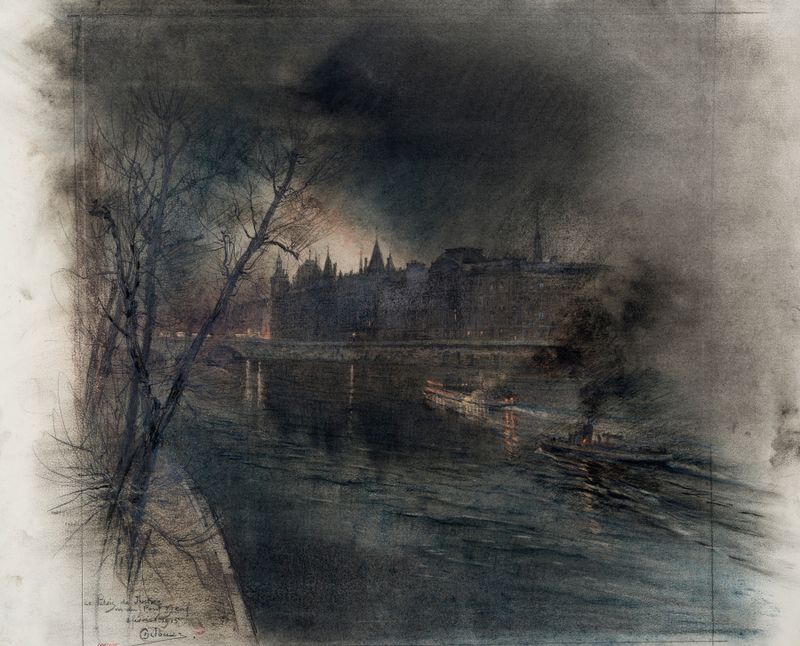
Le Palais de Justice vu du Pont-Neuf
Charles Jouas
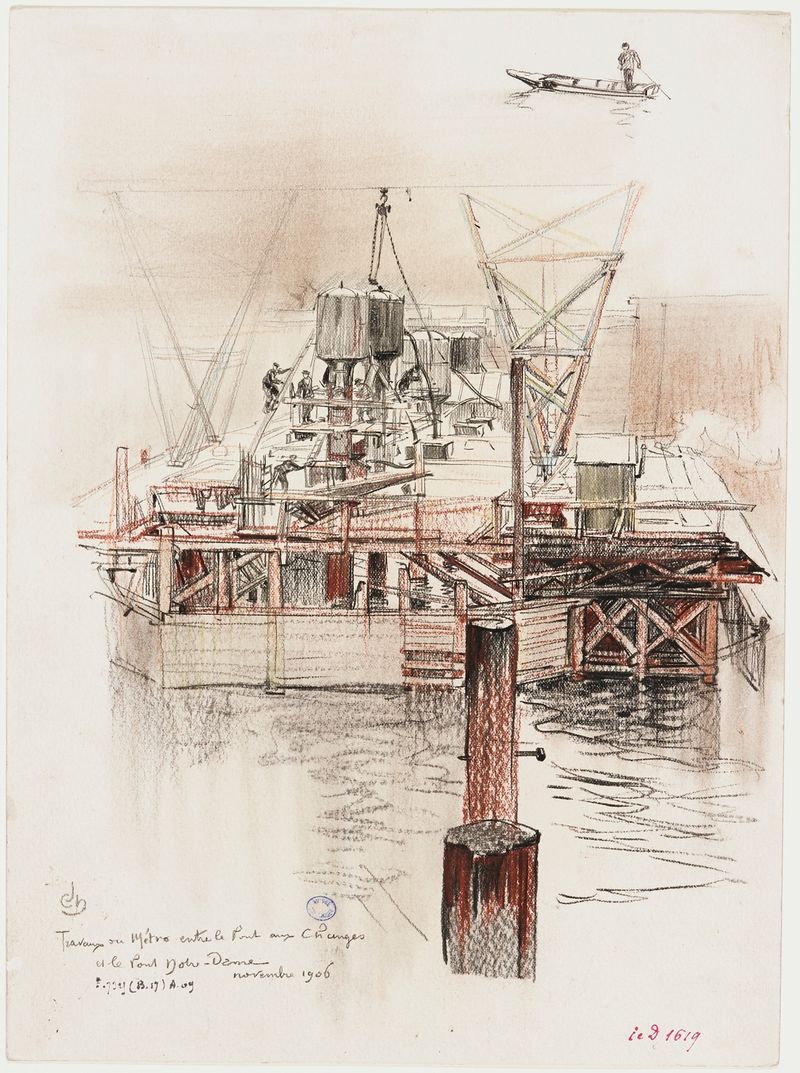
Travaux du métro entre le pont au Change et le pont Notre Dame
Charles Jouas
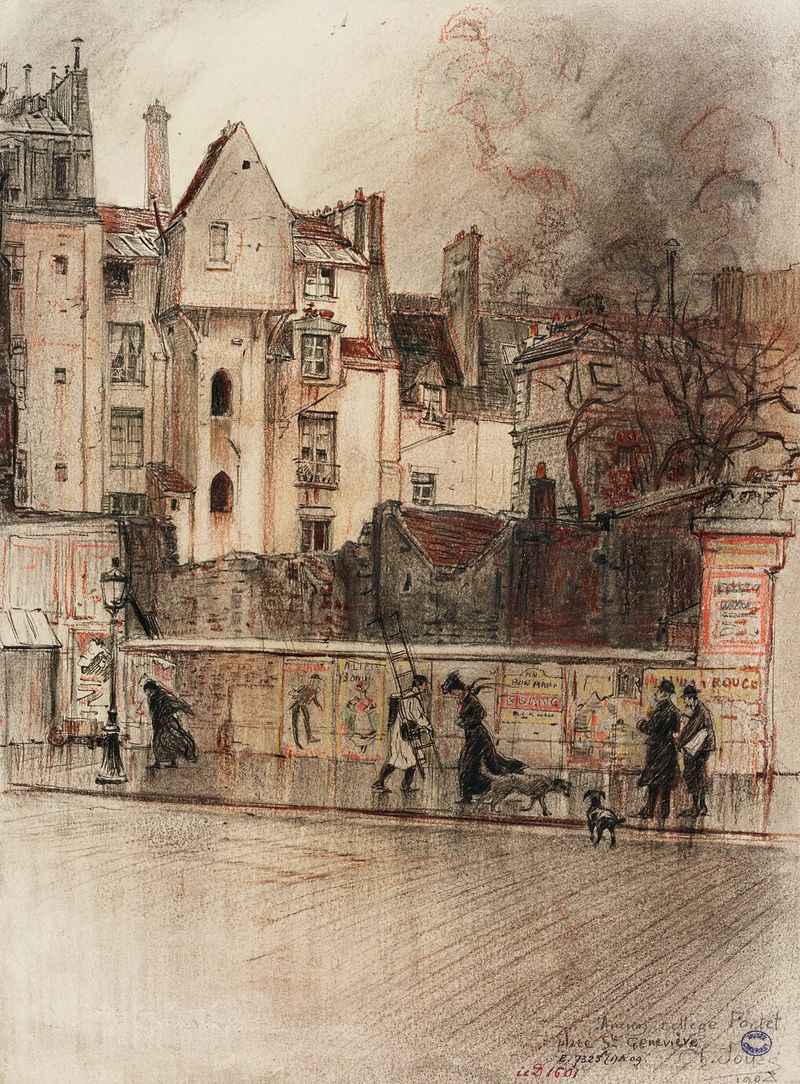
La tour de Calvin (ancien collège de Fortet), place Sainte Geneviève
Charles Jouas

Travaux du métro entre le pont au Change et le pont Notre Dame
Charles Jouas
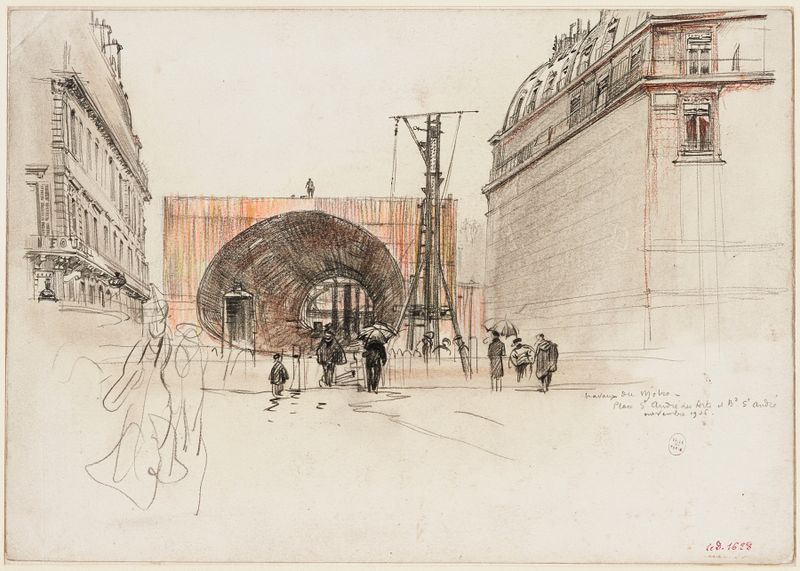
Travaux du métropolitain rue Danton et boulevard Saint-André (le caisson), 6ème aarondissement, Paris
Charles Jouas
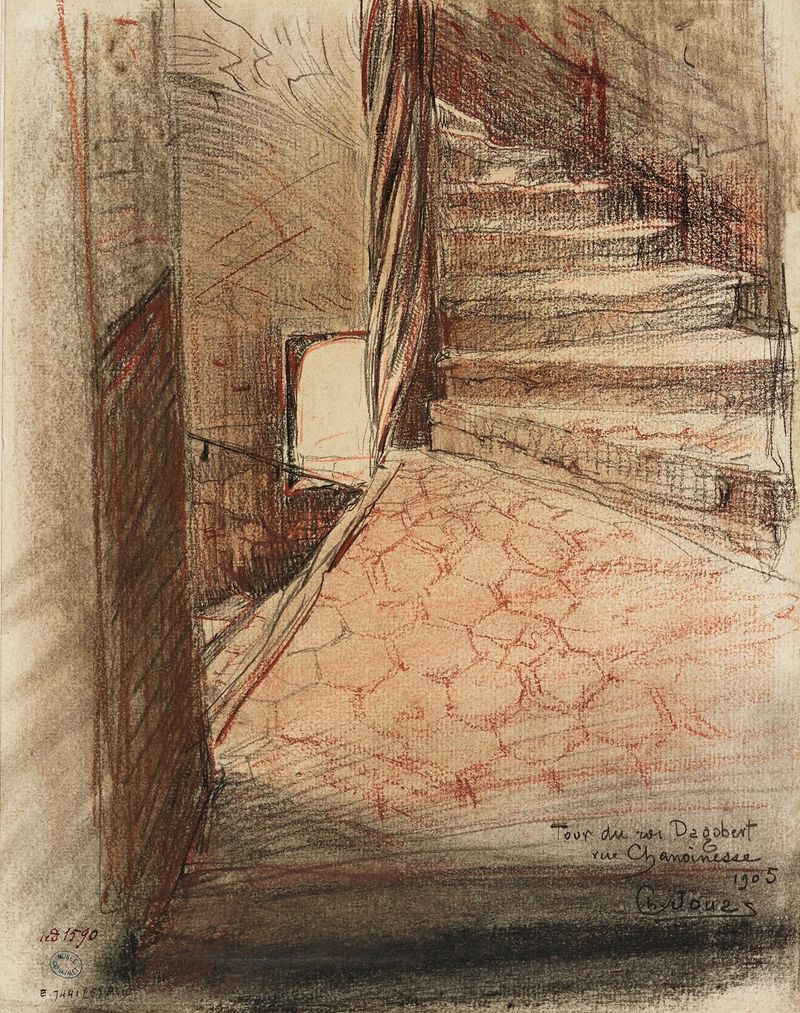
Escalier de la tour Dagobert, rue Chanoinesse
Charles Jouas

Escalier intérieur, 16 rue du Cloître Notre-Dame
Charles Jouas

L’escalier de la rue des Barres
Charles Jouas
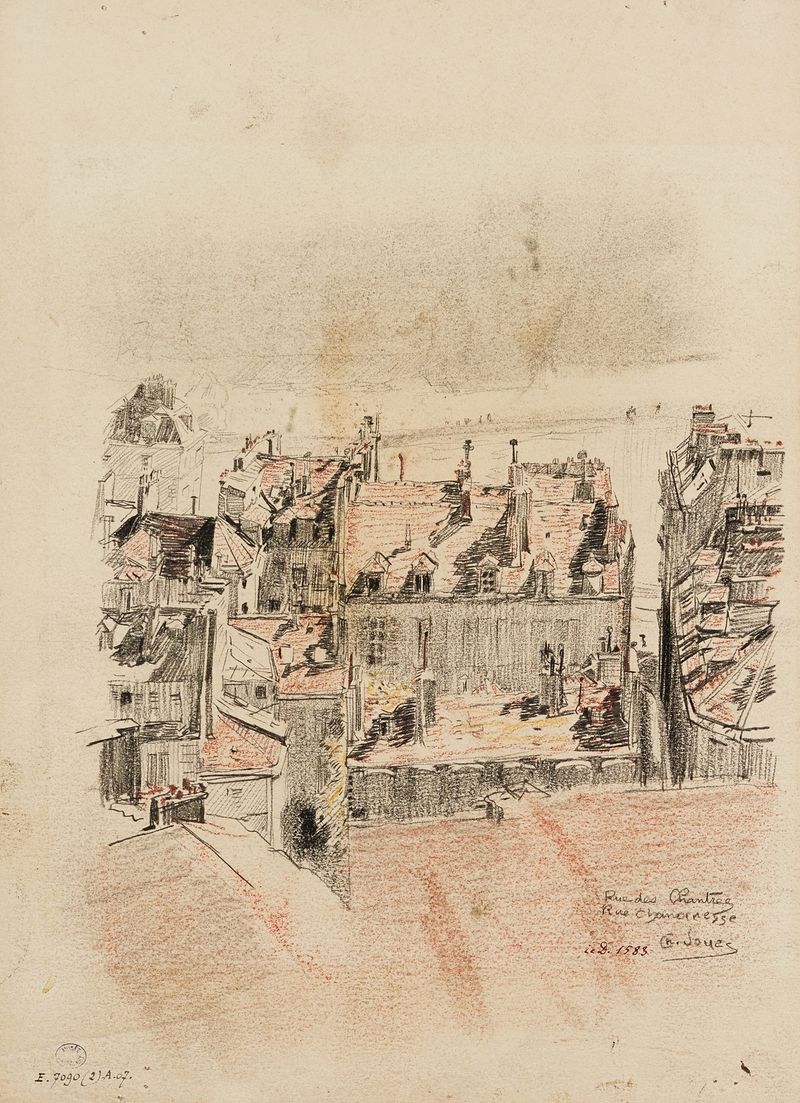
Rue des Chantres et rue Chanoinesse
Charles Jouas

Rue Grenier sur l’Eau
Charles Jouas





