
Travelers in Hilly Countryside — History & Facts
What if silence could speak through light? In Travelers in Hilly Countryside, Aelbert Cuyp captures the ethereal language of tranquility as it unfolds across the landscape. A gentle hush envelops the scene, inviting the viewer to ponder the serene journey of its figures amidst a sprawling, golden-hued expanse. Look to the foreground, where a small group of travelers is gracefully traversing the undulating hills, their figures subtly illuminated by the warm glow of the setting sun. Notice how the light caresses the verdant grass, creating a soft contrast against the deepening shadows that dance behind the travelers.
The sky stretches above, awash in pastel oranges and blues, effortlessly guiding the eye towards the horizon where nature's vastness meets a tranquil stillness. Beyond the obvious beauty, the painting evokes a profound sense of solitude and the quiet moment of connection between the travelers and their environment. The rolling hills symbolize the journeys we all undertake, while the light serves as a metaphor for hope and possibility. The contrast between the figures and the expansive landscape reflects our smallness against nature’s grandeur, prompting contemplation on where we fit within the world and the silence that surrounds our personal paths. Cuyp painted Travelers in Hilly Countryside around 1650, during a time when the Dutch Golden Age was flourishing, and landscapes were increasingly celebrated.
Living in Dordrecht, Cuyp was influenced by the beauty of his homeland and the burgeoning appreciation for nature in art. In a period marked by exploration and trade, his focus on serene, pastoral scenes offered a tranquil counterpoint to the bustling world beyond, capturing the essence of a peaceful, rural escape.
More Artworks by Aelbert Cuyp
Browse all →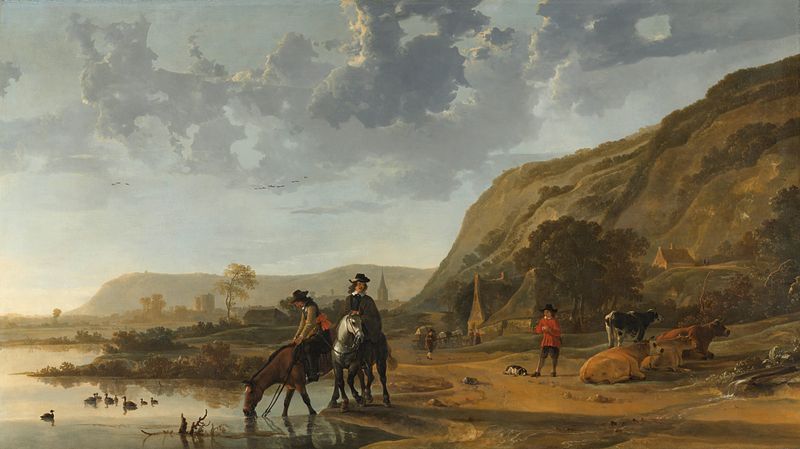
River Landscape with Riders
Aelbert Cuyp

Gezicht op Dordrecht
Aelbert Cuyp
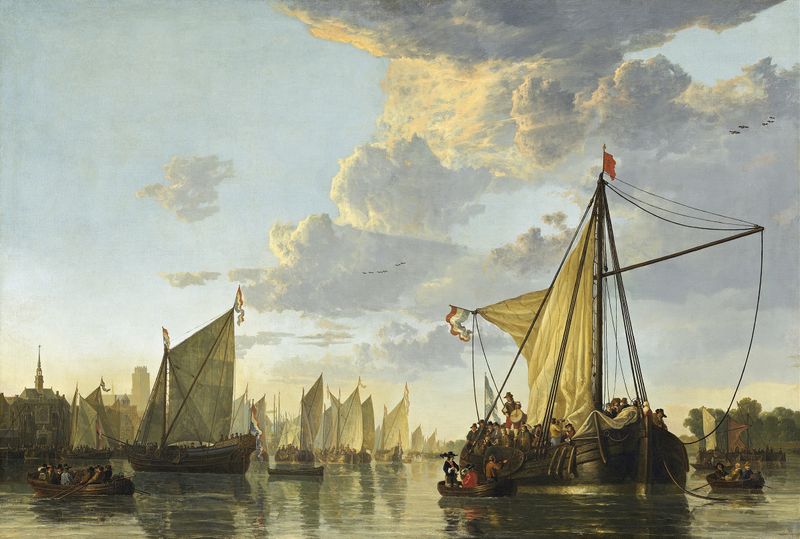
The Maas at Dordrecht
Aelbert Cuyp
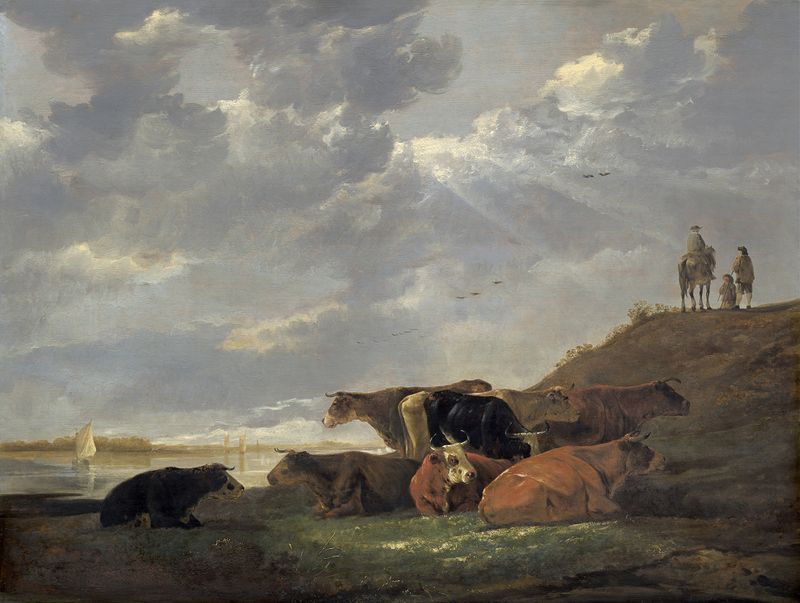
River Landscape with Cows
Aelbert Cuyp
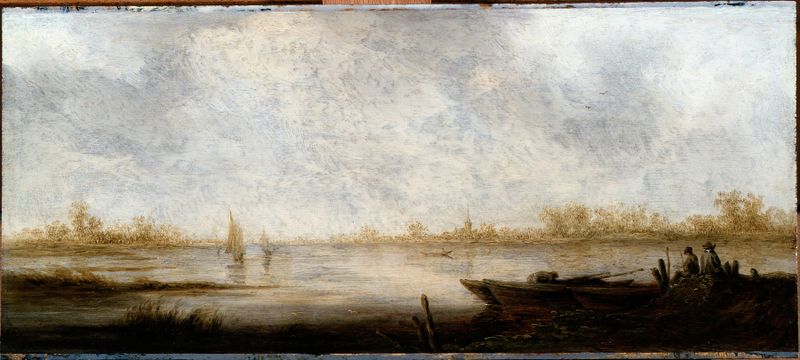
River Landscape
Aelbert Cuyp

Landscape near Dordrecht
Aelbert Cuyp
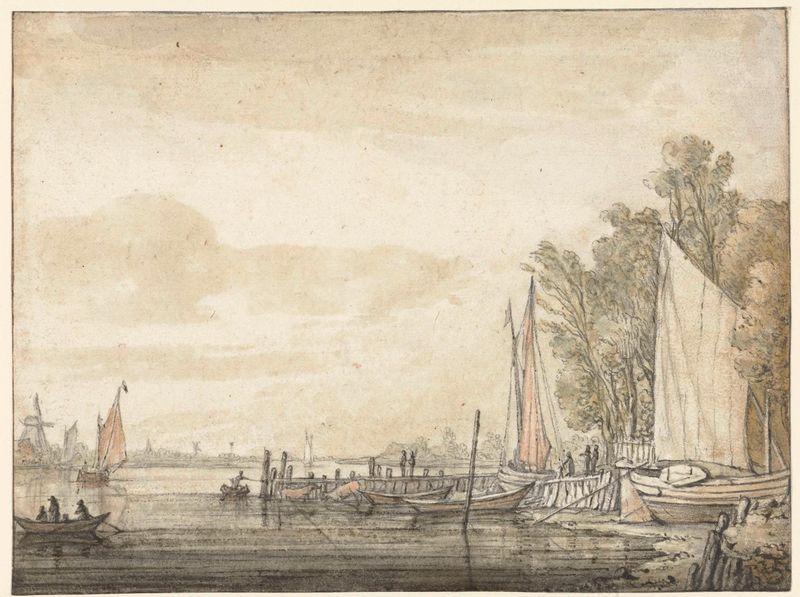
Boten bij een steiger in een rivier
Aelbert Cuyp

Bevroren rivier met schaatsers bij een kerk
Aelbert Cuyp
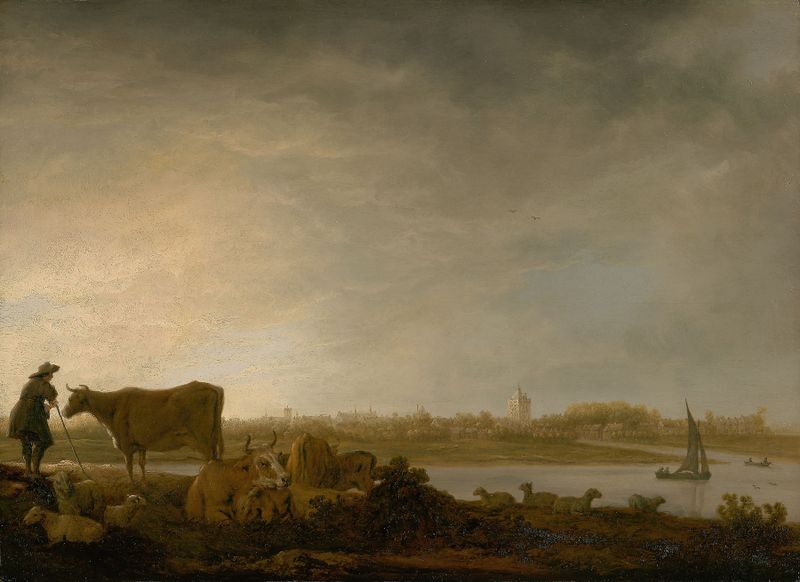
A View of Vianen with a Herdsman and Cattle by a River
Aelbert Cuyp

River Landscape with Cows
Aelbert Cuyp





