
Travellers in a Woodland Glade — History & Facts
What if silence could speak through light? In Travellers in a Woodland Glade, this notion unfolds, illuminating the divine potential of nature to weave tranquility into the human experience. Look to the center where two figures stand, cloaked in an embrace of soft greens and browns. Their stillness contrasts with the gentle rustle of leaves overhead, captured in delicate brushstrokes that evoke a sense of peaceful movement. Notice how the dappled sunlight filters through the canopy, creating a play of light and shadow that breathes life into the scene.
The artist’s use of muted tones allows the tranquility of the setting to envelop the viewer, inviting one to step into the glade and experience its serene embrace. The two travelers embody a moment of contemplation, their posture suggesting a pause in their journey, perhaps reflecting on the beauty surrounding them. The vivid interplay of light not only highlights the figures but also acts as a bridge between the earthly and the ethereal, suggesting a divine presence in the ordinary. There is a palpable sense of wonder in the way the woodland seems to cradle its visitors, a reminder of the sacredness hidden within nature's stillness. William Payne created this work around 1800, a time when Romanticism was blossoming in English art, emphasizing emotion, nature, and the sublime.
At this moment, Payne was forging a path in landscape painting, celebrating the intimate relationship between humanity and the natural world. His canvases often reflected the spiritual connection to the environment, revealing an era keen on exploring the divine through the lens of everyday existence.
More Artworks by William Payne
Browse all →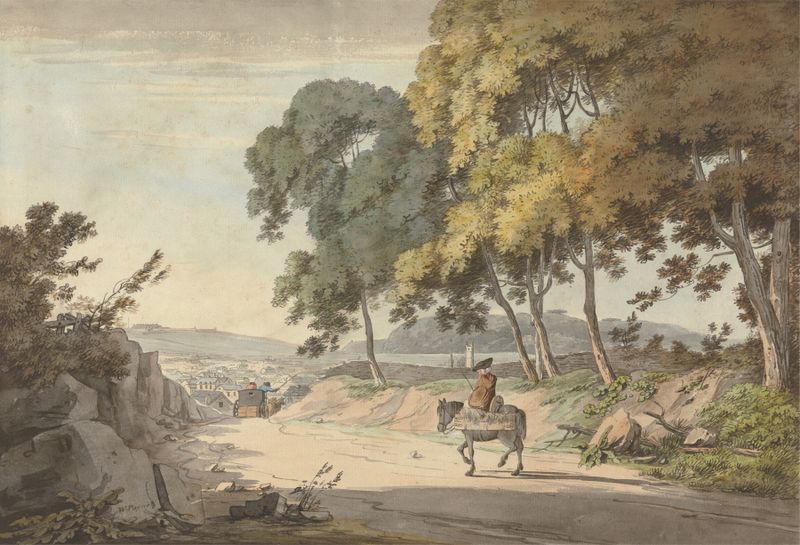
View of Plymouth taken from the Seven Trees, Exeter Road
William Payne

Britten Ferry, Mount Edgecombe
William Payne
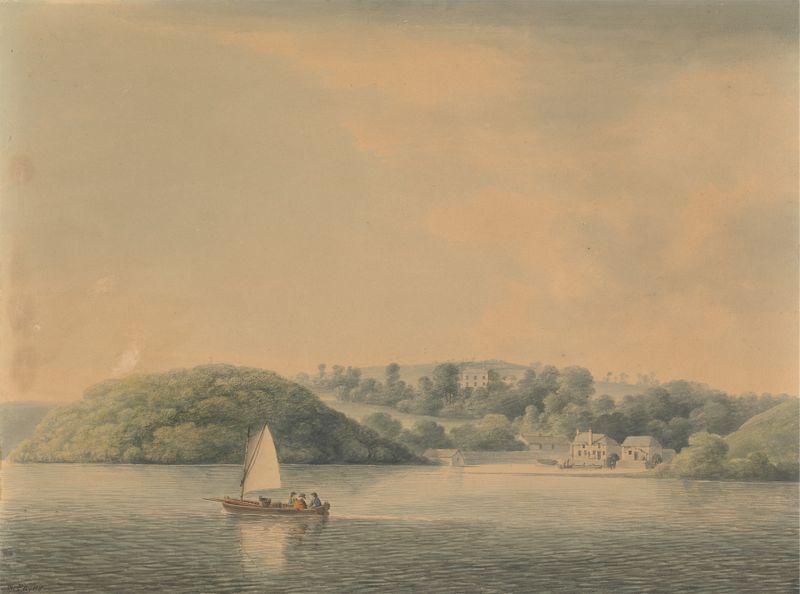
Mill on the Tavy
William Payne

Distant View of Exmouth from Exeter
William Payne
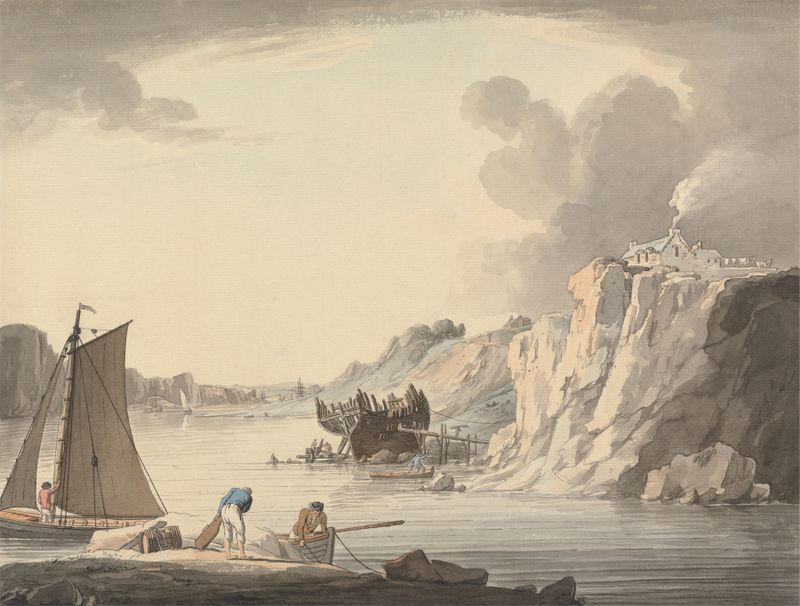
Entrance to Stonehouse Creek, between Plymouth and Dock, Devon
William Payne
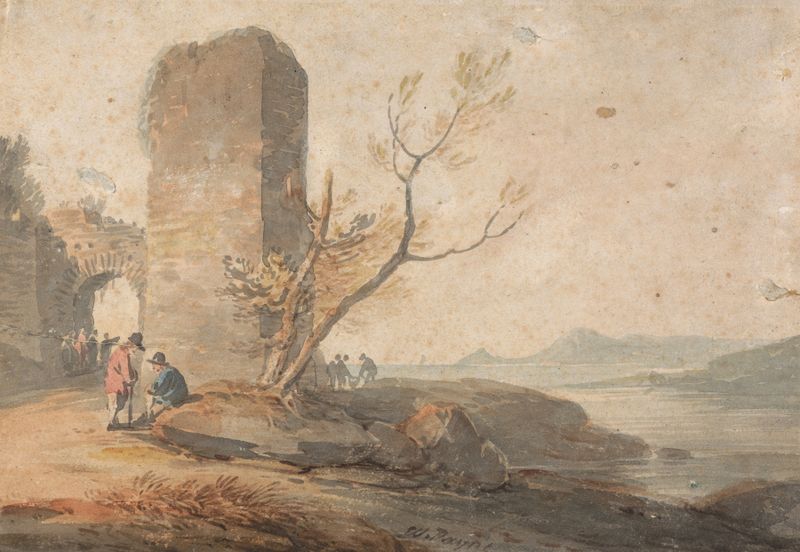
Figures by a Ruined Arch
William Payne
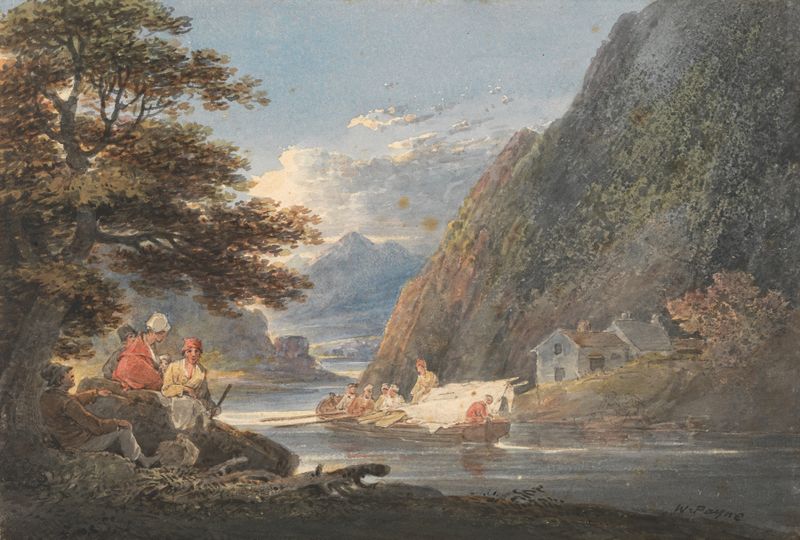
On the River Tivy, near Cardigan, Wales
William Payne
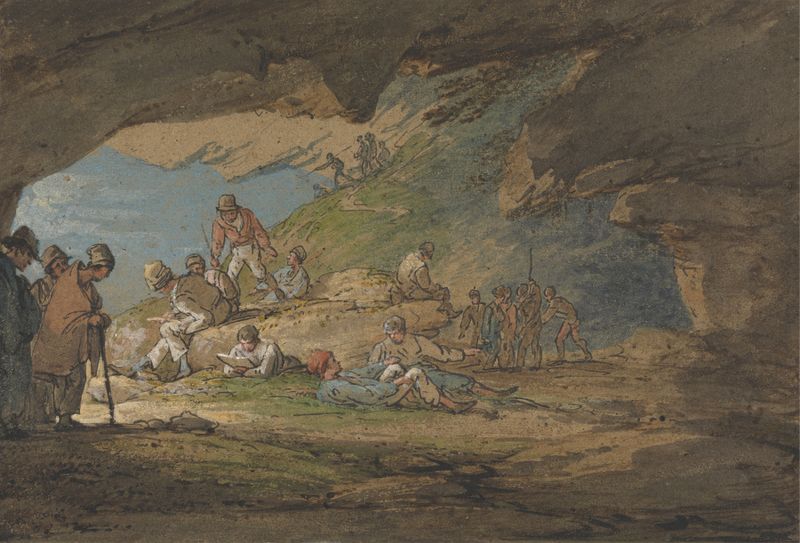
A Cave in Sunlight, with Figures
William Payne
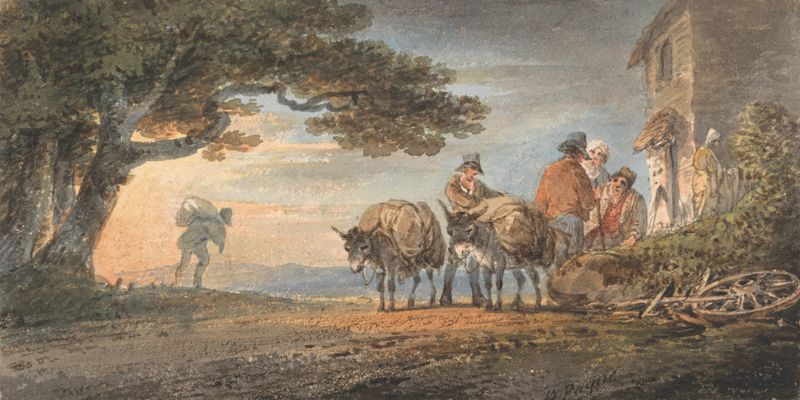
Drivers and Burros Resting at Sunset
William Payne
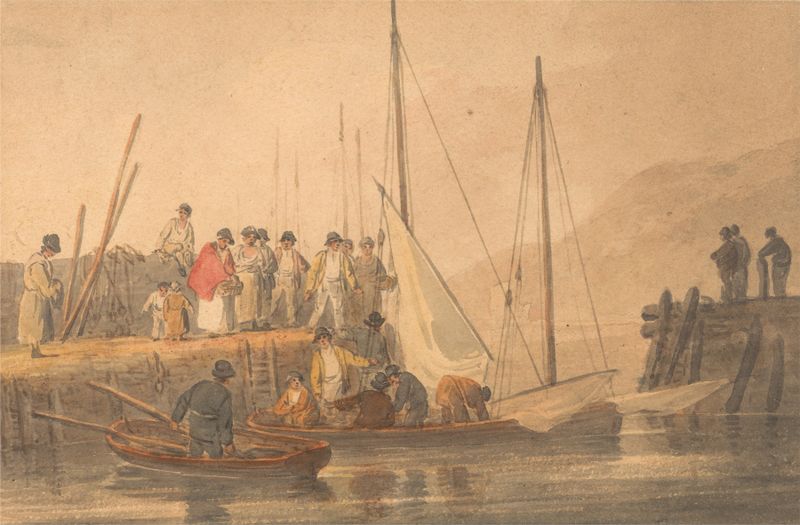
Torquay
William Payne





